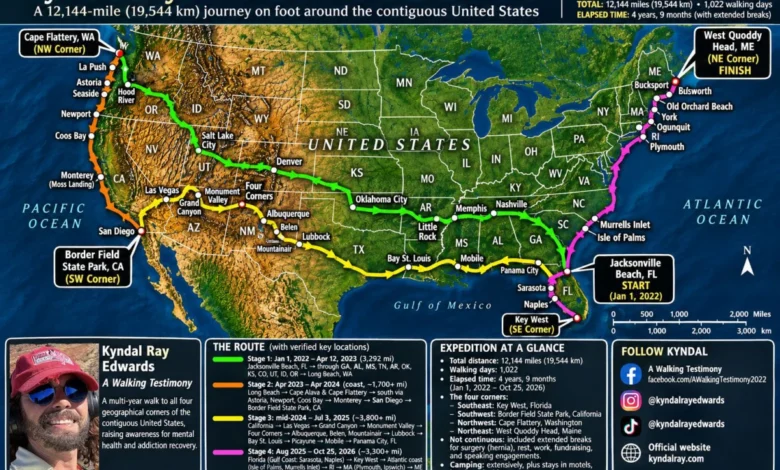
After a grueling 1,022-day odyssey that spanned nearly 20,000 kilometers, endurance athlete Kyndal Ray Edwards has officially concluded his Four Corners Walk, a transformative journey that saw him traverse the breadth and depth of the continental United States. The 33-year-old native of Orange Park, Florida, reached the West Quoddy Head Lighthouse in Lubec, Maine, on October 25, marking the completion of an ambitious project that began on New Year’s Day in 2022. This monumental achievement, which took him from the shores of the Atlantic to the Pacific and back again, serves as a capstone to a personal transformation rooted in recovery, advocacy, and human endurance.
A Journey Born of Resilience
The genesis of Edwards’ trek is deeply intertwined with his personal history. Before becoming an endurance athlete, Edwards faced significant life challenges, including struggles with drug addiction, mental health issues, and subsequent entanglement with the American justice system. These experiences became the catalyst for his mission: to promote mental health awareness and demonstrate the power of personal reinvention. By choosing to walk across the country, Edwards sought to reclaim his own narrative while providing a visible symbol of hope for others navigating similar hardships. His mantra, “You Matter,” prominently displayed throughout his trek, became the focal point of his interaction with the public and his online community.
The Chronology of an American Trek
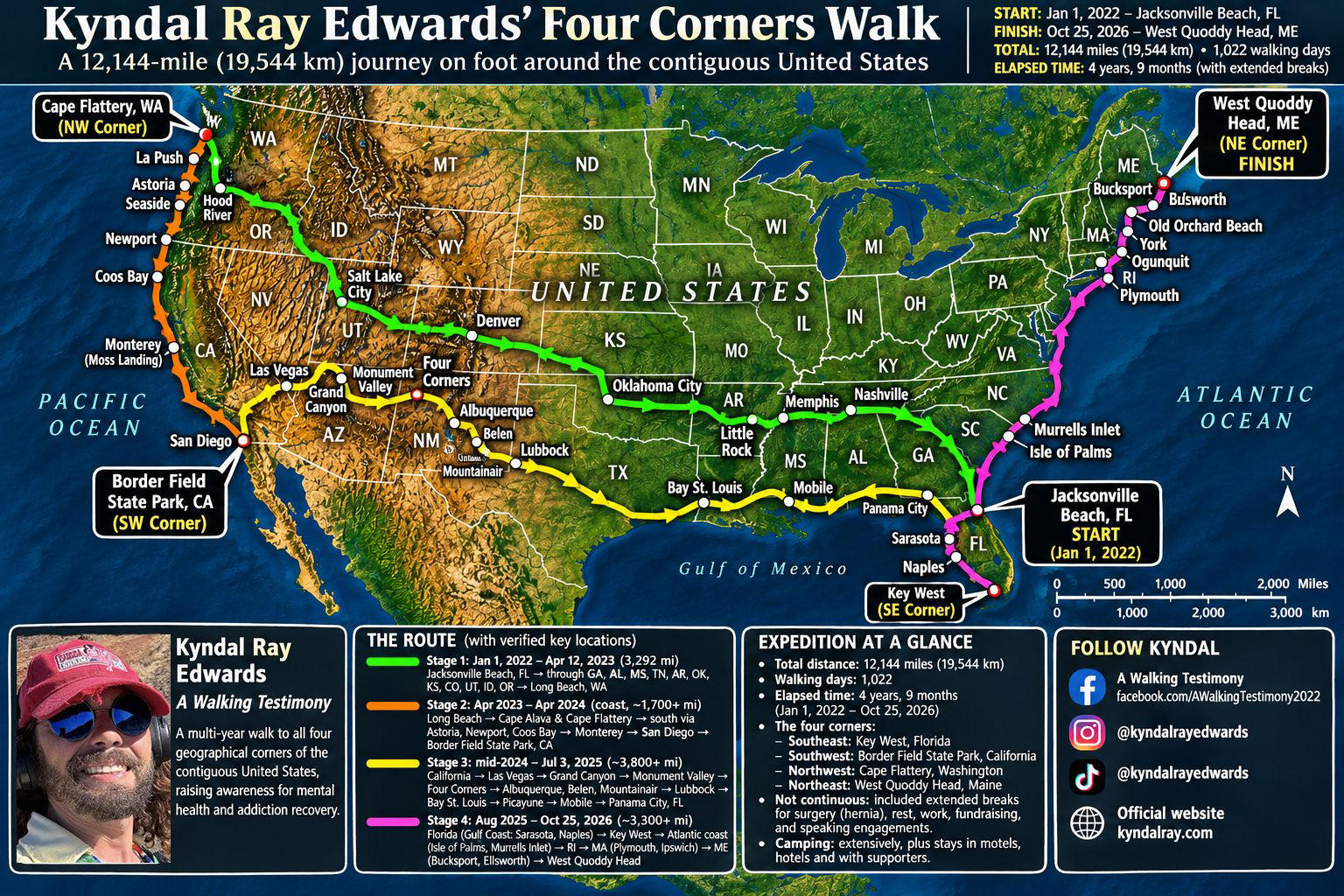
The scale of Edwards’ achievement is best understood through the timeline of his movement across the nation. On January 1, 2022, he departed from the beaches of Jacksonville, Florida, setting a course westward. His initial objective was a standard coast-to-coast crossing, which he completed after 15 months of continuous walking, arriving in Long Beach, Washington. By the time he reached the Pacific, he had covered 5,298 kilometers.
However, the completion of a standard transcontinental crossing did not satisfy his ambition. Edwards pivoted his focus toward a more complex geometry: the Four Corners of the contiguous United States. From his position in Washington, he trekked north to Cape Flattery, the northwesternmost point of the lower 48 states. From there, he turned south, making his way down the Pacific coast to San Diego. The final, and arguably most daunting, leg of his journey required him to traverse the width of the country once more, heading toward the southeastern extremity of Florida before finally pushing north to the northeastern finish line in Lubec, Maine.
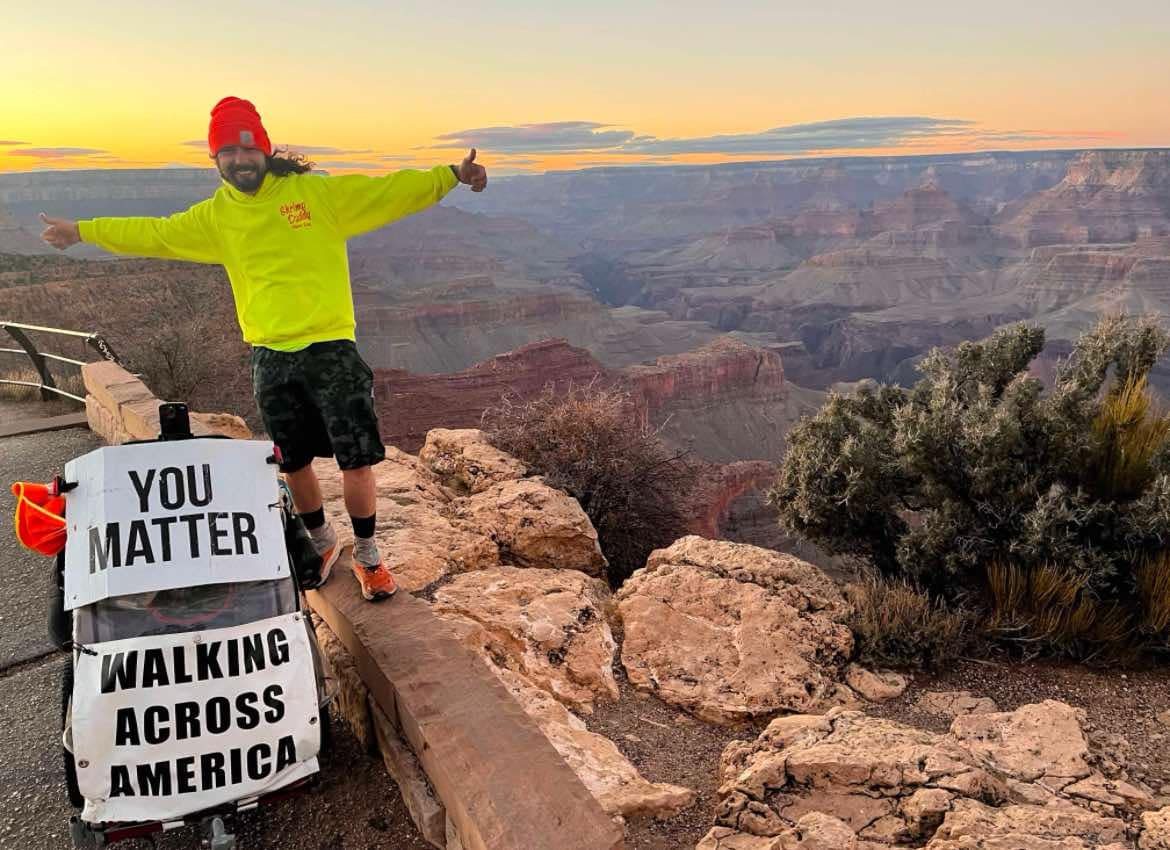
In total, Edwards covered 19,544 kilometers. Maintaining a consistent pace, he averaged nearly 20 kilometers per day, enduring varying terrains, extreme weather conditions, and the logistical challenges inherent in long-distance self-supported travel.
Supporting Data and Statistical Context
To appreciate the magnitude of Edwards’ walk, one must look at the physical toll and the logistical reality of such an endeavor. Walking 19,544 kilometers is equivalent to traversing the length of the United States roughly four to five times. On average, an adult human takes approximately 1,200 to 1,500 steps per kilometer; thus, Edwards likely took upwards of 25 million steps over the course of his 1,022-day journey.
From a physiological standpoint, this level of sustained aerobic activity is categorized as extreme. Long-distance trekking of this nature puts immense strain on the musculoskeletal system, cardiovascular health, and metabolic reserves. The recovery aspect that Edwards championed throughout his journey is not merely metaphorical; it reflects the discipline required to manage the physical breakdown of the body while remaining mentally resilient. His frequent updates on social media platforms served as a real-time data log of his progress, providing a transparent look at the reality of life on the road, including the moments of fatigue and the highs of community support.
Official Responses and Community Impact
The arrival at West Quoddy Head Lighthouse was met with a gathering of supporters, marking a poignant end to a project that had garnered a loyal following across digital platforms. While Edwards operated largely as an independent athlete, his journey attracted the attention of various mental health organizations and community groups who recognized the value of his advocacy.
In the broader sphere of endurance athletics, Edwards’ feat has been noted for its discipline and its focus on advocacy over raw speed. The fact that he completed his journey just days before the legendary explorer Karl Bushby finished his 28-year "Goliath Expedition" highlights a week of significant milestones for the endurance community. The coincidence of their shared birthdays added a layer of serendipity that was widely discussed among followers of long-distance trekking. By completing this walk, Edwards has effectively positioned himself among a small cohort of individuals who have successfully navigated the entire perimeter of the contiguous United States.
Broader Implications and Future Trajectories
The conclusion of the Four Corners Walk raises questions regarding the impact of such long-form endurance projects on public discourse surrounding mental health. By tethering his physical journey to a message of recovery, Edwards has successfully moved the conversation away from the "heroic" nature of the athlete and toward the "human" nature of the struggle. His journey suggests that massive, long-term personal projects can serve as powerful tools for psychological stabilization and social outreach.
As for the future, Edwards has already begun outlining potential next steps. His proposals range from collaborative adventures with strangers in every state—an initiative that would further his mission of community building—to participation in ultra-marathons and international endurance challenges. While he has yet to commit to a singular path, the momentum built over the last three years suggests that his future endeavors will likely continue to blend athletic performance with social advocacy.
The legacy of the Four Corners Walk is not merely the distance covered or the geography traversed. It is the precedent set by an individual who, having hit a personal nadir, utilized one of the most fundamental human activities—walking—to process trauma and inspire others. As he transitions from the road back into a more settled lifestyle, the data and narratives he collected along the way will likely serve as a resource for others looking to undertake similar feats of endurance.
In summary, Kyndal Ray Edwards has completed a journey that stands as a testament to the capacity for human change. By mapping the corners of the nation, he has simultaneously mapped a path of recovery that, while personal in its origin, has become public in its application. His 1,022-day trek concludes not just with the reaching of a lighthouse in Maine, but with a confirmed commitment to the ongoing, long-term work of mental health advocacy and the pursuit of further physical challenges.