COP31: Tourism Sector Demands Tangible Climate Action as Antalya Summit Approaches

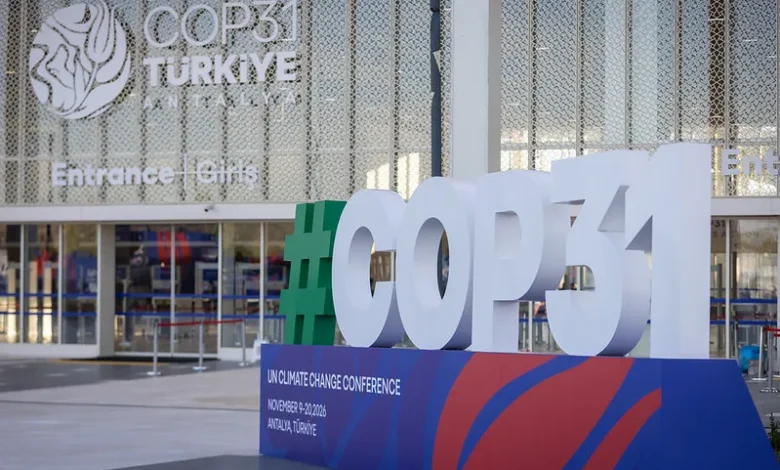
The 31st United Nations Climate Change Conference, set to convene in Antalya, Türkiye, from November 9 to 20, arrives at a critical juncture for the global travel and tourism industry. As international delegates prepare to gather for this two-week marathon of climate diplomacy, the mood among tourism stakeholders has shifted from optimistic participation to a demand for fiscal and operational accountability. Co-hosted by Türkiye and Australia, COP31 is being positioned by the United Nations as the "Implementation COP," a branding intended to distinguish it from the procedural gridlock that characterized the 2025 summit in Belém, Brazil.
The tourism sector, which is responsible for approximately 8% to 10% of global greenhouse gas emissions, finds itself in a paradoxical position. While the industry is among the most vulnerable to the physical impacts of climate change—including rising sea levels, desertification, and the loss of biodiversity—it is also a significant contributor to the carbon footprint of global mobility. For years, tourism operators have engaged in voluntary sustainability initiatives; however, as the window for limiting global temperature rise to 1.5 degrees Celsius narrows, the industry is increasingly signaling that voluntary measures are no longer sufficient to secure a stable future for travel.
The Legacy of Belém and the Road to Antalya
To understand the weight of the expectations surrounding the Antalya summit, one must review the disappointments of COP30. The Belém conference was intended to be a landmark moment for climate finance and the protection of the Amazon, yet it concluded with a lack of consensus on critical fossil fuel transition pathways. Observers noted that while the rhetoric remained ambitious, the mechanisms for enforcing national commitments remained largely aspirational.
The failure to reach a substantive agreement in Brazil left a vacuum that the Antalya presidency is now under intense pressure to fill. The "implementation" focus of COP31 is not merely a slogan; it is a direct response to the criticism that international climate talks have become disconnected from the reality of industrial operations. By prioritizing measurable results over high-level declarations, the Turkish and Australian organizers hope to demonstrate that the Paris Agreement framework can yield economic and environmental outcomes that transcend geopolitical maneuvering.
A New Framework for Accountability
In the lead-up to the summit, the United Nations released a series of voluntary roadmaps on Tuesday that aim to serve as a bridge between high-level pledges and ground-level execution. These documents outline how nations can integrate fossil fuel reduction into their internal regulatory frameworks, leveraging national policies to drive private sector investment.
For the tourism sector, these roadmaps are of particular interest. They emphasize the need for decarbonizing the supply chain, which includes aviation fuel transition, maritime transport electrification, and the retrofitting of hotel infrastructure. If these roadmaps are adopted into national policy, they will likely mandate stricter reporting standards for large tourism enterprises, moving beyond the current landscape of fragmented sustainability disclosures toward a more standardized, audited framework.
The Economic Stakes for Global Tourism
The economic implications of COP31 for tourism are profound. According to data from the World Travel & Tourism Council (WTTC), the sector’s resilience is intrinsically linked to the speed of the global energy transition. A failure to curb fossil fuel reliance will likely lead to increased insurance premiums, higher operational costs due to carbon taxation, and the potential closure of high-risk destinations that are currently grappling with extreme weather patterns.
"The industry is tired of hearing about targets set for 2050," noted a senior consultant for a global hotel chain, speaking on the condition of anonymity due to the sensitivity of pre-COP negotiations. "We need to see the receipts. We need to know how the investments being discussed in these halls will lower the cost of sustainable aviation fuel or provide the tax incentives necessary to pivot our energy grids. If COP31 doesn’t produce actionable fiscal policy, it’s just another meeting in a Mediterranean resort."
Timeline of Climate Milestones
The trajectory leading to Antalya highlights the evolution of the climate conversation:
- 2015 (COP21): The adoption of the Paris Agreement, setting the stage for global efforts to limit temperature rise.
- 2021 (COP26): Glasgow marks the "Net Zero" transition, with major tourism players beginning to align their internal goals with the 1.5°C threshold.
- 2024 (COP29): Discussions in Baku centered on the New Collective Quantified Goal (NCQG) for climate finance, setting the stage for the funding discussions in Antalya.
- 2025 (COP30): The Belém summit concludes with limited consensus, prompting the "Implementation" branding for the following year.
- 2026 (COP31): The Antalya summit focuses on translating climate commitments into local and sector-specific policy frameworks.
Official Responses and Industry Sentiment
Government representatives from the co-hosting nations have underscored the importance of private sector alignment. Australia, leveraging its experience in managing climate-sensitive environments like the Great Barrier Reef, has pushed for a focus on "nature-positive tourism," which seeks to ensure that tourism activity contributes to the restoration of ecosystems rather than merely minimizing damage.
Turkish officials, meanwhile, have highlighted the infrastructural investments needed to modernize the tourism industry in the Mediterranean, a region identified by the IPCC as a climate change "hotspot." The Turkish government’s focus is on integrating renewable energy into the country’s massive hospitality sector, providing a case study for how tourism-dependent economies can transition away from carbon-heavy utility dependence.
However, industry skepticism remains high. Many operators are watching to see if the fossil fuel roadmap provides enough clarity on the future of aviation fuel subsidies. Without a clear path to price parity between traditional jet fuel and sustainable alternatives, the aviation industry—the lifeblood of international tourism—remains locked in a cycle of high-carbon dependency.
Broader Impact and Implications
The success of COP31 will likely be measured by the degree to which it creates a "feedback loop" between national policies and industry behavior. If the implementation strategies discussed in Antalya lead to robust national legislation, we can expect to see a cascade effect across the travel landscape:
- Standardized Reporting: A shift toward mandatory, audit-ready sustainability reporting, reducing the prevalence of greenwashing.
- Infrastructure Funding: Increased public-private partnerships aimed at scaling renewable energy grids in tourism-heavy developing nations.
- Climate Risk Pricing: The integration of climate vulnerability into the valuation of tourism assets, forcing investors to weigh long-term environmental sustainability as heavily as short-term profit margins.
The stakes extend far beyond the balance sheets of travel corporations. For many small island developing states (SIDS), whose economies are almost entirely dependent on tourism, the outcomes of COP31 represent a matter of existential survival. As the Antalya conference begins, the global community will be watching to see if the shift toward "implementation" can finally overcome the inertia that has long plagued international climate negotiations.
In the coming days, as delegates fill the conference halls in Antalya, the focus will be on the fine print of the roadmaps and the political will to fund them. For the tourism industry, the message from the COP31 venue is clear: the era of high-level pledges is ending, and the era of measurable, accountable climate action must begin. Whether the participants can deliver on this promise remains the defining question of the next two weeks. The world will be watching to see if the "Implementation COP" can finally turn the tide, or if it will be remembered as another missed opportunity in the ongoing struggle to stabilize the global climate.