Nestled within the vast expanses of the Mojave Desert lies Nevada’s oldest and largest state park, the Valley of Fire State Park. Spanning approximately 35,000 acres, this protected natural wonderland is defined by its vibrant ochre-colored rock formations, ancient Aztec sandstone waves, and significant archaeological artifacts. Located roughly 49 miles northeast of the Las Vegas Strip, the park offers a dramatic geological contrast to the hyper-urbanized environment of Sin City. Established to preserve its unique landscape and cultural heritage, the Valley of Fire has evolved into a premier destination for ecological tourism, geological research, and outdoor recreation, attracting hundreds of thousands of visitors annually seeking respite from urban life.
Geological Background and Historical Significance

The striking visual profile of the Valley of Fire is the result of millions of years of geological evolution. The park’s signature red sandstone formations were formed during the Jurassic period, roughly 150 million years ago, from shifting sand dunes that were eventually lithified into stone. Subsequent tectonic activity, wind erosion, and water drainage sculpted these mineral-rich deposits into the arches, domes, and sweeping waves visible today. Iron oxides and other minerals within the sandstone are responsible for the varied palette of reds, oranges, pinks, and yellows that give the landscape its characteristic fiery appearance.

Beyond its geological importance, the region holds profound historical significance. The park is home to an abundance of ancient petroglyphs—rock art carved by the Ancestral Puebloans, or Anasazi, who inhabited the area between 300 BC and 1150 AD. These carvings depict animals, human figures, and geometric patterns, offering valuable insight into the spiritual and daily lives of the region’s earliest human occupants. Additionally, the park’s natural water catchments, such as Mouse’s Tank, later provided resources for Paiute Native Americans and served as hideouts for 19th-century outlaws, cementing the area’s role in regional folklore.

Essential Itinerary: Navigating the Park’s Primary Attractions

A comprehensive visit to the Valley of Fire requires careful planning, particularly due to the extreme desert temperatures experienced during peak months. Navigation is facilitated primarily by the Valley of Fire Highway (NV 169), also known locally as Mouse’s Tank Road or White Domes Road, which bisects the park from north to south and provides access to major trailheads and scenic vistas.

The Scenic Drive Along NV 169

The main paved thoroughfare serves as an accessible introduction to the park’s topography. Traversing the highway offers motorists panoramic views of towering crimson cliffs, balanced rocks, and multicolored formations such as the Seven Sisters and the Beehives. Transportation analysts and park management recommend maintaining low speeds and utilizing designated pullouts to observe geological features safely. The approach from the east via Northshore Road, connecting from the Lake Mead Recreational Area, provides an extended scenic route characterized by sweeping views of the Mojave Desert ecosystem.

Key Hiking Trails and Natural Landmarks

The park features a network of well-maintained trails catering to varying levels of physical endurance. Among the most prominent routes are:

- Balanced Rock Trail (0.5 miles): A brief nature trail leading to an unusual geological formation where a massive boulder rests precariously on a narrow pedestal. The area also features small sandstone caves and serves as a frequent sighting location for desert bighorn sheep.
- Mouse’s Tank Trail (0.7 miles round trip): A sandy, flat pathway flanked by petroglyph-covered rock faces. The trail culminates at a natural rock basin that collects rainwater, named after a late-19th-century Paiute fugitive who reportedly utilized the area for concealment.
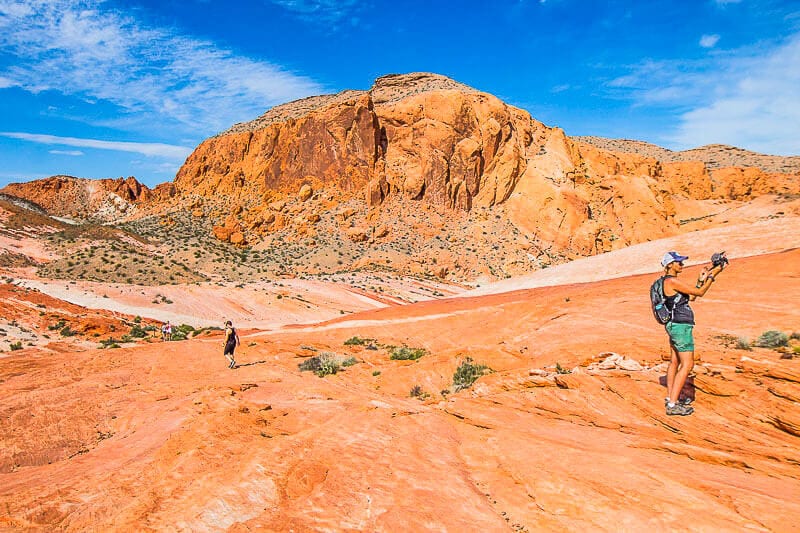
- Rainbow Vista Trail (1.8-mile loop): An expansive route traversing multicolored terrain that concludes near Fire Canyon Wash, a jagged labyrinth of reddish-brown rock formations suitable for panoramic photography and geological observation.
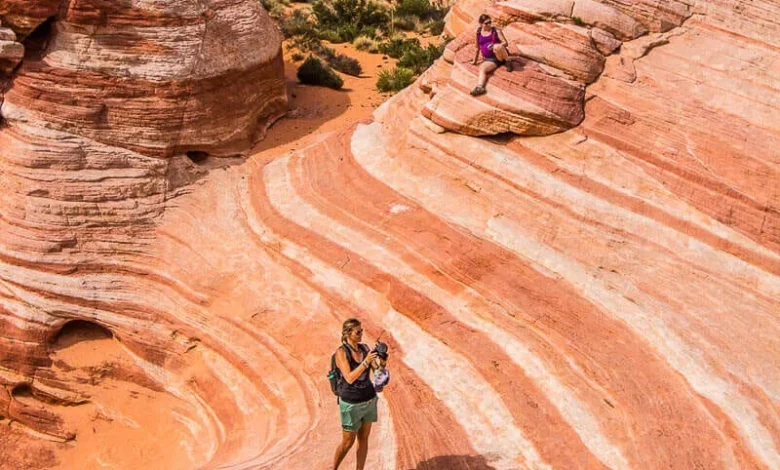
- Fire Wave and Seven Wonders Trail (1.5 miles round trip): Widely regarded as one of the park’s premier attractions, this trail leads hikers across slickrock to a natural amphitheater featuring striking, striated waves of pink, orange, and white sandstone. Due to intense solar exposure, early morning visits are strongly advised during warmer seasons.
- White Domes Trail (1.2-mile loop): Offering a distinct ecological and visual shift from the red sandstone areas, this trail guides visitors through pale yellow and white rock formations, a narrow slot canyon, and the historical remnants of a 1966 Hollywood movie set used for the film The Professionals.
- Petrified Wood and Pastel Canyon: Short, educational loops provide access to fossilized ancient tree logs and smooth pastel-pink canyon walls, further underscoring the area’s complex prehistoric history.
Family Engagement and Conservation Programs

To foster environmental stewardship among younger demographics, the Valley of Fire participates in the Junior Ranger Program, mirroring initiatives found within the United States National Parks system. Participating children complete educational activity booklets provided at the visitor center, learning about local wildlife, desert conservation, and archeological preservation before receiving an official badge.

Infrastructure, Accommodations, and Visitor Logistics

Managing visitation within a fragile desert ecosystem requires robust infrastructure. The park features two primary campgrounds—Arch Rock and Atlatl Rock—equipped with shaded picnic tables, fire pits, water stations, and modern restrooms. Group-use campsites are available by reservation, while overflow options exist on surrounding Bureau of Land Management (BLM) property. Standard vehicle camping and entry fees are structured to support ongoing maintenance and preservation efforts.

Given the extreme climate of the Mojave Desert, where summer temperatures frequently exceed 100°F (38°C), park authorities enforce strict safety protocols. Visitors are advised to carry adequate hydration supplies, wear sturdy footwear, and complete strenuous outdoor activities during the cooler morning or evening hours.

Broader Regional Impact and Economic Implications

As Nevada’s oldest state park, designated as such in 1935, the Valley of Fire plays a critical role in regional tourism and the local economy. By offering a natural alternative to the entertainment-driven economy of Las Vegas, the park diversifies the tourism portfolio of Clark County. Hospitality sector analysts note that day-trips to surrounding state and national parks contribute significantly to regional expenditures, supporting transport services, hospitality providers, and eco-tourism operators based in the Las Vegas metropolitan area. Furthermore, the balance between public access and environmental protection remains a focal point for state land managers, ensuring that the geological and cultural integrity of the Mojave Desert is preserved for future generations.