The Evolution of Aviation Engineering: How the Bombardier Global 8000 Redefines the Geometry of Flight

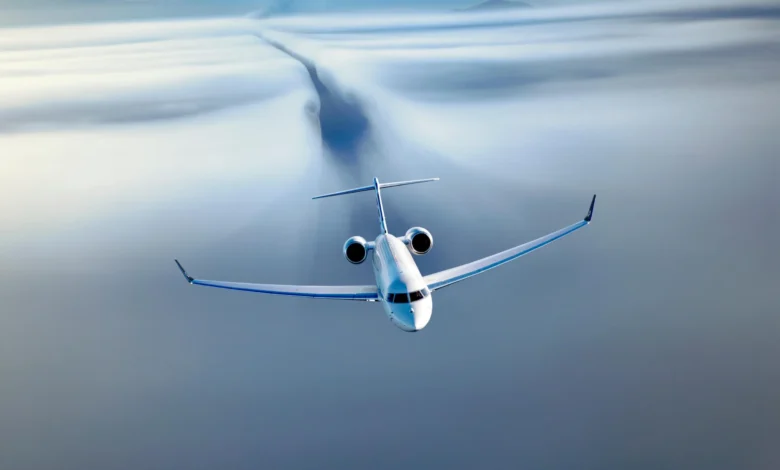
In the history of aerospace engineering, the rigid wing was long considered the gold standard of stability. However, the natural world has always whispered a different truth: a bird never flies on a static wing. As avian species navigate the complexities of thermal currents and shifting wind patterns, their wings constantly bend, fold, and twist. This biomimetic principle—the idea that structural adaptation, rather than rigid resistance, is the key to efficiency—serves as the foundational philosophy behind the Bombardier Global 8000. As the world’s fastest purpose-built business jet, this aircraft represents more than just a leap in speed; it marks a paradigm shift in how we conceive of the relationship between an airframe and the atmosphere.
The Engineering Philosophy: From Biomimicry to the Smooth Flèx Wing
The Smooth Flèx Wing is perhaps the most significant structural advancement in modern aviation. By designing a wing that yields to the kinetic energy of turbulence, engineers have effectively created a mechanical shock absorber. This technology addresses a fundamental friction point in aviation: the trade-off between speed and passenger comfort. In conventional aircraft, high-speed flight often requires a stiffer wing to maintain aerodynamic stability, which in turn transmits more vibration and turbulence into the cabin.
Bombardier’s approach reverses this logic. By allowing the wing to flex dynamically in response to aerodynamic pressure, the aircraft maintains a smoother, more stable trajectory. This design decision echoes the biological mechanics of a bird’s flight, where the alula—often referred to as the "thumb" of the wing—manages airflow at low speeds to prevent stalls. On the Global 8000, this is mirrored by precision-engineered slats, providing the aircraft with a level of agility typically reserved for much smaller, lighter jets.

Navigating the Physics of Aileron Reversal
The development of the Smooth Flèx Wing was not without significant engineering challenges. During the design phase, Bombardier engineers encountered the phenomenon of aileron reversal, a critical condition in high-speed flight where the structural twisting of the wing offsets the pilot’s control inputs, potentially causing the aircraft to roll in the opposite direction of the intended command.
Faced with the choice of stiffening the wing—which would have sacrificed the desired flexibility—or innovating a new control surface, the team opted for the latter. The result was a first-of-its-kind split aileron system. This two-part control surface functions as a single unit during standard flight maneuvers but separates at higher speeds to neutralize the effects of wing twist. This breakthrough allows the aircraft to maintain the structural benefits of a flexible wing without compromising high-speed control, a feat that sets a new industry benchmark for aerodynamic performance.
Operational Reach and Market Implications
The logistical utility of an ultra-long-range jet is often dictated by the number of airports it can access. Historically, the largest business jets have been restricted to major hubs due to their landing speed and runway requirements. The Global 8000, however, defies this trend by offering 30 percent more airport access than its nearest competitor.
This enhanced capability has profound implications for global business. By being able to land at smaller, regional airports closer to a final destination, the Global 8000 reduces the "last mile" transit time, bypassing the congestion of major international hubs. For a corporate executive flying from New York to Hong Kong—a distance of approximately 8,000 nautical miles—this means fewer fuel stops, more direct routings, and a significantly reduced travel footprint.

A Chronology of the Global 8000 Development
The path to the Global 8000 began with the success of the Global 7500, which proved the viability of the Smooth Flèx Wing technology. The transition from the 7500 to the 8000 involved a rigorous testing cycle focused on optimizing the wing’s load-bearing capacity and the integration of the split aileron system.
- 2018: The Global 7500 enters service, validating the core principles of the Smooth Flèx Wing architecture.
- 2022: Bombardier formally announces the Global 8000, promising a top speed of Mach 0.94 and a range of 8,000 nautical miles.
- 2023-2025: Flight test campaigns focus on the integration of enhanced wing loading and advanced fly-by-wire software.
- 2026: The aircraft reaches full operational maturity, demonstrating its capability to perform the longest business jet missions in history with unprecedented comfort.
The Interior Environment: Human-Centric Design
While the exterior of the Global 8000 is a testament to high-tech engineering, the interior is designed with a focus on human physiology. The cabin is partitioned into four distinct zones, catering to the disparate needs of work, dining, entertainment, and rest. This modularity is essential for long-duration flights, where the psychological impact of being confined to a single space can lead to fatigue.
Central to this environment is the Nuage seating system. Incorporating a zero-gravity position, these seats are engineered to distribute body weight evenly, reducing pressure points and facilitating circulation. This is supplemented by the Soleil lighting system, an advanced circadian-rhythm-based technology. By simulating the shift in natural daylight throughout the flight, the system helps mitigate the effects of jet lag, allowing passengers to arrive at their destination physically and mentally prepared.
Clean Air and Environmental Standards
In an era where passenger health is a top priority, the integration of the Pur Air system represents a critical advancement. Using medical-grade HEPA filters, the system continuously scrubs the cabin air of particulate matter and pathogens, providing a clean, fresh environment even at high altitudes. This, combined with the low cabin altitude provided by the aircraft’s pressurized environment, minimizes the physiological stress typically associated with long-range air travel.

Broader Impact on the Aviation Industry
The success of the Bombardier Global 8000 underscores a broader shift in the aviation sector toward "total experience" design. It is no longer sufficient for an aircraft to be merely fast or efficient; it must also serve as a high-functioning, mobile environment that sustains human performance.
Industry analysts note that the Global 8000’s combination of runway performance and range forces competitors to re-evaluate their design roadmaps. The move toward biomimetic structural engineering suggests that the next generation of aircraft will be defined by their ability to "breathe" with the air, rather than simply forcing their way through it.
Conclusion
The Bombardier Global 8000 serves as a bridge between the raw physics of flight and the human necessity for comfort. By observing the natural world—specifically the adaptive wing mechanics of birds—and applying that knowledge through rigorous aerospace engineering, Bombardier has created a machine that addresses the inherent conflicts of long-range flight. Whether through the split aileron system that enables high-speed control or the circadian-rhythm lighting that eases the transition across time zones, every element of the aircraft is designed to minimize the friction of travel. As the Global 8000 continues to set records for range and speed, it remains a defining example of how technological progress, when inspired by nature, can elevate the human experience.
Related posts: