The Paradigm Shift in Close-Up Photography: Proving Specialized Lenses Are Not Prerequisite for Fungi Imaging


The modern photographic equipment market has long propagated a specialized paradigm: specific genres demand specific, often costly, optical instruments. Within this commercial framework, prospective macro photographers have routinely been advised that capturing the intricate details of small subjects requires dedicated macro lenses capable of 1:1 reproduction ratios. However, recent field tests conducted by woodland photographers and gear analysts challenge this long-standing consumer assumption, demonstrating that standard variable-aperture zoom lenses—when paired with advanced computational techniques such as focus stacking and deliberate lighting manipulation—can successfully produce publication-grade macro imagery without specialized capital investment.
Background Context of the Equipment Barrier and the Close-Up Niche
For decades, the barrier to entry for macro and close-up photography has been financial. Standard kit lenses and all-purpose zooms typically feature minimum focusing distances of 0.4 meters or greater and maximum reproduction ratios that fail to isolate small subjects adequately. Consequently, enthusiasts interested in botanical studies, insect life, and mycology (the study of fungi) have frequently felt compelled to purchase macro primes, telephoto lenses, or auxiliary accessories such as extension tubes and close-up filters before attempting to enter the genre.
This economic friction often delays or deters photographers from exploring niche subjects. Industry analysts note that gear acquisition syndrome (GAS)—the persistent urge to buy equipment under the belief that it unlocks artistic capability—remains a dominant force in consumer photography spending. By testing the limits of non-specialized gear, field practitioners seek to establish a more pragmatic baseline for photographic education, arguing that technical mastery of lighting and post-processing should precede hardware expansion.
Chronology of the Woodland Field Experiment
To test the viability of non-specialized equipment in mycology photography, a field expedition was scheduled during the early autumn mushroom season. Entering a familiar local woodland early in the season served a dual purpose: avoiding the heavy insect damage and physical decay that typically affect fungi later in the autumn cycle, and capitalizing on the slanted, soft morning sunlight filtering through the canopy.
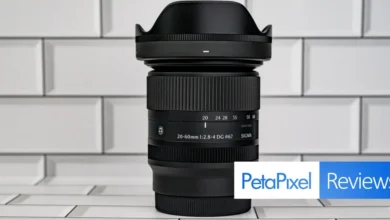
The expedition deliberately excluded any dedicated macro optics, relying instead on a standard Sigma 24-105mm f/4 DG OS HSM Art lens mounted on a full-frame digital camera body. The chronological execution of the shoot involved three distinct phases of technical adaptation:
-
Natural Light and Single-Subject Isolation: The initial phase focused on a solitary specimen illuminated by ambient forest light. Operating at a moderate aperture of f/4 to balance diffraction limits and light gathering, the photographer bypassed the optical limitations of working at close range by capturing a bracketed sequence of eight frames. Each frame shifted the focal plane incrementally from the stipe (stem) to the cap and underside gills.
-
Micro-Scale Scaling and Multi-Subject Integration: The second phase tested the equipment’s resolving power on a cluster of three exceptionally small fungi, each comparable in size to a human fingernail. By capturing seven sequential frames at varying focal distances, the setup tested whether a standard zoom could maintain edge-to-edge sharpness across multiple minuscule subjects separated in three-dimensional space.
-
Artificial Lighting Integration and Environmental Variation: The final phase involved a larger, densely packed fungal colony. To transcend the limits of available ambient light, the workflow incorporated off-camera artificial sources: a variable color-temperature LED panel (manufactured by Litra) set to a warm tungsten balance positioned on the left, paired with a neutral daylight-balanced head torch on the right. By swapping the positions and color temperatures of these dual sources across three separate sequences of 15 frames each, the experiment analyzed how directional lighting alters texture and depth perception without altering the optical glass.
Technical Analysis: Focus Stacking as an Optical Equalizer
The core technical enabler that bridges the gap between standard zooms and dedicated macro lenses is focus stacking. In traditional close-up photography, achieving a deep depth of field requires stopping the lens down to narrow apertures such as f/16 or f/22. However, doing so introduces optical diffraction, which softens the overall image sharpness and reduces contrast—a physical limitation imposed by the physics of light waves passing through small apertures.
Focus stacking circumvents this compromise. By shooting at optimal sharp apertures (typically between f/4 and f/8) and capturing multiple exposures focused on sequential planes from the foreground to the background, algorithms in post-processing software (such as Adobe Photoshop or Helicon Focus) can stitch the sharpest zones of each frame into a single composite image.
Data and observations from the field confirm that while a dedicated 1:1 macro lens provides superior physical working distances and native optical magnification, focus stacking successfully compensates for the shallower depth of field inherent in standard zoom lenses. The resulting composites exhibit high levels of detail across complex, three-dimensional subjects like mushroom gills and caps, rivaling the output of specialized macro configurations.
Industry Perspectives and Expert Commentary
Professional photographers and optical engineers hold nuanced views regarding the necessity of specialized macro glass. While manufacturers emphasize that true macro lenses are engineered with flat-field corrections and specialized optical coatings designed specifically for close-range aberrations, working professionals increasingly advocate for functional pragmatism.
"The industry has long conflated capability with convenience," notes a prominent review analyst in the digital imaging sector. "Dedicated macro lenses make the process faster and offer greater working distance, preventing the front element of the lens from casting shadows on the subject. However, they are not a biological or physical prerequisite for capturing sharp close-up images. Techniques like focus stacking have effectively democratized micro-photography."
Furthermore, photography educators emphasize the psychological and financial benefits of skill-first methodologies. Encouraging photographers to exhaust the capabilities of their existing inventory prevents unnecessary consumer expenditures and ensures that subsequent equipment purchases are driven by verified creative necessity rather than speculative desire.
Broader Impact and Economic Implications for Photographers
The validation of non-specialized gear in specialized genres carries several broader implications for both amateur and professional imaging communities:
- Capital Efficiency: For hobbyists operating on constrained budgets, the realization that standard zoom lenses can handle niche subjects reduces financial pressure and lowers the barrier to entry for creative experimentation.
- Skill Development over Gear Accumulation: By focusing on foundational principles—such as precise manual focusing increments, tripod stability, ambient and artificial light balancing, and post-processing integration—photographers develop transferable competencies that enhance their overall visual literacy.
- Sustainable Consumer Habits: A shift toward utilitarian gear assessment counters the rapid obsolescence cycle driven by aggressive marketing in the consumer electronics sector, promoting more deliberate, sustainable purchasing habits among visual artists.
Conclusion and Future Outlook
Ultimately, the empirical evidence gathered from woodland field tests indicates that specialized equipment remains a tool of convenience and optimization rather than an absolute gateway to artistic output. While dedicated macro lenses undoubtedly streamline the workflow of close-up photography by offering superior magnification ratios and extended working distances, they are not mandatory for practitioners seeking to explore mycology or other macro genres.
By leveraging computational techniques like focus stacking and mastering the nuances of natural and artificial illumination, photographers can achieve professional-grade results using standard variable-aperture zoom lenses already present in their kits. For those considering an expansion into close-up photography, the most prudent preliminary step is not an immediate visit to the camera retailer, but a deliberate evaluation of existing equipment in the field.