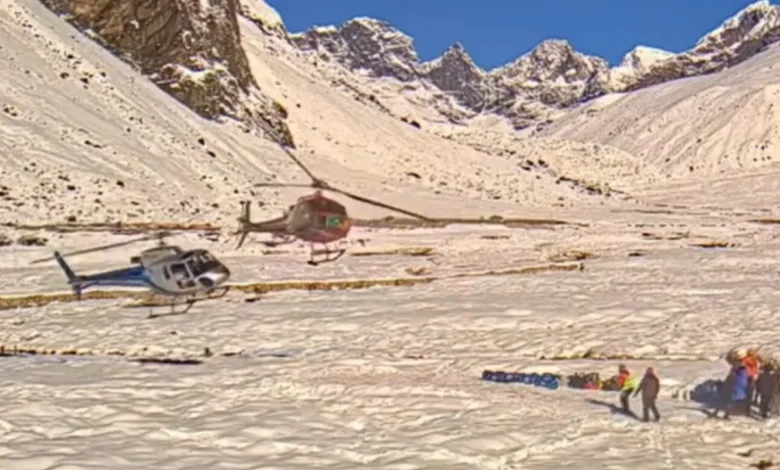
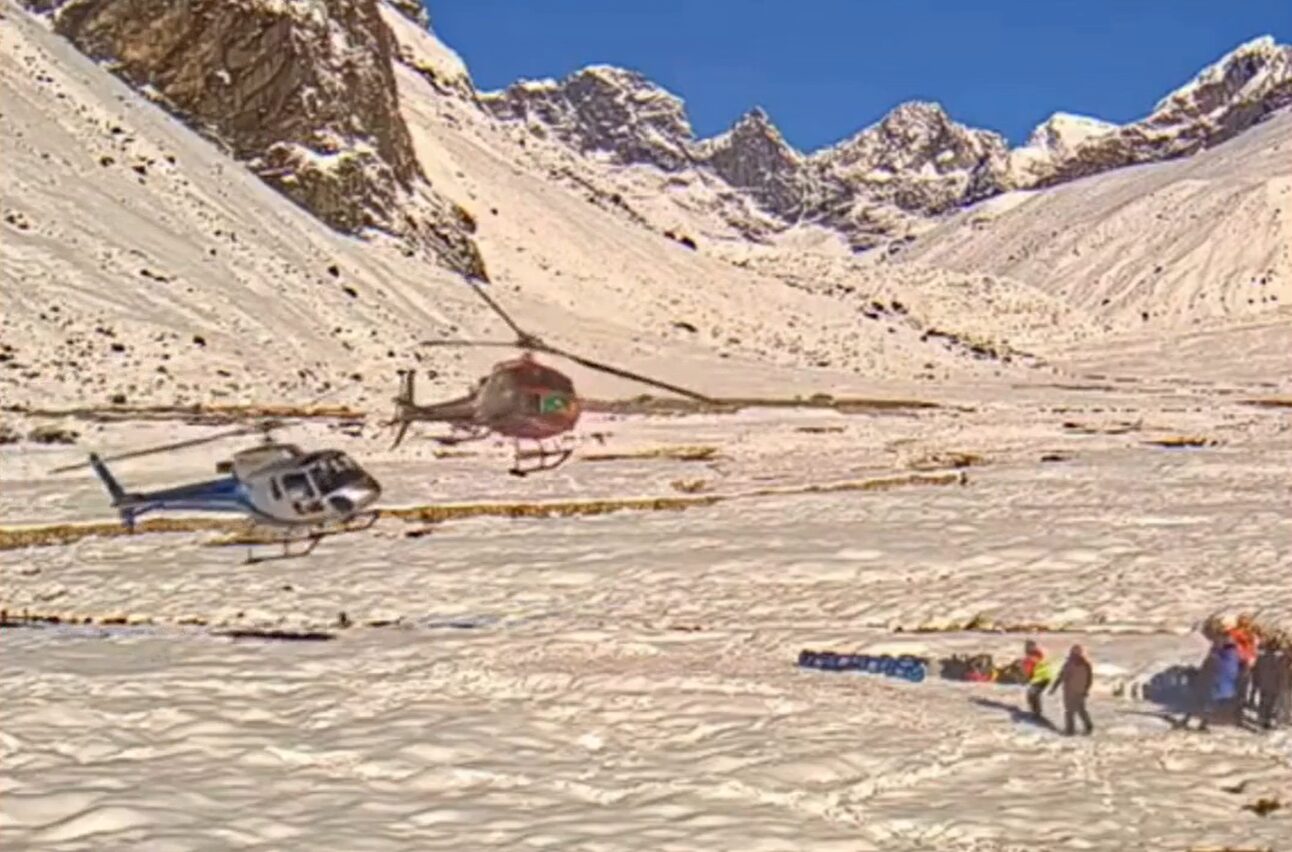
A catastrophic aviation incident occurred this morning near the village of Pheriche in the Solu-Khumbu district of Nepal, resulting in one fatality and two serious injuries. The collision involved two commercial helicopters—operated by Fishtail Air and Air Dynasty—which struck one another while attempting to land at a critical refueling and logistics hub situated at an altitude of 4,371 meters. The incident has sent shockwaves through the regional aviation community, which serves as the primary lifeline for mountaineering expeditions, medical evacuations, and cargo transport in the high-altitude terrain surrounding Mount Everest.
The Sequence of Events: A Mid-Air Collision
The incident took place during the peak operational hours of the morning, a time when wind conditions are typically most favorable for high-altitude flight in the Himalayas. According to preliminary reports and visual evidence captured by bystanders, the two aircraft were approaching the Pheriche helipad from different vectors.
The Pheriche helipad is a sprawling, flat area frequently utilized by aviation companies as a staging ground. Despite the seemingly optimal visibility and the expansive nature of the landing zone, the flight paths of the two aircraft converged simultaneously. Eyewitness accounts and video footage confirm that as the helicopters attempted their final descent, their rotor blades made contact. The kinetic energy of the collision caused immediate structural failure, leading to a rapid descent.
Vasanth Kumar, an Indian national trekking in the region, was confirmed dead at the scene. Two other individuals, identified as Shailesh Kishan, a New Zealander, and Rabindra Prajapati, a veteran senior captain, sustained life-threatening injuries. Both survivors were stabilized by local responders before being evacuated via emergency helicopter to specialized medical facilities in Kathmandu. At the time of the crash, the Fishtail Air helicopter was transporting passengers, while the Air Dynasty aircraft was engaged in a cargo delivery mission.
Operational Context: The Vital Role of Pheriche
Pheriche serves as a vital artery for the Everest region. Situated at approximately 4,371 meters (14,340 feet), it is not merely a waypoint for trekkers acclimatizing for the ascent to Everest Base Camp (EBC), but a logistical cornerstone for aviation. Because helicopters operating in the thin, high-altitude air are restricted by weight and fuel capacity, they frequently utilize Pheriche to refuel or drop off loads that would otherwise be too heavy to carry directly to the higher, more hazardous Base Camp.
The density of air at this altitude significantly affects rotor performance and aircraft lift. Pilots operating in the Everest region are among the most skilled in the world, having to contend with unpredictable mountain thermals, sudden downdrafts, and the physical challenges posed by hypoxia. The fact that an accident of this magnitude occurred in a flat, high-visibility area suggests a failure in communication or a lapse in standard air traffic coordination, rather than a failure driven by environmental conditions.
Aviation Safety and Regulatory Oversight in Nepal
The crash highlights the increasing pressure on Nepal’s aviation sector. In recent years, the demand for helicopter transport in the Khumbu region has surged. Beyond the trekking industry, which relies on these machines to transport luxury gear and food supplies, there is a consistent demand for emergency medical services (EMS).
Nepal’s aviation safety record has long been a subject of international scrutiny. The country’s complex topography and unpredictable weather patterns, combined with an aging fleet of helicopters, create a challenging operational environment. The Civil Aviation Authority of Nepal (CAAN) generally mandates strict flight protocols, including radio communication requirements and specific approach corridors for popular landing zones like Pheriche.
Industry experts note that while the number of pilots trained for high-altitude flight in Nepal is growing, the sheer volume of traffic during the climbing seasons—spring and autumn—often pushes the limits of the existing infrastructure. Many helipads in the region are not managed by dedicated air traffic controllers; instead, pilots often rely on "see-and-avoid" protocols and radio chatter between colleagues to coordinate arrivals and departures.
Chronology of Incident Response
Following the collision, a massive search and rescue operation was mobilized within minutes. Local trekking guides and villagers, who are often the first to arrive at crash sites in the Khumbu, provided initial triage.
- 09:30 AM (Local Time): The collision occurred at the Pheriche helipad.
- 09:45 AM: Local emergency responders and medical personnel stationed in Pheriche reached the site.
- 10:15 AM: Initial triage of the survivors, Captain Prajapati and Shailesh Kishan, was completed.
- 11:00 AM: Emergency medical transport helicopters arrived from Kathmandu to collect the injured.
- 12:30 PM: The two survivors were admitted to Kathmandu hospitals.
- 02:00 PM: Authorities began the process of recovering the remains of the deceased and securing the wreckage for investigation.
Official Statements and Investigative Protocols
Representatives from both Fishtail Air and Air Dynasty have issued statements expressing their condolences to the families affected by the tragedy. Both companies have pledged full cooperation with the government-led investigation.
The Ministry of Culture, Tourism, and Civil Aviation is expected to form an independent commission to probe the incident. A primary focus of this investigation will be the flight logs and cockpit voice recordings. Investigators will likely examine whether the two pilots were in contact with one another on the designated frequency and if any external factors, such as glare from the sun or mechanical malfunction, contributed to the inability to maintain separation.
"We are conducting a thorough review of the incident," a CAAN spokesperson stated. "Safety is our paramount concern. We will investigate whether existing traffic management at the Pheriche site is sufficient for the current volume of air traffic, and we will implement necessary changes to prevent a recurrence."
Broader Implications for the Himalayan Tourism Industry
The loss of life in such a high-profile location has reignited debates regarding the safety of helicopter operations in Nepal. For the tourism industry, which accounts for a significant portion of Nepal’s GDP, the safety of transport infrastructure is essential for maintaining international traveler confidence.
While helicopter transport is often marketed as a safe and efficient way to bypass the arduous multi-day trek to Base Camp, this accident serves as a stark reminder of the inherent risks. For many, the incident raises questions about whether the current "wild west" approach to traffic management at remote helipads requires a more formal, centralized regulatory presence.
Furthermore, the accident will likely lead to a temporary grounding or increased inspection requirements for the fleets of both Fishtail Air and Air Dynasty. This could create a temporary bottleneck in transport services for expeditions currently on the mountain, potentially delaying medical evacuations or the movement of essential gear for the remainder of the season.
Conclusion
As the investigation proceeds, the aviation community in Nepal faces a period of reflection. The tragedy at Pheriche is not merely a mechanical or pilot error; it is a symptom of a rapidly expanding industry that may have outpaced its safety infrastructure. With one life lost and two individuals battling significant trauma, the focus remains on recovery and the urgent need to address the systemic challenges of flying in one of the most demanding aviation environments on the planet. The lessons learned from this crash will likely dictate new safety protocols for the upcoming season, as Nepal attempts to balance the growth of its mountain tourism sector with the essential, non-negotiable safety of those who traverse its skies.