Space-Age Sunlight Meets Wilderness Reality: Search and Rescue Teams Question the Value of Orbital Illumination

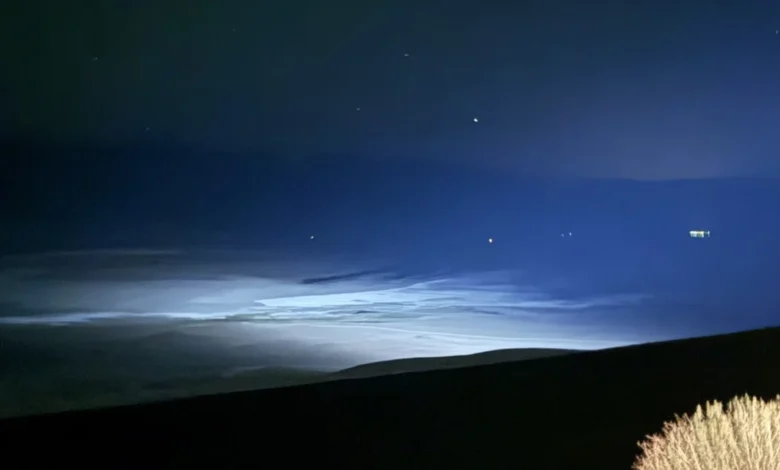
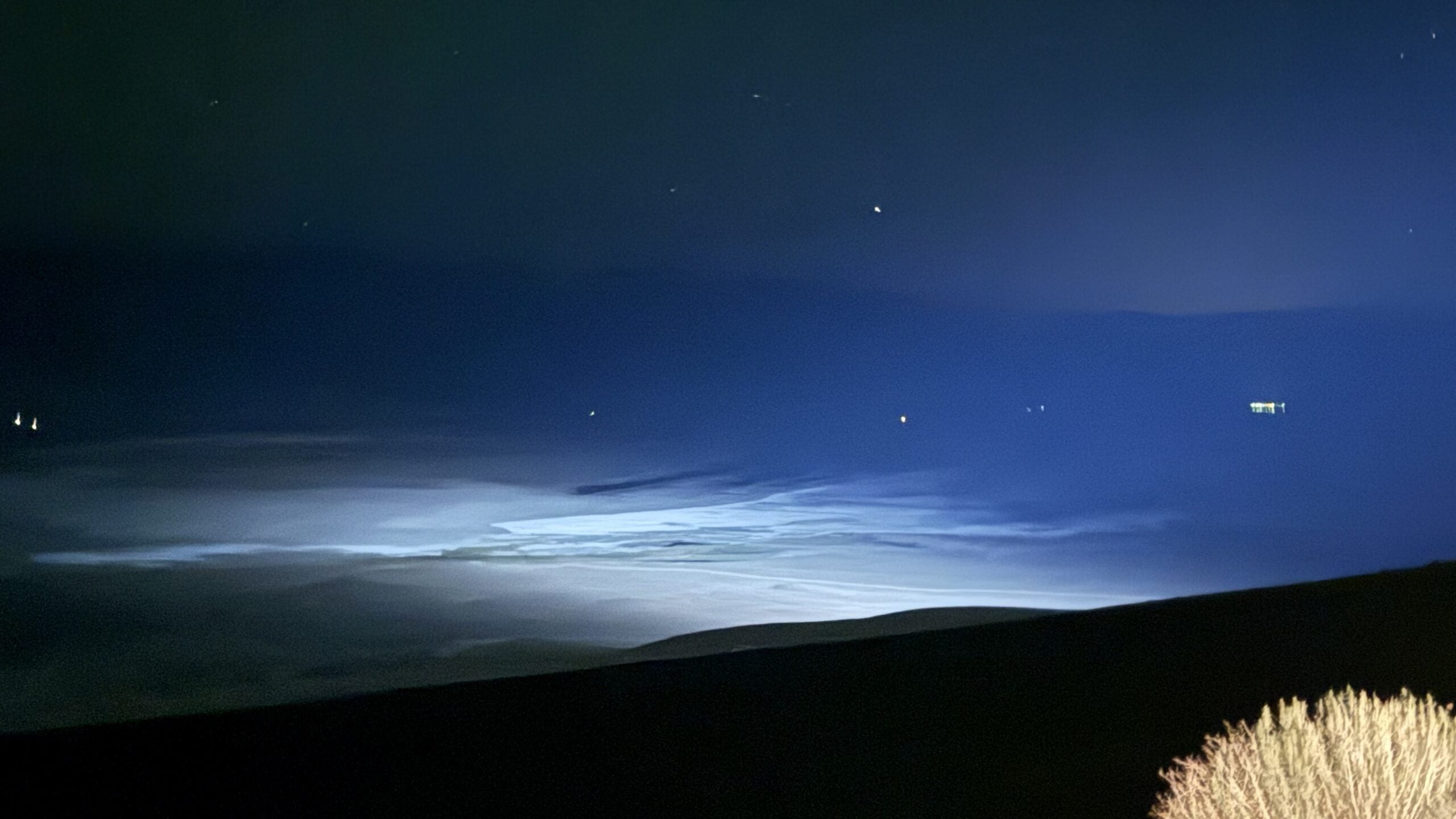
The foothills of Mount Whitney bore witness to an experimental intersection of aerospace engineering and terrestrial emergency response late last year, raising complex questions about the future of night operations. In the pitch-black hours of the night, onlookers across a three-by-ten-mile zone were suddenly bathed in an intense, artificial cone of light. The source was a high-powered ground-based floodlight system operated by Reflect Orbital, a Los Angeles-based startup whose overarching mission is to launch the future of commercial sunlight by deploying a constellation of mirrored satellites into low Earth orbit. These orbital reflectors are designed to redirect sunlight back to Earth on demand, and the ground test was engineered to simulate that celestial phenomenon.
While the startup has pitched its prospective technology for commercial applications spanning agriculture, defense, and entertainment, it has also heavily promoted search and rescue (SAR) as a primary humanitarian use case. To test this claim, a coalition of seasoned rescue volunteers and public safety officials gathered on a country road outside Lone Pine, California. They sought to determine whether a transient light field roughly the size of Manhattan—shining twice as bright as a natural full moon—could genuinely enhance nighttime emergency operations in rugged wilderness terrain.
However, the empirical findings from the field test suggest that space-age illumination may offer far fewer practical advantages than its developers anticipate, sparking broader conversations among public safety agencies, financial officers, and environmental advocates about the true utility and cost of orbital lighting.
A High-Stakes Field Test in the California Desert
The evaluation brought together members of the China Lake Mountain Rescue Group (MRG) and the Inyo County Search and Rescue team. These organizations routinely operate in some of the most punishing and remote geography in the United States, where nighttime rescues are often high-stakes operations dictated by the ticking clock of hypothermia and trauma.
Phillip Cash, operations leader for the China Lake Mountain Rescue Group, approached the experiment with professional curiosity. He noted that his team is largely composed of scientists, engineers, and technicians who naturally embrace technological innovation. Yet, the initial sense of intrigue quickly gave way to pragmatic skepticism.
During the exercise, crews rehearsed standard search-and-rescue workflows twice: once under normal dark-sky conditions and once under the massive artificial light field. The drills encompassed critical operational tasks, including grid searches, stretcher carries, and complex rope rigging.
Initially, Cash observed a minor operational benefit regarding ground mobility. The expansive illumination widened his team’s peripheral vision, reducing the physical hazards of navigating rocky, uneven terrain in the dark and lowering the risk of stepping into hidden crevices or holes. Beyond this baseline improvement, however, the practical efficacy of the light rapidly diminished.
Operational Hurdles and Tactical Limitations
As the drills progressed, several significant limitations emerged, forcing rescue leadership to reassess the technology’s viability. Chief among the concerns was severe glare. While the ground-based test utilized a localized floodlight rather than an orbiting satellite, Cash pointed out that professional wilderness rescuers deliberately wear brimmed hats at night precisely to block stray ambient light and preserve their natural night vision. Introducing a floodlight of this magnitude effectively negated natural dark adaptation.
Furthermore, the structure of the test itself exposed potential hazards for real-world rescue scenarios. Organizers placed highly reflective white pylons in the test field to act as targets instead of human manikins. While these markers aided the rescuers during the simulation, field leads realized that deploying such intense light over lost hikers or distressed subjects could trigger dangerous psychological responses. Rather than remaining stationary to await help—the standard protocol for lost persons—disoriented individuals might be drawn toward the massive light source, potentially wandering deeper into hazardous terrain or rugged wilderness.
Helicopter operations also stood to gain little from the orbital simulation. Aviation crews involved in night rescues already rely heavily on specialized night vision goggles (NVGs) as standard operating procedure. Introducing an overwhelming artificial light field could interfere with NVG calibration and create dangerous visual anomalies for pilots navigating steep mountain corridors.
Ultimately, Cash concluded that the technology offers minimal value to wilderness search and rescue operations. "It’s not going to make a huge difference to wilderness search and rescue except in a few cases," Cash stated in post-test reviews. "We’re pretty good at working at night already."
Financial Realities and Economic Barriers
Beyond operational drawbacks, the economic viability of utilizing commercial orbital mirrors presents an insurmountable barrier for the vast majority of search and rescue organizations. Most volunteer SAR groups in the United States operate as underfunded nonprofits or rely on constrained county budgets, purchasing specialized equipment through community fundraising and grants.
While Reflect Orbital has not yet released an official, finalized rate sheet for commercial services, preliminary industry reports—including investigations by Sky & Telescope—indicate that the company plans to price its services at approximately $5,000 per hour. Achieving the kind of intense, broad-scale illumination required for wilderness operations would necessitate coordinated constellations of multiple satellites, driving operational costs significantly higher.
For context, these projected costs dwarf standard emergency aviation expenses. According to commercial aviation data, an Airbus H125 helicopter—a standard workhorse utilized by agencies like the Kern County Sheriff’s Office—costs roughly $2,500 per hour to operate.
Public safety officials have been candid about these fiscal constraints. Lori Meza, a public information officer for the Kern County Sheriff’s Office, noted that while her agency occasionally procures specialized assets for its SAR teams, contracting commercial orbital services would represent an unprecedented budgetary leap. "Given the circumstances, if we needed it, it would definitely be something we would utilize," Meza acknowledged. "But we have no idea what it would cost."
Cash was far more definitive regarding his organization’s financial capacity. "Most search and rescue teams, at least in California, will not be able to afford it," he stated. "They won’t even think about affording it. We cannot pay for that sort of thing."
Regulatory Landscapes and Environmental Implications
While local rescue groups focus on tactical utility and budgetary constraints, environmental organizations and astronomical watchdogs are raising alarms about the broader implications of deploying thousands of reflective satellites into low Earth orbit.
DarkSky International, a recognized global watchdog advocating for the preservation of night skies, has closely monitored Reflect Orbital’s development trajectory. Drew Reagan, senior marketing and communications manager for DarkSky, emphasized that the fundamental question governing any new technology must be its baseline necessity. "The first question is ‘is it needed?’" Reagan noted. "And in this case, the rescue groups found the need was pretty minimal."
The regulatory pathway for commercial space mirrors has progressed rapidly, often outpacing comprehensive environmental review. The Federal Communications Commission (FCC) has already granted regulatory approval for Reflect Orbital to launch its initial functional satellite. Looking ahead, the company’s long-term deployment roadmap envisions a massive constellation of 50,000 satellites in low Earth orbit by the year 2035.
Independent scientists and conservationists warn that even if these satellites do not actively direct high-intensity light beams toward the Earth’s surface, the sheer density of the constellation will drastically alter the global night environment. The collective reflectivity of tens of thousands of orbital bodies would permanently brighten the night sky across the planet, interfering with astronomical research, astrotourism, and natural ecological cycles.
Environmental impacts extend far beyond human stargazers. Researchers note that widespread artificial brightening of the night sky can disrupt the natural behavior, navigation, and migratory patterns of vulnerable wildlife, including migratory birds and nocturnal insects.
Despite these concerns, public safety administrators maintain an open, albeit cautious, stance toward emerging technologies. Agencies like the Kern County Sheriff’s Office emphasize that they defer to the tactical expertise of frontline volunteer groups when assessing new tools.
For now, however, the intersection of aerospace innovation and backcountry survival appears to have hit a solid wall of practical reality. As wilderness rescue professionals return to their traditional headlamps, night-vision equipment, and fieldcraft, the prospect of purchasing commercial sunlight remains firmly grounded—not in the stars, but in the realm of science fiction.