The Essential Guide to Selecting the Best Baby Beach Tents for Optimal UV Protection and Infant Safety

Taking an infant to the beach is a hallmark of family summer vacations, but the logistics of maintaining a safe environment in an unpredictable outdoor setting require careful planning. Pediatric health experts emphasize that infants under the age of six months should be kept out of direct sunlight entirely, while older babies require rigorous protection against ultraviolet (UV) radiation. As parents increasingly seek alternatives to traditional, cumbersome beach umbrellas, the market for specialized baby beach tents has expanded, offering portable, high-tech solutions designed to mitigate the risks of sun exposure and heat exhaustion.

The Scientific Necessity of Sun Protection for Infants
The physiological vulnerability of infants to solar radiation is well-documented by global health organizations. The American Academy of Dermatology (AAD) and the Skin Cancer Foundation maintain that an infant’s skin is significantly thinner and less pigmented than that of an adult, rendering it highly susceptible to damage from both UVA and UVB rays. Sunburns in early childhood are statistically linked to an increased risk of developing melanoma later in life.

Beyond the immediate threat of thermal burns, infants are less efficient at regulating body temperature, making them prone to heat-related illnesses such as heat exhaustion and heatstroke. The implementation of a structured, shaded micro-environment is not merely a convenience; it is a critical component of dermatological and physiological health management during outdoor recreation. Professional guidelines suggest a multi-layered approach to sun safety: wide-brimmed hats, UV-protective swimwear covering the majority of the body, and the utilization of physical shade structures.

Evolution of Beach Shade Technology
Historically, families relied on heavy, difficult-to-anchor umbrellas that offered limited coverage and required constant adjustment as the sun’s position changed. The last decade has seen a technological shift toward pop-up, tension-frame shelters. These modern tents utilize synthetic, tight-weave fabrics treated with specialized coatings to achieve a Ultraviolet Protection Factor (UPF) of 50+.

A UPF 50+ rating indicates that the fabric allows only 1/50th (or 2%) of the sun’s UV radiation to penetrate the material. This measurement is distinct from the Sun Protection Factor (SPF) found in lotions, which measures the time it takes for skin to redden; UPF is a more comprehensive metric for textile performance against both UVA and UVB spectra.

Evaluating Key Features for Consumer Safety
When selecting a protective shelter, parents must evaluate several technical criteria to ensure the safety and utility of the product.

- Structural Integrity and Anchoring: The coastal environment is characterized by high-velocity wind, which can compromise the stability of lightweight tents. Modern units now feature integrated sand pockets and heavy-duty stakes. Experts advise that a tent failing to anchor securely poses a safety risk, as sudden gusts can cause the structure to collapse or become a projectile.
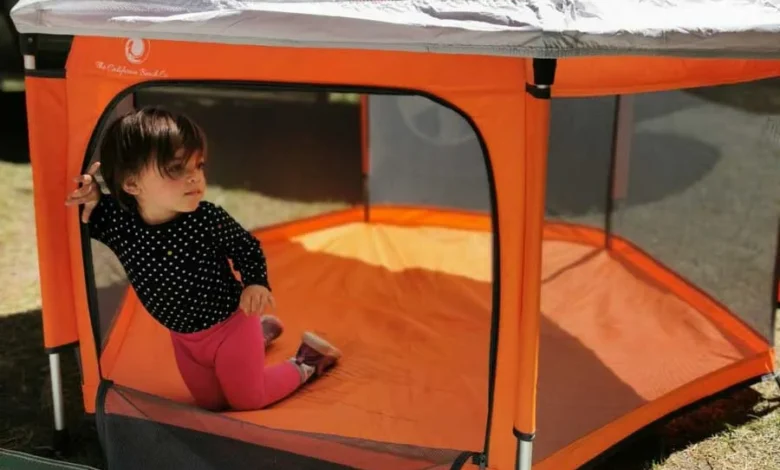
- Ventilation and Airflow: The "greenhouse effect" is a significant concern inside enclosed fabric structures. To prevent the accumulation of heat, high-quality shelters are designed with 360-degree mesh ventilation or strategically placed rear windows. This airflow is essential to maintaining an ambient temperature safe for a sleeping or resting infant.
- Ergonomic Design for Caregivers: Modern innovations include rear-zipper access points and extended floors. These features are designed to facilitate essential caregiving tasks, such as diaper changes or nursing, without requiring the parent to move the child into direct sunlight or sand-heavy areas.
- Portability and Ease of Deployment: The "pop-up" mechanism has revolutionized setup times, allowing for near-instant deployment. However, the "twist-and-fold" breakdown process remains a point of contention for some users. Manufacturers are increasingly providing standardized video tutorials to assist users in mastering the folding technique, ensuring that the shelter remains portable and durable for frequent travel.
Comparative Analysis of Current Market Offerings
The current market offers a spectrum of products tailored to different family needs, ranging from minimalist infant-only shades to comprehensive family cabanas.

- The Pop-Up Utility Models: Products such as the WolfWise AquaBreeze A10 represent the standard for families seeking a balance between rapid setup and spatial efficiency. By utilizing mesh windows and high-tensile frames, these units provide necessary airflow while maintaining a compact footprint in a stroller or travel bag.
- The Splash-Pool Hybrid Designs: Innovations such as the Monobeach or the Babymoov Aquani incorporate a shallow, waterproof base. These models allow for water play within the shade, permitting the infant to cool off without the risks associated with ocean currents or direct sun exposure. These units must, however, be used with strict adult supervision, as water-related incidents can occur in even minimal depths.
- Family-Scale Cabanas: For families with multiple children, larger cabanas like the Gorich series provide an extended interior volume. While these sacrifice some of the extreme portability of smaller infant tents, they offer a communal space for parents and children, which can be particularly useful for long-duration stays at the beach.
The Role of Supplemental Safety Measures
Despite the efficacy of high-UPF tents, experts clarify that a tent is not a standalone solution. The most effective sun-safety strategy is redundant in nature. Even inside a tent, reflective surfaces—such as white sand or water—can bounce UV rays into the shelter, increasing the "diffuse" UV exposure.

Consequently, the tent serves as the primary barrier, but must be augmented by protective clothing. Furthermore, parents are advised to consult with their pediatrician regarding the appropriate use of sunscreen for infants under six months of age, as the chemical composition of certain products may not be suitable for developing skin.

Long-term Implications and Future Trends
The rise in demand for specialized baby gear reflects a broader trend of "active parenting," where families are unwilling to sacrifice outdoor lifestyle engagement due to the presence of young children. This has spurred a segment of the travel and outdoor industry to prioritize compact, lightweight, and multi-functional designs.

Industry analysts observe that as material science improves, we can expect future iterations of these tents to incorporate even thinner, more breathable, and lighter-weight fabrics. Additionally, the integration of smart-fabric sensors—which could alert parents to internal temperature fluctuations via a smartphone app—is a potential frontier for the next generation of infant shade products.

Conclusion
The selection of a baby beach tent should be driven by a prioritized assessment of safety, stability, and ventilation. By moving away from legacy shade solutions and adopting modern, UPF-rated, ventilated structures, families can significantly reduce the risk of UV damage and heat-related illness. When combined with appropriate clothing, sun-hats, and rigorous attention to local weather conditions, a high-quality beach tent transforms a potentially hazardous environment into a safe, comfortable, and enjoyable space for the youngest family members. As with all infant products, users should verify the manufacturer’s age recommendations and follow all assembly instructions to ensure the structural integrity of the device in varied environmental conditions.