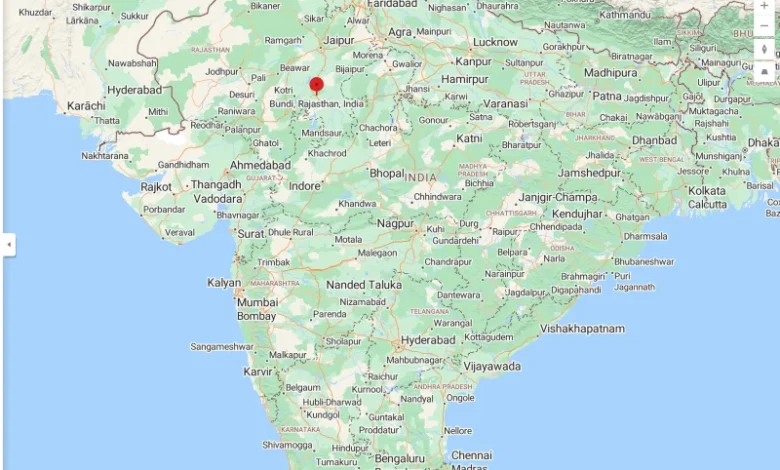
Nestled within the semi-arid expanses of the Hadoti region in Rajasthan, India, the historic town of Bundi offers a distinct architectural and cultural departure from the high-density urban centers typically associated with South Asian tourism. Situated geographically between the major economic and tourism hubs of Jaipur and Udaipur, Bundi has increasingly drawn attention from travelers and regional planners seeking alternatives to heavily trafficked itineraries. While contemporary travel statistics underscore India’s broader post-pandemic tourism resurgence—with domestic and international arrivals steadily climbing toward pre-2020 benchmarks—smaller municipalities like Bundi represent a growing sector focused on heritage preservation, slow travel, and rural economic decentralization.

Background Context and Geographic Significance
Bundi’s historical prominence is deeply rooted in its status as a former princely state ruled by the Hada Chauhan Rajputs. Founded in the mid-14th century, the region developed a distinct political and artistic identity, culminating in the establishment of the Bundi school of miniature painting. Unlike the sprawling commercial metropolises of New Delhi or Mumbai, Bundi’s urban layout remains largely defined by its topography: a dense labyrinth of pastel-blue-painted dwellings clinging to the foothills of the Aravalli range, dominated by centuries-old fortifications.
Geographically, the town serves as a strategic crossroads within southeastern Rajasthan. Situated approximately 200 kilometers south of Jaipur and roughly 35 kilometers north of Kota—a major industrial and railway junction—Bundi is accessible via a well-established network of national highways and rail corridors. Transportation analyses indicate that regional infrastructure upgrades, including expanded expressways connecting New Delhi to Rajasthan, have reduced overland transit times, making off-the-beaten-path destinations increasingly accessible to regional and international visitors.

Chronology of Key Heritage Sites and Architectural Evolution
The architectural chronology of Bundi spans several centuries of dynastic rule, showcasing a transition from defensive military engineering to refined royal aesthetics.
Constructed beginning in 1607 AD under the patronage of Rao Raja Ratan Singh Hada, the Garh Palace (Bundi Palace) stands as one of the premier examples of Rajput architecture. Architectural historians note that the palace complex evolved in phases over successive reigns, resulting in an assemblage of courtyards, terraced pavilions, and specialized chambers. Among its notable interior spaces are the Chhatra Mahal, Phool Mahal, and Badal Mahal, which house extensive collections of murals illustrating mythological narratives and courtly life. The Chitrashala, an open-air art gallery within the palace grounds, is internationally recognized by art conservators for preserving some of the finest surviving examples of traditional Rajasthani wall painting from the 17th and 18th centuries.

Perched higher along the ridge is the Taragarh Fortress, originally established in the 8th century AD by Ajayaraja Chauhan. Functioning primarily as a military installation rather than a royal residence, the fortress features extensive ramparts and subterranean water systems designed to withstand prolonged sieges. Preservation authorities have emphasized the fortress’s structural resilience, noting that despite centuries of exposure to weather and historical conflicts, its primary perimeter walls remain largely intact.
Hydrological Engineering and the Stepwell Network
One of Bundi’s most defining characteristics is its historical hydraulic infrastructure, specifically its network of stepwells, locally known as baoris. Constructed primarily between the 16th and 18th centuries, these multi-tiered architectural structures served a dual purpose: securing a reliable water supply during arid periods and functioning as communal public spaces for religious ceremonies and social gatherings.

Among the approximately 50 registered stepwells in the district, Raniji-ki-Baori (Queen’s Stepwell), constructed in 1699 AD by Queen Nathavati, is the most prominent. Engineering evaluations of these sites highlight the advanced mathematical precision employed in their construction, featuring intricately carved pillars, high-arched portals, and descending geometric staircases designed to accommodate fluctuating water tables. Preservationists and municipal planners have increasingly turned their focus toward these sites, advocating for coordinated conservation frameworks to address structural weathering and sedimentation.
Socio-Economic Implications of Heritage Tourism
The gradual influx of cultural heritage tourists to Bundi has generated notable socio-economic shifts within the local community. Economically, the town’s tourism sector relies heavily on small-scale hospitality enterprises, family-run guesthouses, and artisanal markets such as Sadar Bazaar, where traditional crafts—including Kota Doria textiles, hand-knotted carpets, and miniature paintings—are produced and traded.

Local municipal and tourism development reports indicate that sustainable tourism initiatives have contributed to employment diversification in the Hadoti region. By distributing visitor foot traffic away from saturated hubs like Agra and Jaipur, secondary destinations like Bundi help mitigate urban overcrowding while stimulating regional economic growth. Furthermore, community-led initiatives aimed at preserving local arts, architecture, and seasonal events—such as the annual Bundi Festival and regional monsoon celebrations—have reinforced cultural continuity among local populations, which comprise a diverse demographic mix of Hindu, Muslim, and Jain communities.
Logistical Access and Travel Infrastructure
For contemporary travelers planning an itinerary to Bundi, logistical frameworks are well-defined by regional transport networks. The nearest domestic and international air terminal is located in Jaipur, approximately 200 kilometers to the north, from which direct bus and taxi services connect to Bundi via a three-and-a-half-hour highway journey. Rail connectivity remains a cost-effective alternative, with Kota functioning as the primary railhead for long-distance services originating from New Delhi, Mumbai, and other major metropolitan centers.

Infrastructure assessments by regional tourism boards emphasize the importance of maintaining balanced visitor capacities to preserve the town’s historical integrity. As travel trends increasingly favor authentic, community-centric experiences over mass tourism, Bundi’s blend of preserved royal architecture, historical hydrology, and slow-paced community life positions it as a significant case study in sustainable heritage management within modern India.