Jurassic Quest Returns: How the Popular Drive-Thru Dinosaur Experience Adapts to Modern Family Entertainment

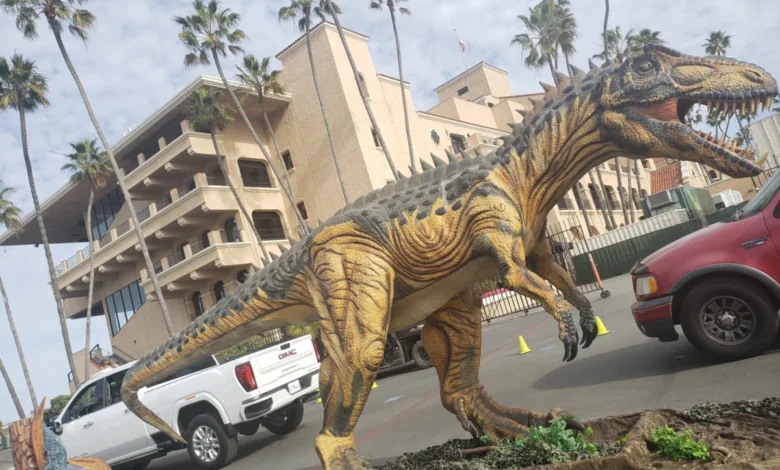
The nation’s premier traveling dinosaur exhibit, Jurassic Quest, has officially announced its highly anticipated return to select cities across the United States. Following successful runs that drew hundreds of thousands of families seeking safe, outdoor entertainment during times of public health restrictions, the attraction continues to deploy its innovative drive-thru format. Among its past notable engagements was a successful multi-week run at the Del Mar Fairgrounds in Southern California, which highlighted the operational feasibility and enduring consumer demand for large-scale, mobile entertainment that prioritizes safety without sacrificing scale or spectacle.
As event organizers navigate the shifting landscape of family-oriented leisure, Jurassic Quest stands out as a prime example of operational adaptation. By transforming traditional indoor and open-air walking exhibitions into a seamless vehicular journey, the production company has managed to keep the prehistoric world accessible to audiences nationwide. This comprehensive overview examines the educational components, animatronic technology, pricing models, logistical frameworks, and broader economic implications of the touring attraction.
Main Facts and Attraction Overview
Jurassic Quest is designed to immerse visitors in the Mesozoic Era from the comfort and safety of their own automobiles. The core attraction features dozens of life-sized, scientifically accurate animatronic dinosaurs, ranging from towering long-necked sauropods to ferocious apex predators like the Tyrannosaurus rex. Unlike static museum displays or stationary sculptures, these creatures are engineered with pneumatic and robotic systems that allow them to blink, breathe, move their tails, and roar, creating a dynamic visual spectacle for attendees of all ages.
The experience is structured as a self-paced vehicular tour. Guests tune their vehicle radios to a dedicated, synchronized audio channel or access a mobile streaming link that guides them through the chronological epochs of the dinosaur era. The audio tour provides detailed scientific information regarding each species, detailing their diets, habitats, and behavioral traits based on current paleontological research.
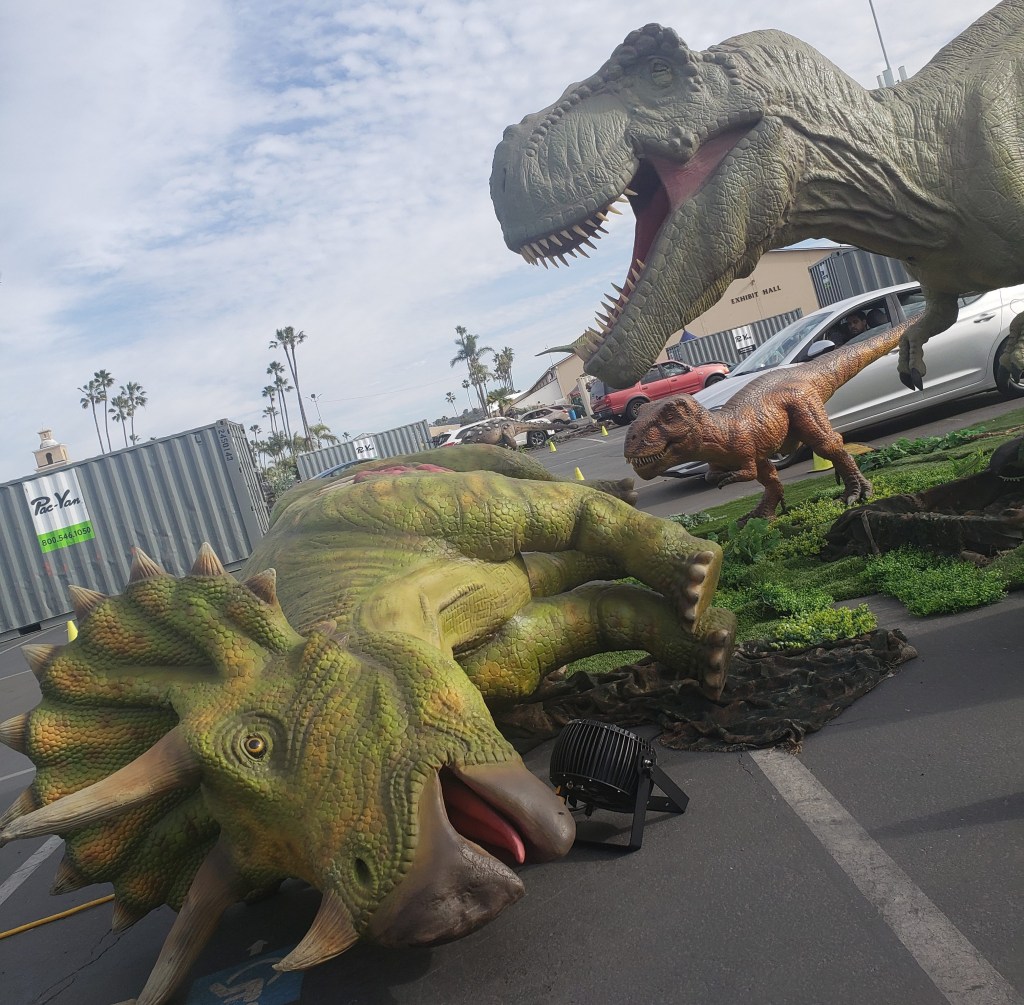
To enhance the experience, organizers offer tiered add-on packages—such as the Tracker Pack—which include physical activity books, dinosaur excavation kits, and themed memorabilia delivered directly to vehicles prior to entry. Additionally, the event layout typically incorporates carnival-style food vendors at the staging areas and merchandise booths at the conclusion of the tour, ensuring a comprehensive visitor experience while maintaining strict operational controls.
Chronology and Evolution of the Touring Model
The genesis of Jurassic Quest dates back to its establishment as an indoor walking exhibition, where families would navigate convention centers filled with fossil replicas, dinosaur rides, and interactive science stations. However, the onset of public health challenges in 2020 necessitated a radical restructuring of the entertainment industry.
Recognizing the urgent need for socially distanced activities that allowed families to leave their homes safely, Jurassic Quest engineers and event producers conceptualized the drive-thru model. The pilot iterations launched in late summer and autumn of 2020, quickly expanding into a nationwide tour by early 2021.
The engagement at the Del Mar Fairgrounds in January 2021 served as a benchmark for the tour’s operational success on the West Coast. Operating under strict local health guidelines, the venue processed thousands of vehicles per weekend. The synchronized audio guide system was refined during this period to accommodate varying traffic speeds, ensuring that families could pause or decelerate to observe specific animatronics without missing narrative cues. Following the stabilization of public health conditions, producers retained elements of the drive-thru model alongside traditional walking formats, offering venues the flexibility to cater to diverse regional preferences.
Financial Architecture and Accessibility
One of the defining structural differences between Jurassic Quest and traditional theme park attractions is its pricing methodology. While major amusement parks typically levy per-person admission fees that can rapidly escalate for large families, Jurassic Quest implements a flat-rate pricing structure calculated per vehicle.

Standard vehicle admission typically starts at approximately $49, regardless of whether the car carries two passengers or a full capacity of family members. This pricing strategy has been widely praised by consumer advocates and parenting publications for lowering the financial barrier to entry for multi-child families.
Optional enhancements, designated as "Quest Packs," range in price from $15 to $50, offering supplementary educational toys, personalized safari lanyards, and surprise merchandise. By unbundling these souvenirs from the base ticket price, parents retain control over their total expenditure while still providing customized experiences for children celebrating birthdays or milestones.
Educational Value and Scientific Collaboration
Despite its commercial appeal as an entertainment spectacle, Jurassic Quest places a strong emphasis on paleontology and education. Event organizers collaborate with leading paleontologists to ensure that the physical characteristics, coloration, and behavioral representations of the animatronic dinosaurs reflect contemporary scientific consensus.
The accompanying audio tour bridges the gap between entertainment and academia. As vehicles traverse the exhibit, the narrative introduces listeners to concepts such as fossilization, geological epochs (Triassic, Jurassic, and Cretaceous), and the ecological niches occupied by specific dinosaurs. By translating complex scientific data into accessible, family-friendly dialogue, the tour encourages active listening and post-visit inquiry among young learners. Educators have noted that children frequently retain specific biological facts presented during the tour, demonstrating the efficacy of immersive, experiential learning models.
Logistical Framework and Crowd Management
Executing a drive-thru exhibition of this magnitude requires sophisticated logistical planning. Host venues—such as fairgrounds, speedways, and large sports complexes—possess the expansive asphalt acreage necessary to queue hundreds of vehicles simultaneously without causing local traffic congestion on public thoroughfares.

Timed-entry ticketing systems are utilized to regulate the flow of traffic, ensuring that vehicles are spaced adequately to prevent bottlenecks and maintain the illusion of an isolated prehistoric journey. Venue operators coordinate closely with local law enforcement and traffic management personnel to establish clear directional signage and dedicated holding lanes. Furthermore, essential infrastructure, including accessible restroom facilities, is strategically positioned at the conclusion of the route to accommodate guests after completing the 45-to-60-minute journey.
Broader Impact and Industry Implications
The resilience and adaptability demonstrated by Jurassic Quest offer valuable insights into the broader evolution of the live-events and entertainment sector. As consumer expectations shift toward experiences that offer both high production value and customizable safety parameters, touring intellectual properties must innovate continuously.
The success of the vehicular exhibition model proves that audiences are willing to embrace unconventional formats for large-scale entertainment. For regional fairgrounds and exhibition centers—many of which experienced severe revenue contractions during periods of event cancellations—hosting traveling productions like Jurassic Quest provides a vital economic boost. These events generate temporary local employment, stimulate ancillary spending at nearby food and retail establishments, and drive utilization of under-resourced public spaces.
As Jurassic Quest continues its multi-city itinerary, its ongoing popularity signals a robust consumer appetite for family-oriented, educational entertainment that successfully merges theatrical showmanship with rigorous scientific context. Prospective attendees are encouraged to consult the official Jurassic Quest website to verify local tour dates, secure mandatory advance reservations, and review specific venue guidelines prior to arrival.