The Iconic Plaza Hotel in New York City Will Close for a Four-Year Restoration Project

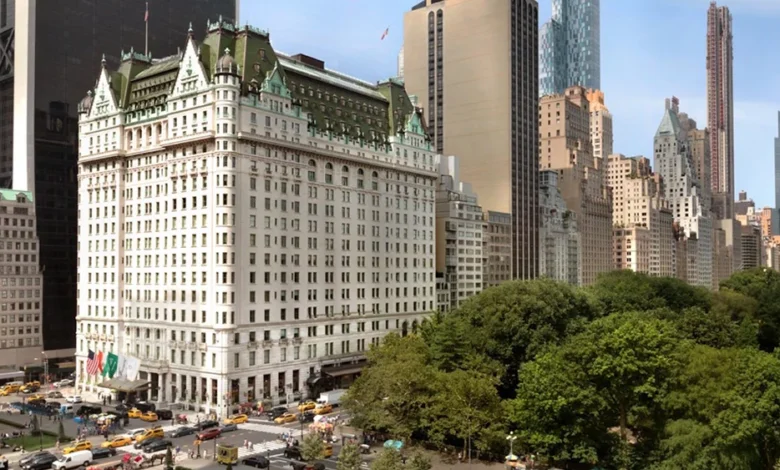
The Plaza Hotel, a cornerstone of New York City’s architectural and cultural identity, has announced that it will shutter its operations for at least four years to facilitate a comprehensive, large-scale restoration of its historic exterior. The closure, which is scheduled to commence in January, marks the beginning of an ambitious preservation effort aimed at safeguarding the 18-story landmark for future generations. While the hotel’s operator, Fairmont Hotels & Resorts, has characterized the project as a necessary measure for the building’s structural longevity, the announcement signals a temporary end to a century-old tradition of luxury hospitality at the corner of Fifth Avenue and Central Park South.
The decision to pause operations—which will result in the closure of all 282 guest rooms and the legendary Palm Court, famous for its afternoon tea service—comes as the building navigates the complex regulatory environment associated with its status as a protected New York City landmark.
A Legacy Defined by Architectural Grandeur
Since its opening in 1907, the Plaza Hotel has occupied a singular position in the American cultural consciousness. Designed by the visionary architect Henry Janeway Hardenbergh, the building was conceived as a French Renaissance-inspired chateau, reflecting the opulence of the Gilded Age. Its exterior, defined by its white brick and limestone facade, has served as a silent witness to over a century of New York City history.
The structure’s significance extends far beyond its physical footprint. Over the decades, it has hosted a litany of notable figures, from the Beatles to fashion icon Christian Dior. Its cinematic legacy is equally profound; the Plaza has served as a key set piece in films ranging from the 1973 classic The Way We Were to Baz Luhrmann’s 2013 adaptation of The Great Gatsby. Furthermore, the building is perhaps most synonymous with the fictional character Eloise, whose adventures within the hotel walls introduced the property to generations of readers worldwide.
The Logistics of a Landmark Restoration
The impending restoration is not merely a cosmetic upgrade but a rigorous engineering undertaking. According to a formal statement released by Fairmont Hotels & Resorts, the project is dictated by the unique requirements of maintaining a landmark-protected property.
“Understanding the unique place in New York City’s architectural heritage and cultural history it holds, the Plaza Hotel is advancing plans for repair and restoration works to its landmark-protected façade,” the statement read. “The undertaking reflects the complexity of maintaining a property of such architectural and historical significance, with careful consideration given to preservation requirements and the building’s long-term care, as well as the safety of our guests, employees, and the wider community.”
While specific architectural details regarding the restoration remain shielded from the public eye, industry experts suggest that such a massive timeline implies a comprehensive overhaul. This will likely involve the meticulous cleaning, repair, and potential replacement of deteriorating stonework, the reinforcement of the building’s intricate ornamental features, and the updating of building systems that interface with the exterior envelope. Given the building’s age, the project must adhere to strict guidelines set by the New York City Landmarks Preservation Commission, ensuring that every modification preserves the historical integrity of Hardenbergh’s original vision.
Chronology of the Plaza’s Transformation
The history of the Plaza is marked by several pivotal moments of evolution. A brief timeline illustrates the building’s constant adaptation to changing economic and social landscapes:

- 1907: The Plaza Hotel officially opens its doors to the public, setting a new standard for luxury in Manhattan.
- 1969: The building is officially designated a New York City landmark, ensuring its exterior cannot be altered without government oversight.
- 2005: The hotel undergoes a massive $450 million renovation, a significant portion of which involved the conversion of many hotel rooms into 181 private luxury condominiums.
- 2025: Plans are finalized for the upcoming four-year exterior restoration project.
- 2026 (January): The official commencement of the restoration, marking the start of the hotel’s longest period of inactivity in its history.
- 2031 (Expected): Targeted completion date for the restoration of the facade.
The Human Element and Labor Implications
The temporary closure carries significant consequences for the Plaza’s workforce. The Hotel & Gaming Trades Council, the union representing the 378 staff members employed at the hotel, is currently working to manage the transition. As the hotel ceases operations, the union’s primary objective is to facilitate the placement of these workers into alternative roles within the broader hospitality sector.
The loss of employment at such a prestigious institution is a significant event for the local labor market. The Plaza has long been a major employer in the Midtown Manhattan area, and the closure serves as a stark reminder of how physical infrastructure projects can create ripples that affect hundreds of families. Union representatives have emphasized that they will be working closely with management to ensure that the transition is handled with the appropriate support and severance considerations for the affected employees.
Uncertainties Regarding Private Residences
One of the most pressing questions arising from the announcement concerns the 181 private condominiums housed within the building. These units, which are often valued in the tens of millions of dollars, represent a significant portion of the property’s total value. Fairmont has not yet provided clarity on whether residents will be permitted to remain in their homes while the exterior restoration is underway.
The logistical challenge of conducting major exterior work—which involves scaffolding, construction noise, and restricted access—while maintaining residential occupancy is immense. Residents may face years of significant disruption, potentially impacting property values or the ability to occupy their units during the construction phase. Analysts are closely watching how the building management coordinates with these high-net-worth stakeholders, as any conflict could lead to legal complications or further delays to the project timeline.
Economic and Cultural Impact
The temporary closure of the Plaza is a symbolic blow to the New York City luxury tourism market. The Palm Court, in particular, acts as a primary draw for international travelers and domestic tourists alike. With its stained-glass dome and long-standing reputation for elite service, the venue is a staple of the NYC experience. Its absence from the city’s culinary scene for four years will undoubtedly create a vacuum in the high-end hospitality market.
From an economic perspective, the restoration project represents a substantial capital investment in Manhattan’s real estate. By prioritizing the preservation of the facade, the owners are making a long-term bet on the enduring value of the Plaza as a landmark. While the immediate loss of revenue from hotel operations is substantial, the proactive maintenance of such a building is often required to avoid more catastrophic structural issues that could lead to even longer closures in the future.
Analysis: A Necessary Pivot
The move is, in many ways, an act of "preservation by necessity." As buildings of the early 20th century age, the cost of deferring maintenance often compounds exponentially. The Plaza’s management appears to be taking a conservative approach, preferring a long, comprehensive project over a series of smaller, disruptive repairs.
Furthermore, this project may serve as a template for other historic properties in New York City that are currently grappling with the tension between modern safety requirements and preservation mandates. The success of this endeavor will depend on the management’s ability to coordinate with the city’s various stakeholders, maintain transparency with the public, and honor the architectural legacy of a building that has become synonymous with the spirit of New York.
As the hotel prepares to go dark in early 2026, the city will look on with both nostalgia and expectation. The Plaza Hotel is more than a building; it is a cultural artifact that has survived wars, economic depressions, and the rapid urbanization of Manhattan. Its four-year hiatus is, in the scope of its history, a brief period of quietude before it returns to its role as the centerpiece of Fifth Avenue. For now, the world will have to wait until 2031 to witness the next chapter of this storied establishment.