The fall climbing season for Carstenz Pyramid, the crowning achievement of the Seven Summits in Oceania, has been abruptly terminated as an unprecedented wave of wildfires ravages the Indonesian province of Papua. Local logistics providers, including the primary operator Tropic Adventure Papua, have confirmed that the combination of hazardous air quality, zero visibility, and the logistical impossibility of helicopter transport has rendered the 4,884-meter peak inaccessible for the remainder of the year. This closure marks a significant blow to the international mountaineering community, as expeditions that had already deployed to the staging hub of Timika have been forced to withdraw.
The crisis is rooted in an atmospheric anomaly described by climatologists as a "Super Niño." This manifestation of the El Niño-Southern Oscillation (ENSO) has introduced a prolonged, severe drought across the Indonesian archipelago. The lack of precipitation has desiccated the dense tropical vegetation, turning the lush landscape into a tinderbox. With no immediate relief from the rainfall usually expected in the region, the fires have grown in both scope and intensity, creating a persistent, toxic haze that now blankets vast swathes of the island.
A Chronology of the Crisis
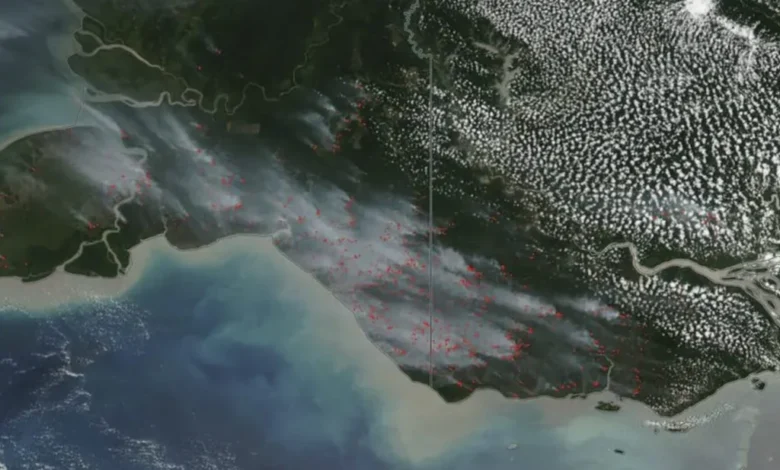
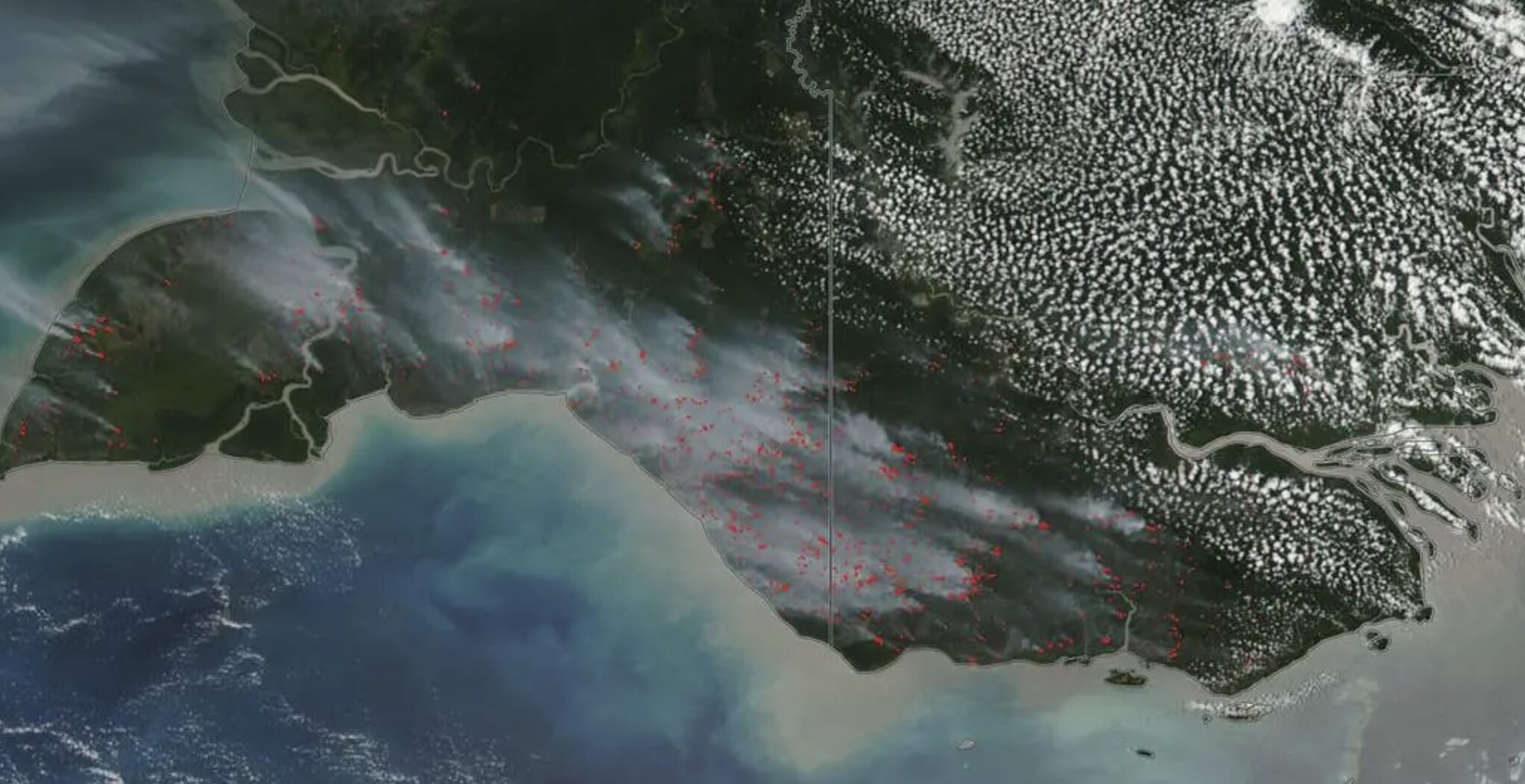
The escalation of the current wildfire emergency can be traced back to the onset of the extreme dry season, which began significantly earlier than in previous years. By late September, satellite imagery from NASA began to show an alarming density of thermal anomalies across the Central Highlands of Papua.
Throughout October, the situation deteriorated rapidly. As air quality index (AQI) monitors in and around the region surged to hazardous levels, the aerial transport routes—which are the lifeline for any expedition attempting the Carstenz Pyramid—were grounded. Because the surrounding jungle terrain is virtually impassable by foot, and the standard access protocol relies heavily on helicopter extraction to Base Camp, the lack of visibility effectively shuttered the mountain. By early November, major outfitting firms began the formal process of notifying clients that the logistical window had closed. For those who had already traveled to Timika, the reality was a quiet, disappointing return home, with not a single summit achieved during this peak operational window.
Environmental Catastrophe Beyond the Peaks
While the closure of the Carstenz Pyramid is a logistical failure for the climbing industry, it is a secondary concern when compared to the broader ecological disaster currently unfolding in Indonesia, Malaysia, and Singapore. The fires are not merely affecting high-altitude climbing zones; they are decimating the biodiversity of the rainforests.
The impact on the orangutan population, in particular, has become a global focal point. Conservation groups have reported a surge in rescue operations, with primates being pulled from the tree canopy as their habitats vanish into smoke. Viral footage showing a young orangutan struggling to navigate the burning forest has underscored the desperation of the situation. While some rescue services have managed to return rehabilitated animals to pockets of forest where fires have been contained, the long-term viability of these ecosystems remains in jeopardy.
Data from the Indonesian Ministry of Environment and Forestry suggests that this year’s fire season is significantly more severe than the historical average, with the Super Niño exacerbating human-led land clearing activities. The "incalculable" damage to the ecosystem includes the destruction of peatlands, which, when burned, release massive quantities of sequestered carbon into the atmosphere, further compounding the global climate crisis.
Mountaineering Logistics in a High-Risk Region
Carstenz Pyramid, or Puncak Jaya, has long been one of the most complex objectives for global climbers. Unlike the peaks of the Himalayas or the Andes, where mountain culture is deeply integrated into the local economy, the Carstenz region presents a unique set of variables. Access is strictly controlled, and the mountain is situated in an area where major mining operations—specifically the Grasberg mine—heavily influence infrastructure and airspace management.
Historically, the mountain has faced closures due to political instability and local tribal conflicts. However, the current environmental closure is a stark reminder of the increasing volatility of the world’s most remote peaks in the face of climate change. Professional mountaineers, including renowned guide Garrett Madison, have expressed their concern, emphasizing that the welfare of the local population takes precedence over any athletic endeavor. "Our thoughts are with the local communities affected," Madison noted, highlighting the humanitarian dimension of the disaster as local residents struggle with the immediate health effects of smoke inhalation and the loss of agricultural land.
Economic and Future Implications
The cancellation of the season represents a significant financial loss for the local service industry in Timika and the specialized expedition firms that operate in the region. Planning for these expeditions often begins 12 to 18 months in advance, involving complex permit acquisitions, flight arrangements, and international logistics.
Looking toward 2027, the outlook remains cautiously optimistic, provided the current climatic patterns stabilize. Outfitters are already coordinating with local authorities to reschedule expeditions for the March and October windows of the coming year. However, there is a growing realization within the mountaineering community that the "climb-at-any-time" reputation of the Carstenz Pyramid may be a relic of a more stable climate era.
The industry is now facing a period of introspection regarding how it monitors and prepares for regional climate events. Real-time air quality tracking, such as the resources provided by IQAir, has become a mandatory tool for expedition leaders, and the reliance on helicopters for access may require more robust contingency planning in the future. As the fires continue to burn, the focus remains on containment and the safety of the local communities. For now, the summit of Oceania remains silent, hidden behind a thick, grey shroud of smoke, serving as a sobering testament to the reach of a changing global climate.
Expert Analysis: The Intersection of Climate and Adventure
The shift in the frequency and intensity of extreme weather events is forcing a recalibration of how adventure tourism operates. In the case of the 2026 Papua wildfires, the "Super Niño" has acted as a force multiplier for existing environmental stressors. When combined with the inherent isolation of the Puncak Jaya region, the result is a total loss of accessibility.
Climatologists note that while El Niño is a natural phenomenon, the baseline temperature increases caused by anthropogenic climate change are raising the "floor" for these events, making droughts longer and fires more difficult to suppress. For the mountaineering community, this necessitates a more nuanced approach to risk assessment. It is no longer sufficient to monitor political stability or standard seasonal weather patterns; organizers must now integrate regional forest fire risk and air quality modeling into their pre-expedition protocols.
As the international community watches the situation in Indonesia unfold, the closure of the Carstenz Pyramid stands as a microcosm of a larger reality: the most remote corners of the globe are not immune to the cascading effects of global environmental change. The 2027 season will likely see a renewed focus on sustainability and a heightened awareness of the fragility of the regions that host these high-altitude expeditions. For now, the climbing world must wait for the air to clear and the rains to return to the highland forests of Papua.