Unlocking Delta Stays: How SkyMiles Credit Card Holders Can Maximize Up to $250 in Annual Hotel Credits

Co-branded airline credit cards have long been evaluated by consumers through the lens of traditional perks—free checked bags, priority boarding, and accelerated mileage accumulation on everyday spending. However, as the co-branded credit card market becomes increasingly competitive, card issuers like American Express and airline partners like Delta Air Lines have continuously shifted their value propositions toward calendar-year statement credits. Among the most lucrative, yet frequently misunderstood, additions to Delta’s card portfolio is the Delta Stays credit. Ranging from $100 to $250 annually depending on the specific card tier, this benefit allows cardholders to offset the cost of prepaid hotels, resorts, and vacation rentals.
Understanding how to navigate this Expedia-powered platform, recognizing its limitations regarding hotel loyalty programs, and performing diligent price comparisons are essential steps for travelers hoping to extract maximum value without inadvertently overpaying for accommodations.
Background and Strategic Evolution of Airline Card Perks
Over the past several years, major domestic carriers have substantially restructured their cobranded card portfolios. Escalating annual fees have been met by airlines with a corresponding introduction of lifestyle and travel-oriented statement credits designed to offset these costs. Delta Air Lines and American Express followed this industry trend by embedding hotel booking credits across nearly their entire suite of personal and business SkyMiles credit cards.
The strategic intent behind Delta Stays is clear: airlines aim to capture a larger share of the total travel wallet. Historically, a consumer might use a Delta credit card to book a flight, but subsequently book their hotel through a competitor, an online travel agency (OTA) like Booking.com or Expedia, or directly with a hotel brand. By introducing Delta Stays—a dedicated travel portal powered by Expedia—Delta captures the auxiliary lodging revenue while deepening customer engagement within its proprietary ecosystem.
However, utilizing a third-party portal introduces specific structural friction points, particularly regarding hotel elite status recognition, point accrual, and baseline room pricing. To evaluate whether these credits represent genuine savings or merely clever marketing, travelers must examine the mechanics of how the credits are distributed, redeemed, and valued in practice.
Breakdown of Delta Stays Credits by Card Tier
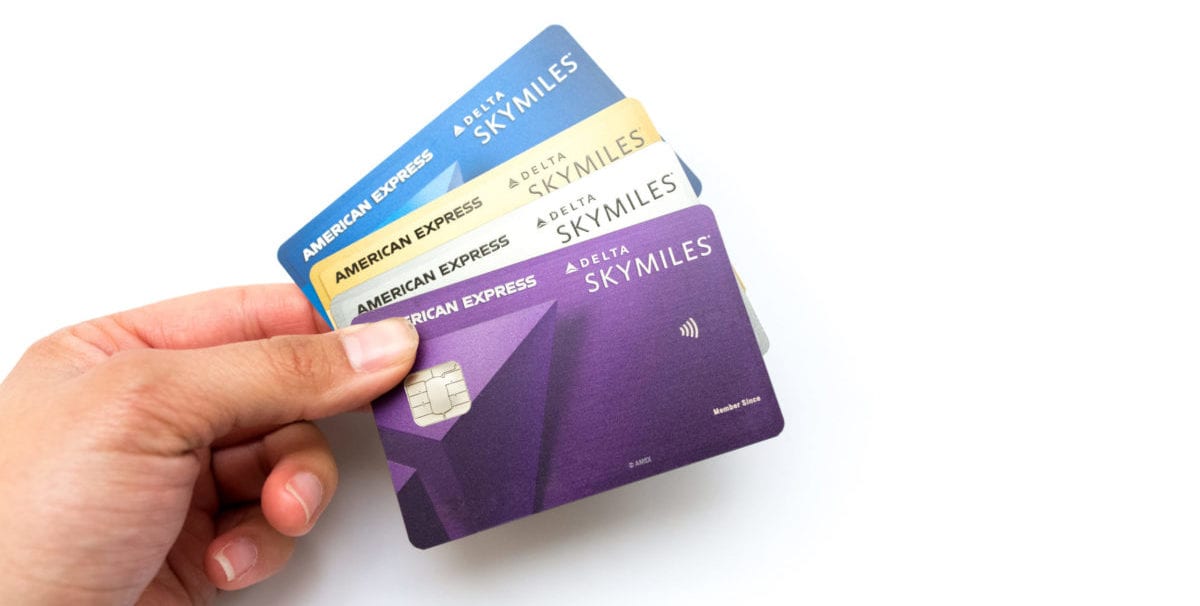
Almost all personal and business Delta SkyMiles credit cards issued by American Express feature an annual Delta Stays statement credit, with a single notable exception: the entry-level, $0 annual fee Delta SkyMiles® Blue American Express Card. For all other cardholders, the annual credit amount scales directly with the annual fee and prestige of the card:

- Delta SkyMiles® Gold American Express Card: $100 annual credit
- Delta SkyMiles® Platinum American Express Card: $150 annual credit
- Delta SkyMiles® Reserve American Express Card: $200 annual credit
- Business variants of these cards offer parallel or enhanced structures, allowing small business owners who hold both personal and business versions to stack multiple credits across separate accounts.
Crucially, these credits operate on a calendar-year basis rather than a card-member anniversary year. This distinction carries significant financial implications for new applicants. A consumer who acquires a card late in the calendar year can utilize the current year’s credit before December 31, and subsequently trigger a fresh credit on January 1 of the following year. This overlap allows cardholders to harvest two distinct years of statement credits while paying only a single annual fee, dramatically altering the first-year return on investment for cards like the SkyMiles Gold, which features a $0 introductory annual fee for the first year, followed by $150 thereafter.
Mechanics of Booking: Prepaid Rates, Deposits, and Statement Triggers
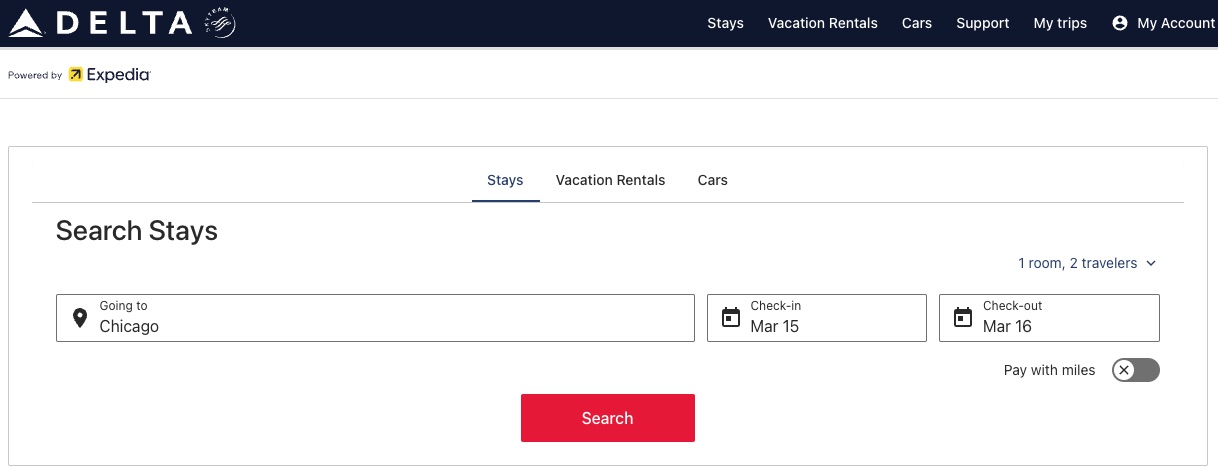
Executing a Delta Stays booking requires navigating the dedicated portal accessible through Delta’s partner network. The search interface mirrors traditional OTAs, aggregating inventory from major multinational hotel chains, independent boutique properties, and alternative short-term rentals comparable to Airbnb or Vrbo.

When executing a reservation, travelers must adhere strictly to the platform’s payment parameters. Program terms explicitly dictate that statement credits apply exclusively to prepaid hotel and vacation rental bookings. Selecting the "pay at property" or "pay later" option disqualifies the transaction from triggering the statement credit.
Fortunately, prepayment does not automatically equate to non-refundable inventory. The platform features a robust selection of fully refundable prepaid rates. Furthermore, certain properties permit reservations secured via an upfront deposit, with the remaining balance settled on-site. Historical transaction data indicates that these initial qualifying deposits successfully trigger the automated statement credit, providing flexibility for travelers whose itineraries remain fluid.
Once a qualifying prepaid transaction is posted to an eligible Delta SkyMiles card, the corresponding statement credit typically posts to the account within a matter of days. In addition to the statement credit, cardholders earn double SkyMiles (2x miles per dollar spent) on the base cost of the booking after completing the stay, alongside the standard mileage-earning multipliers associated with holding the co-branded card.

The Fine Print: Elite Status, Loyalty Points, and Third-Party Bookings
The most significant trade-off associated with utilizing Delta Stays—or any third-party online travel agency—involves hotel loyalty programs. Major hotel operators, including Marriott International, Hilton Worldwide, Hyatt Hotels Corporation, and IHG Hotels & Resorts, maintain strict policy guidelines regarding third-party bookings. Generally, guests who book through an OTA are ineligible to earn elite night credits, accumulate brand-specific loyalty points, or reliably receive elite status benefits such as complimentary breakfast, room upgrades, or late check-out.
Consequently, financial analysts recommend deploying Delta Stays credits primarily for independent boutique hotels, budget properties, or one-off stays where brand loyalty holds little personal value.
However, exceptions do occur in practice. Travelers have occasionally reported receiving baseline recognition at select properties despite booking via third-party portals. For instance, mid-tier or upper-tier elite members of programs like IHG One Rewards have occasionally been acknowledged at check-in, receiving welcome amenities such as bonus points or beverage vouchers. Nonetheless, these instances should be viewed as pleasant anomalies rather than dependable policy expectations. Travelers relying on Delta Stays should anticipate standard, non-status guest treatment upon arrival.
Comparative Pricing Analysis: Are Delta Stays Actually a Good Deal?
A common behavioral economics phenomenon known as the "credit trap" often leads consumers to overspend simply because a promotional credit is available. To determine whether Delta Stays offers genuine financial utility, recent price-matching analyses across various global destinations provide critical context.
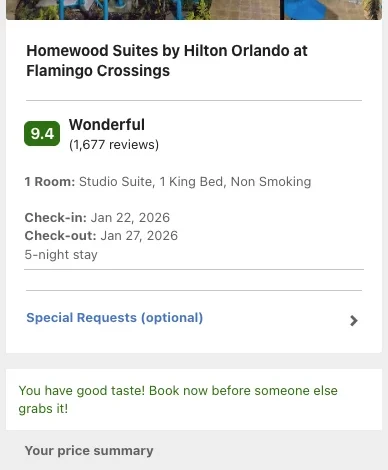
Case Study 1: Homewood Suites by Hilton (Orlando, Florida)
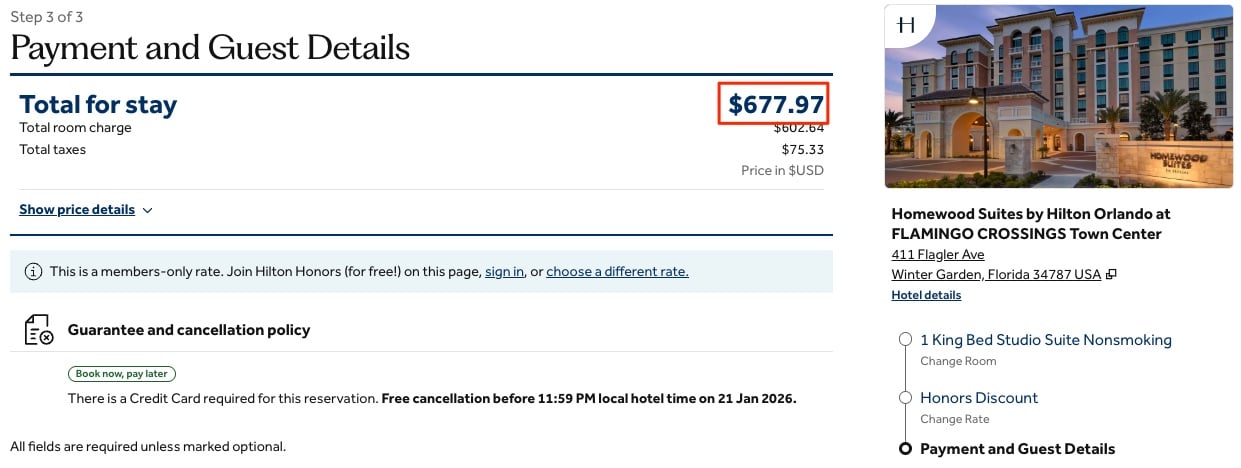
A simulated five-night winter family vacation booked through Delta Stays at an Orlando Homewood Suites property totaled $664 (approximately $133 per night). When verified directly through Hilton’s proprietary booking channel for the exact same dates and room classification, the direct rate was priced slightly higher at $677. In this instance, the Delta Stays portal yielded a lower baseline price before the application of any cardholder statement credit. For a holder of the SkyMiles Gold Card, who receives a $100 credit, the net cost drops to $564—representing a substantial savings compared to booking direct.
Case Study 2: Hyatt Centric Times Square (New York City)
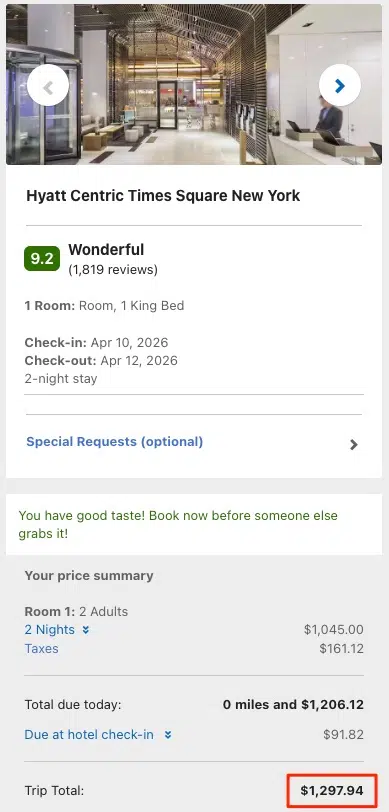
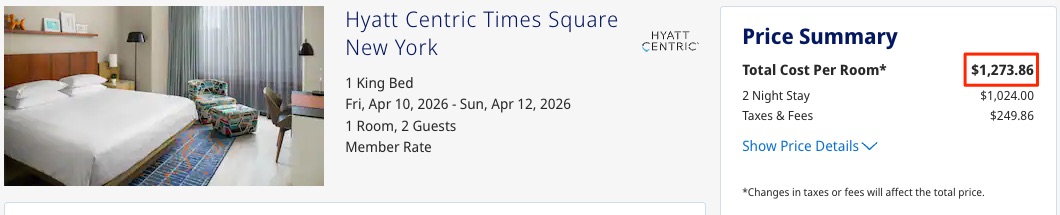
Evaluating a two-night weekend stay in Manhattan revealed a contrasting dynamic. The Hyatt Centric was listed on Delta Stays for just under $1,300. When checked directly through Hyatt’s reservation system, the identical two-night itinerary priced out at $1,274. By choosing to book through Delta Stays to harvest a statement credit, the consumer effectively overpaid for the accommodation by $25. For a SkyMiles Reserve cardholder expecting a $200 statement credit, the net financial utility of the perk is diminished; the "free" $200 credit is partially eroded by the inflated third-party rate, yielding an actual net savings closer to $175.
Case Study 3: Holiday Inn Resort (Aruba)
A five-night Caribbean getaway booked through Delta Stays at an Aruba resort totaled slightly over $2,900. The identical room and dates booked directly through IHG priced out at $2,764, representing a $143 markup on the Delta portal. For a cardholder with a $100 credit, the markup entirely neutralizes the benefit, leaving the consumer paying more out-of-pocket than if they had bypassed the airline portal entirely—while simultaneously forfeiting potential IHG elite benefits and point earnings.
Implications and Strategic Recommendations
The empirical data surrounding Delta Stays highlights a clear mandate for modern consumers: statement credits should never be treated as a substitute for basic comparison shopping. While the automated credits effectively reduce out-of-pocket lodging expenses, discrepancies in baseline pricing between OTAs and direct-booking channels mean that cardholders must verify rates before finalizing transactions.
For budget-conscious travelers and those holding lower-tier cards with modest credit limits, the risk of overpaying is easily mitigated. Because stays can be broken across multiple nights or lower-cost properties, consumers are not pressured into inflating their travel budgets to extract the credit’s value.

Ultimately, the Delta Stays program functions as a valuable addition to the airline’s credit card ecosystem, provided it is approached with analytical rigor. By combining calendar-year credit stacking strategies with careful cross-platform price checks, cardholders can successfully shave significant costs off their lodging expenditures without falling victim to hidden third-party markups.