Beyond the Gaudí Facades: Why Returning Travelers Are Redefining the Barcelona Experience

For decades, the standard itinerary for travelers visiting Barcelona for the first time has followed a well-worn path. Visitors routinely flock to the architectural masterpieces of Antoni Gaudí, navigate the dense crowds of the Gothic Quarter, sip sangria near the Mediterranean shore, and shuffle down the bustling pedestrian corridor of La Rambla. While these iconic landmarks remain vital to the city’s global identity and tourism economy, a significant shift is occurring among seasoned travelers. Increasingly, visitors returning to Catalonia’s capital are bypassing the traditional checklist in favor of immersive neighborhood exploration, culinary discovery, and regional excursions beyond the metropolitan boundaries.
This evolution in travel habits reflects a broader trend in European urban tourism. Rather than rushing to capture photographs of the city’s most photographed monuments, returning visitors are seeking authenticity, cultural context, and a slower pace of travel that engages directly with local communities.
The Evolution of Urban Tourism: Moving Beyond the Highlights
Tourism data indicates that repeat visitors to major European hubs like Barcelona spend significantly more time in residential neighborhoods compared to first-time tourists. On an initial trip, the focus is predominantly observational—taking in the grandeur of the Sagrada Família, marveling at the serpentine benches of Park Güell, or viewing the historic fortifications of the old town.

However, travel analysts note that return trips transform the visitor from a passive spectator into an active participant. By shifting the geographic focus away from the Ciutat Vella (Old Town), travelers contribute to a more sustainable distribution of tourism revenue across the city’s diverse districts. This decentralization helps alleviate the congestion that has historically strained central neighborhoods, offering economic benefits to smaller local businesses, independent boutiques, and family-owned taverns in outlying areas.
To better understand this transition, travel economists and urban planners often examine the chronology of a typical traveler’s relationship with Barcelona.
Chronology of a Barcelona Traveler
- First Visit (The Discovery Phase): The initial 48 to 72 hours are typically dedicated to major monuments. Visitors prioritize the Eixample district for Gaudí architecture, La Boqueria market for street food, and Barceloneta for coastal dining.
- Second Visit (The Neighborhood Integration Phase): Travelers begin booking accommodations outside the strict city center. Attention shifts to districts with distinct historical identities, such as Gràcia, Sant Antoni, and Poblenou.
- Third Visit and Beyond (The Regional Expansion Phase): The city serves as a logistical base. Itineraries expand outward to include day trips to regional wine country, medieval towns, and coastal enclaves across the Catalonia region.
Immersive Neighborhoods: El Raval and Gràcia
For those ready to venture beyond the Gothic Quarter, the adjacent neighborhood of El Raval offers a starkly different cultural landscape. Historically a working-class district and a historic gateway for migrant communities, El Raval pulses with creative energy. It is home to the Museu d’Art Contemporani de Barcelona (MACBA), designed by Richard Meier, which serves as a cultural anchor for the neighborhood. The open plaza directly in front of the museum, Plaça dels Àngels, functions as a public gathering space where contemporary urban culture thrives.
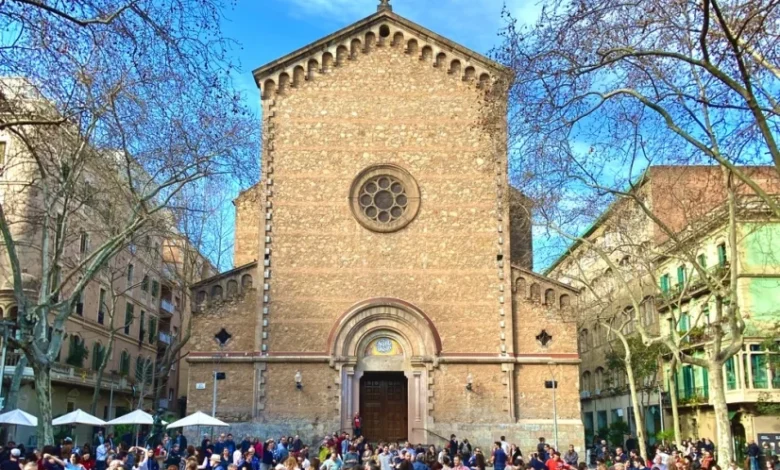
Further north lies Gràcia, which maintained its status as an independent municipality until its annexation by Barcelona in 1897. This historical independence is palpable in its urban fabric. Unlike the grand grid system of the Eixample, Gràcia is characterized by a labyrinth of narrow streets that open suddenly into charming plazas, such as Plaça del Sol. Free from the heavy concentration of chain stores found in central tourist zones, Gràcia preserves an ecosystem of independent bookshops, artisan bakeries, and local cafes.

Culinary Shifts: From La Boqueria to Sant Antoni and Poble Sec
Gastronomy plays a central role in the evolution of repeat tourism. While La Boqueria remains a marvel of historic market architecture, its overwhelming popularity has turned it primarily into a tourist attraction. Consequently, seasoned culinary travelers are turning their attention to the Mercat de Sant Antoni.
Reopened in 2018 following a monumental, decade-long restoration project, the Mercat de Sant Antoni occupies an imposing iron-and-glass structure originally designed by Antoni Vila i Bassa in the late 19th century. Operating away from the intense foot traffic of La Rambla, Sant Antoni provides an authentic window into daily Catalan life, particularly on Sundays, when the surrounding streets host a sprawling open-air market for collectors, booksellers, and coin enthusiasts.
Similarly, the neighborhood of Poble Sec has earned a reputation as a culinary destination, specifically along Carrer de Blai. Known for its concentration of Basque-style pintxos bars, this pedestrian-friendly street encourages a dynamic dining style. Rather than committing to a single formal sit-down meal, patrons sample small, toothpicked delicacies across multiple venues, fostering a vibrant, communal evening atmosphere.
Industrial Heritage and Green Spaces: Poblenou and Montjuïc
Barcelona’s industrial past is most vividly preserved in Poblenou. Once dubbed the "Catalan Manchester" due to its dense concentration of 19th-century textile mills and factories, the neighborhood has undergone a massive urban regeneration project. Many of the industrial brick warehouses have been successfully repurposed into architectural design studios, technology incubators, and contemporary art galleries, all while retaining their striking industrial silhouettes.

Meanwhile, the sprawling hill of Montjuïc offers a multifaceted escape from the urban density of the city center. Beyond its famous cable car and panoramic viewpoints, Montjuïc holds a complex historical record. Montjuïc Castle, perched at the summit, stands as a reminder of Catalonia’s turbulent political history, having served variously as a military fortress, a political prison, and an execution site during times of civil conflict. Today, the mountain also encompasses botanical gardens, Olympic sports complexes, and cultural institutions established during the 1929 International Exposition.
Regional Expansion: Venturing Beyond the Metropolitan Border
When travelers exhaust the urban boundaries of Barcelona proper, the surrounding Catalonia region offers a wealth of day-trip opportunities accessible via high-speed rail and regional transit networks.
Just north of the city lies Alella, one of Spain’s smallest and most historic Appellation of Origin (DO) wine regions. Tucked between the coastal mountain range and the Mediterranean Sea, Alella is internationally recognized for its crisp, mineral-forward white wines produced from the native Pansa Blanca grape. Historic modernist wineries in the area offer tastings and educational tours, providing agricultural context just a short journey from the metropolis.
For travelers seeking historical architecture, Girona—located approximately 40 minutes away by high-speed AVE train—features a remarkably well-preserved medieval quarter, ancient Roman walls, and a dramatic cathedral overlooking the River Onyar. Alternatively, the coastal town of Sitges, situated south of Barcelona, offers a distinct Mediterranean atmosphere with its whitewashed historic center, expansive beachfront promenades, and deep-rooted artistic legacy tied to the modernist movement of the late 19th and early 20th centuries.

Socioeconomic Implications and Sustainable Tourism Policy
The shift toward neighborhood-level exploration and regional travel aligns closely with municipal strategies implemented by the Barcelona City Council. In recent years, local authorities have actively worked to manage overtourism through targeted policy measures, including regulations on short-term rentals, restrictions on large tour groups in sensitive historic zones, and promotional campaigns designed to highlight lesser-known districts.
Urban development experts point out that encouraging visitors to explore areas like Poblenou, Gràcia, and Sant Antoni helps distribute the economic benefits of tourism more equitably across the local population. Furthermore, it reduces the environmental strain on heavily impacted areas like the Gothic Quarter and the immediate beachfront of Barceloneta.
As Barcelona continues to adapt to the changing demands of global mobility, the experiences of repeat travelers demonstrate that the city’s true depth lies far beyond its primary architectural postcards. By slowing the pace, engaging with local neighborhoods, and venturing into the wider expanse of Catalonia, visitors uncover a dynamic urban ecosystem that continually reinvents itself while honoring its complex historical roots.