Airlines Get More Time on Mumbai Airport Cuts — But the Move to Navi Mumbai Is Still Coming

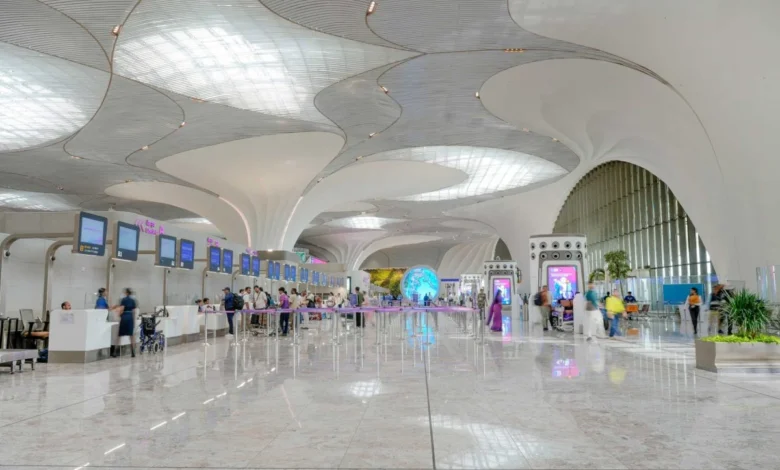
The Ministry of Civil Aviation has intervened in the high-stakes transition of international flight operations from Mumbai’s Chhatrapati Shivaji Maharaj International Airport (CSMIA) to the newly inaugurated Navi Mumbai International Airport (NMIA). On Tuesday, government officials directed Adani Airport Holdings, which manages both facilities, to pause its immediate plans to relocate a significant portion of international traffic. This directive provides a critical breathing room for airlines and airport operators to synchronize their logistics, security, and passenger handling protocols.
While the intervention has been characterized as a temporary suspension, it does not represent a abandonment of the government’s broader strategy to decongest Mumbai’s primary airport. Instead, the ministry has mandated that airlines and Adani Airport Holdings submit a comprehensive, firm roadmap for the transition. A series of high-level meetings have been scheduled, starting October 13, with a second consultation expected by October 20, to finalize the operational framework for the migration.
The Context of the Operational Shift
The pressure to move international flights from CSMIA to NMIA is rooted in the chronic capacity constraints of the existing Mumbai airport. CSMIA, which operates as a single-runway intersection system, is one of the busiest airports in the world relative to its footprint. Despite its efficiency, the airport has reached its structural limit in terms of passenger throughput and aircraft movements.
Navi Mumbai International Airport was conceptualized as a vital release valve for the Mumbai Metropolitan Region (MMR). As the commercial capital of India, Mumbai’s aviation demand continues to outpace infrastructure growth. The government’s vision for the new airport includes not only relieving the burden on CSMIA but also creating a secondary hub that can accommodate the next generation of wide-body long-haul aircraft. However, the operational complexity of moving international carriers—which require specialized customs, immigration, and security clearance infrastructure—cannot be overstated.
Chronology of the Decision
The friction reached a boiling point this week when Adani Airport Holdings issued an informal deadline to major domestic and international carriers. Airlines were instructed to inform Mumbai International Airport Limited (MIAL) by 4:00 p.m. on Tuesday regarding which international flight slots they were prepared to relinquish to facilitate the move to Navi Mumbai.
The urgency of the situation prompted an emergency 90-minute meeting in New Delhi on Tuesday, involving representatives from the Ministry of Civil Aviation, the Airports Authority of India, airline executives, and Adani Group leadership. The outcome was a clear signal from the government: the transition, while necessary, must be handled with systemic precision to avoid passenger chaos and logistical failures. The ministry’s decision to mandate a formal roadmap by October 20 reflects a desire to avoid the "big bang" style of transition that has historically led to operational disruptions in other global airport hubs.
Supporting Data and Capacity Challenges
The logistical challenge is underscored by the current statistics of CSMIA. The airport handles over 50 million passengers annually, a volume that pushes its infrastructure to the brink. In contrast, the initial phase of NMIA is designed to handle approximately 20 million passengers per year, with a long-term goal of scaling up to 90 million.
The primary concern for airlines is the "split operation" risk. For carriers that operate a mix of domestic and international flights, moving only their international segment to Navi Mumbai creates a significant operational hurdle regarding crew rotation, maintenance, and interlining. Without a seamless transit system—including high-speed connectivity between the two airports—airlines fear that their connectivity indices will drop, potentially damaging their market share in the lucrative Mumbai route.
Furthermore, the data suggests that Mumbai’s international demand is growing at an annual rate of 8–10%. With no further land available for the expansion of CSMIA, the reliance on the Navi Mumbai facility is not merely a strategic preference; it is a necessity for the survival of the region’s aviation sector.

Stakeholder Reactions and Industry Implications
The airline industry has reacted with a mix of relief and anxiety. While major players acknowledge that the current congestion at CSMIA is unsustainable, the sudden pressure to relocate international operations left many scrambling to adjust their scheduling software and ground-handling contracts.
A spokesperson for a leading international carrier, speaking on the condition of anonymity, noted that the government’s intervention was "a pragmatic step." The source highlighted that moving international operations involves complex regulatory approvals, including the installation of advanced baggage screening systems and the stationing of dedicated Customs and Immigration personnel, which require more than a few days of preparation.
From the perspective of the Adani Group, the challenge lies in balancing the government’s aggressive timelines with the operational readiness of the airport. As the concessionaire, Adani has invested billions into the Navi Mumbai project and is keen to demonstrate its viability. However, the group now faces the dual task of proving the new airport’s operational excellence while managing the expectations of a skeptical airline community.
Fact-Based Analysis of the Shift
The implications of this delay extend beyond simple scheduling. First, the delay allows for the finalization of the Metro connectivity project and other road infrastructure improvements intended to link Navi Mumbai to the city center. A successful transition is predicated on passenger experience; if travelers find it impossible to reach the new airport in a timely manner, the transition will be perceived as a failure regardless of the airport’s internal efficiency.
Second, the regulatory oversight exercised by the aviation ministry suggests a shift toward more centralized control over airport capacity management. By forcing a collaborative roadmap, the government is ensuring that the burden of the transition is shared equitably among the stakeholders rather than being unilaterally imposed by the airport operator.
Third, the upcoming meetings on October 13 and October 20 will be pivotal. These sessions are expected to address the critical issue of "slot allocation." Airlines are wary of losing valuable peak-hour slots at CSMIA without receiving equally lucrative timings at the new facility. The resolution of these negotiations will determine the long-term competitive landscape of Indian aviation.
The Path Forward
As the industry looks toward the October 20 deadline, the focus remains on technical readiness. The ministry’s insistence on a "firm roadmap" implies that the government expects a phase-wise migration rather than a sudden shift. This would likely involve starting with low-frequency international routes or point-to-point regional flights before transitioning the high-density hubs served by global carriers.
The intervention has also brought to light the necessity for improved communication channels between airport operators and airlines. Moving forward, the industry expects a more transparent consultative process that takes into account the commercial viability of individual routes.
In conclusion, while the temporary hold on the transition of international flights from Mumbai to Navi Mumbai may be viewed by some as a setback, it is more accurately defined as a strategic consolidation. By prioritizing operational stability over speed, the Ministry of Civil Aviation is attempting to ensure that the birth of the Navi Mumbai International Airport does not come at the cost of the existing air transport network’s integrity. The next two weeks of negotiations will be a litmus test for the stakeholders involved and a defining moment for the future of aviation infrastructure in the Mumbai Metropolitan Region.