Charting a Course Across the Strait: A Comprehensive Guide to Ferry Travel Between Europe and Morocco

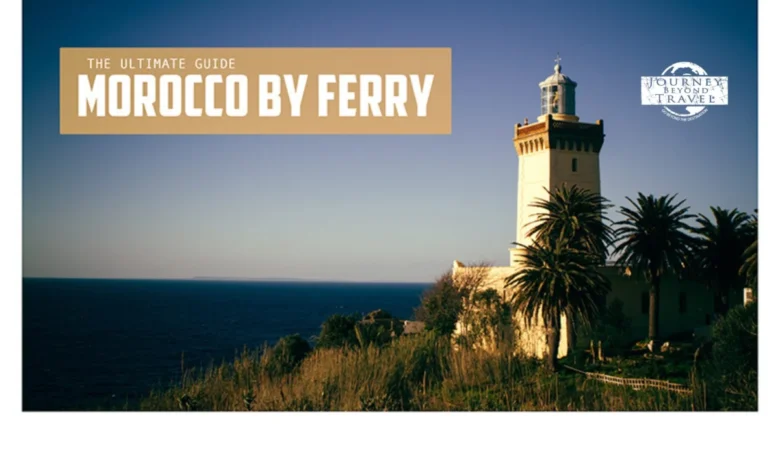
While air travel has long been the primary gateway for international visitors entering Morocco, a significant demographic of travelers continues to favor the maritime route, drawn by the logistical flexibility and scenic allure of crossing the Strait of Gibraltar. As of mid-2026, the ferry network connecting the European mainland to the North African coast remains a critical artery for both tourism and regional commerce. This mode of transport offers distinct advantages over aviation, specifically regarding vehicle transport, reduced baggage constraints, and a more immersive transition between the distinct cultural landscapes of Southern Europe and the Maghreb.
The Evolution of Maritime Connectivity
The maritime link between Europe and Morocco is rooted in historical trade routes that have connected the Iberian Peninsula and North Africa for centuries. In the modern era, these routes have evolved into sophisticated logistical corridors. The primary hub for this activity is the Tangier Med complex, a massive port facility located approximately 30 kilometers east of Tangier city. Opened in 2007 and subject to continuous expansion, Tangier Med has shifted the center of gravity for ferry arrivals away from the traditional downtown Tangier Ville port, allowing for larger vessels and increased cargo throughput.
The operational landscape has seen significant shifts in the last two years. Most notably, the 2023 acquisition of the long-standing ferry operator FRS by the Danish logistics giant DFDS marked a major consolidation in the market. By May 2025, the cessation of specific long-standing FRS routes necessitated a realignment of services, with operators such as Balearia and Africa Morocco Link (AML) expanding their schedules to maintain the high frequency of crossings required to support both peak summer tourism and year-round commercial traffic.
Strategic Port Hubs and Geographic Distribution
For the modern traveler, understanding the geography of Moroccan ports is essential for effective itinerary planning. The northern coastline is served by several key entry points, each catering to different travel objectives:
- Tangier Ville: Primarily a passenger-focused port located in the heart of the city, ideal for foot passengers who wish to access the historic medina immediately upon arrival.
- Tangier Med: A major industrial and passenger port designed for high-volume traffic. It serves as the primary entry for those arriving by vehicle who intend to drive to major urban centers like Rabat (3 hours), Casablanca (4 hours), or Fez (4.5 hours).
- Nador: Located further east, this port is the primary gateway for the Rif region and the eastern provinces of Morocco.
- Spanish Enclaves: Ports in Ceuta and Melilla, while technically under Spanish jurisdiction, serve as vital transit points. Travelers often utilize these hubs for shorter crossings before navigating the land border crossings into Moroccan territory.
Comparative Analysis of Ferry Routes
The ferry network is categorized by the point of origin, with Spain serving as the most frequent transit point due to its geographic proximity.
Routes from Spain:
The Tarifa to Tangier Ville crossing is currently the shortest maritime link, typically lasting approximately 60 minutes. This route is highly favored by foot passengers. Conversely, the Algeciras to Tangier Med route remains the workhorse of the industry, handling the highest volume of heavy vehicles and passenger cars.
| Route | Duration | Typical Frequency | Primary Operators |
|---|---|---|---|
| Tarifa – Tangier Ville | 1 hour | 10–14 daily | Balearia, AML |
| Algeciras – Tangier Med | 1.5 hours | 15+ daily | DFDS, Balearia, AML |
| Algeciras – Ceuta | 1 hour | 15–19 daily | Balearia, DFDS, Naviera Armas |
| Malaga – Melilla | 6 hours | 1 daily | Balearia |
| Almeria – Nador | 6–9 hours | 7–14 weekly | Balearia, Naviera Armas |
| Barcelona – Tangier Med | 28–36 hours | 2–5 weekly | Grandi Navi Veloci |
Routes from France and Italy:
Long-haul maritime routes serve as a secondary tier of travel, often preferred by those seeking a "cruise-like" experience or those wishing to avoid the drive through Spain. The Sete to Tangier/Nador routes from France provide a direct connection for travelers originating in Central and Northern Europe. Italian routes from Genoa and, seasonally, Civitavecchia, cater to a similar market, offering journeys that span upwards of 48 hours.
Logistical Considerations and Passenger Requirements
Traveling to Morocco by sea requires a higher degree of pre-trip coordination than standard air travel. Unlike the streamlined security protocols of international airports, ferry transit involves complex vehicle documentation processes.
For travelers bringing a vehicle, the "Temporary Importation of Vehicles" (D16ter) process is mandatory. Drivers must present valid vehicle registration, proof of insurance (often the International Insurance Card or "Green Card"), and a valid driving license. Customs officials at ports such as Tangier Med are tasked with verifying these documents upon arrival, a process that can add significant time to the disembarkation phase.
Furthermore, scheduling volatility remains a reality of maritime travel. Unlike aviation, which operates under strictly regulated time slots, ferry schedules are susceptible to weather conditions in the Strait of Gibraltar—an area known for high winds and unpredictable currents. Consequently, travelers are strongly advised to allow for significant buffer time when connecting to onward rail or bus services provided by the national operator, ONCF, or intercity bus networks like CTM.
Economic and Infrastructure Impact
The investment in maritime infrastructure has broader implications for the Moroccan economy. The expansion of the Tangier Med port has facilitated not only tourism but also the growth of Morocco’s automotive manufacturing sector, with vessels increasingly carrying parts for the Renault and Stellantis plants in the region.
From a consumer standpoint, price dynamics are highly seasonal. While off-peak travel (September through May) offers predictable pricing and availability, the summer months—coinciding with the "Operation Marhaba," the annual return of the Moroccan diaspora—result in a surge in demand. During this period, ticket prices can escalate significantly, and port congestion becomes a standard operational challenge. Industry analysts suggest that booking at least four to six weeks in advance is essential during the June-August window.
Operational Challenges and Future Outlook
Despite the convenience of vehicle transport, the ferry experience is not without its limitations. Feedback from regular commuters and tourists alike points to the variance in onboard amenities. While newer, larger vessels operated by companies like DFDS and Balearia offer high-speed internet, restaurants, and cabin accommodations, smaller, older vessels on high-frequency, short-haul routes may offer a more utilitarian experience.
The industry is currently facing a period of transition regarding sustainability. European Union regulations regarding maritime emissions (such as the inclusion of shipping in the Emissions Trading System) are beginning to influence operating costs. Operators are under increasing pressure to modernize their fleets with lower-emission vessels, which may lead to gradual, structural changes in ticket pricing over the coming decade.
Navigating the Border: Essential Regulatory Information
For the majority of travelers holding passports from the United States, United Kingdom, and the European Union, the entry requirements for Morocco remain favorable, with visa-free access for stays of up to 90 days. However, the onus remains on the traveler to ensure that passport validity exceeds six months beyond the date of arrival.
As of June 2026, the regulatory environment is stable, but officials advise that travelers keep digital and physical copies of all ferry bookings and vehicle documentation. Because the ferry ports serve as international borders, the immigration process involves individual passport control, which can be time-consuming during peak periods.
Conclusion: Weighing the Maritime Option
Deciding whether to arrive in Morocco by sea or air requires a clear assessment of one’s travel priorities. For the self-drive enthusiast, the ferry is an indispensable tool that allows for the freedom to explore the Atlas Mountains, the Sahara, and the Atlantic coast at one’s own pace. For the budget-conscious or time-constrained traveler, air travel remains the more efficient route.
However, the experience of watching the African coastline emerge from the horizon remains a unique aspect of the North African journey—a transition that bridges the gap between the European continent and the diverse cultural tapestry of the Kingdom of Morocco. As logistics continue to refine and capacity grows, the maritime route stands as a resilient and vital component of the Mediterranean travel network. Travelers are encouraged to consult official operator websites regularly, as route availability and pricing are subject to rapid shifts dictated by market demand and regulatory changes.
Related posts: