A massive, slow-moving weather system originating from the Bay of Bengal has descended upon Nepal, bringing with it a dire forecast of extreme rainfall, hurricane-force winds, and significant snowfall across the Himalayan range. While the majority of commercial expeditions have opted to pull their teams back to lower altitudes or evacuate to Kathmandu, a small contingent of high-altitude mountaineers remains at the Base Camps of Manaslu and Dhaulagiri, waiting for a precarious window of opportunity that meteorologists warn may never materialize. This developing situation highlights the ongoing tension between the pursuit of summit success and the harsh, unpredictable realities of late-monsoon Himalayan climbing.
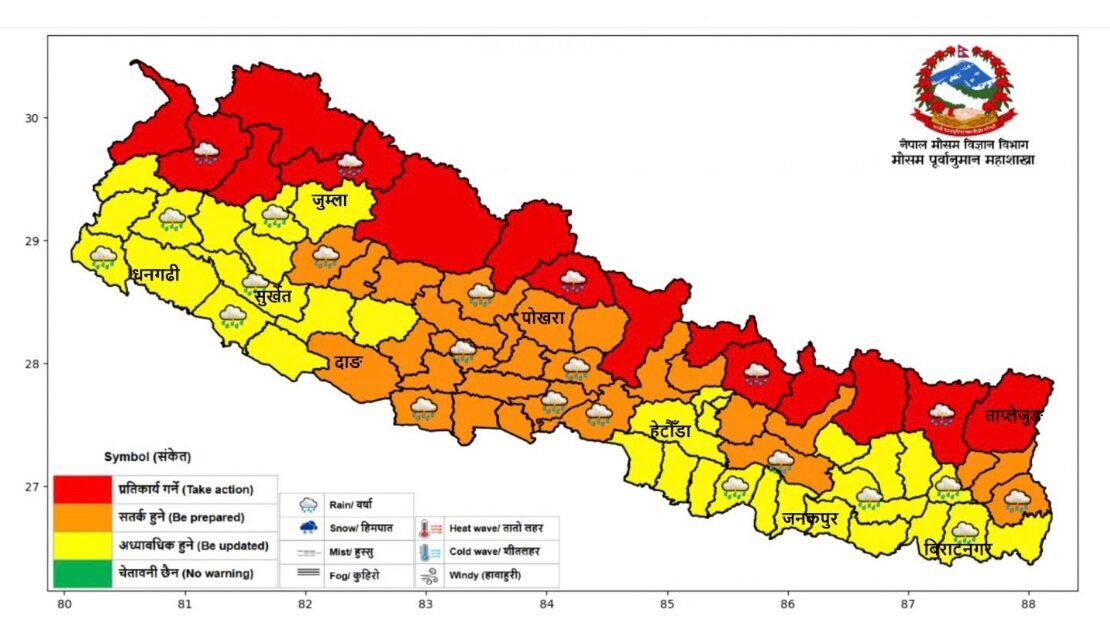
The current weather event is part of a broader, more volatile climatic trend that has plagued Nepal throughout the 2026 season. With the country still reeling from a series of catastrophic floods that claimed the lives of approximately 1,452 people in recent weeks, the government and local authorities have placed all mountain regions under a strict red alert. The transition from late monsoon rains to early autumn snows has created a dangerous environment for both professional climbers and the growing trekking tourism industry.
The Standoff at Manaslu Base Camp
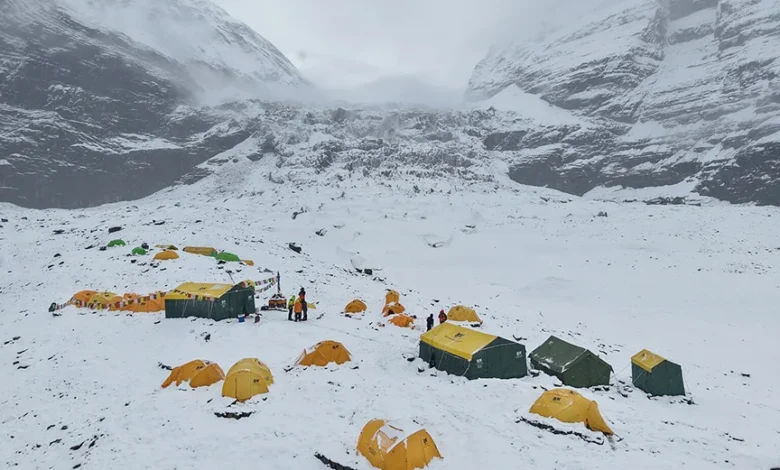
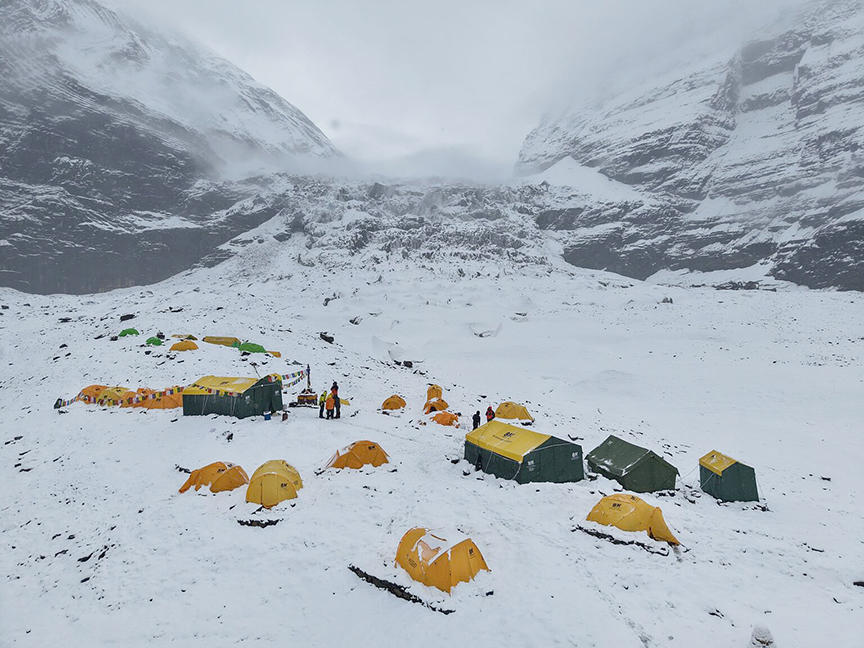
Manaslu, historically a popular destination for commercial teams, has seen a mass exodus of personnel. As of mid-week, reports from the mountain indicate that approximately 90 percent of the Base Camp infrastructure has been dismantled. High-altitude camps, which serve as the lifelines for summit bids, have been largely retracted as teams anticipate the destruction of equipment by heavy snow accumulation.
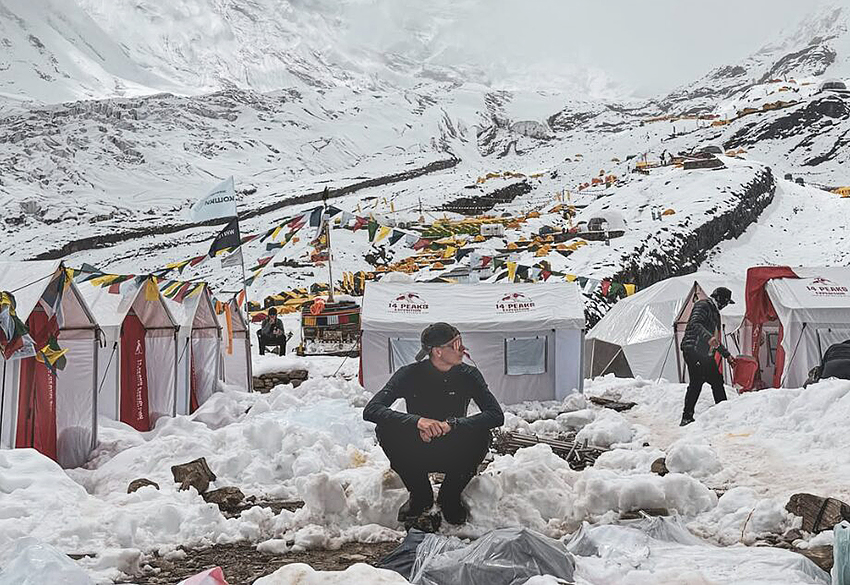
Despite this, Russian climbers Denis Aleksenko and Artem Tsensevitsky have made a deliberate decision to remain at the site. Aleksenko, who has been documenting the situation via social media, described the atmosphere as one of “general panic,” from which he and his partner have distanced themselves. While acknowledging the mathematical reality that the commercial season is likely over, the pair is clinging to the slimmest of possibilities—the proverbial one percent chance that the storm might dissipate or shift, allowing for a late-season push.
Their stance contrasts sharply with major operators like Elite Exped, which has officially shuttered its operations on the mountain. In a formal update to their stakeholders, the company cited the physical impossibility of maintaining a safe route. The accumulation of heavy snow, they noted, would necessitate a monumental, and potentially fatal, effort to re-break trails and fix ropes. Given the risks of avalanches and the sheer volume of labor required to re-establish access, they deemed the continuation of the expedition untenable.
Strategic Patience vs. Operational Reality
The philosophy of “waiting it out” is not entirely without precedent. Climbing the 7 Summits, a major expedition outfitter with deep experience in the region, has relocated its personnel to Samagaon and Kathmandu rather than initiating a full retreat. Caroline Pemberton, representing the company, invoked the three-decade career of founder Mike Hamill to contextualize their decision.
Hamill’s approach is rooted in the history of Himalayan mountaineering, where premature cancellations have historically been offset by teams that remained patient. The company argues that large-scale storms are sometimes inaccurately forecast, and that maintaining a presence in relative safety allows for a rapid return to the mountain should conditions stabilize. However, this strategy is balanced by a rigorous adherence to daily meteorological reports, which currently suggest that this particular system is far larger and more persistent than typical seasonal disturbances.
The Situation on Dhaulagiri
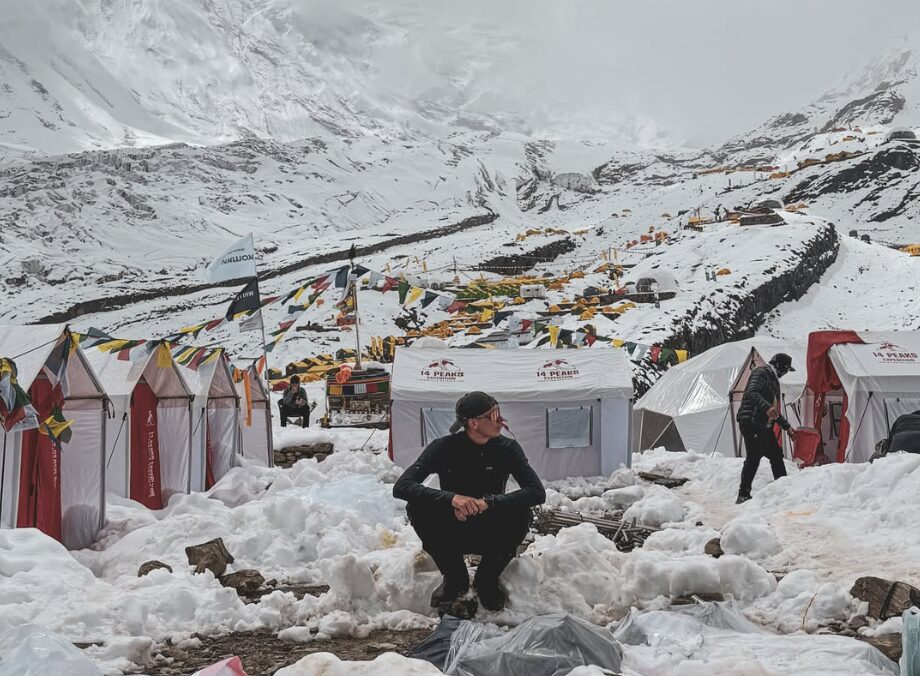
The atmospheric pressure is equally high on Dhaulagiri, where climbers such as Paul Clarke and Xenia Santha are currently weathering the storm. With approximately 20 centimeters of fresh snow already recorded and the precipitation continuing unabated, the focus has shifted from movement to survival. For those remaining at 8K Expeditions’ base, the immediate priority is the reinforcement of tents and the monitoring of the Dhaulagiri col. The climbers have signaled that they will wait for the storm to break before conducting a formal assessment of the mountain’s condition, acknowledging that the integrity of the route may be compromised by the time the skies clear.
A Country Under Alert: Beyond the Summits
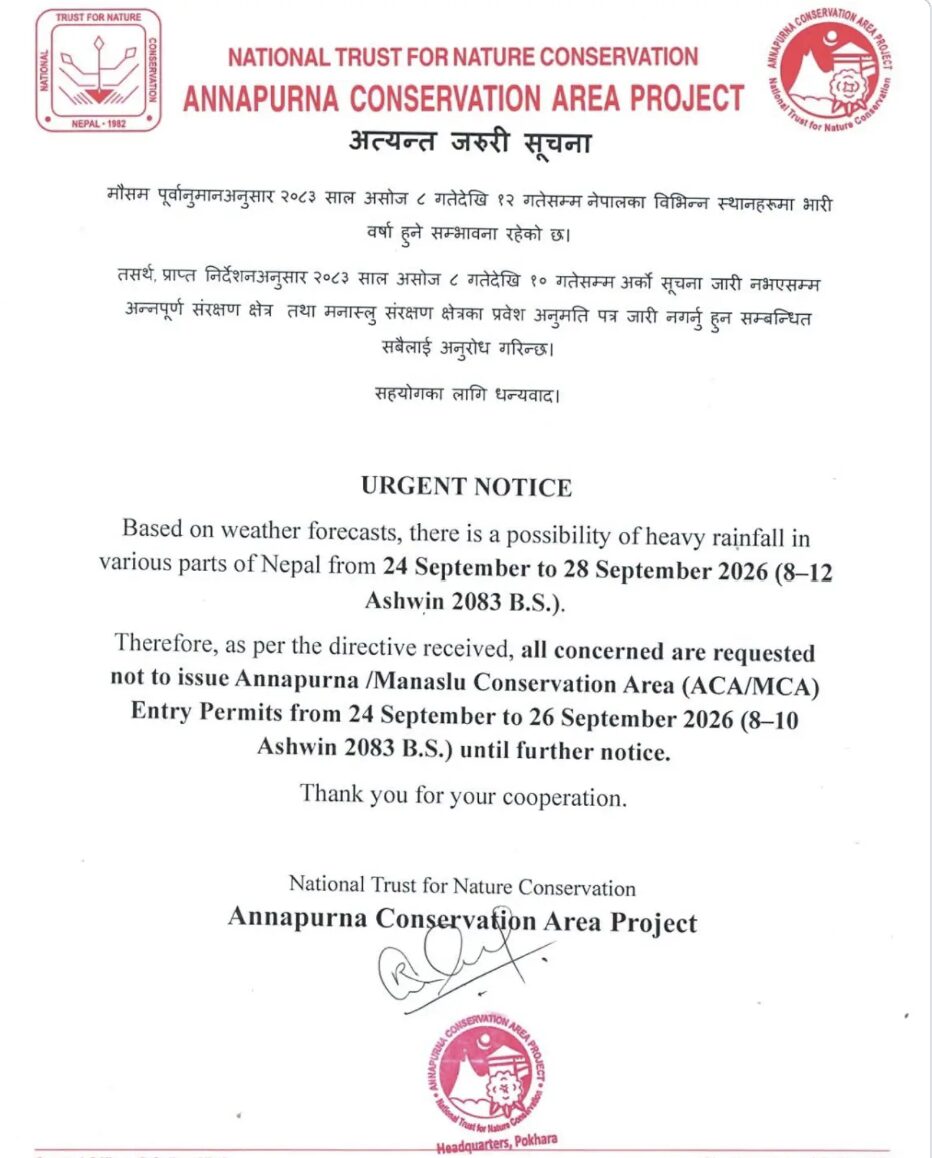
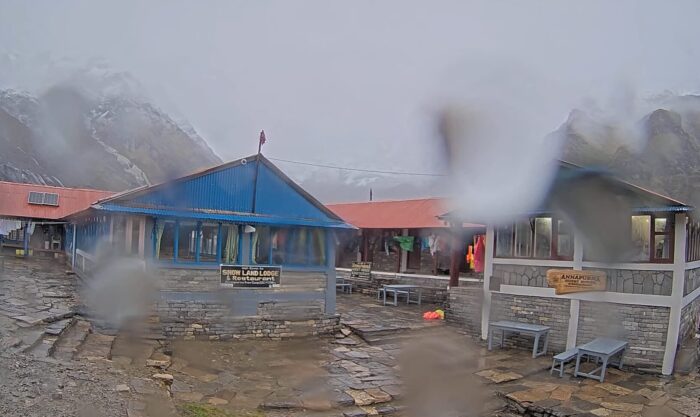
The impact of this weather system extends far beyond the high-altitude peaks. The Nepalese government has issued comprehensive warnings to all travelers, including those on popular trekking circuits. The Annapurna region has already implemented formal closures as local authorities attempt to mitigate the risk of flash floods and landslides, which have become a recurring threat following the recent, record-breaking rainfall.
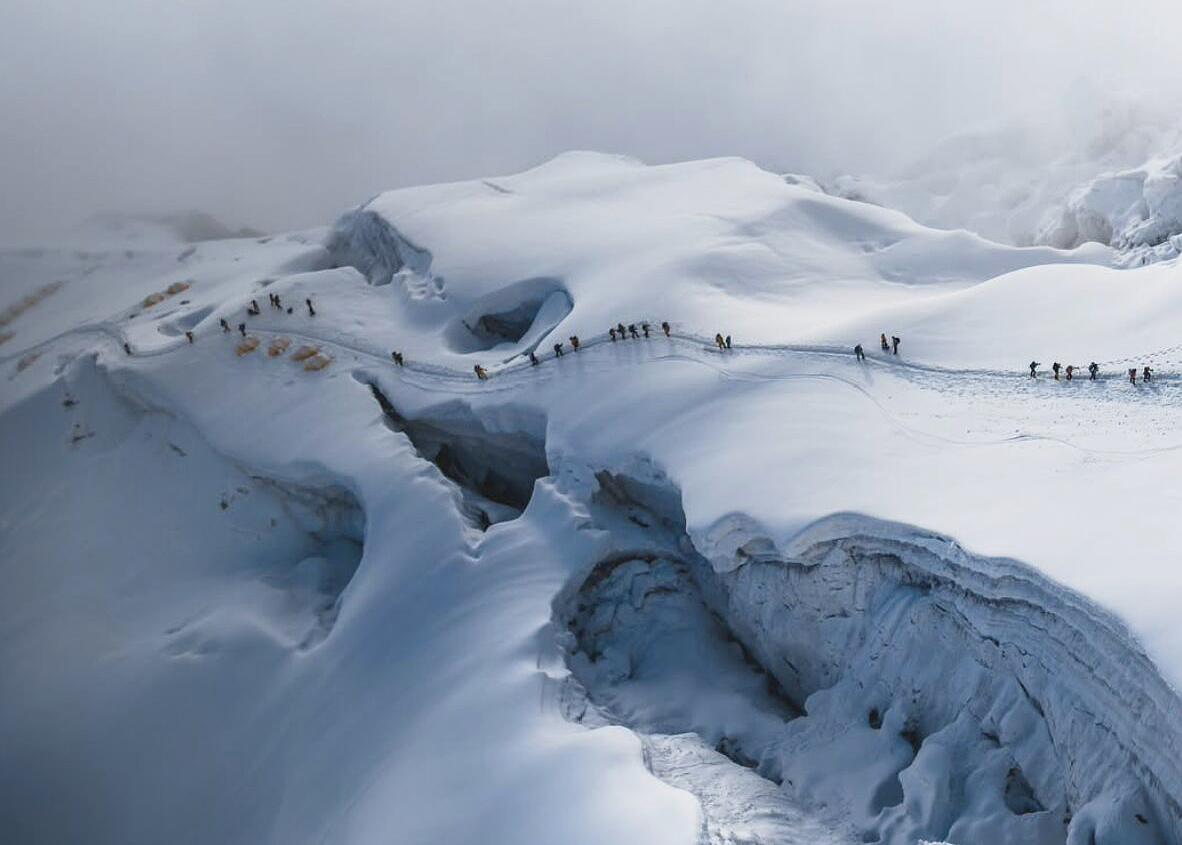
The Expedition Operators’ Association Nepal (EOAN), represented by figures like Nga Tenjin Sherpa of Summit Force, has circulated urgent notices to all mountain workers and guides. The directive emphasizes the necessity of caution, noting that while the high-altitude focus is on snow and wind, the lower regions are facing an existential threat from hydrological instability. The lessons from last year, when Cyclone Montha triggered a series of lethal avalanches that resulted in nine deaths on 6,000m and 7,000m peaks, have clearly influenced the current, more conservative approach by the broader climbing community.
Logistical and Rescue Constraints
A critical factor in the current crisis is the status of aviation. The Airlines Operators Association of Nepal has instructed helicopter companies to maintain a state of high readiness for potential search-and-rescue operations. However, there is a realistic recognition among industry experts that the intensity of the storm will likely render air travel impossible. Under current conditions, the mountainous terrain becomes a "no-fly" zone, effectively isolating any climbers who choose to stay on the upper slopes.
This lack of a safety net is what distinguishes the current situation from standard high-altitude operations. In a normal season, the proximity of rescue helicopters provides a degree of comfort for commercial clients. With those assets grounded, the risk-to-reward ratio for any summit attempt becomes drastically skewed.
Broader Implications for Himalayan Tourism
The events of this week serve as a microcosm for the challenges facing modern Himalayan mountaineering. The increasing frequency of late-season cyclonic activity suggests a shifting weather pattern that may necessitate a fundamental change in how expeditions are scheduled. Roland Hunter of The Mountain Company, who recently arrived in a rain-drenched Kathmandu, noted that his organization has already begun pushing back trekking start dates to the second week of October to avoid the window of peak storm volatility.
For the industry, this represents a significant shift. The historical reliance on "predictable" windows is being challenged by climate instability. As data-driven forecasting becomes more precise, the dissemination of information has improved, yet the human element—the drive to reach the summit—remains a powerful motivator that often conflicts with the data.
As the storm continues to dump heavy precipitation across the country, the coming days will be decisive. For the few remaining at Base Camp, the waiting game is not just a test of endurance, but a high-stakes gamble against the evolving climate of the Himalaya. Whether they are eventually forced to descend by the sheer force of the elements or find a small, improbable window for success, their experiences will undoubtedly influence future protocols for expeditions in an era of unpredictable mountain weather. The international climbing community remains on watch, hopeful that the caution exercised by the majority will ensure a season that, while truncated, remains free of further loss of life.