Family Travel Dynamics: Navigating a Weeklong Private Villa Stay in Phuket with Young Children

When international families contemplate a tropical holiday in Southeast Asia, Phuket frequently emerges as a top-tier destination, traditionally associated with postcard-perfect beaches, traditional long-tail boat excursions, and dense palm groves. However, a contemporary travel trend highlights a shift away from high-intensity, checklist-driven sightseeing toward immersive, slower-paced itineraries. This shift is particularly evident among families traveling with young children, who often find that the true value of a destination lies in establishing a predictable daily routine rather than rushing from one tourist landmark to another. Recent family travel data indicates that nearly 65 percent of long-haul family travelers now prioritize vacation rentals over standard hotel accommodations, seeking spatial autonomy, culinary flexibility, and a more localized neighborhood experience.
The Logistics of Accommodation: Choosing a Private Villa Over Traditional Hotels
The operational challenges of traveling with toddlers and young children are well-documented: fluctuating sleep schedules, the necessity for dietary accommodations, and the requirement for dedicated downtime. Addressing these logistical hurdles often dictates the overall success of an international trip. For a recent family expedition to Phuket, organizers bypassed conventional resort hotels in favor of a private residential villa located on the island’s bustling yet versatile west coast.
Industry experts frequently recommend utilizing local holiday rental agencies rather than global booking conglomerates when securing properties in foreign markets. Local providers typically maintain immediate on-the-ground support teams capable of addressing maintenance issues, logistical questions, or emergency requests in real time. Following this guidance, the family secured a three-bedroom villa in the Patong region through a regional property management firm, Lofty Villas.
This accommodation strategy yielded immediate operational benefits. Unlike standard hotel rooms that force families into rigid dining and housekeeping schedules, a private villa provided segregated sleeping quarters, a fully equipped kitchen, and a private swimming pool. This configuration allowed the family to dictate their own chronology. Mornings commenced unhurriedly with the children utilizing the pool while adults managed planning logistics over coffee, fundamentally altering the psychological tenor of the trip from a high-stress migration to a relaxed temporary relocation.
Geographical Layout and the Strategic Choice of Patong
Understanding Phuket’s unique geographical scale is critical for first-time visitors. As Thailand’s largest island, Phuket spans approximately 543 square kilometers, featuring a rugged interior and a heavily developed coastal periphery. The primary international gateway, Phuket International Airport, anchors the island’s northern tip, while the urban and resort centers extend southward through a diverse chain of micro-communities, including Patong, Kamala, Kata, Karon, Nai Harn, and Rawai.

Patong, historically renowned globally for its vibrant, high-energy nightlife district centered around Bangla Road, presents a surprisingly functional daytime environment for families. During daylight hours, Patong Beach transforms into an accessible, sprawling coastal zone characterized by gentle surf and expansive sandy shores. Furthermore, the surrounding municipal infrastructure—featuring comprehensive medical clinics, large shopping centers, international supermarkets, and reliable transportation networks—provides an invaluable safety net for parents navigating the unpredictability of pediatric travel.
By establishing a base in Patong, the family positioned themselves within a five-kilometer radius of essential urban services while maintaining arterial road access to the quieter, more secluded beaches and cultural sites located in the island’s southern and eastern sectors.
Balancing Urban Exploration with Coastal Leisure
A successful family itinerary in Phuket requires a calibrated balance between high-stimulation excursions and low-impact relaxation. Over the course of a seven-day deployment on the island, the itinerary was deliberately structured to alternate between cultural immersion, aquatic exploration, and restorative downtime.

Mid-week excursions regularly expanded beyond the immediate coastline. A prominent cultural anchor of the trip was a morning expedition to the historic district of Phuket Town on the island’s eastern seaboard. Characterized by well-preserved 19th-century Sino-Portuguese architecture, vibrant shophouses, and indigenous culinary institutions, Phuket Town offers a stark sociological contrast to the western beach resorts. Urban planners and tourism boards frequently promote this district to diversify the island’s tourism footprint, mitigating the environmental and infrastructural strain concentrated solely on coastal zones.
Additionally, the family visited the iconic Phuket Big Buddha, officially known as Phra Phuttha Ming Mongkol Eknakiri, perched atop the Nakkerd Hills between Chalong and Kata. Rising 45 meters high and constructed primarily of reinforced concrete faced with Burmese white jade marble, the monument serves as a significant religious landmark and a strategic vantage point. The site offers panoramic 360-degree views of Chalong Bay, Kata, and Phuket Town, while the elevated microclimate provides a thermal reprieve from the lowland tropical humidity.
Aquatic Adventures: Phang Nga Bay, Phi Phi, and Marine Ecosystems
No assessment of Phuket’s tourism economy is complete without analyzing its marine tourism sector. Island-hopping excursions generate a substantial portion of the region’s seasonal revenue, drawing millions of visitors annually to adjacent marine parks and limestone archipelagos.
The family undertook a guided marine excursion to the Phi Phi Islands, located roughly 40 kilometers southeast of Phuket in the Andaman Sea. Famous for their dramatic sheer limestone karsts, emerald waters, and white sand beaches, the islands offer world-class marine sightseeing. However, managing such excursions with young children requires careful pacing. Tour operators increasingly emphasize the importance of vessel selection, advocating for private speedboats or stable catamarans over overcrowded ferries to ensure child safety and comfort.
Complementing the marine excursions, land-based water attractions such as Andamanda Phuket—a massive culturally themed water park located inland near Phuket Town—provided alternative aquatic recreation. Water parks have become a major growth sector in Thailand’s domestic and international tourism strategy, designed to absorb peak-season crowds and offer structured, lifeguarded environments for families. Furthermore, neighboring maritime destinations such as Phang Nga Bay, renowned for its vertical limestone tower karst formations and sea cave ecosystems popularized by cinematic appearances, remain vital components of the region’s ecological tourism offerings.
The Southern Coastline: Nai Harn, Ya Nui, and Local Culinary Economics
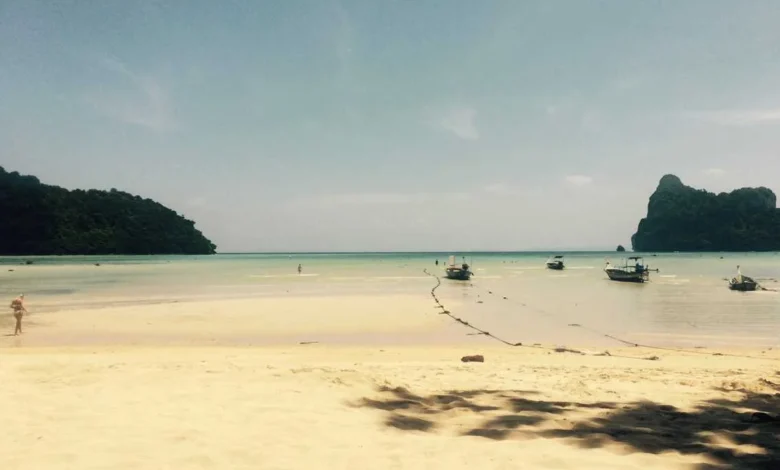
In stark contrast to the commercialized energy of Patong and the northern resort corridors, Phuket’s southern extremity offers a more naturalized, ecologically preserved environment. As the week progressed, the family transitioned their daily excursions toward Nai Harn Beach and the diminutive cove of Ya Nui Beach.

These southern beaches are strictly regulated by local municipal authorities regarding commercial development, resulting in significantly lower structural density, minimal high-rise intrusion, and a preservation of local coastal vegetation. Tourism analysts note that travelers seeking sustainable and authentic experiences increasingly gravitate toward these micro-destinations, which distribute economic benefits directly to smaller vendors, independent restaurants, and local fishermen.
A primary cultural and economic highlight of the southern migration was a visit to the Rawai Seafood Market. Here, visitors engage in a direct-to-consumer economic model: patrons purchase fresh, locally caught marine life—including reef fish, tiger prawns, and rock lobsters—directly from local fishermen and vendors along the pier, and subsequently commission adjacent open-air restaurants to prepare the catch to order. This interactive market model not only provides high nutritional value and culinary authenticity but also serves as an informal educational experience for children regarding marine biodiversity and local coastal commerce.
Implications and Best Practices for Family Travel in Phuket
The logistical success of a weeklong family deployment in Phuket highlights several broader principles relevant to the contemporary travel industry.

-
Spatial Autonomy Over Institutional Luxury: The growing preference for private residential rentals over traditional hotels underscores a fundamental shift in consumer psychology. Families increasingly value domestic capabilities—such as private laundry facilities, full kitchens, and independent climate control—over standardized hotel amenities.
-
Infrastructure and Emergency Readiness: Selecting a centrally located base like Patong ensures immediate access to critical infrastructure, including international-standard medical facilities, reliable transport networks, and commercial supply chains, mitigating the inherent risks associated with traveling with minors.
-
Pacing and Cognitive Load Management: Tourism boards and travel psychologists consistently emphasize that over-scheduling children leads rapidly to behavioral fatigue and diminished holiday satisfaction. Incorporating structural downtime—such as morning pool routines and early evening villa returns—significantly enhances the psychological well-being of both children and parents.
Ultimately, the data and lived experiences gathered from extended stays in Phuket suggest that the island’s true economic and cultural value extends far beyond its heavily marketed resort facades. By decentralizing itineraries, supporting localized rental ecosystems, and embracing a slower, more deliberate cadence of exploration, families can unlock a sustainable, deeply memorable travel experience that bridges the gap between international adventure and domestic comfort.