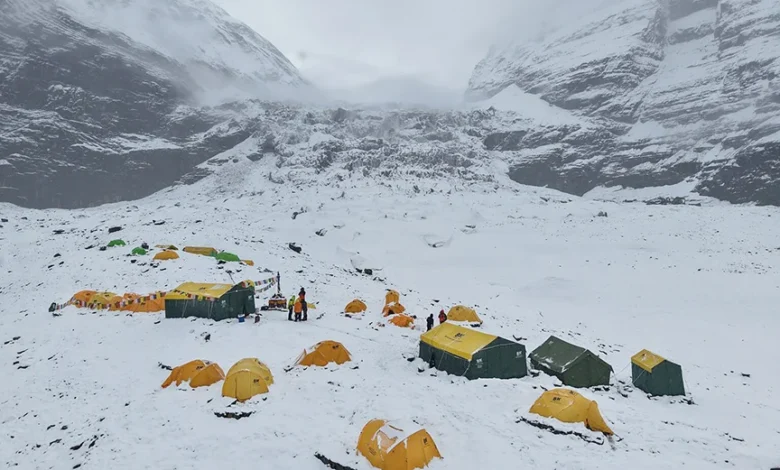
A massive, slow-moving weather system originating from the Bay of Bengal has descended upon Nepal, triggering a nationwide red alert and bringing high-altitude expeditions to a precarious standstill. While the meteorological event, characterized by heavy, persistent rainfall in the lower valleys and severe blizzard conditions in the high Himalayas, has effectively shuttered the commercial climbing season for the majority of operators, a small contingent of alpinists remains hunkered down in base camps, waiting for a break in the weather that many experts believe may never come.
The storm, which meteorologists anticipate will batter the region for at least four to five days, comes on the heels of a catastrophic monsoon season that has already claimed the lives of 1,452 people due to widespread flooding and landslides. This atmospheric instability has forced the hand of major expedition outfits, leading to a mass evacuation of personnel from the slopes of 8,000-meter peaks like Manaslu and Dhaulagiri. Yet, for a dedicated few, the lure of the summit remains a powerful enough incentive to endure the isolation of a snow-bound base camp.
Chronology of the Crisis and Operational Retreat
The situation began to deteriorate late last week as weather models confirmed that a deep-pressure system would track directly over the Himalayan range. By early this week, the tactical reality on the mountains shifted from summit pushes to preservation.
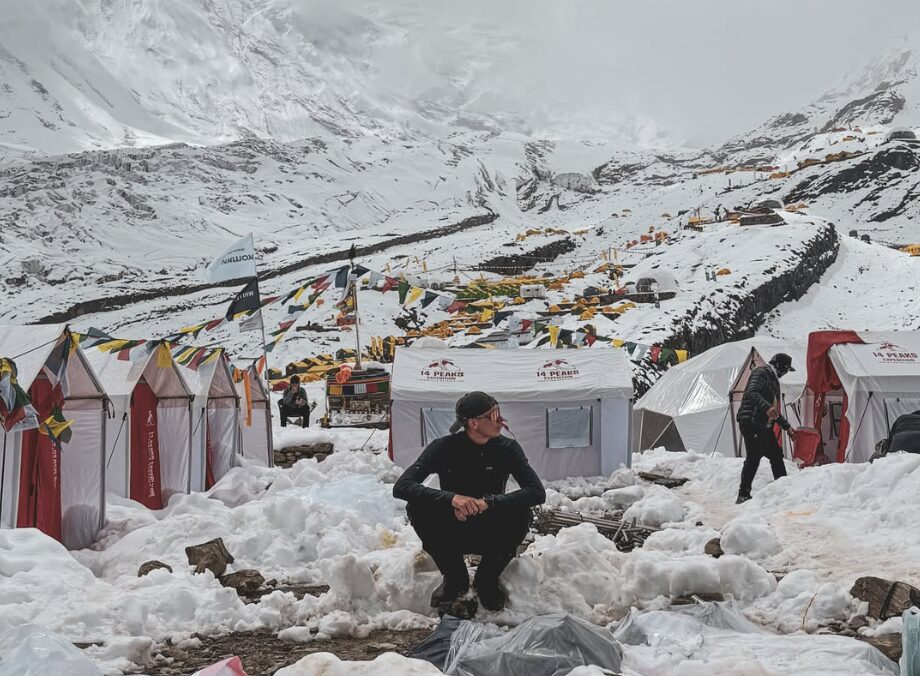
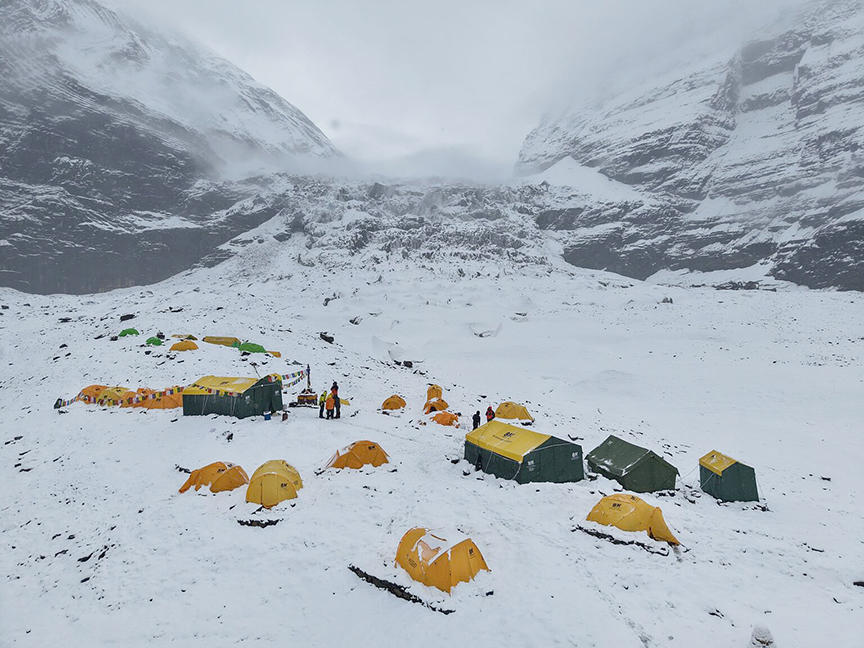
On Manaslu, Russian climbers Denis Aleksenko and Artem Tsensevitsky have made the unconventional decision to remain in their base camp, even as the infrastructure around them vanishes. According to Aleksenko, approximately 90% of the base camp facilities have been dismantled as other teams opted for a full retreat to safer, lower altitudes. The remaining tents are largely those of support staff and a few die-hard climbers who refuse to accept the season’s conclusion.
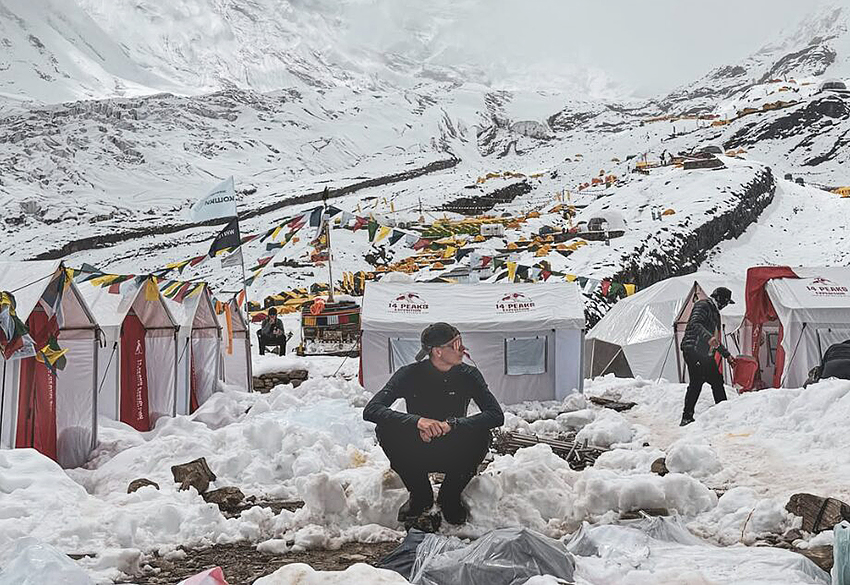
In contrast, the U.S.-Australia-based firm Climbing the 7 Summits initiated a disciplined withdrawal of their entire team. Rather than abandoning the season entirely, they have relocated their climbers and staff to the safety of Samagaon and Kathmandu. Their leadership, guided by the experience of founder Mike Hamill—a veteran of over 30 Himalayan expeditions—maintains that while the current window is closed, historical data suggests that early cancellations are not always justified. Hamill’s philosophy, shared by co-owner Caroline Pemberton, is that conservative patience has, on occasion, been rewarded when forecasted storms dissipate or track away from the intended climbing routes.
Conversely, the outfitter Elite Exped, which had initially signaled an intention to wait out the weather, officially pivoted yesterday to conclude their season. Their decision was driven by the physical reality of the mountain: heavy snowfall has rendered the trails impassable, significantly increasing the labor required to re-establish routes. The logistical burden of breaking trail through deep, unstable snow, combined with the extreme avalanche risk, has made the prospect of fixing new ropes for commercial clients untenable.
The Human and Meteorological Toll
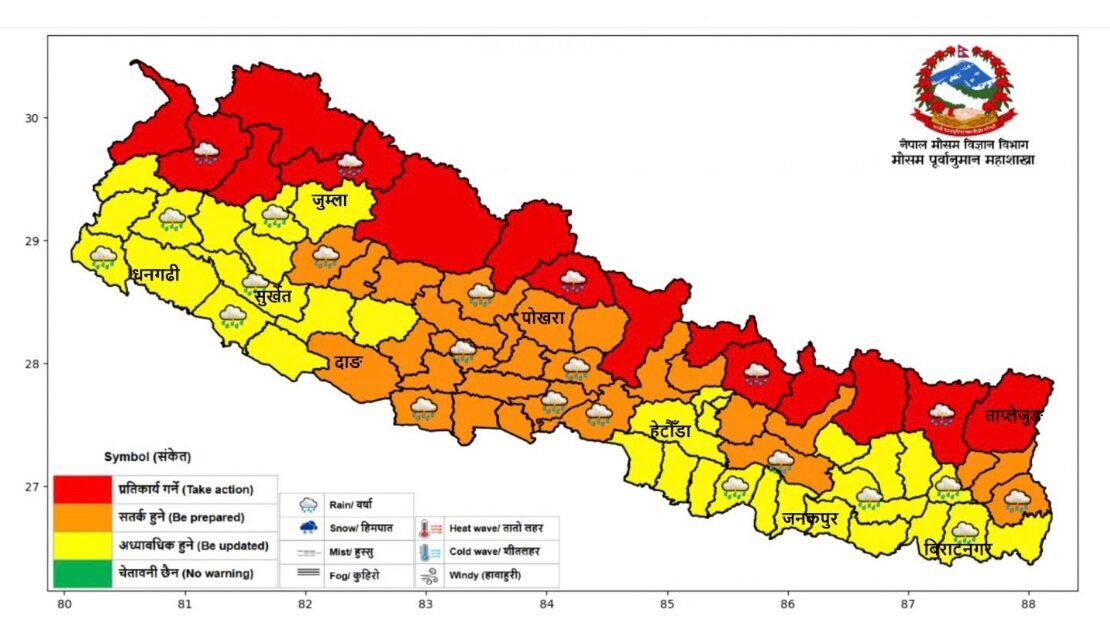
The current weather pattern is a late-monsoon phenomenon that has drawn significant concern from the Department of Hydrology and Meteorology in Nepal. The transition from monsoon to post-monsoon climbing is typically marked by stable windows, but the intensity of this particular system has led officials to classify the entire mountainous region under a red alert.
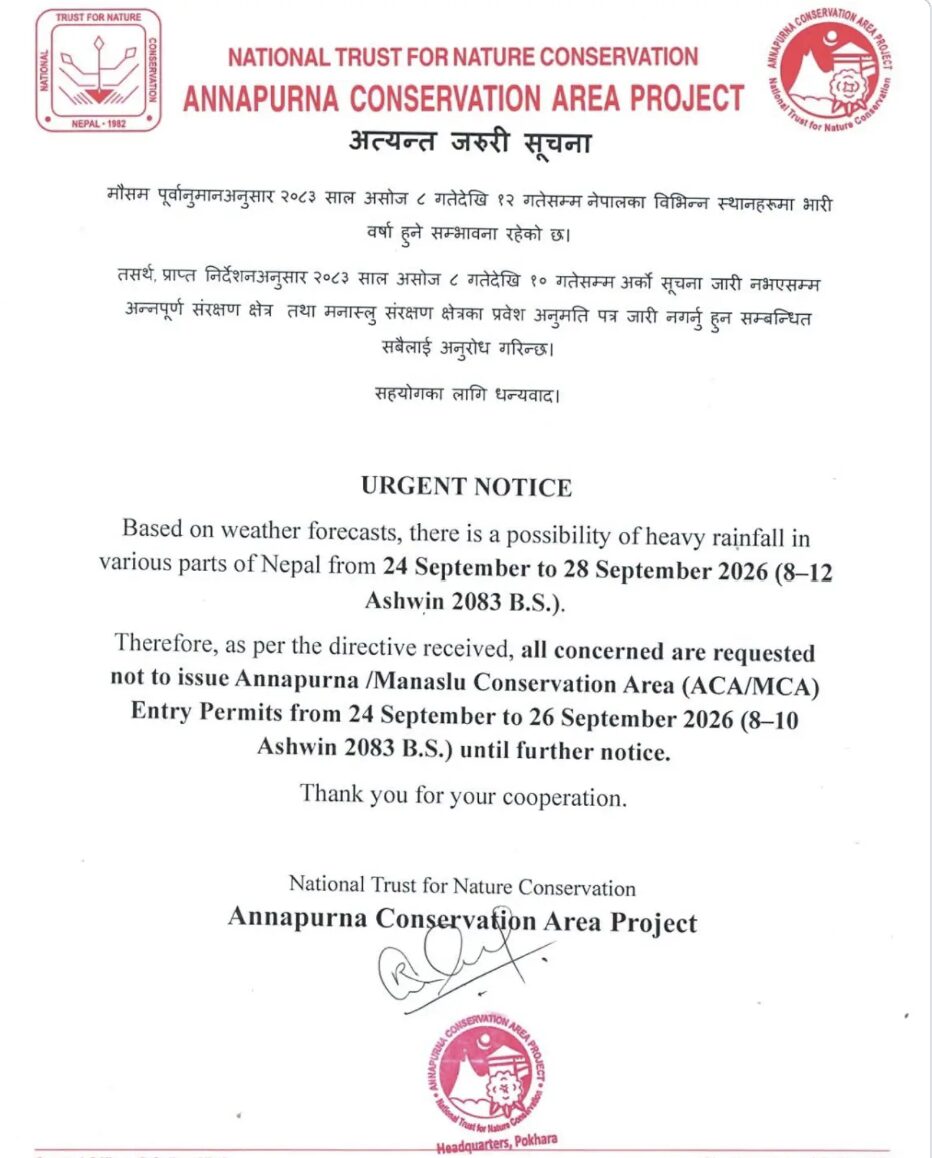
The concern is not limited to the high-altitude elite. Trekking routes, which draw thousands of tourists annually, are facing severe disruption. The Annapurna region has issued formal closure notices, citing the high probability of flash floods and landslides that threaten the safety of mountain corridors. For the thousands of trekkers currently in Nepal, this event serves as a stark reminder of the volatility of the region’s climate.
This situation draws immediate parallels to the tragic events of last year, when Cyclone Montha struck the region. That storm resulted in nine deaths across various avalanches on 6,000-meter and 7,000-meter peaks. Unlike the current event, which has forced 8,000-meter climbers to retreat, the previous cyclone primarily impacted trekkers and mountaineers at lower elevations who were unprepared for the rapid, massive accumulation of snow.
Implications for the Industry and Future Protocols
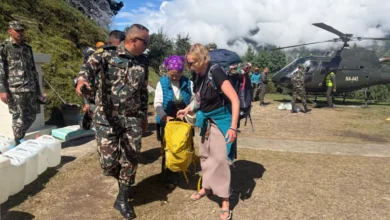
The logistics of mountain safety in Nepal have become increasingly complex. The Airlines Operators Association of Nepal has issued a directive to helicopter companies, requesting they maintain standby status for rescue operations. However, the meteorological reality is that the intensity of the winds and the density of the cloud cover will likely ground all aviation assets for the duration of the storm. This creates a dangerous "blackout" period where search and rescue capabilities are effectively neutralized.
The Expedition Operators’ Association Nepal (EOAN) has been instrumental in disseminating warnings, yet the challenge remains in the varying risk appetites of different teams. While professional outfits are increasingly data-driven, the decision to remain on the mountain by independent climbers poses a significant strain on resources. If a rescue were required during the height of this storm, the risk to the rescue crews would be extreme, potentially leading to further loss of life.
Analysis of the Season’s Viability
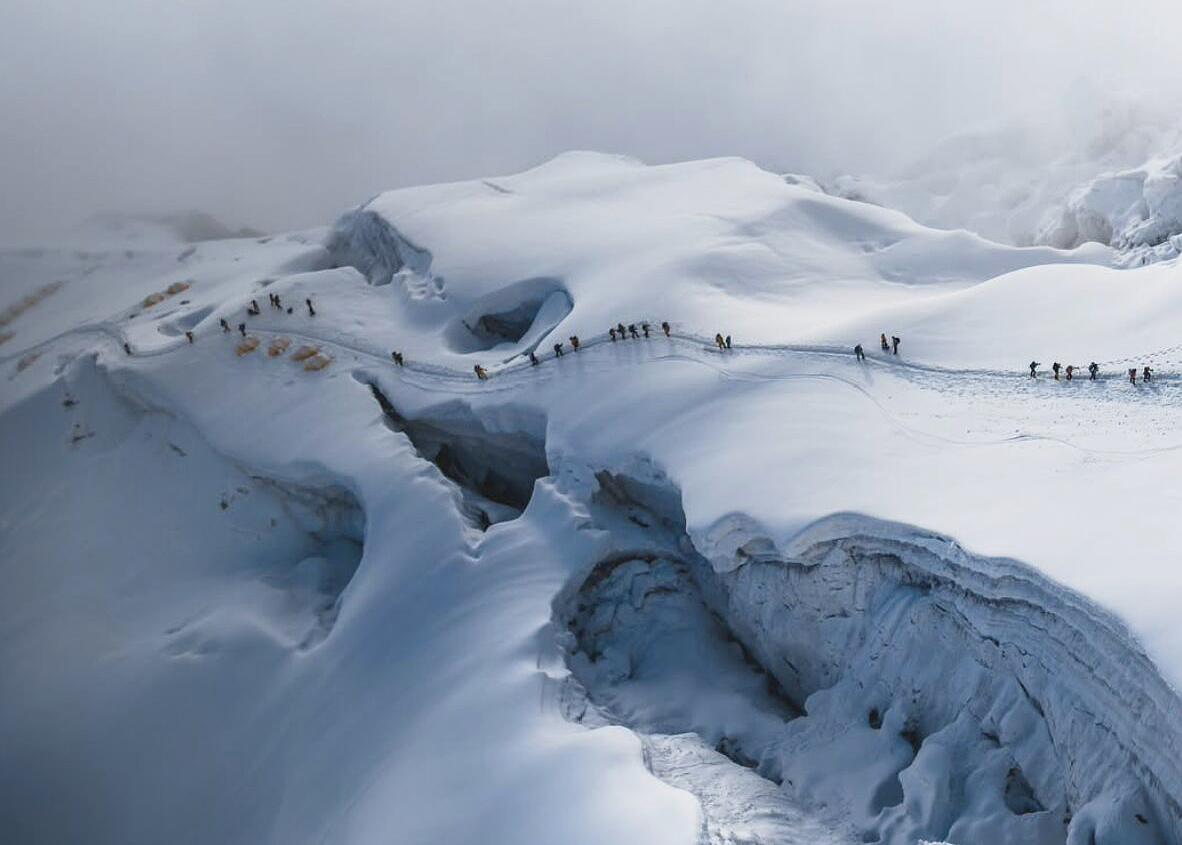
From an objective standpoint, the 2024 late-season window is rapidly narrowing. Even if the precipitation were to cease within the predicted four-day timeframe, the mountain conditions would remain hazardous for weeks. The process of "re-opening" a mountain like Manaslu—which involves re-establishing camps, testing the stability of the snowpack, and re-fixing ropes—is a massive undertaking that requires sustained clear weather.
For the outfits that have already relocated to Kathmandu, the cost of keeping staff and logistics on standby is significant. However, this is weighed against the potential for a "late-season miracle," where a brief high-pressure system might allow for a fast-and-light summit push. Yet, the consensus among veteran mountain guides is that the current depth of new snow, combined with the high-altitude winds expected to follow the storm, will likely result in a high-danger avalanche cycle that could last for the remainder of the month.
The Role of Technology and Communication
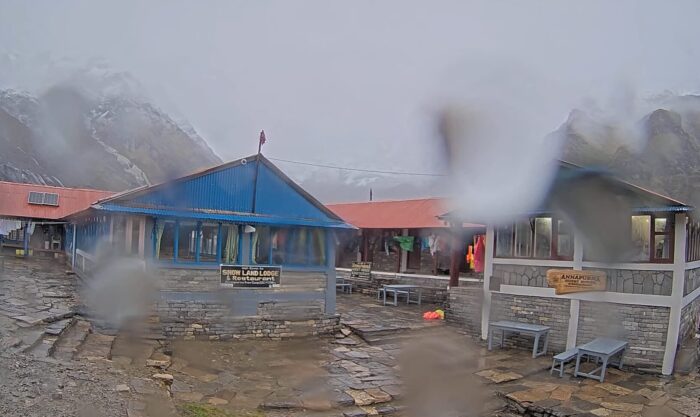
One notable improvement in the management of this crisis is the dissemination of information. As noted by UK-based outfitter Roland Hunter of The Mountain Company, the communication regarding extreme weather has become more structured and effective than in previous years. The availability of real-time weather data and live webcams, such as those at Lukla airport and the Annapurna Sanctuary, allows for better informed, albeit difficult, decision-making.
Despite this, the human element—the "summit fever" that pushes climbers to risk everything for a peak—remains a constant. The 1% chance mentioned by Denis Aleksenko represents a psychological threshold that often defies traditional risk assessment. While the commercial industry is increasingly leaning toward a safety-first model that prioritizes the lives of staff and clients over the completion of the expedition, the existence of smaller, independent teams complicates the overall risk landscape.
Conclusion: A Season in Suspension
As the rain continues to fall in Kathmandu and the snow continues to accumulate on the upper slopes of the Himalayas, the region finds itself in a state of enforced pause. For the majority of the climbing community, the priority has shifted from the pursuit of summits to the pursuit of safety. The coming days will be critical, not only for the few who remain on the mountains but for the local communities in the valleys who are most vulnerable to the secondary effects of the storm, such as flooding and infrastructure collapse.
The lesson of this year’s late-monsoon crisis is clear: the Himalayan environment is increasingly unpredictable. The ability to pivot, to accept the loss of a season, and to recognize when the mountain is simply not ready for human presence, has become the most essential skill for any modern mountaineer. As the red alerts remain in effect, the focus for all parties—from the elite climber at 7,000 meters to the trekker in the lower valleys—is survival. The mountains will remain, but the current weather event serves as a stern reminder that nature, not the climber, dictates the timeline of the high Himalaya.