United Airlines Aggressively Targets Competitors Through Strategic Status Match Initiative and Technological Dominance

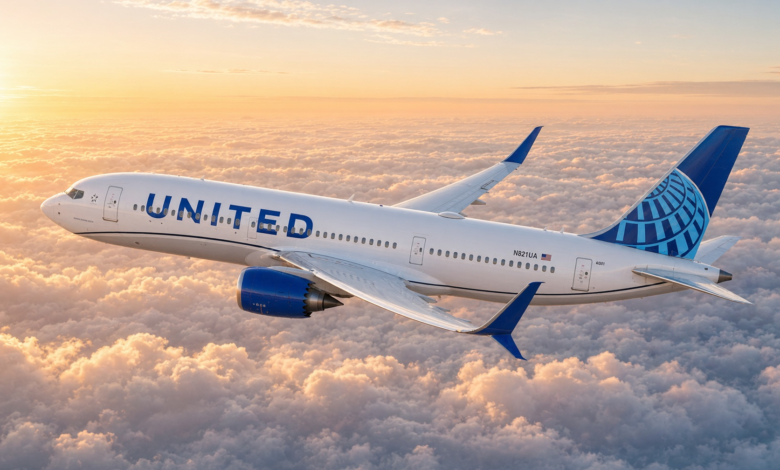
In an aggressive push to consolidate its market share among premium travelers, United Airlines has launched a targeted status-matching campaign aimed directly at loyal customers of American Airlines and Delta Air Lines. This move, which incentivizes high-value flyers to migrate their business to United, is being leveraged by the carrier’s current technological competitive advantage: the large-scale integration of SpaceX’s Starlink satellite internet across its fleet. While the airline industry has long competed on route networks, seat configurations, and loyalty program perks, the current battleground has shifted to inflight connectivity, a feature that has evolved from a luxury amenity to a baseline necessity for the modern business traveler.
The strategic timing of this campaign arrives as United reports that more than 600 of its aircraft are already equipped with high-speed Starlink Wi-Fi, with a firm internal goal to reach 1,000 aircraft by the conclusion of the calendar year. By contrasting its immediate technological deployment with the divergent strategies of its two primary competitors, United is positioning itself as the premier choice for connectivity-dependent passengers.
The Connectivity Divide: A Technological Arms Race
The landscape of inflight connectivity is currently undergoing a radical transformation, yet the three major U.S. carriers—United, Delta, and American—have chosen vastly different technological paths. United’s commitment to Starlink represents a high-stakes bet on Low Earth Orbit (LEO) satellite technology. By utilizing SpaceX’s constellation, United promises a broadband-like experience that mirrors terrestrial fiber-optic performance, capable of handling high-bandwidth tasks such as video conferencing, real-time gaming, and large file transfers—tasks that have historically crippled traditional inflight systems.
Conversely, the strategies employed by Delta and American highlight the fragmentation of the industry’s digital infrastructure. Delta Air Lines, which has been a vocal proponent of its own proprietary connectivity initiatives, has faced criticism regarding its selection of satellite partnerships. While Delta has sought to innovate, industry analysts have noted that the carrier’s reliance on alternative satellite providers has met with skepticism, particularly as those systems encounter technical hurdles in commercial implementation that the Starlink infrastructure has seemingly bypassed.
American Airlines, meanwhile, has adopted a more conservative and long-term timeline. The carrier has signaled that its next-generation inflight connectivity rollout is not scheduled to commence until 2027. This three-year gap provides United with a significant window of opportunity to capture "digital nomads" and executive travelers who view consistent, high-speed internet as a prerequisite for flight selection.
Chronology of the Connectivity Shift
The current state of affairs is the culmination of years of investment and shifting consumer expectations. The chronology of this transition reveals how quickly the market has moved:
- 2019-2021: The COVID-19 pandemic forces a massive shift in remote work culture. Frequent travelers begin to prioritize "office-in-the-sky" capabilities over traditional perks like meal quality or lounge access.
- 2022: SpaceX begins aggressively marketing Starlink for aviation, promising latency speeds significantly lower than the legacy satellite networks used by traditional airlines.
- 2023: United Airlines officially announces its partnership with SpaceX, pledging to equip its entire mainline fleet with Starlink, free of charge to passengers.
- Early 2024: United begins the rapid installation phase, focusing on its narrow-body fleet to maximize the impact on the most common domestic business routes.
- Q3/Q4 2024: United initiates the targeted status match program, specifically inviting American and Delta elite-tier members to test the new connectivity firsthand.
Data-Driven Implications for Passenger Loyalty
The decision to offer status matches is a calculated maneuver based on the "switching cost" theory. For a passenger with elite status on Delta or American, the barrier to switching airlines is high because of the loss of benefits such as complimentary upgrades, priority boarding, and baggage fee waivers. By offering a status match, United removes the friction associated with moving to a new carrier.
According to industry data from the Bureau of Transportation Statistics, the average domestic flight duration for business travelers is approximately 2.5 hours. For these passengers, a loss of connectivity for even 30 minutes can result in missed deadlines or fragmented communication. United’s internal data suggests that customers who experience stable, high-speed Wi-Fi report a 40% higher satisfaction rate with their overall flight experience. By effectively commoditizing high-speed internet, United is turning a utility into a primary loyalty driver.
Industry Analysis: The Risks of Implementation
While United’s narrative of dominance is compelling, industry analysts caution that the rollout is not without risk. Integrating satellite technology into a fleet of over 600 diverse aircraft requires significant engineering precision. Each aircraft type requires unique hardware modifications, and the logistics of retrofitting a fleet while maintaining flight schedules are immense.
However, the risk of inaction appears to be higher. Delta’s recent challenges with its selected satellite partner serve as a cautionary tale. Analysts point to the "testing gap," where a system that performs well in a laboratory environment fails to account for the physical realities of high-altitude flight, including antenna obstruction, thermal management, and rapid handovers between satellites. United’s ability to move quickly—scaling to 1,000 aircraft in less than a year—suggests a robust supply chain and a mature installation process that its competitors currently lack.
Official Responses and Competitive Positioning
While United has not released specific internal numbers regarding the number of status matches requested, spokespeople for the airline have emphasized that the campaign is designed to "reward those who value time and efficiency." In recent communications, United executives have highlighted the "Starlink experience" as a cornerstone of their value proposition, framing it not just as an amenity, but as a commitment to the productivity of the American worker.
Representatives for American and Delta have largely declined to comment on United’s specific status match campaign, maintaining that their own loyalty programs remain industry-leading. However, in recent investor calls, Delta leadership has reiterated that their focus remains on providing a "premium experience" that includes a mix of reliability and service, rather than focusing solely on the technological infrastructure of the aircraft.
Broader Impact on Airline Economics
The ripple effects of this connectivity war are likely to extend well beyond the current quarter. If United successfully converts a significant portion of its competitors’ elite base, it will force a strategic rethink at both American and Delta.
- Revenue Per Available Seat Mile (RASM): By attracting high-value business travelers, United is positioning itself to increase its RASM. Business travelers are historically less price-sensitive and more likely to book last-minute, full-fare tickets if the utility—in this case, connectivity—is guaranteed.
- Market Differentiation: For years, the U.S. "Big Three" have converged on similar product offerings. The Starlink integration provides United with a rare, distinct product differentiator that is easily understood by the average consumer.
- The Future of Inflight Services: If Starlink proves to be as reliable as United claims, it may pave the way for other value-added services, such as live-streaming media, integrated corporate collaboration tools, and enhanced inflight retail, all of which require the high bandwidth that only LEO satellite constellations can currently provide.
Conclusion: A New Standard for Commercial Aviation
The rivalry between the major U.S. carriers has entered a new, high-tech phase. By prioritizing the passenger’s need for constant connectivity, United Airlines has successfully shifted the conversation away from legacy loyalty perks and toward the immediate, tangible benefits of modern technology.
As the airline industry continues to navigate a post-pandemic environment, the ability to deliver a seamless, high-speed internet experience is likely to become a defining factor in customer retention. With American’s rollout years away and Delta’s current satellite strategy facing scrutiny, United has carved out a distinct competitive advantage. Whether this technological lead will translate into long-term market share dominance remains to be seen, but for the time being, United has succeeded in positioning itself as the most technologically prepared carrier for the demands of the modern, connected traveler.
The success of this status match campaign will ultimately depend on whether the onboard reality of Starlink consistently meets the high expectations set by United’s marketing. If the service remains as robust as current data suggests, the airline may have effectively set a new industry standard that its competitors will be forced to match—at a significant cost—in the years to come.