Unearthing the Legend of Nasi Lemak Tanglin: Kuala Lumpur’s Historic Culinary Institution

The culinary landscape of Southeast Asia boasts countless iconic dishes, yet few command the cultural reverence and daily devotion of Malaysia’s national dish: Nasi Lemak. Spanning from southern Thailand through the Malaysian peninsula and down to Singapore, this deceptively simple composition of "fat rice" serves as a foundational element of regional cuisine, consumed by tens of millions daily. Among the pantheon of establishments dedicated to this heritage food, Nasi Lemak Tanglin in Kuala Lumpur stands out not merely as a restaurant, but as a historic institution. Operating continuously for over seven decades, this open-air stall inside the Kompleks Makan Tanglin complex offers a masterclass in traditional Malay gastronomy, drawing epicures, locals, and international travelers alike.
Main Facts: The Anatomy of an Iconic Breakfast and Lunch Institution
Nasi Lemak Tanglin operates within a shared food complex that brings together various vendors specializing in traditional Malaysian morning and midday fare. Situated near Lake Gardens in Kuala Lumpur, the establishment opens its counters daily at 7:00 AM, feeding a relentless stream of patrons until stocks are completely exhausted—a milestone frequently reached by 11:30 AM or noon.
The core of the dish remains true to its historic roots: rice infused with rich coconut milk to impart a velvety texture, gently steamed alongside pandan leaves to achieve a subtle, floral fragrance. This is accompanied by essential traditional garnishes: crisp cucumber slices, fried anchovies (ikan bilis), and roasted peanuts, all tied together by sambal—a complex, time-consuming chili paste that balances heat, sweetness, and tang.
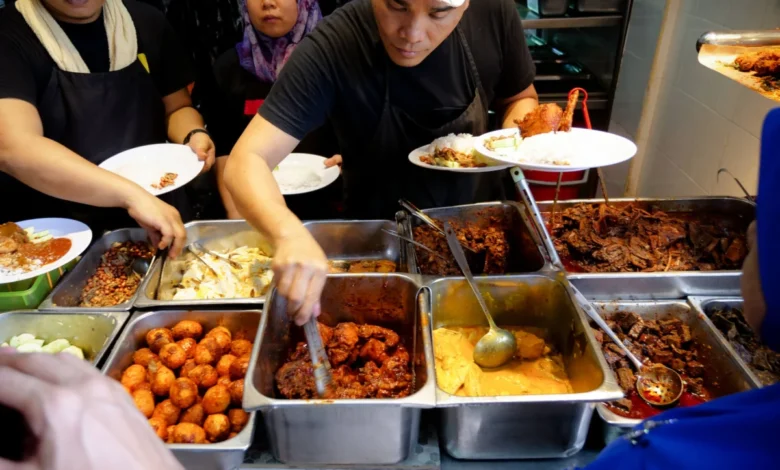
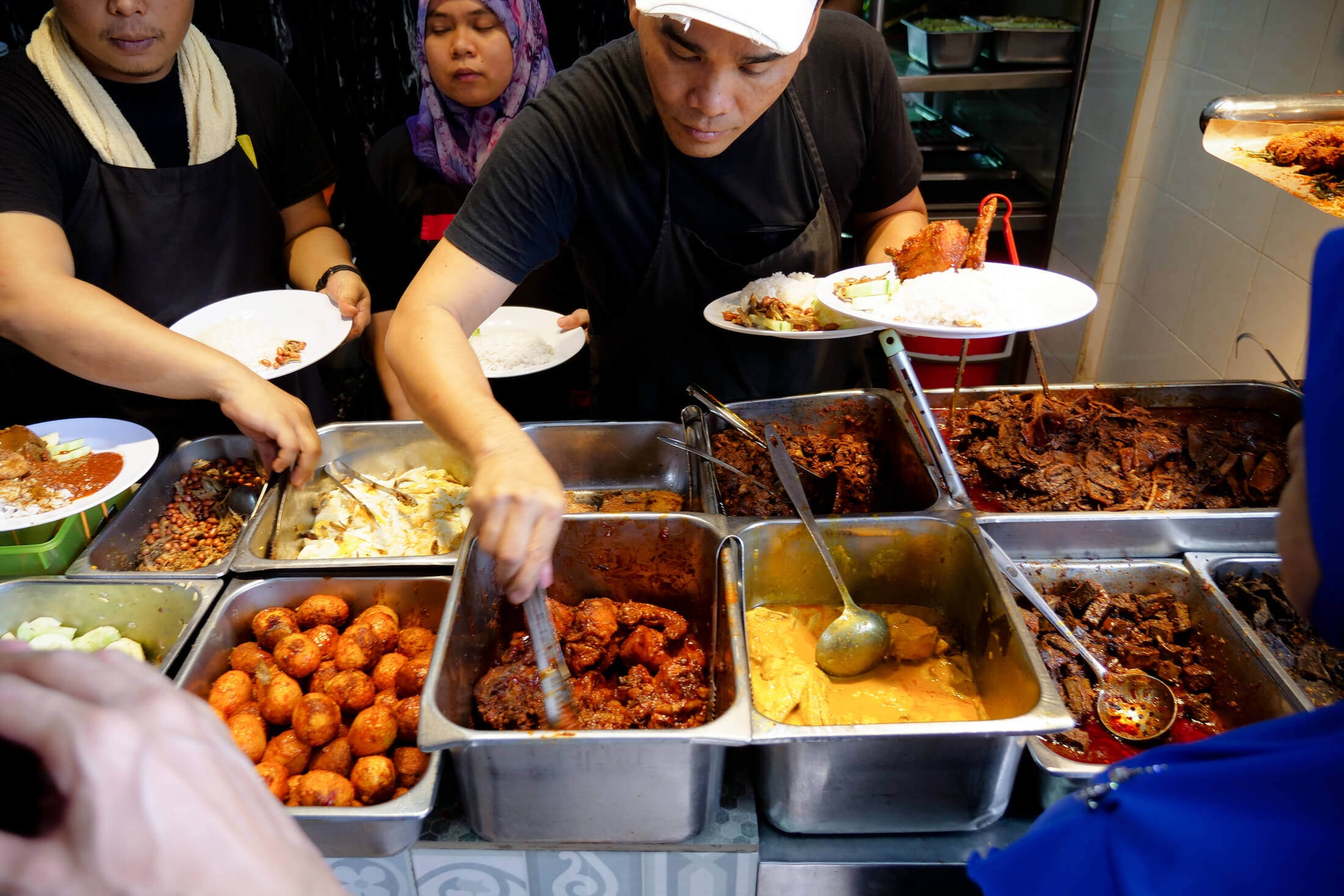
Beyond the foundational plate, Nasi Lemak Tanglin distinguishes itself through an extensive buffet-style counter featuring rich curries, braised meats, and offal. Diners curate their own plates, selecting proteins such as beef rendang, cockles, and beef spleen, smothered in thick, dark gravies and crowned with a fried egg.

Chronology and Historical Background
The history of Nasi Lemak Tanglin is deeply intertwined with the post-independence culinary evolution of Kuala Lumpur. Established in 1948—before the formal independence of Malaya—the stall began as a modest operation serving colonial-era laborers, civil servants, and local residents. Over the decades, management has passed through generations, preserving the exact spice pastes, cooking methodologies, and purveyor relationships that established its reputation.
Despite urban modernization, expressway developments, and the shifting demographics of Malaysia’s capital, the stall has remained rooted in its original location at Kompleks Makan Tanglin. The daily rush follows a rigid, decades-old chronology: preparations begin in the pre-dawn hours at around 3:00 AM, when large cauldrons of coconut rice are steamed and vats of beef rendang and sambal are simmered. Doors open at 7:00 AM, triggering a mid-morning peak between 9:30 AM and 11:00 AM, during which hundreds of office workers, tourists, and multi-generational families converge on the open-air seating area. By early afternoon, the metal trays are routinely wiped clean, marking the end of the business day.

Supporting Data and Economic Accessibility
Gastronomic tourism data underscores the economic accessibility of Nasi Lemak as a cornerstone of Malaysian food culture. A standard base plate of Nasi Lemak Tanglin—featuring the core coconut rice, sambal, anchovies, peanuts, and cucumber—is priced affordably at approximately 2 Malaysian Ringgit (MYR). The inclusion of premium proteins, such as beef rendang, squid, cockles, or specialized offal dishes, adds between 1 to 5 MYR per item.
For a comprehensive meal supporting multiple diners, costs remain remarkably low. A recent four-person dining excursion featuring heavy proteins, multiple curries, and side dishes totaled roughly 35 MYR (approximately $8.50 USD). This pricing structure reflects the historic role of Nasi Lemak as an egalitarian working-class meal, ensuring that high-quality, culturally significant cuisine remains accessible across all socioeconomic strata.

Operational Dynamics and Environmental Adaptation
In recent years, institutional eateries across Kuala Lumpur have faced mounting pressure to adapt to modern environmental and regulatory standards. Nasi Lemak Tanglin has navigated these shifts by balancing heritage presentation with contemporary sustainability mandates.
Historically, Nasi Lemak was wrapped and served exclusively in folded banana leaves, a biodegradable practice deeply embedded in Malay culinary traditions. However, in alignment with national initiatives to curb single-use plastics and curb the over-harvesting of banana foliage in protected jungle reserves, many urban food complexes have transitioned toward reusable ceramic and melamine plates. While purists occasionally note the absence of the traditional leaf aroma, the operational shift allows for rapid turnover, waste reduction, and enhanced hygiene control during peak rush hours.

Furthermore, the dining experience at Kompleks Makan Tanglin integrates elements of Malaysian popular culture. Weekend and weekday breakfast rushes are frequently accompanied by live musical performances, notably "Pop Yeh Yeh"—a vibrant fusion of Malay folk traditions and 1960s Western rock and roll that originated in Singapore and Malaysia. This ambient entertainment transforms a routine meal into an immersive cultural outing, drawing diners who linger under protective awnings designed to shield them from equatorial downpours.
Broader Impact and Implications for Culinary Tourism
Nasi Lemak Tanglin serves as a case study in the longevity and resilience of traditional street food vendors within rapidly developing metropolitan centers. As global fast-food chains and upscale fusion cafes dominate urban real estate, institutions like Tanglin preserve the intricate techniques of heritage cooking—such as the multi-hour reduction of coconut milk and the meticulous balancing of dried chilies, shrimp paste, and aromatics required for authentic sambal.

From a sociological perspective, communal food halls such as Kompleks Makan Tanglin act as social equalizers. Government officials, blue-collar laborers, university students, and international tourists share communal tables, united by a shared appreciation for regional gastronomy. The establishment’s practice of smothering exposed grains of rice with "bonus ladles" of rich curry broth exemplifies a culture of hospitality and abundance deeply ingrained in Malaysian food service.
For international travelers and domestic food historians alike, a visit to Nasi Lemak Tanglin offers more than a simple breakfast; it provides a direct connection to the gastronomic heritage of mid-century Malaya. As Kuala Lumpur continues to market itself as a premier global destination for culinary tourism, the preservation and celebration of legacy stalls ensure that the foundational flavors of the nation remain accessible, vibrant, and culturally intact for future generations.
Restaurant Information:
Name: Nasi Lemak Tanglin
Location: Kompleks Makan Tanglin, Kuala Lumpur, Malaysia
Hours: Open daily from 7:00 AM to 1:00 PM (or until sold out)
Pricing: Base plates from 2 MYR; average complete meals range from 8 to 15 MYR per person.