Exploring the Historic Legacy of Mission San Juan Capistrano: The Birthplace of Orange County

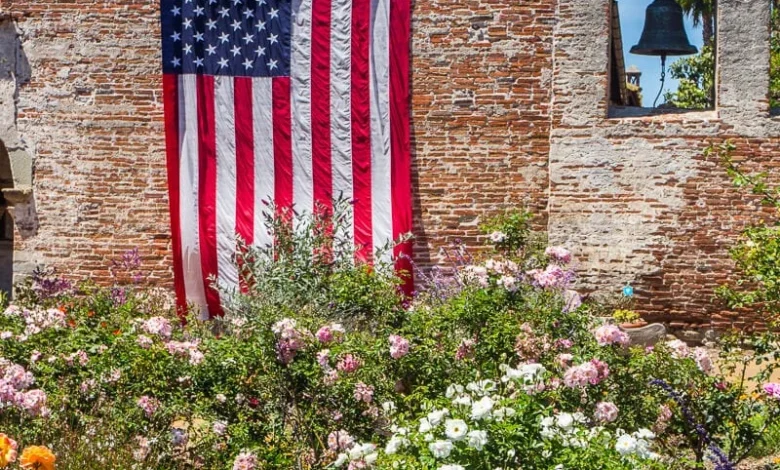
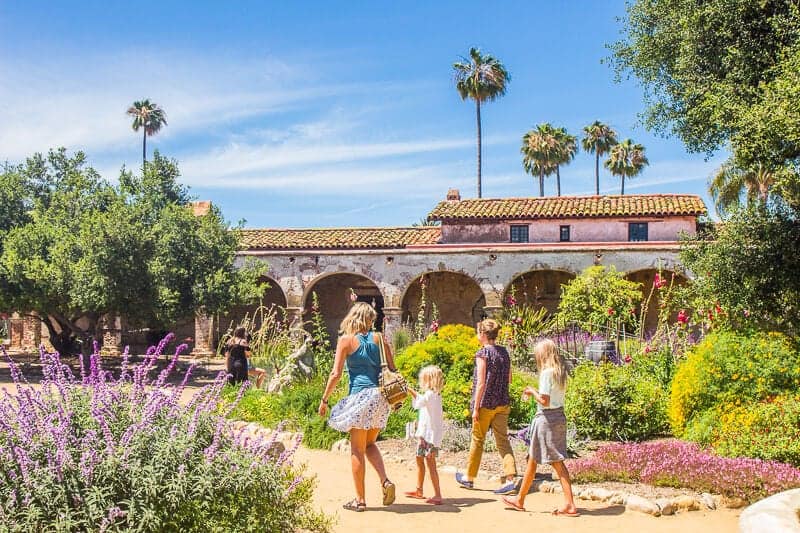
Nestled in the heart of Orange County, California, Mission San Juan Capistrano stands as one of the most culturally significant and historically complex landmarks in the American Southwest. Widely recognized as the "Birthplace of Orange County," this former Spanish colonial outpost spans more than two centuries of profound architectural, social, and political evolution. Today, the mission operates primarily as a historic museum and active parish, drawing hundreds of thousands of visitors annually to examine its preserved Spanish-Baroque architecture, sprawling gardens, and deep-rooted ties to the region’s indigenous populations.
The Chronology of a Colonial Settlement: Foundation and Expansion
The origins of Mission San Juan Capistrano trace back to the late 18th century, an era defined by the expansionist ambitions of the Spanish Empire. Between 1769 and 1833, Spanish authorities and Franciscan missionaries established a network of 21 missions stretching along the California coast. Their primary objectives were twofold: to assert territorial claims against rival European powers and to systematically convert the indigenous populations to Catholicism.

Founded on November 1, 1776, by Father Junipero Serra, Mission San Juan Capistrano was the seventh mission established in California. Named in honor of Saint John of Capistrano, a 15th-century Franciscan theologian and inquisitor from Italy, the site quickly grew into a bustling agricultural and administrative community. The local indigenous population, the Acjachemen people, were integrated into the mission system. While the Spanish introduced European agricultural techniques, livestock, metallurgy, and new forms of social organization, this integration fundamentally disrupted indigenous culture, language, and traditional ways of life.
The introduction of foreign flora and fauna by European settlers permanently altered the local ecosystem, reshaping the topography and biological diversity of the region. Furthermore, the close-quarter living conditions within the mission compound introduced European pathogens—such as measles, tuberculosis, and syphilis—to populations lacking acquired immunities, resulting in severe demographic decline among the Acjachemen.

Natural Disasters and the Transition of Power
The 19th century brought severe turbulence to the mission. On December 8, 1812, a massive earthquake struck Southern California, causing catastrophic structural damage. The tremors completely destroyed the mission’s ambitious Great Stone Church, an architectural marvel of its time, and resulted in the loss of several lives. This disaster, coupled with rising mortality rates from epidemic illnesses and a declining birth rate, precipitated a gradual abandonment of the site by both missionaries and indigenous residents.

Geopolitical shifts further transformed the mission’s status. Following Mexico’s successful War of Independence from Spain in 1821, the new Mexican government secularized the California missions in the 1830s. In 1834, Mission San Juan Capistrano was sold into private hands, functioning as a private family ranch for over a decade.
Following the Mexican-American War and California’s admission to the Union as a state in 1850, efforts began to restore ecclesiastical properties to the Catholic Church. A significant legal milestone occurred in 1865 when President Abraham Lincoln signed an official government patent returning ownership of the Mission San Juan Capistrano lands to the Catholic Bishop of Monterey. Over the subsequent decades, extensive preservation and restoration efforts transformed the ruins and surviving structures into a protected historical site.

The Legend and Science of the Annual Return of the Swallows
Beyond its architectural and colonial history, Mission San Juan Capistrano achieved international renown due to a distinct ecological phenomenon: the annual migration of American cliff swallows. Every spring, these birds journey approximately 6,000 miles from their wintering grounds in Goya, Argentina, to nest in the eaves and stone archways of the mission.

According to popular local folklore, the tradition began centuries ago when an innkeeper, annoyed by the birds nesting on his property, began destroying them. A Franciscan friar reportedly invited the swallows to take refuge within the mission walls instead, establishing a tradition where the birds arrive around St. Joseph’s Day (March 19) and depart in the autumn. While modern ecological shifts and urban development have altered migration patterns—resulting in fewer swallows returning directly to the mission grounds in recent years—the cultural legacy of the swallows remains an integral part of the landmark’s identity.
Preserved Artifacts and Museum Exhibitions

Today, the mission functions as an expansive historical museum offering visitors a comprehensive look into early California history. The permanent collections house thousands of artifacts dating from the 18th through the 20th centuries. Notable items include:
- 19th-century leather saddles used by local ranchers during the private-ownership era.
- Original mission documents, including a marriage register dating back to the 1700s and liturgical texts used by the founding padres.
- The official land patent signed by President Abraham Lincoln in 1865.
- Extensive interpretive exhibits dedicated to the Acjachemen nation, highlighting indigenous art, culture, and life prior to European contact.
- Fine art galleries featuring works by regional artists such as Jan and Honorable H. Warren Siegel.
In addition to the museum galleries, visitors frequently tour the Serra Chapel—believed to be the oldest standing building in California where Father Junipero Serra celebrated Mass—as well as the historic Bell Wall, which houses two surviving original bells cast in the early 19th century: the San Antonio and the San Rafael. These bells are rung ceremonially on specific historical dates, continuing a tradition that spans generations.

The Surrounding Historic District and Regional Impact
Directly adjacent to the mission grounds across the railway tracks lies the Los Rios Historic District, recognized as the oldest continuously inhabited neighborhood in California. Established in the late 18th century to house mission builders and soldiers, the district features 31 authentic homes along Los Rios Street, some of which date back to 1794. Many of these historic adobe and Victorian-style structures remain occupied by descendants of original families, while others now house artisan boutiques, cafes, and art galleries.

Economically and culturally, the preservation of Mission San Juan Capistrano and the surrounding historic district serves as a major anchor for tourism in Orange County. Historians and cultural anthropologists emphasize that the site offers critical insights into the complex realities of the Spanish colonial period, balancing architectural appreciation with a serious examination of the socio-cultural transformations experienced by California’s native populations.
Visitor Information and Practical Details

Mission San Juan Capistrano is located at 26801 Old Mission Road, San Juan Capistrano, California. The museum and grounds are open Tuesday through Sunday from 9:00 a.m. to 5:00 p.m., with exhibition galleries closing at 4:00 p.m. General admission pricing is structured to accommodate various visitor groups, with adult tickets set at $19, senior tickets (60+) at $16, and student and child tickets (ages 5 and older) at $11. Children under the age of five are admitted free of charge.
As a cornerstone of Southern California heritage, the mission continues to serve as an educational nexus, inviting scholars, students, and travelers to engage directly with the foundational chapters of the state’s diverse history.