Tragedy at Himlung Himal: Four bodies recovered as rescue efforts continue following catastrophic avalanche

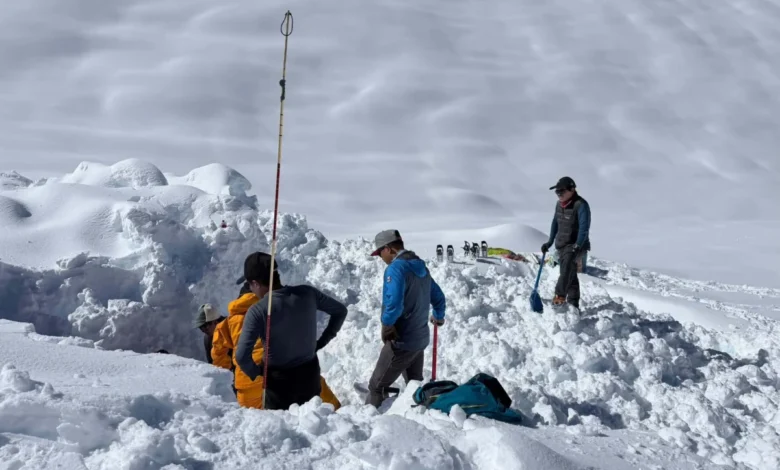
The mountaineering community is reeling from a catastrophic event at the base camp of Himlung Himal, where a massive, unexpected avalanche has buried the site under several meters of snow. Current reports confirm that four individuals have been recovered deceased, while the status of the remaining personnel at the site remains dire. A total of 16 people were present at the base camp when the disaster occurred, comprised of 14 kitchen staff members and two professional climbing guides. As search and rescue operations enter a critical phase, the prospects of finding survivors are rapidly diminishing, casting a somber shadow over the Himalayan climbing season.
The victims identified thus far include climbing guides Chhebi Bhote and Pasang Bhote, whose bodies were recovered yesterday, followed by the recovery of Birendra Gurung and Ghan Shyam Rai today. The loss of these individuals, all of whom were integral to the logistical and safety support systems for various climbing teams, represents a significant blow to the local guiding community.
Chronology of the Disaster and Response
The incident began following a period of intense and sustained snowfall in the region, which created unstable conditions across the mountain’s slopes. While Himlung Himal—located in the Gandaki Province of Nepal near the Tibetan border—is generally considered a technical but manageable objective, the sheer volume of fresh precipitation overwhelmed the area.
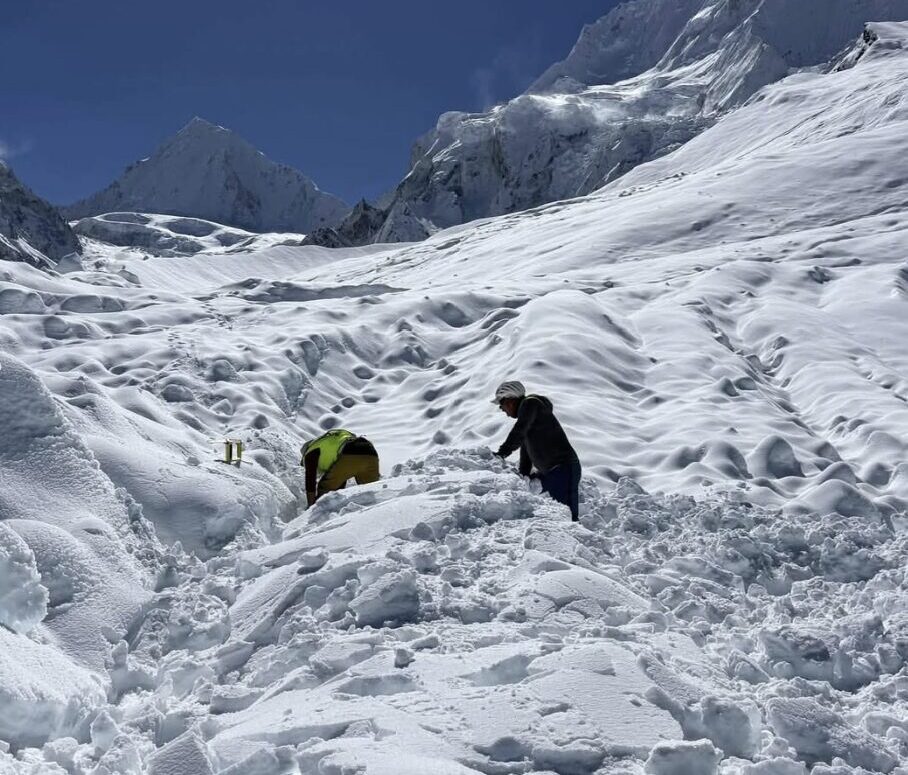
The avalanche struck the flat plateau of the base camp with little warning. The geography of the site, which is typically sheltered from major objective hazards, provided no protection against the force of the slide. Following the event, inclement weather prevented immediate rescue access, effectively isolating the area. It was not until the weather cleared yesterday evening that the first helicopter support was able to reach the vicinity.
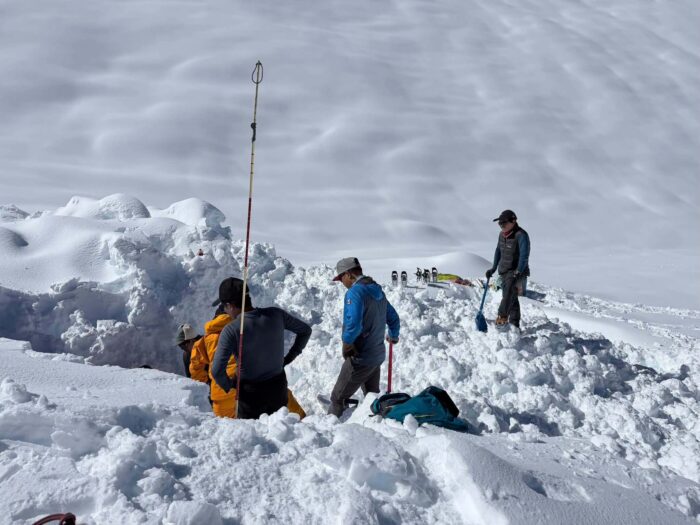
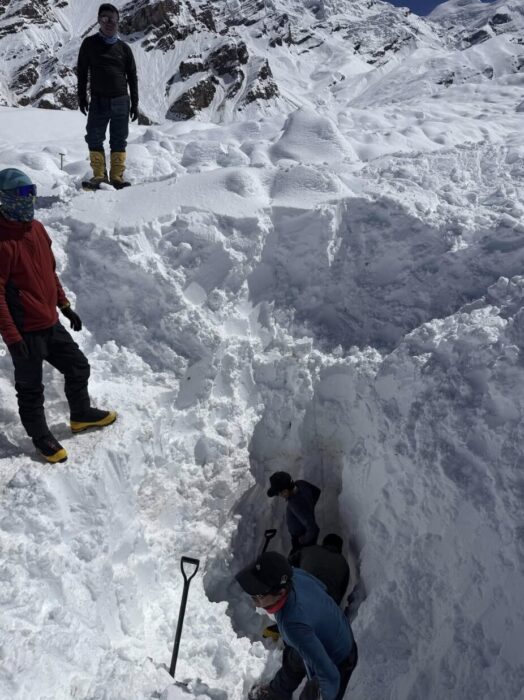
Today, a specialized rescue mission, led by the renowned climber Mingma G of Imagine Nepal, has intensified efforts on the ground. The team consists of eight highly experienced, IFMGA-accredited Sherpa guides, including Pasang Kaji Sherpa, Pimba Tenzing Bhote, Ashish Gurung, Tsering Pemba Sherpa, Bikram Karki, Dandu Sherpa, and Pasang Rinzi Sherpa. Their presence highlights the gravity of the situation; these are individuals who are no strangers to high-altitude recovery missions, yet they face the immense challenge of excavating a site buried under more than two meters of compacted snow and ice.
Geographical and Meteorological Context
Himlung Himal has historically been viewed as a relatively low-risk mountain regarding large-scale avalanches at base camp elevations. Unlike peaks with massive hanging glaciers or complex icefalls directly above the camp, the topography surrounding the Himlung base camp is characterized by gentler slopes.
However, mapping data provided by Gorskie Mapie offers a sobering look at the environmental factors that contributed to the tragedy. By analyzing NASA topographical data, experts have identified that the disaster was likely a "slab avalanche." This phenomenon occurs when a cohesive layer of fresh, heavy snow loses its bond with the frozen, harder surface beneath it. Even on slopes that appear moderate, the weight of rapid, excessive snowfall can act as a trigger, sending a massive, fluid-like wave of debris toward the base of the mountain.
The combination of the specific snow density and the accumulation rate appears to have been the primary catalyst. In the high Himalayas, "settled" snow is usually stable, but the rapid accumulation of heavy, wet snow—often associated with late-season shifts or unusual weather patterns—can turn seemingly benign slopes into lethal hazards.
The Human Cost and Industry Impact
The loss of 16 lives—if no further survivors are found—would rank among the most significant single-incident fatalities in the history of Himalayan commercial mountaineering. The composition of the group is particularly striking: the fact that 14 of the 16 individuals were kitchen staff underscores the vulnerability of the support personnel who make high-altitude expeditions possible. These workers are the backbone of the mountaineering industry, often spending weeks in base camps to ensure the safety, nutrition, and logistical success of international climbing clients.
Mingma G’s leadership in this recovery effort is particularly poignant, as he has faced personal loss within his own staff previously, most notably during the Broad Peak season in July. His commitment to leading this recovery underscores the tight-knit nature of the Sherpa community and their dedication to ensuring that no one is left behind, regardless of the danger.
Broader Implications for Himalayan Safety
This tragedy has reignited critical discussions regarding the safety of base camp placements. Historically, base camps are established in "safe zones," but as weather patterns in the Himalayas become increasingly unpredictable due to broader climate shifts, historical data may no longer serve as an accurate predictor of risk.
- Re-evaluating Risk Assessments: Mountaineering organizations and guiding companies may need to adopt more rigorous geological surveys before establishing base camps. The assumption that a flat, broad area is inherently safe is being challenged by the increased frequency of large-scale, unexpected slides.
- Climate Change and Weather Patterns: The intensification of monsoonal weather or erratic out-of-season storms can deposit immense amounts of snow in a short window. This poses a challenge for meteorologists and expedition leaders who must weigh the risk of staying in place versus attempting a risky evacuation during a storm.
- Emergency Preparedness: The delay caused by the weather highlights the reliance of remote Himalayan sites on helicopter support. When conditions prevent air access, teams are essentially left to their own devices. This raises questions about whether base camps should be equipped with more robust, specialized rescue caches to deal with large-scale burials.
A Community in Mourning
The Nepal National Mountain Guide Association (NNMGA) has been the primary conduit for information, coordinating closely with rescue teams and the families of the victims. As the search continues, the focus remains on the difficult task of recovery. The physical toll on the rescue team is immense, as they are required to probe and excavate through deep, frozen debris in high-altitude conditions, a process that is as exhausting as it is emotionally taxing.
For the families of Chhebi Bhote, Pasang Bhote, Birendra Gurung, and Ghan Shyam Rai, the news marks the beginning of a long period of grief. For the international climbing community, the Himlung disaster serves as a stark reminder of the inherent dangers that persist even when climbers are not actively on the mountain’s technical faces.
As the search operation continues, authorities are expected to launch an investigation into the precise sequence of events that led to the burial of the camp. While the immediate priority remains the recovery of the remaining victims, the long-term goal for the climbing community will be to translate the lessons learned from this catastrophe into improved safety protocols.
The Himlung Himal incident will likely influence how future expeditions select their base camp sites and how they monitor local snow conditions during periods of heavy precipitation. For now, however, the thoughts of the global mountaineering community remain with the rescuers on the ground and the families mourning those who were lost in one of the most unexpected tragedies in recent Himalayan history. The silence at the base of Himlung is a heavy one, marked only by the ongoing, determined efforts of those who refuse to leave their brothers behind.