The New Nordic Renaissance: How Sweden’s Quiet Luxury Is Redefining Global Travel Trends

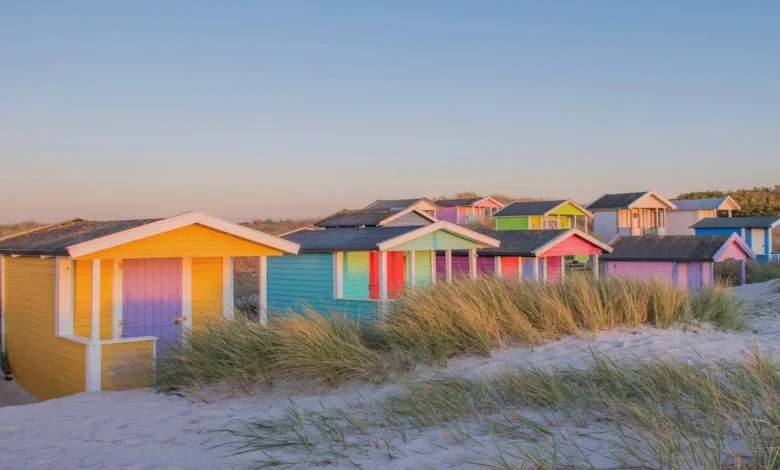
Tucked away on the Bjäre Peninsula, an unassuming guesthouse with kale-green shutters and a classic red-tile roof has become the epicenter of a quiet revolution in global hospitality. This is Furuhem, a property that rejects the glitz of traditional five-star retreats in favor of a philosophy rooted in intentionality, artisanal craftsmanship, and a return to the natural world. While the structure—historically linked to a time when Danish and Swedish royalty vacationed in the region—offers no Murano chandeliers or grand, marble-clad lobbies, it has become the most sought-after reservation in Scandinavia. Opened with a three-month waiting list, the inn represents a broader, tectonic shift in how the ultra-wealthy are choosing to consume luxury: moving away from performative opulence toward what many are now calling "intentional" or "quiet" luxury.
The Evolution of the New Nordic Culinary Scene
To understand the current appetite for properties like Furuhem, one must look back to the early 2000s, when the New Nordic Movement—spearheaded by visionaries such as René Redzepi of Noma—reshaped the global culinary landscape. The manifesto, which championed local, seasonal, and hyper-pure ingredients, forever altered the expectations of the modern gastronome.
Magnus Nilsson, the former head chef of the world-renowned Fäviken Magasinet, was a central figure in this movement. At Fäviken, located in the deep, evergreen forests of Jämtland, Nilsson elevated foraging and traditional preservation to an art form. Diners from around the globe traveled to his remote estate to experience 32-course tasting menus featuring ingredients as stark and uncompromising as dried pig’s blood and bone marrow served with diced cow’s heart. When Nilsson closed Fäviken in 2019, it marked the end of an era for aggressive, destination-based fine dining. His transition to the Bjäre Peninsula, where he now co-manages Furuhem alongside chef Frida Nilsson and Noma alumnus Daniella Rebelo, signifies a maturation of that same philosophy. The focus has shifted from the shock value of the avant-garde to the refinement of the domestic experience.

A New Geography of Affluence
The Swedish countryside is currently witnessing a renaissance that mirrors the growth of the Mediterranean coast, yet it does so with a distinct cultural identity. As record-breaking summer temperatures in Southern Europe drive travelers toward cooler northern latitudes, the west coast of Sweden has emerged as a premier destination.
This regional development is not limited to the Bjäre Peninsula. An hour’s drive away in the Halland province, Åstad Vingård illustrates the commercial viability of this trend. Once a third-generation dairy farm, the property has been transformed by siblings Linda, Daniel, and Mattias Carlsson into a sophisticated winery and spa. The estate, which houses the Michelin-starred Restaurant Äng, offers a 19-course hyper-seasonal tasting menu within a glasshouse, framed by the backdrop of grazing livestock and the Äkulla Bokskogar nature reserve.
The economic implications of this shift are significant. The influx of high-net-worth travelers—bankers, tech executives, and affluent families—has catalyzed local investment. The Carlsson family’s acquisition and subsequent renovation of the 1822 Varbergs Kusthotell, situated near Apelviken, one of Sweden’s most prominent surf beaches, demonstrates a strategic move to capitalize on the increasing demand for "wellness-first" travel.
The Philosophy of Understated Elegance
Industry analysts suggest that the trend toward "quiet luxury" is a reaction against the overt displays of status that characterized the previous decade. Janel Carnero, a luxury travel adviser with Embark Travel, notes that the Swedish approach to prestige is markedly different from the global norm. "In Sweden, luxury isn’t loud—it’s intentional," says Carnero. "It is not about gold leaf or marble lobbies. Luxury here is found in the extreme purity of the experience, whether that is foraging for dinner ingredients with a master chef or engaging in a private ice-bath ritual."

This sentiment is echoed by veteran industry figures like Mathias Dahlgren, the "Godfather" of Swedish cuisine. Dahlgren, who recently opened Ateljé Vita duken – Tornhuset in his hometown of Umeå, views the current movement as a form of healing. "We Swedes are born as nature romantics," Dahlgren observes. "This is our escape from industrialization, urbanization, and modern stress. Picking wildflowers, cooking over an open fire, or swimming in a lake—that is the ultimate luxury."
Strategic Market Positioning and Data Trends
The success of these properties is underscored by their ability to maintain exclusivity without traditional marketing tactics. Vyn Restaurant and Hotel, located in Skåne and led by the celebrated chef Daniel Berlin, has become the "darling" of the region since opening in 2023. With booking demand often compared to high-profile stadium concert tours, Vyn offers an 18-course menu that epitomizes the hyperlocal and hyperseasonal ethos.
From an economic standpoint, the "Vyn model" highlights a transition toward a high-margin, low-volume business strategy. With dinner prices at $410, wine pairings at $460, and suites reaching $848 per night during high season, the model is designed for a demographic that prioritizes value-per-experience over mass-market accessibility.
Chronology of the Nordic Hospitality Shift
- 2004: The New Nordic Food Manifesto is established, focusing on purity, season, and regionality.
- 2008: Fäviken Magasinet gains international notoriety, putting Swedish rural dining on the global map.
- 2019: Fäviken closes, signaling a pivot in the industry toward more sustainable, less intense dining models.
- 2021–2022: A post-pandemic surge in domestic travel leads to increased investment in Swedish coastal properties.
- 2023: Vyn Restaurant and Hotel opens, setting a new benchmark for luxury in Skåne.
- 2024–2025: A wave of renovated historic properties, including the Varbergs Kusthotell, targets the growing affluent market from Copenhagen and Stockholm.
Implications for the Future of Travel
The rise of the Swedish countryside as a luxury destination holds broader implications for the global hospitality industry. First, it demonstrates that remote or rural locations can achieve premium status if they offer a distinct, authentic connection to their environment. Second, it highlights the decline of "logo-heavy" luxury in favor of "service-heavy" and "experience-heavy" luxury.

As travelers become more environmentally conscious and wary of the "over-tourism" seen in cities like Venice or Dubrovnik, the understated, grounded appeal of the Nordic coast provides a sustainable alternative. The industry is currently watching to see if this trend will continue to spread to other overlooked regions in Northern Europe.
Ultimately, the transformation of these dairy farms and century-old inns into world-class retreats serves as a case study in how to leverage heritage and landscape to create value. Whether it is the restoration of vintage lighting at Furuhem or the preservation of an 1822 bathhouse in Varberg, the emphasis remains on continuity rather than disruption. For the modern traveler, the luxury is not in the acquisition of the new, but in the appreciation of the profound. As the industry moves forward, the Swedish example suggests that the most effective way to capture the attention of the world’s elite is not to shout, but to invite them to sit, breathe, and experience the simple, intentional beauty of the land.