Berlin Holiday Guide: Navigating the German Capital’s Expansive Network of Christmas Markets

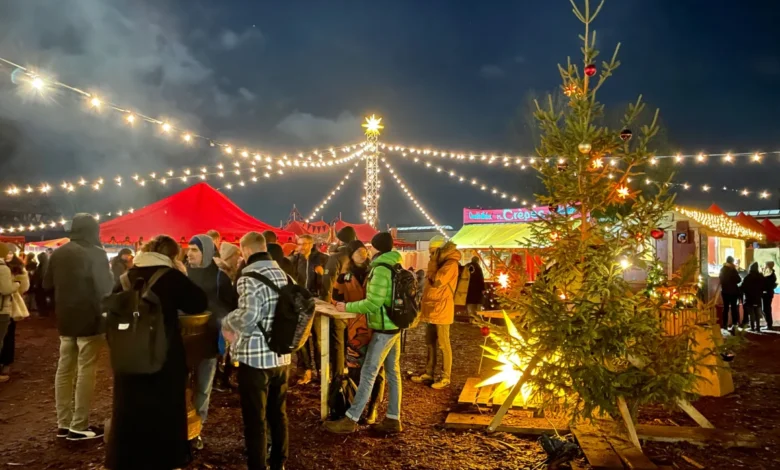
As the winter solstice approaches and daylight in the German capital dwindles to less than eight hours daily, Berlin undergoes a striking seasonal transformation. Unlike many European municipalities where holiday celebrations converge on a single, centralized town square, Berlin hosts a sprawling ecosystem of roughly 70 distinct Christmas markets, locally known as Weihnachtsmärkte or Adventsmärkte. This decentralization reflects the city’s complex urban layout and distinct neighborhood identities, offering visitors and residents an array of settings ranging from medieval fortresses and baroque palaces to industrial courtyards and riverside cultural spaces.
Background Context and Evolution of Berlin’s Holiday Markets
The tradition of the German Christmas market traces its roots back to the late Middle Ages, initially serving as practical winter supply fairs before evolving into community-centric cultural touchstones. While historic southern German hubs like Nuremberg, Munich, and Stuttgart have historically dominated the international tourism market with centuries-old traditions, Berlin has cultivated a different approach. Because the city lacks a singular historic center, its holiday markets developed organically across its diverse boroughs following reunification.

Over the past decade, Berlin’s municipal tourism boards and local district councils have leveraged this decentralized structure to disperse economic benefits beyond traditional tourist corridors. Consequently, the city’s markets now operate on a continuum between grand, historic spectacles and hyper-local, artisan-driven weekend gatherings. This duality allows the capital to accommodate millions of domestic and international visitors each year while maintaining spaces dedicated entirely to neighborhood community-building, charitable fundraising, and niche cultural preservation.
Chronology and Operating Schedules

The Berlin Christmas market season typically commences in the final week of November, aligning with the beginning of the Christian liturgical season of Advent. The vast majority of major markets open their gates simultaneously—frequently on the Monday following the Sunday of the Dead (Totensonntag)—and run continuously through December 23 or December 30, with select locations extending operations past New Year’s Day.
Daily operating hours generally span from mid-morning to late evening, typically 11:00 AM to 9:00 PM or 10:00 PM, with extended hours on Fridays and Saturdays. Because Berlin experiences early winter sunsets, often plunging into darkness by 4:00 PM, the atmospheric illumination of the markets becomes a central feature of the visitor experience during late afternoon and early evening hours.

Key Markets and Architectural Settings
Berlin’s holiday landscape is categorized by distinct thematic and architectural backdrops:

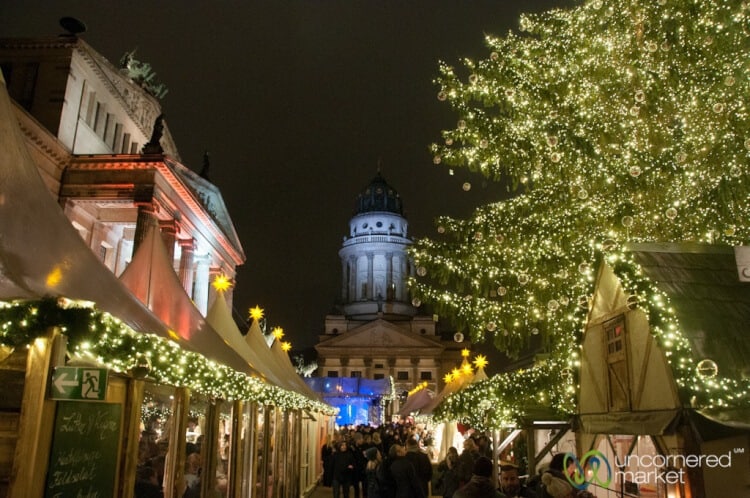
- WeihnachtsZauber Gendarmenmarkt: Set against the monumental backdrop of the neoclassical Konzerthaus and twin French and German cathedrals, this market emphasizes high-end handicrafts, luxury goods, and culinary offerings. It remains one of the few prominent markets charging a nominal admission fee (traditionally one euro) to manage crowd flow and support local cultural programming.
- Schloss Charlottenburg: Positioned in the shadow of Berlin’s largest surviving baroque palace, this market leverages historical grandeur. It features traditional multi-tiered Christmas pyramids (Weihnachtspyramiden) and extensive illumination of the 300-year-old royal residence.
- Lucia Christmas Market at Kulturbrauerei: Located within the winding nineteenth-century industrial brick courtyards of a former brewery in Prenzlauer Berg, this market focuses explicitly on Nordic and Scandinavian traditions. Visitors can sample regional variations of mulled wine, such as Swedish glögg, alongside reindeer specialties and Nordic crafts.
- Spandau Old Town and Citadel: Situated in the western borough of Spandau, this location combines a sprawling historic street market with events held inside one of Europe’s best-preserved Renaissance fortresses, offering a village-like atmosphere within the metropolitan boundary.
- Historical Christmas Market at RAW: Built on the grounds of the RAW cultural center in Friedrichshain, this medieval-themed market targets families and history enthusiasts with fire pits, hand-operated wooden carousels, blacksmith demonstrations, and traditional archery.
- Potsdam Christmas Market: Located just outside Berlin proper in the capital of the federal state of Brandenburg, this market spans the historic center of Potsdam near UNESCO-listed palaces, featuring expansive light displays and regional culinary staples such as Eierpunsch (spiced egg punch).
Neighborhood and Short-Run Weekend Markets
Beyond the major Advent-long installations, Berlin relies heavily on weekend-only, neighborhood-specific markets that highlight local civic engagement:
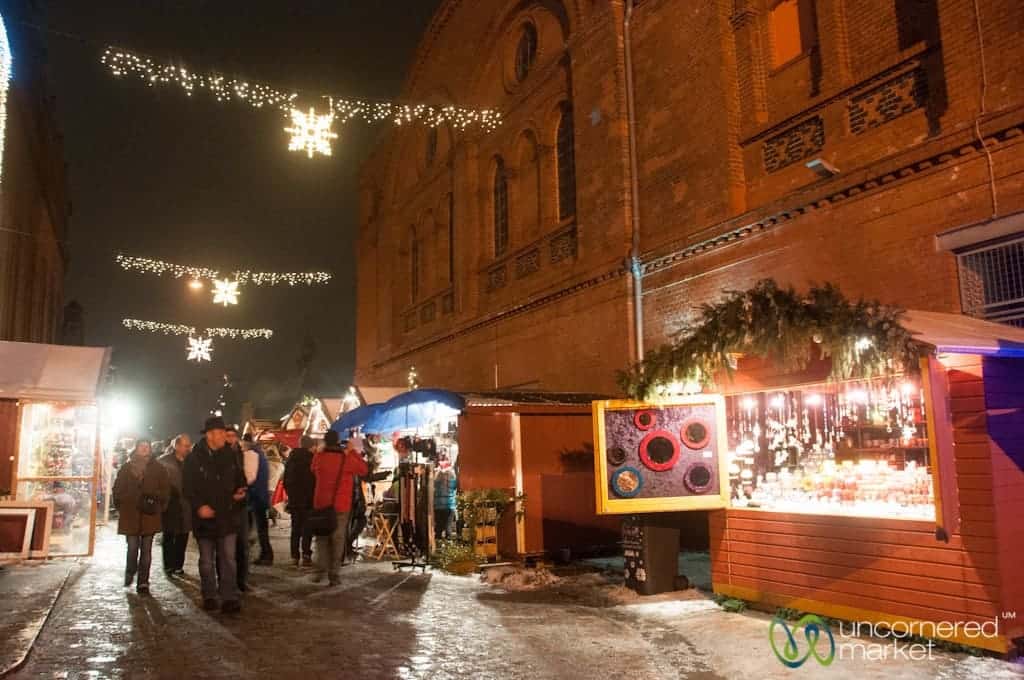
- Alt-Rixdorfer Christmas Market: Held in the historic Richardplatz square in Neukölln for a single weekend in early December, this market is organized entirely by local charitable groups, schools, and non-profit associations. Proceeds directly fund community initiatives, and the historic square hosts pony rides and traditional handicraft stalls.
- Heissa Holzmarkt: Operating on weekends along the Spree River in Friedrichshain, this market merges traditional winter aesthetics with modern Berlin counterculture, featuring riverfront bonfires, silent discos, and experimental art installations.
- Schloss Britz and Domäne Dahlem: Both locations offer manor-house and farm-based settings emphasizing organic agriculture, regional artisan goods, and historical reenactments, drawing visitors seeking a respite from high-density urban tourism.
Economic and Cultural Implications
The annual operation of Berlin’s Christmas market network represents a significant economic driver for the regional hospitality, retail, and gastronomy sectors. Millions of local residents and tourists circulate through the markets, generating substantial revenue for small-scale artisans, independent caterers, and municipal transit networks.

At the same time, the proliferation of markets has prompted urban planners and cultural analysts to address challenges related to commercialization and crowd management. While large-scale commercial installations near major transit hubs cater to high-volume tourism, hyper-local markets in districts like Neukölln and Friedrichshain rely on strict regulatory frameworks regarding vendor curation to preserve neighborhood character and prevent cultural homogenisation. These localized markets serve as vital community anchors, reinforcing social cohesion during the darkest weeks of the calendar year and sustaining traditional trades that might otherwise struggle in a modern digital economy.
Related posts: