The State of Digital Imaging: Sigma Teases October 24 Announcement, Canon Macro Rumors Stir Debate, and the Truth About the Sony a7S IV

The global digital photography market is entering one of its most anticipated seasonal cycles as manufacturers prepare to unveil new hardware ahead of the fourth-quarter retail surge. Industry observers and professional image-makers are closely monitoring a flurry of developing stories involving three of the sector’s most influential players: Sigma, Canon, and Sony. With supply chain stabilization and rapid advancements in artificial intelligence integration driving recent product launches, consumer expectations remain exceptionally high. This week’s developments encompass a cryptic teaser from independent lens manufacturer Sigma, widespread community discussion regarding Canon’s upcoming macro optic strategy, and necessary clarification surrounding the persistent rumors of an unannounced Sony full-frame video camera.
Sigma Corporation Prepares for October 24 Product Showcase Amid Speculation
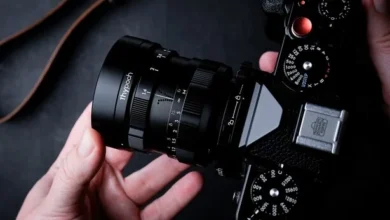
Independent lens manufacturer Sigma Corporation has officially triggered intense speculation across the digital imaging community following the distribution of media advisories for a global product announcement scheduled for October 24. Known for producing high-performance interchangeable lenses for multiple camera mounts—including Sony E-mount, Leica L-mount, and Fujifilm X-mount—the Japanese optical manufacturer has remained tight-lipped regarding the exact nature of the forthcoming release.
Historically, Sigma utilizes major product introduction windows to introduce either groundbreaking prime lenses featuring exceptional aperture values, versatile high-speed zoom optics, or, on rare occasions, revolutionary sensor and camera bodies built around its proprietary Foveon technology. Market analysts and industry insiders are currently divided into three distinct schools of thought regarding the October 24 event. The first and most probable hypothesis points toward the announcement of a new flagship art-series lens, potentially addressing gaps in ultra-wide-angle or telephoto prime lineups for mirrorless ecosystems. The second theory suggests the unveiling of a specialized cinema lens designed to meet the growing demands of independent filmmakers and broadcast professionals.
The third, albeit less common, speculation involves the long-awaited update concerning Sigma’s Foveon full-frame mirrorless camera project. Development of the Foveon sensor has faced multiple technical hurdles and public timeline revisions over recent years. While an entirely new camera body would represent a major milestone for the company, optical engineers point out that Sigma’s recent commercial success lies heavily in its aggressive expansion of high-quality glass for established major mounts. Regardless of the specific hardware, the October 24 event is expected to significantly impact market share dynamics in the independent lens sector, where competition from domestic and international third-party manufacturers has intensified dramatically throughout the fiscal year.
Canon Rumors Spark Mixed Reactions Over Anticipated Macro Lens Specification
Simultaneously, the Canon ecosystem is navigating a wave of community debate following leaked specification reports concerning an upcoming macro lens release. According to industry tracking reports originating from specialized enthusiast outlets such as Canon Rumors, anticipation for a dedicated professional macro optic has been tempered by revelations that the design is slated to utilize a stepping motor (STM) rather than a high-end ultrasonic or dual-nano USM drive system.
Macro photography requires exceptional precision, often demanding fine manual focus adjustments and rapid, silent autofocus tracking at close working distances. Historically, Canon has reserved its highest-tier Ultrasonic Motor (USM) technology for its premium L-series lenses, ensuring lightning-fast autofocus acquisition and robust weather-sealing. The reported inclusion of an STM mechanism in an upcoming macro release has led to mixed reactions among professional photographers and enthusiast communities.
While modern stepping motor technology has evolved significantly—offering smooth, quiet operation that benefits videographers pulling focus—critics argue that traditional macro specialists prefer the tactile feedback and instant response characteristics of ring-type USM systems. Furthermore, market analysts note that consumer perception of lens pricing often hinges on mechanical categorization. If a lens bearing professional-grade optical qualities is paired with an STM drive, debates regarding value proposition and intended target audience—whether advanced hobbyist or working professional—inevitably arise. Canon has yet to officially confirm the existence, specifications, or pricing strategy of the rumored macro optic, leaving the community to weigh leaks against the company’s broader strategic shift toward hybrid photo-video shooting tools.
Investigating the Sony a7S IV Rumors: Registration Facts Versus Internet Speculation
Rounding out the current cycle of industry news is the ongoing discourse surrounding the purported development and registration of the Sony a7S IV. Persistent rumors across social media platforms and photography forums recently suggested that Sony had quietly registered a new high-sensitivity, video-centric full-frame mirrorless camera intended to succeed the widely popular a7S III.
However, careful examination of regulatory filings and global telecommunications certification databases reveals a more nuanced reality: an immediate successor to the a7S lineage has not been officially registered in the manner claimed by viral reports. While consumer electronics manufacturers routinely secure placeholder certifications or update existing product lines with minor internal revisions, the definitive presence of an a7S IV ready for immediate commercial distribution remains unsubstantiated.
The a7S series holds a legendary status within the digital cinematography community. Released in 2020, the Sony a7S III established a new benchmark for low-light performance, efficient thermal management, and reliable 4K video recording without active cooling fans in a compact mirrorless form factor. In the years since its debut, the competitive landscape has shifted profoundly. Competitors have introduced advanced full-frame and super35 sensor cameras capable of internal 8K recording, open-gate capture, and sophisticated raw video output over HDMI.
Consequently, consumer demand for an a7S IV is exceptionally high, driven by speculation over what features Sony might incorporate into a next-generation low-light powerhouse. Industry experts suggest that if Sony were to release an a7S IV, expected enhancements would likely include a higher-resolution sensor capable of pixel-binning or sensor-shift high-resolution modes while retaining class-leading dynamic range and exceptional signal-to-noise ratios at extended ISO ranges. Additionally, integration of advanced AI-driven autofocus subject recognition algorithms, matching those found in the current a7R V and a9 III bodies, remains a primary wishlist item for videographers. Until official regulatory documentation or corporate press releases confirm product registration, the a7S IV remains a subject of intense industry projection rather than imminent hardware reality.
Broader Market Implications and Future Outlook
The convergence of these distinct industry storylines highlights the rapid pace of innovation and consumer expectation defining the modern digital imaging sector. Camera manufacturers and optical engineers are no longer competing solely on traditional metrics such as megapixels and burst rates; instead, product development cycles are increasingly defined by software integration, hybrid functionality that bridges still photography and professional videography, and competitive pricing strategies in a recovering global economy.
As the industry looks toward the final quarter of the year, all eyes will be fixed on upcoming corporate presentations, starting with Sigma’s October 24 showcase. The announcements made in the coming weeks will likely set the tone for hardware trends moving into the new calendar year, offering clear indications of how legacy brands and independent manufacturers plan to capture the attention of an increasingly discerning consumer base. Whether through optical breakthroughs from independent innovators or strategic hardware refinements from market leaders, the state of digital imaging remains dynamic, competitive, and poised for continuous evolution.
Related posts: