From Travel Foodie Mom to Global Adventure: How a Mother-Son Duo Created Slothee Wants Coffee

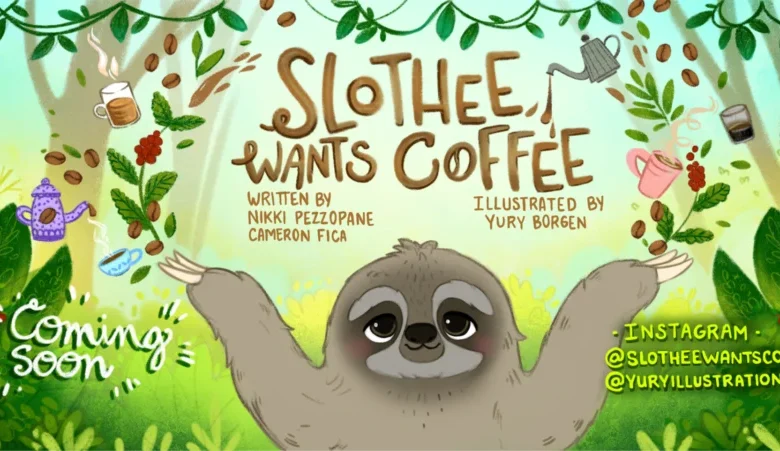
The digital landscape of parenting and travel blogging is fiercely competitive, often demanding constant content generation just to remain relevant. However, sometimes a temporary radio silence from a beloved digital platform signals not an end, but a pivot toward an ambitious creative undertaking. For Nikki Pezzopane, the driving force behind the lifestyle and travel platform Travel Foodie Mom, a hiatus from her regular publishing schedule culminated in a major literary milestone: the creation of a children’s book titled Slothee Wants Coffee. Co-authored with her then-eight-year-old son, Cameron Fica, the project successfully surpassed its crowdfunding goals on Kickstarter, capturing media attention across major outlets including Yahoo News, MSN, The Patch, and Oncenoticias.

The Genesis of a Global Journey
The conceptual foundation of Slothee Wants Coffee took root during a family expedition to Costa Rica. While exploring the lush, biodiverse rainforests of Central America, Pezzopane and her son encountered sloths in their natural habitat. Captivated by the animals’ deliberate, graceful movements and unhurried demeanor, the duo designated the sloth as their unofficial spirit animal.

Simultaneously, the trip included an immersive coffee and chocolate agricultural tour. For young Cameron, who took his first commercial flight at just three months old and had already visited 14 countries and 22 states by the time of the book’s development, the experience demystified the journey of everyday commodities. The tour illustrated that brewing a morning cup of coffee is not a singular act, but the final, complex step in an extensive agricultural supply chain spanning planting, harvesting, roasting, and distribution.
Driven by a desire to translate this complex educational process into an accessible format for young readers, Pezzopane and her son conceptualized a character named Slothee. The protagonist embarks on an international quest, traversing Costa Rica, Brazil, Colombia, Indonesia, Ethiopia, and Hawaii in search of the ultimate cup of coffee. Along the way, Slothee encounters a diverse cast of animal characters, introducing children to regional traditions, foreign geographies, and cultural appreciation through a narrative lens.

A Rigorous Publishing Timeline
Bringing an independent children’s book from conception to physical publication is a notoriously arduous undertaking, particularly for first-time authors navigating the modern publishing ecosystem. The lifecycle of Slothee Wants Coffee spanned precisely twelve months from its initial conceptualization to final printing and distribution.

The production timeline required coordinating multiple specialized phases. Following the initial writing and collaborative storyboarding between Pezzopane and her son, the project advanced to professional editing and manuscript refinement. Concurrently, the creators commissioned European-trained architect and traditional oil painter Yury, operating under Yury Illustration, to translate the global settings and characters into vibrant visual assets.
Following the artistic phase, the project entered the formatting, digital rendering, and pre-press stages. To mitigate the financial risks associated with traditional indie publishing, the creators launched a crowdfunding campaign on Kickstarter. The campaign not only achieved full funding well ahead of its deadline but also galvanized an engaged community of early supporters, facilitating pre-orders through the designated portal at bit.ly/preorderslothee.

Profiles of the Creative Team
The collaborative nature of Slothee Wants Coffee is reflected in the diverse backgrounds of its creators and primary illustrator.

Nikki Pezzopane’s professional trajectory highlights a significant shift from corporate and academic pursuits to creative entrepreneurship. Originally from Metro Detroit and raised in Arizona, Pezzopane earned a Bachelor of Science in Criminal Justice and Criminology from Northern Arizona University, followed by a Master of Science in Forensic Psychology from Argosy University. Recognizing that her long-term career aspirations lay elsewhere, she transitioned into the digital media sector, founding a digital marketing and social media management firm in 2014. Leveraging her lifelong passion for writing and extensive personal travel experience—spanning 38 U.S. states and 16 countries—Pezzopane provided the structural writing framework and administrative execution required to bring the book to market.
Cameron Fica, co-author and primary inspiration for the project, represents a generation of digitally fluent, globally mobile children. Having lived in three states and explored extensive domestic and international territories by age eight, Fica integrated his firsthand observations of foreign landscapes into the narrative architecture of the book. Outside of his literary contributions, his interests lean toward STEM-based activities, including science experiments, alongside recreational pursuits such as the gaming platform Roblox.

Illustrator Yury brought a distinct architectural and fine-art perspective to the project. Trained in traditional oil painting and fine arts from an early age, Yury completed her university studies in architecture before pivoting entirely toward commercial illustration. Her portfolio includes multiple illustrated children’s titles distributed through major retail platforms such as Amazon, Walmart, and Barnes & Noble. Her artistic style emphasizes global diversity, environmental appreciation, and multicultural exploration, aligning closely with the thematic goals of the Slothee franchise.
Broader Industry Implications and Educational Value

The success of Slothee Wants Coffee reflects a broader consumer trend within the children’s publishing market: an increased demand for literature that introduces global citizenship, economic literacy, and environmental stewardship at an early age. Industry analysts note that contemporary parents increasingly seek educational resources that move past basic alphabet and counting books, opting instead for narrative non-fiction and culturally immersive fiction that foster empathy and geographical awareness.
By framing an agricultural commodity like coffee through an engaging, character-driven narrative, the authors successfully bridge the gap between entertainment and education. The inclusion of fact-based insights regarding coffee production—such as the agricultural differences between highland and lowland farming, regional harvesting techniques, and the cultural rituals surrounding coffee consumption in countries like Ethiopia and Indonesia—provides foundational economic and geographical lessons disguised as a fun adventure.

Furthermore, the project serves as a case study in modern creator-led publishing. By utilizing crowdfunding platforms like Kickstarter, independent authors can bypass traditional publishing gatekeepers, retain creative and financial control, and build a direct-to-consumer audience via digital marketing channels and social media presence (@slotheewantscoffee).
As physical copies of Slothee Wants Coffee make their way from the press to mailboxes worldwide, the project stands as a testament to the viability of collaborative, family-led publishing initiatives. Through perseverance, strategic digital engagement, and a clear educational mission, Pezzopane, Fica, and Yury have established a new literary platform designed to inspire the next generation of travelers, learners, and coffee enthusiasts.