The French holiday season represents a significant cultural and economic pillar, with Christmas markets serving as the centerpiece of regional tourism and local commerce. As 2026 approaches, municipalities across France are finalizing preparations for their annual festive events, which trace their historical origins to the 16th century in the Alsace region. These markets, characterized by their timbered stalls, artisanal crafts, and regional culinary specialties, act as vital hubs for local economies, drawing millions of domestic and international visitors annually.

Historical Context and Evolution
The tradition of the Christmas market in France is most deeply rooted in the Alsace-Moselle region, reflecting a centuries-old convergence of French and Germanic cultural influences. The Christkindelsmärik in Strasbourg, established in 1570, holds the distinction of being one of the oldest in Europe. Over the last several decades, the concept has transcended its regional borders, evolving into a national phenomenon. Modern markets now integrate local heritage—such as Provencal santons or Norman culinary staples—with contemporary event management, including light shows, Ferris wheels, and interactive programming designed to maintain the tradition’s relevance in a globalized tourism market.

Regional Highlights and Economic Impact
The Alsace region continues to serve as the primary destination for holiday tourism. In Strasbourg, the city’s designation as the Capital of Christmas underscores its strategic importance. The city hosts approximately 300 vendors across 10 distinct sites, requiring meticulous coordination between local government and commercial entities to manage the logistical influx of visitors. Data suggests that the economic impact of the Strasbourg market alone extends to hundreds of millions of euros in regional revenue, supporting hospitality, retail, and transportation sectors.

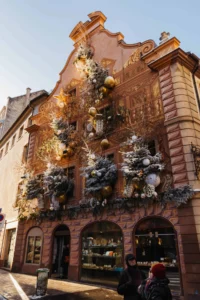
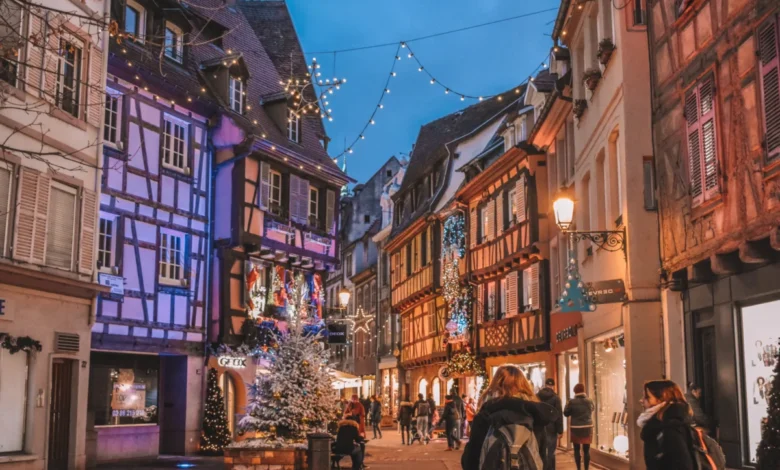
Colmar, often cited for its architectural preservation, offers a more intimate but equally significant economic draw. Its market layout, spread across distinct historical squares like the Place des Dominicains and the Place de l’Ancienne Douane, leverages the city’s medieval aesthetic to create a cohesive brand identity that sustains local businesses throughout the winter months.

Northern and Central France Market Landscapes
Metz, situated in the Lorraine region, has emerged as a major competitor in the holiday market circuit. Its proximity to both the German and Luxembourgish borders facilitates a cross-border flow of tourists. The city utilizes the architectural backdrop of the Gothic Metz Cathedral, illuminated by historic stained glass by Marc Chagall, to distinguish its offering. With over 100 vendors, the market serves as an essential platform for regional producers of foie gras, local cheeses, and artisanal spirits.

Further north, Lille presents a different market dynamic. The Lille Christmas Market is noted for its focus on light installations and a large Ferris wheel, serving as a landmark for Northern France’s holiday celebrations. The market’s longevity—running from mid-November through late December—allows for sustained commercial activity, mitigating the typical winter slowdown in the retail sector.

Southern and Western Market Variations
The markets in Bordeaux and Nice illustrate the diversity of the French holiday experience. In Bordeaux, the focus shifts toward regional viticulture and gastronomy, aligning with the city’s international reputation for wine production. By pairing artisanal goods with local wine tastings, the Bordeaux market functions as a seasonal extension of the region’s primary industry.

Nice, conversely, provides an alternative to the traditional snowy aesthetic. By capitalizing on its Mediterranean climate, the Nice Christmas Market attracts a demographic seeking a milder winter experience without sacrificing holiday traditionalism. The event features extensive programming for families, including ice skating rinks and Santa-themed workshops, effectively extending the peak tourist season on the French Riviera.

Operational Logistics and Scheduling
For 2026, the scheduling of these markets has been carefully synchronized to maximize visitor engagement while managing crowd density. The majority of major French markets are slated to commence between November 14 and November 27, 2026, with most concluding by December 30, 2026. Specialized events, such as the Ribeauvillé Medieval Christmas Market, operate on a condensed schedule—typically spanning only two weekends—to maintain exclusivity and ensure the feasibility of its elaborate, historically-themed programming.

Data and Visitor Preparedness
Tourism boards and local chambers of commerce emphasize the importance of early planning for the 2026 season. Given the high demand for accommodation in cities like Strasbourg, Colmar, and Lyon, authorities strongly recommend the use of public transportation. The train network in the Alsace region is particularly robust during the holiday season, allowing for efficient "market-hopping" between smaller villages like Eguisheim, Riquewihr, and Kaysersberg.

From a regulatory standpoint, visitors are advised to note that while credit card penetration is high in France, smaller market vendors often operate on a cash-only or partial-cash basis. Furthermore, security protocols at major markets remain a priority for municipal governments, with enhanced presence and controlled access points being standard in high-traffic urban centers.

Cultural Significance and Traditions
The "Père Noël" figure remains central to the French holiday narrative, though the cultural focus often shifts toward the "Réveillon" on December 24. This late-night feast, featuring traditional foods like oysters, boudin blanc, and specialized cakes, is the culmination of the holiday season. The markets act as the primary supply chain for these delicacies, with vendors offering specialized regional products that are rarely found in standard supermarkets.

The "sapin de noël" (Christmas tree) remains a symbol of continuity. In Strasbourg, the placement of a large-scale tree in the Place Kléber is a state-level event, requiring extensive forestry coordination. This focus on tradition, combined with the integration of local crafts, ensures that the markets remain distinctively French, resisting the homogenization often seen in other European markets.

Broader Implications for 2026
The 2026 Christmas market season is expected to be a key indicator of post-pandemic recovery for French regional tourism. As international travel patterns stabilize, the emphasis on "local and authentic" experiences—a hallmark of the French market circuit—is projected to draw increased interest from North American and Asian markets.

Municipal leaders have noted that the challenge for 2026 lies in balancing the preservation of historical charm with the logistical demands of increased visitor volume. Sustainable practices, such as the reduction of single-use plastics and the promotion of locally sourced goods, are being integrated into the operational guidelines for vendor stalls. This transition toward sustainability is not merely an environmental choice but a branding strategy intended to appeal to the evolving values of modern travelers.

In summary, the 2026 French Christmas markets offer a comprehensive blend of historical heritage, economic vitality, and regional identity. Whether through the medieval streets of Ribeauvillé, the grand cathedrals of Amiens and Rouen, or the sun-drenched squares of Nice, these events provide a structured, festive, and historically significant experience that remains a cornerstone of the French cultural calendar. Travelers are encouraged to review specific municipal calendars as the season approaches to navigate the varying operational dates and localized event schedules.