Conquering Wat Phu Tok: Thailand’s Architectural Wonder and Cliffside Meditation Center

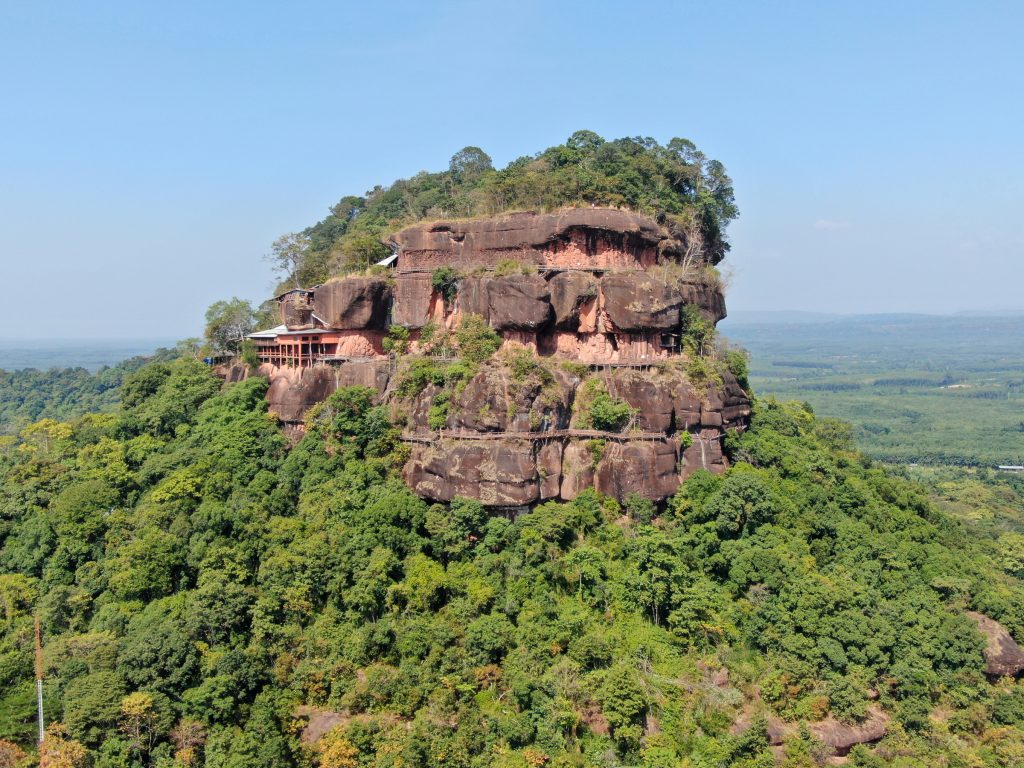
Nestled in the remote and tranquil landscapes of Bueng Kan province in northeastern Thailand’s Isan region lies Wat Jetiyakhiri, more commonly known by its local moniker, Wat Phu Tok. Rising 359 meters above the surrounding plains, this unique architectural marvel has increasingly drawn intrepid travelers, cultural tourists, and spiritual seekers from around the globe. Translating literally to "lonely mountain" in the regional Isan dialect, Phu Tok is a solitary sandstone formation that abruptly punctuates the flat terrain of Thailand’s newest province, established officially as a separate administrative entity in 2011 to boost regional governance and tourism.
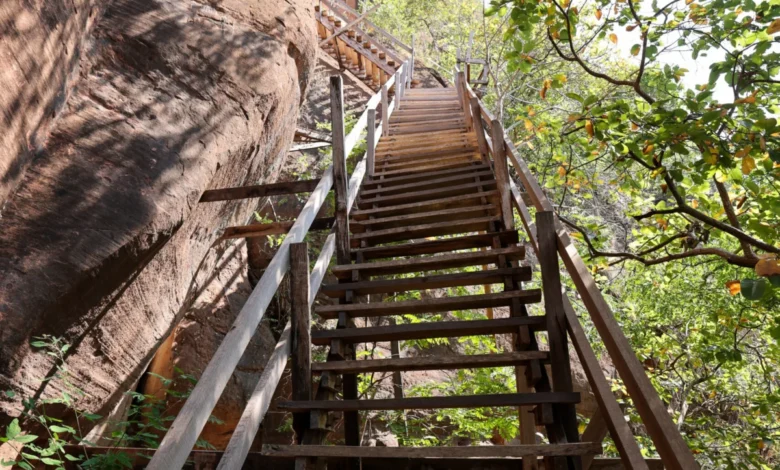
The site features an intricate network of handcrafted wooden staircases, ladders, and cantilevered walkways that cling precariously to vertical rock faces. Constructed over decades as a vertical pilgrimage route, the temple complex was designed to mirror the seven stages of Buddhist spiritual purification and mindfulness. While tourism infrastructure in Thailand often prioritizes accessibility and commercial convenience, Wat Phu Tok remains an outlier—a testament to human engineering driven by religious devotion, offering an authentic off-the-beaten-path experience that juxtaposes raw natural beauty with adrenaline-inducing exploration.
Historical Origins and Construction of the Seven Levels

The history of Wat Phu Tok is deeply intertwined with the life and vision of its founder, the revered ascetic monk Luang Pu Juan. Long before construction began, the rugged, heavily forested terrain of the isolated sandstone outcrop was untouched by modern infrastructure and served primarily as a natural habitat for diverse wildlife, most notably populations of venomous snakes. This remote, forbidding environment, however, made the location ideal for Buddhist monks seeking solitude, seclusion, and the psychological challenge of confronting elemental dangers during meditation.
In the latter half of the 20th century, Luang Pu Juan undertook the monumental task of transforming the perilous mountain into a functional forest monastery and meditation center. Recognizing the need to connect various natural caves, rock shelters, and elevated plateaus used by meditating monks, he spearheaded the construction of a labyrinthine system of wooden stairs and walkways. Monks and local laborers worked together, manually anchoring sturdy timber planks directly into the vertical sandstone cliffs.

The physical ascent is deliberately divided into seven distinct tiers, aligning with the Buddhist doctrine of the seven levels of enlightenment. The lower tiers feature relatively gentle slopes, dense surrounding forest, and basic monastic facilities, while the upper tiers present increasingly narrow and steep pathways designed to test the mental focus and emotional resilience of visitors. Tragically, Luang Pu Juan’s visionary life was cut short when he perished in a high-profile commercial aviation accident in 1980. Despite the loss of its founder, the monastic community and local authorities have continuously maintained and restored the wooden scaffolding, ensuring that Wat Phu Tok remains structurally sound and accessible to the public.
Navigating the Ascent: A Tier-by-Tier Breakdown

A journey to Wat Phu Tok begins at the base of the mountain, where visitors are greeted by a sprawling temple complex, a serene lake, and ample parking facilities situated within a well-maintained public park. Located approximately a 30-minute drive from Bueng Kan city, the site requires no entry fee, though donations for maintenance are encouraged.
The trail officially begins at a heavily ornamented gateway, quickly transitioning from dirt footpaths into modest wooden plank staircases. As climbers ascend past the first few levels, the staircases grow progressively steeper, eventually resembling vertical ladders anchored to the rock face. While the wood may bow slightly underfoot—inducing a momentary sense of vertigo—the structural integrity of the engineering remains exceptionally stable, reflecting rigorous ongoing maintenance by temple caretakers.

The fifth level serves as the primary administrative and ceremonial hub of the monastery. Unlike the narrow cliffside paths above, the fifth tier opens up into a relatively flat, expansive forested ground area. Here, visitors encounter the principal ordination hall, numerous smaller shrines, and living quarters for resident monks. This level acts as a transitional space, offering a moment of respite before travelers tackle the more demanding upper tiers. Additionally, a rewarding detour from the main path leads adventurous hikers across an elevated rock walkway and a suspension bridge to an isolated rock-carved shrine tucked away on a distant ledge of the mountain.
The sixth level is universally acknowledged as the structural and experiential highlight of Wat Phu Tok. Comprising a precarious wooden walkway anchored horizontally into the sheer rock face, this tier wraps around the circumference of the mountain. Approximately half of the sixth level consists of these cliff-hanging wooden planks, offering unobstructed, panoramic views of the verdant Mekong River basin and the sprawling agricultural lowlands of Bueng Kan. While the drop-off is severe and demands absolute concentration, the visual and sensory reward is unmatched, delivering a thrilling blend of exposure and serenity.

Finally, the seventh level marks the absolute summit of the mountain. Historically noted for harboring populations of venomous pit vipers, ascent to this final tier is undertaken strictly at the visitor’s own risk. Unlike the meticulously engineered walkways of the sixth level, the seventh tier lacks artificial pathways, consisting instead of the rough, natural plateau of the mountain top. While it offers limited additional structural sights beyond a few vantage points, completing the climb provides a profound sense of accomplishment and closes the symbolic loop of the seven stages of meditation.
Regional Tourism and Economic Impact in Bueng Kan

The steady influx of visitors to Wat Phu Tok plays a vital role in the broader economic and tourism development strategy of Bueng Kan province. Situated in the far northeastern corner of Thailand along the border with Laos, Isan has historically lagged behind central and southern Thailand in terms of international tourism revenue, despite its rich cultural heritage and natural landscapes.
Provincial tourism authorities have increasingly leveraged unique ecological and cultural assets—such as the bizarre rock formations of Hin Sam Wan (Three Whale Rock) and the spiritual significance of Wat Phu Tok—to attract eco-tourists and independent travelers. Tourism economists note that sites like Wat Phu Tok stimulate local micro-economies, benefiting regional guesthouses, family-run restaurants, and transportation providers in Bueng Kan city.

However, managing sustainable tourism growth while preserving the sacred and tranquil atmosphere of active monastic sites remains a delicate balancing act. Local officials and monastic leadership continuously emphasize visitor etiquette, urging tourists to maintain quiet decorum, dress respectfully in accordance with Buddhist temple standards, and exercise extreme caution to prevent accidents on the aging timber structures.
Implications for Travelers and Safety Considerations

Visiting Wat Phu Tok requires careful preparation, physical fitness, and an acute awareness of personal safety limitations. Due to the high altitude exposure, steep vertical ladders, and lack of modern handrails in certain isolated sections, the site is generally unsuitable for individuals with severe mobility impairments, debilitating vertigo, or young children.
Travel experts and safety analysts recommend visiting during the early morning hours, particularly during the cool and dry season from November to February, when temperatures are moderate and the afternoon rains are less likely to render the wooden walkways slick. Sturdy footwear with reliable traction is mandatory, as is adherence to posted safety notices and restricted zones.

Ultimately, Wat Phu Tok stands as a monumental achievement where human architectural ingenuity meets spiritual devotion. By successfully blending a rigorous physical challenge with a deeply contemplative atmosphere, this cliffside sanctuary in Bueng Kan continues to offer an unforgettable, transformative experience for those willing to venture off the conventional Thai tourist trail.
Related posts: