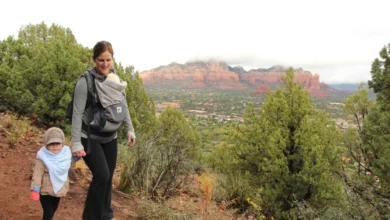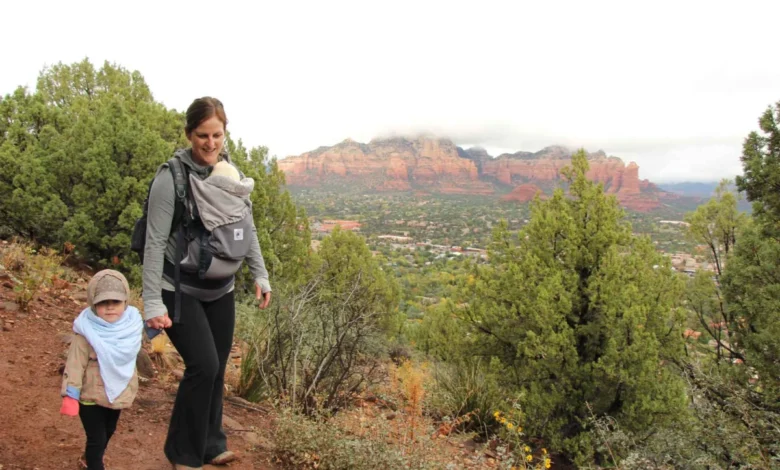
Sedona, Arizona, has solidified its reputation as a premier destination for outdoor enthusiasts, specifically attracting a growing demographic of families seeking accessible adventure within the Coconino National Forest. The region’s iconic red rock formations, characterized by their vibrant hematite-enriched sandstone, provide a backdrop for a trail system that is increasingly being adapted to accommodate multi-generational travelers. While Sedona is often associated with strenuous backcountry treks and technical mountain biking, a significant portion of its 200-plus miles of trails is uniquely suited for infants, toddlers, and young children. The integration of stroller-friendly pathways and shorter loop trails has allowed the local tourism economy to tap into the "soft adventure" market, ensuring that the natural wonders of the Verde Valley remain accessible to visitors of all physical capacities.

Geological Context and Environmental Significance
The allure of Sedona’s trail system is rooted in a geological history spanning over 300 million years. The layers visible in the canyon walls—primarily the Schnebly Hill Formation, the Hermit Shale, and the Coconino Sandstone—tell a story of ancient coastal dunes and floodplains. For families, this environment serves as a living classroom. However, the surge in popularity has necessitated a focus on environmental stewardship. The United States Forest Service (USFS) and local advocacy groups emphasize the importance of "Leave No Trace" principles, particularly the protection of cryptobiotic soil crusts. These living soil layers are essential for preventing erosion and nitrogen fixation but are easily destroyed by off-trail foot traffic. Consequently, family-friendly hiking in Sedona is not merely a recreational pursuit but an exercise in sustainable tourism and environmental education.

Infrastructure and Accessibility: The Red Rock Pass System
To maintain the integrity of the trails and provide necessary amenities such as trailheads, restrooms, and signage, the USFS utilizes the Red Rock Pass program. Most popular family trailheads require a daily, weekly, or annual pass. In recent years, the City of Sedona has also implemented the Sedona Shuttle, a free transit service designed to mitigate traffic congestion and parking shortages at high-demand trailheads like Cathedral Rock and Devil’s Bridge. This infrastructure is a critical component for families, as it reduces the logistical stress of finding parking during peak seasons (March–May and September–November) and ensures a safer transition from transit to trail.

Analysis of Primary Family-Friendly Trails
The selection of a trail for families with young children requires careful consideration of elevation gain, shade cover, and surface stability. The following trails represent the most viable options for those navigating the terrain with strollers or baby carriers.

1. Bell Rock Pathway: The Accessibility Standard
The Bell Rock Pathway stands as the benchmark for accessible hiking in the region. Spanning approximately 3.6 miles in its entirety, the pathway is wide and features a relatively hard-packed surface composed of red shale gravel. While the full length may be daunting for toddlers, the initial one-mile stretch from the southern trailhead offers dramatic views of Bell Rock and Courthouse Butte with minimal elevation change.

From a logistical standpoint, this trail is one of the few in Sedona that can accommodate all-terrain strollers. The lack of significant technical obstacles makes it an ideal introductory experience for infants. However, the trail offers limited canopy cover, making sun protection and hydration imperative for young children sensitive to the high-desert climate.

2. West Fork of Oak Creek: The Riparian Corridor
Located within the "Call of the Canyon" day-use area, the West Fork Trail provides a stark contrast to the arid desert floor. This trail follows Oak Creek through a deep, shaded canyon where towering cliffs provide natural temperature regulation. For families, the primary attraction is the series of creek crossings. While these crossings involve stepping stones—rendering the trail unsuitable for strollers—they offer a high level of engagement for older children.

Data from the USFS suggests that West Fork is one of the most visited trails in the Coconino National Forest, often reaching capacity by 9:00 AM. The microclimate here supports diverse flora, including Gambel oaks and bigtooth maples, providing a cooler environment that is significantly safer for children during the summer months when temperatures on exposed trails can exceed 100°F (38°C).
3. Fay Canyon: A Study in Geological Erosion
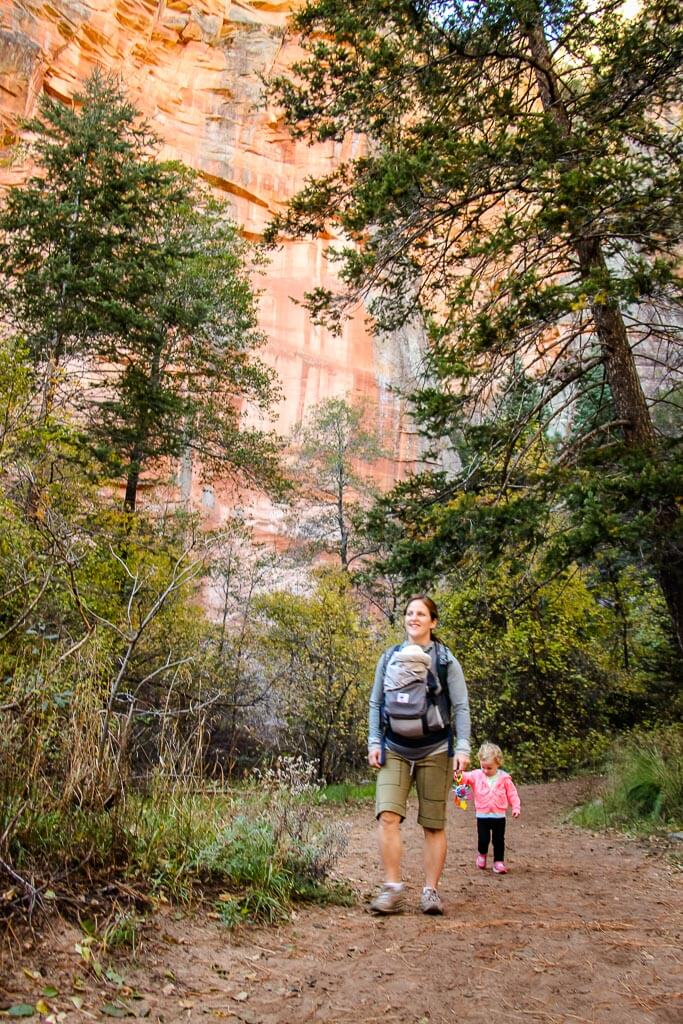
Fay Canyon is often cited by local guides as the preferred alternative to the more crowded West Fork. This 2.2-mile out-and-back trail is largely flat and protected by high canyon walls. The trail concludes at a massive rockfall, though a short, steep side trail leads to the Fay Canyon Arch.

The arch serves as a practical example of the region’s erosional forces. While the climb to the arch is not recommended for those with strollers, the main canyon floor is manageable with a rugged baby carrier. The dense vegetation, including manzanita and juniper, provides intermittent shade, making it a viable midday option.

4. Baldwin Trail: Views of the Cathedral
Situated near the Village of Oak Creek, the Baldwin Trail is a 2.7-mile loop that skirts the base of a red rock butte. Its primary value lies in its proximity to Oak Creek and the unobstructed views it provides of Cathedral Rock, one of the most photographed formations in the world. The terrain is characterized by red dirt and occasional rocky outcrops, necessitating the use of a baby carrier over a stroller. The trail also provides access to "Buddha Beach," a popular riparian area where families can rest by the water, providing a necessary break for toddlers.

5. Huckaby Trail and Airport View Trail: Urban-Wildland Interface
The Huckaby and Airport View trails offer convenience for families staying within the Sedona city limits. The Airport View Trail, starting from the airport mesa, provides a panoramic perspective of the Mogollon Rim. Although short, the trail is rocky and narrow. Similarly, the Huckaby Trail offers views of the Midgley Bridge and the city but requires navigating uneven terrain. These trails are best suited for families using hiking-specific carriers, as they provide a quick way to experience the wilderness without extensive travel time.

The Devil’s Bridge Exception: Managing High-Demand Destinations
Devil’s Bridge is arguably the most famous hike in Sedona, featuring a natural sandstone bridge that attracts thousands of visitors weekly. While it is often included in family guides, it represents a higher level of difficulty due to a steep rock staircase near the summit. For families with infants, this trail is only advisable for those experienced with ergonomic carriers and comfortable with vertical gain. The bridge itself has no railings, and wait times for photographs can exceed an hour, a factor that parents must weigh against the patience levels of young children.

Chronology of Trail Development and Tourism Growth
The formalization of Sedona’s trail system began in earnest in the late 20th century as the city transitioned from a quiet ranching and artist community to a global tourism hub.

- 1980s-1990s: The USFS began mapping and marking "social trails" to prevent resource damage, creating the backbone of the current system.
- 2000-2015: The rise of digital travel platforms led to an explosion in visitor numbers, specifically for "iconic" spots like Bell Rock and Devil’s Bridge.
- 2022: The launch of the Sedona Shuttle marked a turning point in the city’s management of hiker traffic, prioritizing environmental preservation over unrestricted vehicle access.
Supporting Data: Climate and Safety
Safety is the paramount concern for families hiking in the Arizona desert. According to the National Weather Service, Sedona experiences an average of 55 days per year with temperatures reaching 95°F or higher.

| Month | Avg. High (°F) | Avg. Low (°F) | Recommended Hiking Window |
|---|---|---|---|
| March | 65 | 37 | All Day |
| June | 93 | 58 | Before 10:00 AM |
| September | 88 | 56 | Morning/Late Afternoon |
| December | 57 | 31 | Midday |
Local emergency services frequently respond to heat-related illnesses on trails. Experts recommend a minimum of one liter of water per person for every two hours of hiking, with increased amounts for children who have higher surface-area-to-mass ratios and dehydrate more quickly than adults.

Official Responses and Community Impact
The Sedona Chamber of Commerce and Tourism Bureau has shifted its marketing strategy in recent years toward "Sustainable Sedona," encouraging visitors to choose lesser-known trails to alleviate pressure on the "Big Four" (Bell Rock, Cathedral Rock, Devil’s Bridge, and Boynton Canyon). In statements regarding family travel, local officials emphasize that the town’s infrastructure—including public restrooms and water refill stations—is being upgraded to meet the needs of traveling parents.

"Our goal is to ensure that the beauty of Red Rock Country is preserved for the next generation," stated a representative from the Sedona Red Rock Trail Fund. "By providing clear information on which trails are suitable for small children and strollers, we can guide families toward experiences that are both safe and environmentally responsible."

Broader Implications for Adventure Tourism
The trend toward family-friendly hiking in Sedona reflects a broader shift in the travel industry. Parents are increasingly prioritizing experiential learning and nature-based activities over traditional theme parks or resort-based vacations. Sedona’s success in this sector demonstrates that with proper infrastructure, clear communication regarding trail difficulty, and a robust transit system, even rugged wilderness areas can become inclusive spaces.

As the city continues to balance the economic benefits of tourism with the necessity of conservation, the family-friendly trail network remains a vital component of its identity. For the traveling parent, Sedona offers more than just a photo opportunity; it provides a manageable entry point into the natural world, fostering a lifelong appreciation for the outdoors in the youngest of explorers. Through continued investment in accessibility and education, Sedona is poised to remain a top-tier destination for families for decades to come.