Chase Freedom Flex Eliminates Foreign Transaction Fees in Major Overhaul for No-Annual-Fee Credit Cards


Chase has announced a sweeping series of updates to the Chase Freedom Flex credit card, headlined by the elimination of foreign transaction fees—a historic first for the card and an exceptionally rare feature for a product with no annual fee. Effective Monday, cardholders will no longer incur international transaction surcharges, transforming the popular cash-back card into a viable option for globetrotters. Alongside the removal of foreign transaction fees, Chase has rolled out an elevated welcome offer, a redesigned aesthetic, early access to quarterly bonus categories, and targeted points-boosting incentives for hotel redemptions through the Chase Travel portal.
These changes apply immediately to both new applicants and existing cardholders, significantly strengthening the value proposition of a product that has long been a staple of the personal finance and points-and-miles communities. While the companion Chase Freedom Unlimited card will retain its standard foreign transaction fees, the Freedom Flex now bridges the gap between everyday domestic spending and international utility, reinforcing its position within the Chase Ultimate Rewards ecosystem.
Background Context and Evolution of the Freedom Product Line
To understand the significance of Chase’s recent announcement, it is necessary to examine the evolution of the Chase Freedom brand. For over a decade, Chase’s no-annual-fee cash-back portfolio has served as an entry point for beginner rewards enthusiasts and a reliable workhorse for advanced credit card strategists. The original Chase Freedom card, which eventually paved the way for the Freedom Flex issued on the Mastercard network, introduced the concept of rotating 5% cash-back categories on up to $1,500 in combined quarterly spending.
Historically, however, these no-annual-fee products carried a standard 3% foreign transaction fee on purchases made outside the United States or processed by foreign merchants. Consequently, financial advisors and travel bloggers routinely cautioned consumers against packing their Freedom cards when traveling abroad, advising them instead to rely on travel-specific cards like the Chase Sapphire Preferred or Chase Sapphire Reserve, or competing products with zero foreign transaction fees.
By stripping away these international surcharges, Chase is breaking convention. In the broader credit card industry, waiving foreign transaction fees is heavily concentrated in cards that levy annual fees, typically ranging from $95 to $695. By extending this perk to a $0-annual-fee card that simultaneously offers high-yield rotating categories, Chase is blurring the traditional lines between standard cash-back cards and premium travel products.
A Detailed Breakdown of the Product Enhancements
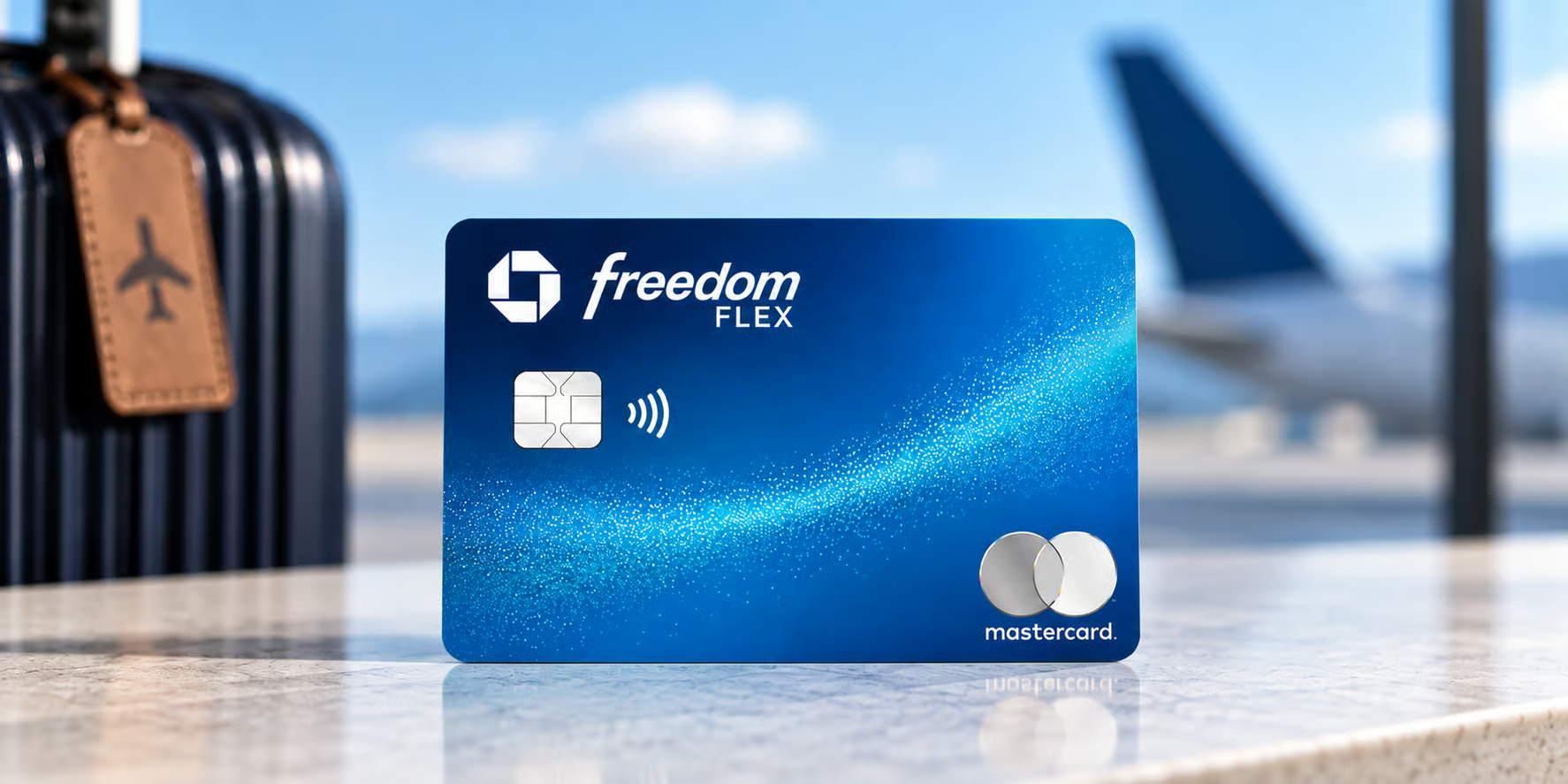
The structural overhaul of the Chase Freedom Flex encompasses several distinct updates designed to improve user engagement, point flexibility, and aesthetic appeal.
First and foremost, the elimination of foreign transaction fees allows cardholders to make purchases globally without absorbing the typical 3% penalty. This change makes the card infinitely more practical for international travel, online shopping from foreign retailers, and transactions processed in foreign currencies. Notably, this benefit remains exclusive to the Freedom Flex within the baseline Freedom family; the Chase Freedom Unlimited, which earns a flat 1.5% cash back on all non-category purchases, continues to enforce foreign transaction fees.
Second, Chase has introduced a limited-time elevated welcome offer. New cardmembers can now earn a $250 cash-back bonus after spending $500 on purchases within the first three months of account opening. This represents a $50 increase over the standard introductory offer associated with the same minimum spending threshold. For individuals who also hold an annual-fee Chase Ultimate Rewards-earning card—such as the Chase Sapphire Preferred, Chase Sapphire Reserve, or the Ink Business Preferred Credit Card—this $250 bonus can be converted into 25,000 transferable Ultimate Rewards points. These points can subsequently be pooled and transferred to over a dozen airline and hotel loyalty programs, exponentially increasing their potential redemption value.
Third, Chase has incorporated rotating "Points Boost" offers within the Chase Travel portal. While this feature applies selectively to certain hotel bookings rather than a blanket discount, it allows cardholders to stretch their points value by up to 10%. While modest in scope, this integration marks the first time Chase has extended portal-specific enhancements beyond its premium Sapphire and Ink lines to the Freedom portfolio.
Fourth, cardholders will now benefit from early visibility into upcoming quarterly bonus categories. Historically, consumers were forced to wait until shortly before the start of a new calendar quarter to learn which merchant types would trigger the 5% cash-back rate. Under the new policy, Chase is allowing users to preview next quarter’s categories directly within the Chase Mobile app ahead of time. For instance, the preview for the first quarter reveals that grocery stores and streaming services will comprise the 5% rotating categories. Crucially, Chase noted that grocery store spending will span two consecutive quarters—running through the final quarter of the previous year into the first quarter of the new year—though wholesale clubs like Walmart and Target are explicitly excluded from these earnings.
Finally, Chase has updated the physical design of the Freedom Flex card. The new aesthetic features a deeper, more vibrant blue background accented by a modern "stardust" graphic pattern. Existing cardholders can request the redesigned card, while new applicants will automatically receive the updated physical plastic.
Financial Analysis and Industry Implications
Industry analysts are closely monitoring the rollout of these updates, viewing them as a calculated strategic maneuver by JPMorgan Chase to capture a larger share of wallet-share among younger demographics and cost-conscious consumers who resist paying annual fees.

By removing foreign transaction fees from the Freedom Flex, Chase is effectively lowering the barrier to entry for international rewards optimization. Consumers who prefer not to pay an annual fee for a dedicated travel card can now pair the Freedom Flex with other non-fee products, creating a robust spending strategy without recurring overhead costs. Furthermore, the ability to transfer cash-back earnings into the broader Ultimate Rewards ecosystem—provided the user or a household member holds an eligible Sapphire or Ink card—creates a powerful synergy that deters customers from migrating to competing issuers such as American Express, Capital One, or Citi.
Market reaction suggests that these enhancements will drive a surge in new applications, particularly given the low $500 spending requirement attached to the elevated $250 welcome bonus. Competitors in the no-annual-fee cash-back space may find themselves under mounting pressure to match these features, especially the elimination of foreign transaction fees, which has long been viewed as an unyielding revenue stream for credit card issuers.
The Role of Freedom Flex in a Comprehensive Points Strategy
For advanced points-and-miles enthusiasts, the Chase Freedom Flex has always held a vital role, but these new updates elevate its utility. The card’s core earning structure remains intact, featuring:
- 5% cash back on rotating quarterly categories on up to $1,500 in combined spending when activated.
- 5% cash back on travel purchased through the Chase Travel portal.
- 3% cash back on dining at restaurants, including takeout and eligible delivery services.
- 3% cash back on drugstore purchases.
- 1% cash back on all other general purchases.
When combined with the Chase Freedom Unlimited—which covers non-category spending at a flat rate of 1.5%—and anchored by a premium travel card like the Chase Sapphire Reserve, cardholders establish what is colloquially known within the travel community as the "Chase Trifecta." With the Freedom Flex now free of foreign transaction fees, travelers can comfortably deploy the card overseas during months when dining or travel expenses align with its bonus categories, maximizing their return on spend without incurring unexpected surcharges.
Conclusion and Future Outlook
Chase’s comprehensive update to the Chase Freedom Flex signals a customer-centric evolution in the highly competitive credit card marketplace. By blending the elimination of foreign transaction fees with an increased welcome bonus, enhanced digital transparency regarding quarterly categories, and aesthetic modernization, Chase has redefined what consumers can expect from a no-annual-fee financial product.
All announced features are live and accessible immediately to both new applicants and legacy cardholders. As travelers increasingly seek out cost-effective ways to navigate inflation and maximize their purchasing power, the updated Freedom Flex stands out as a formidable tool for both domestic budgeting and international exploration.