Beyond the Postcards: Inside the Socio-Economic Reality and Culinary Heritage of Rio de Janeiro’s Rocinha Favela

Rio de Janeiro’s favelas—often mischaracterized in international media as lawless slums—represent a complex, highly organized, and culturally vibrant facet of Brazil’s urban landscape. Among these informal settlements, Rocinha stands as the largest favela in the country, housing an estimated 100,000 to over 300,000 residents across the steep hillsides of the city’s South Zone. Far from the temporary encampments implied by the term "shantytown," Rocinha is a permanent, densely populated urban neighborhood equipped with essential infrastructure, thriving commerce, and a distinct cultural identity that plays a critical role in the broader socio-economic fabric of modern Brazil.
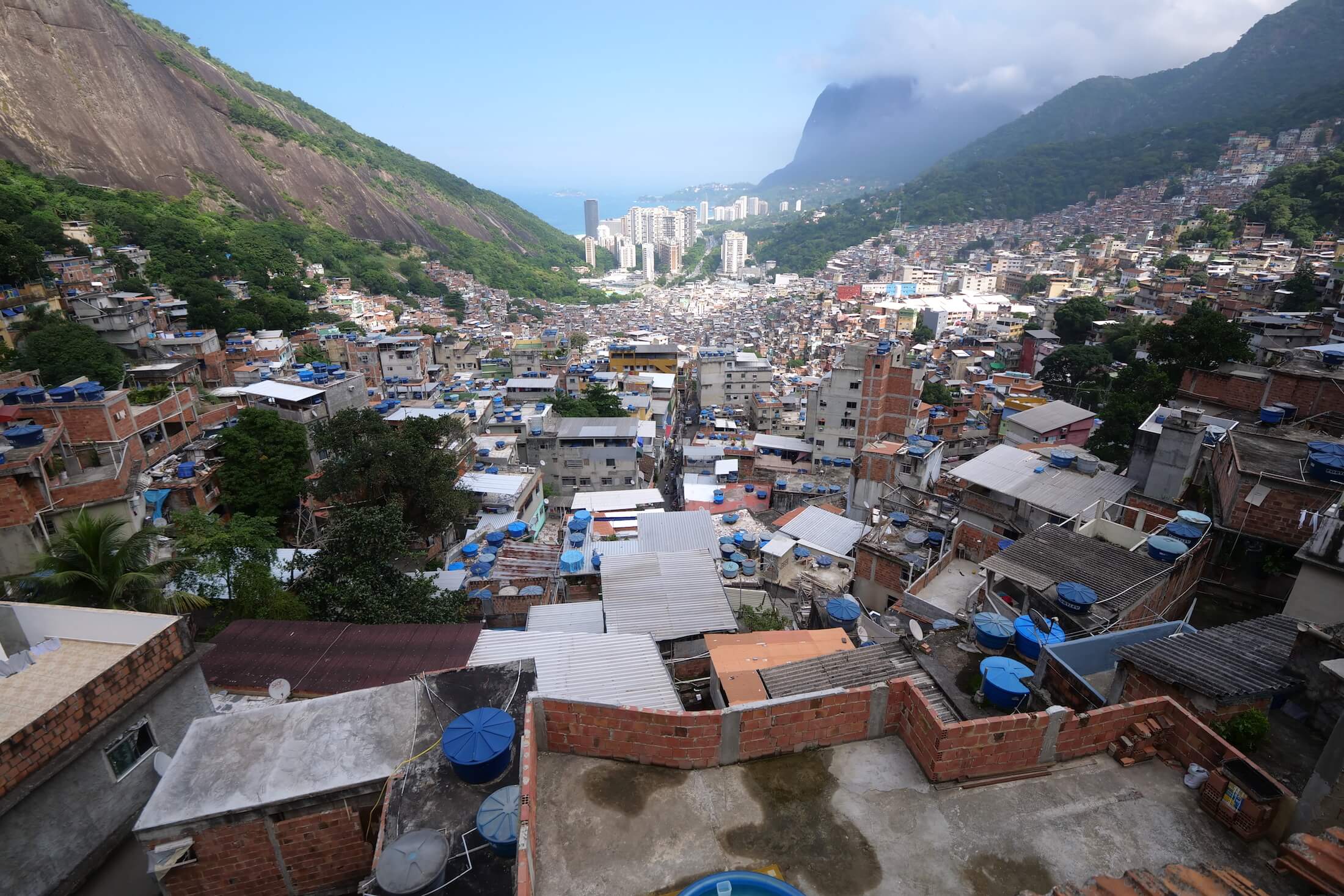
Urban Infrastructure and Socio-Economic Landscape
Favelas emerged in Brazil late in the 19th century, initially built by impoverished soldiers and freed slaves. Over decades, as rapid urbanization drove millions from rural areas to major metropolitan hubs like Rio de Janeiro and São Paulo, these communities expanded upward along steep terrain where formal real estate development was unfeasible. Today, approximately 6% of Brazil’s total population—roughly 12.5 million people—resides in informal communities.
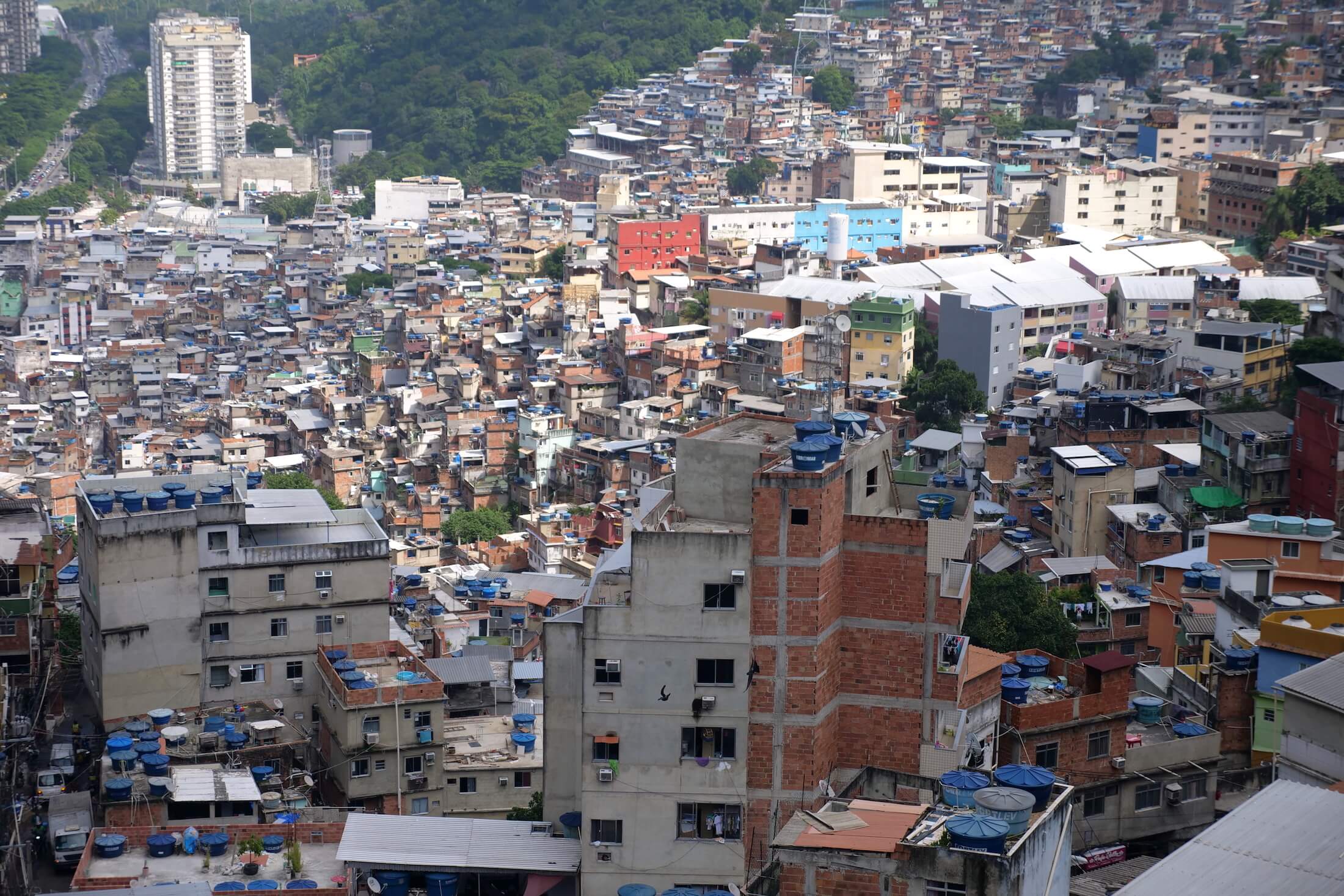
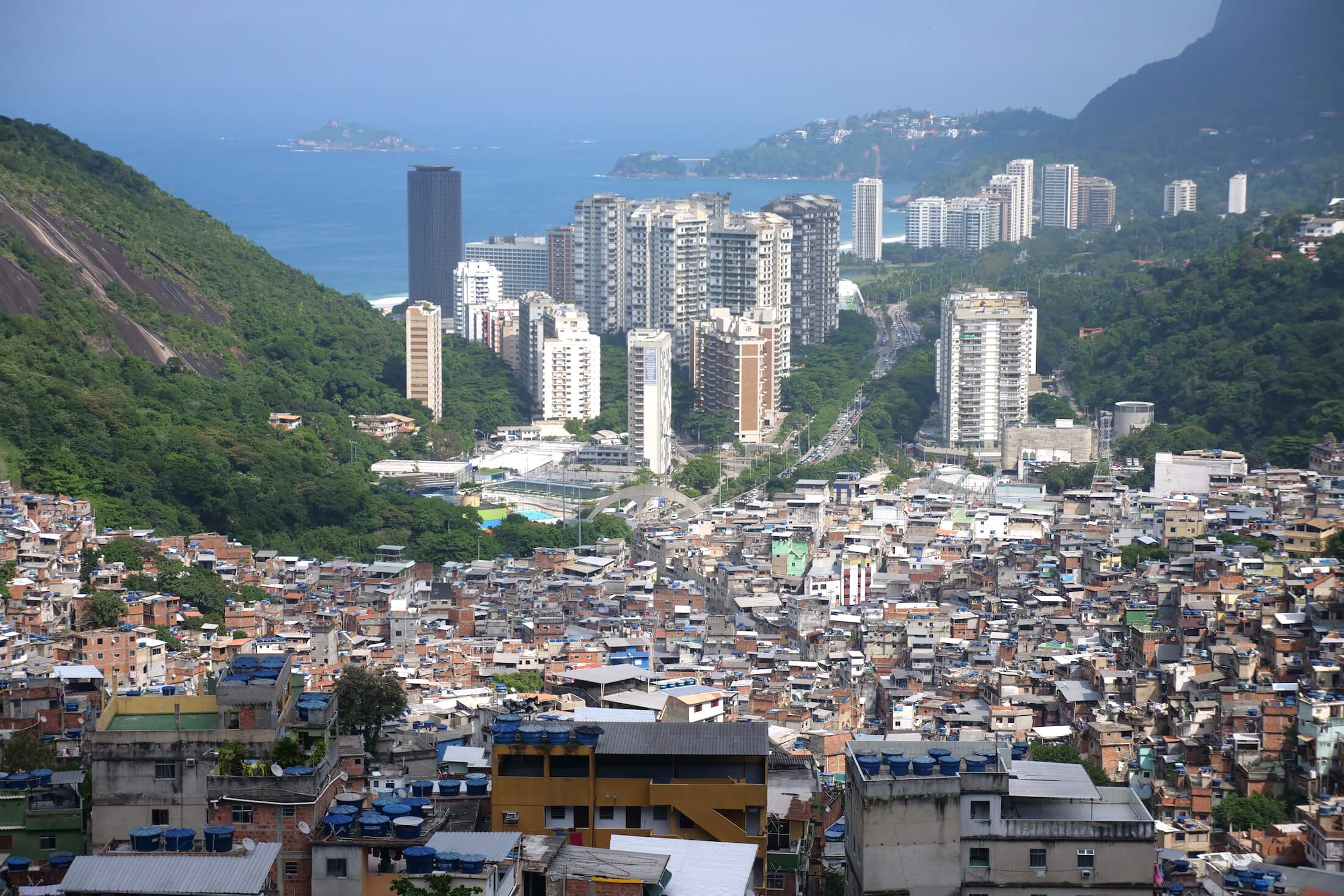
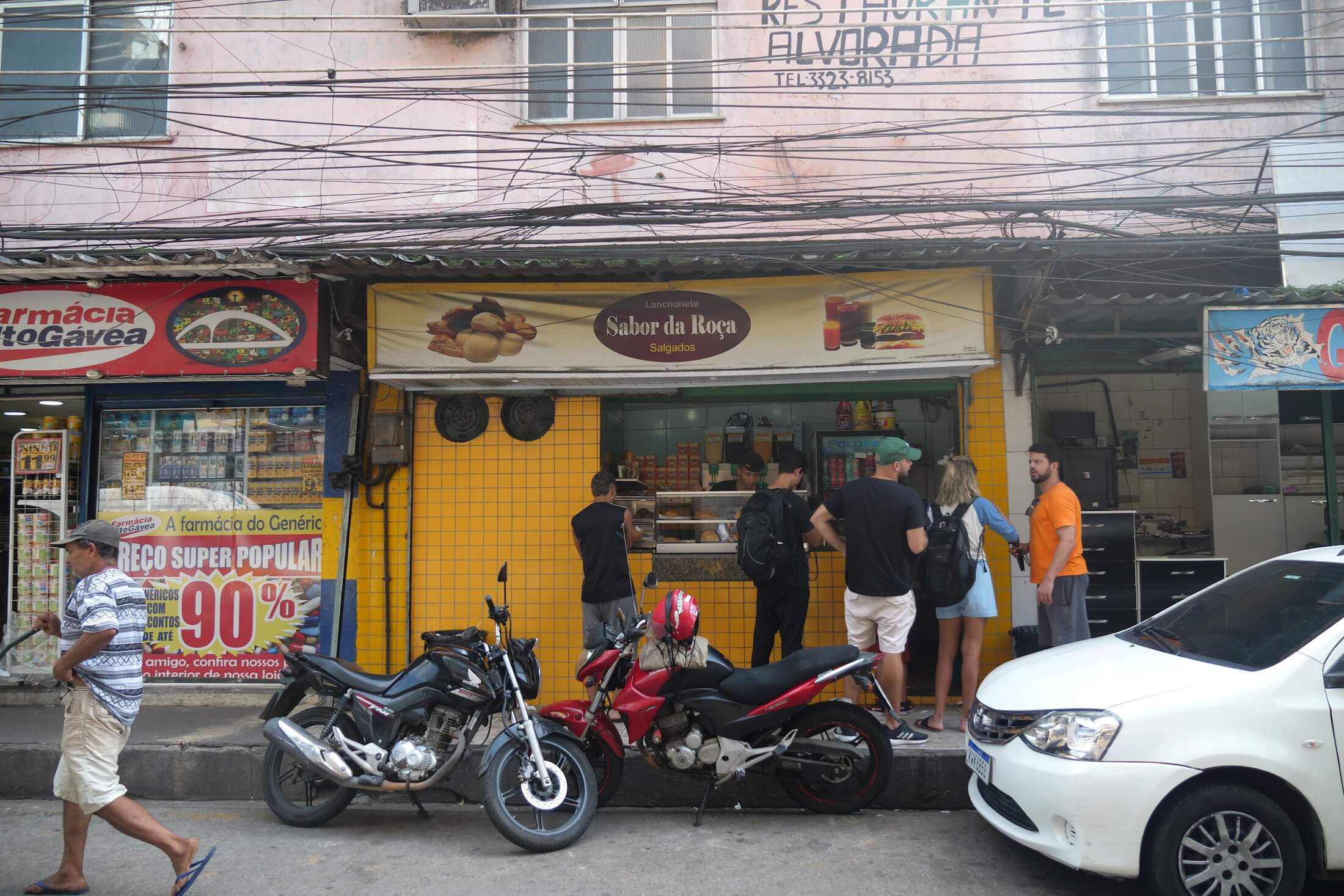
Rocinha defies the monolithic stereotype of urban deprivation. The neighborhood features widespread access to running water, electricity, schools, financial institutions, pharmacies, and bustling commercial strips. Homes are engineered vertically, a testament to architectural ingenuity, constructed densely atop one another. The local economy is driven by hardworking residents who participate in the formal and informal labor markets, commuting daily to Brazil’s commercial centers.
Navigating Rocinha: Logistics and Geography
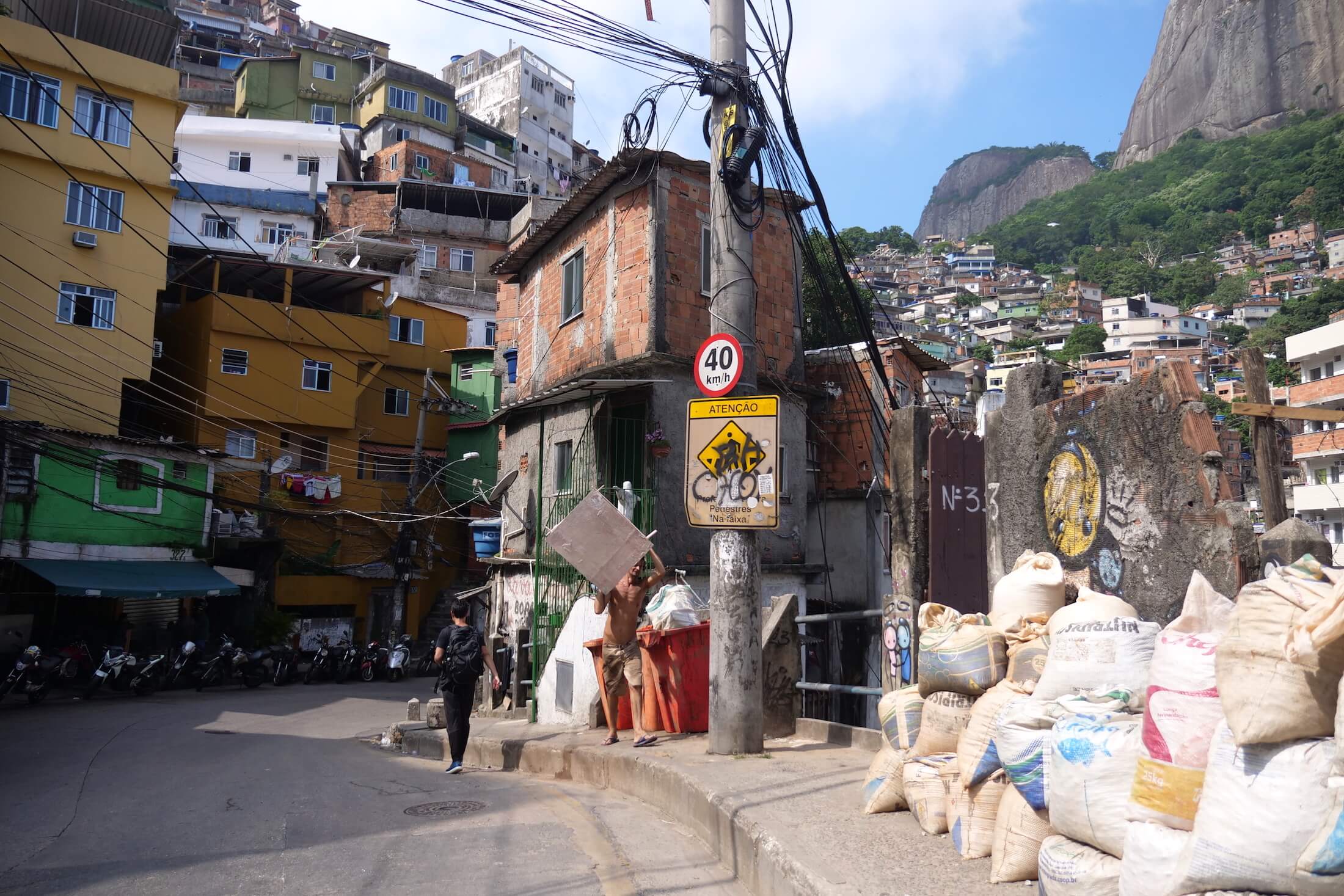
Geographically situated in the São Condo district of Rio de Janeiro’s Zona Sul, Rocinha is accessible via public bus networks and private transit. Visitors and locals frequently utilize moto-taxis—motorcycle taxis that navigate the steep, winding roads—to reach the higher elevations of the neighborhood.
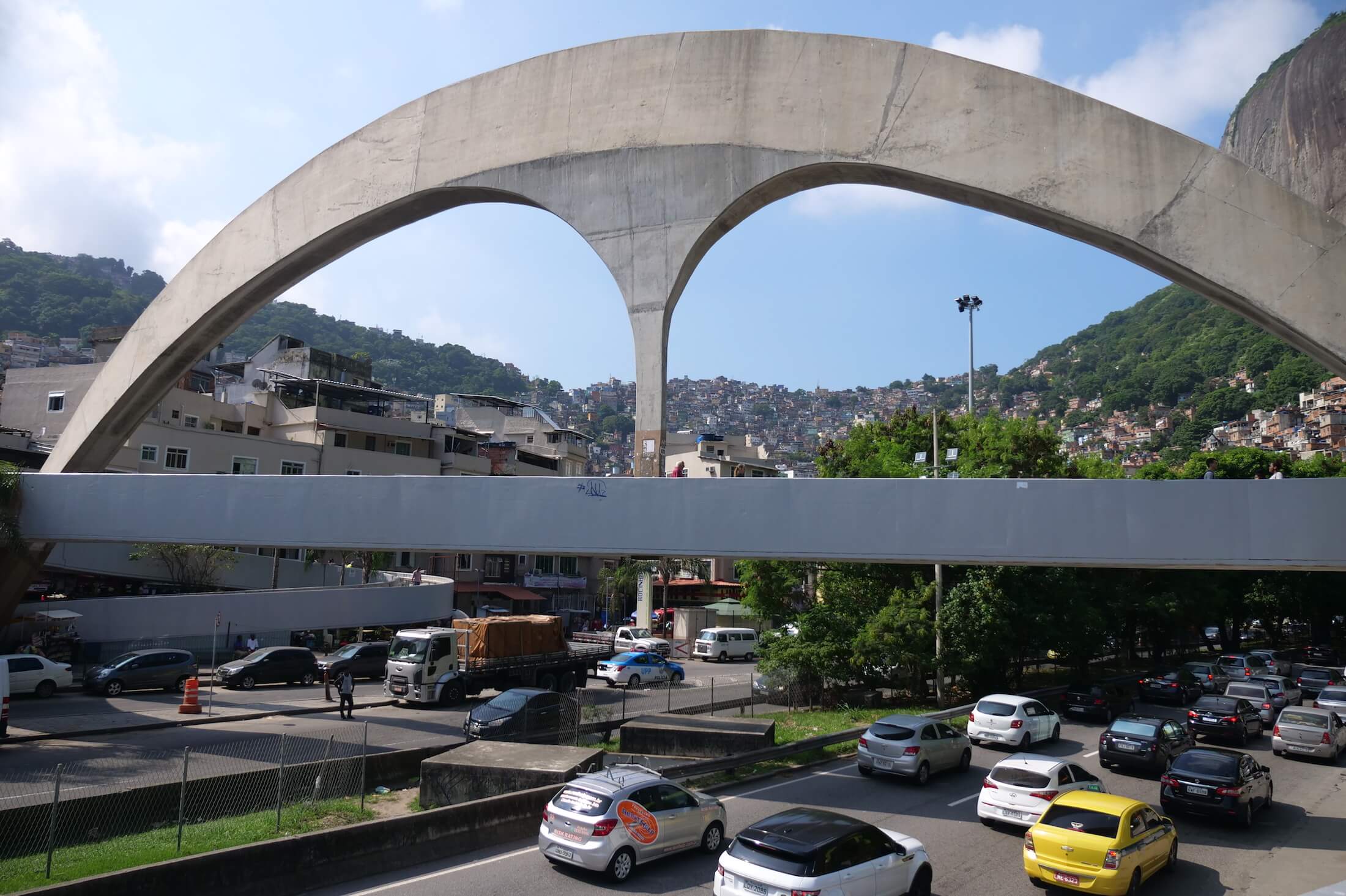
A primary geographic landmark is the "Gate of Heaven," a high-altitude viewpoint near the top of the favela. From this vantage point, panoramic vistas stretch from the dense maze of rooftops across the urban expanse to the Atlantic Ocean. Entering the neighborhood typically begins at the main lower archway, serving as a transitional threshold from the formal city streets into the labyrinthine alleys of the community.
Culinary Traditions and Street Food Economy
The culinary landscape of Rocinha mirrors the hearty, comforting traditions of Brazilian working-class cuisine, characterized by a heavy reliance on starches, savory proteins, and locally sourced ingredients. Street food culture is deeply embedded in daily life, providing affordable and substantial meals for residents returning from work.
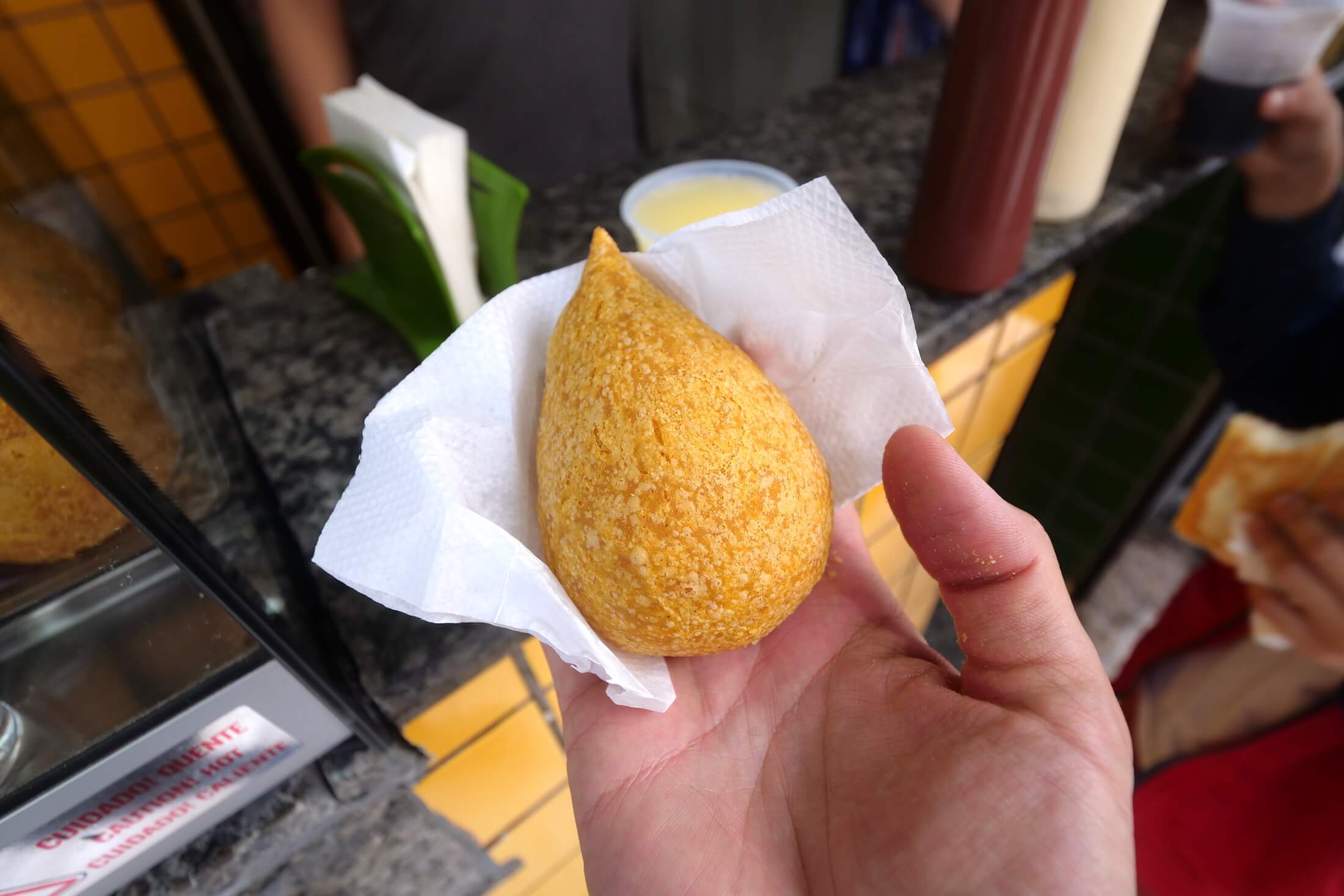
Among the staple items is the coxinha, a popular Brazilian snack consisting of shredded chicken wrapped in dough, molded into a teardrop shape, and deep-fried. Priced accessibly between R$2 and R$5, these snacks are frequently paired with coffee or customized with chili oil. Similarly, salgados—a general term for savory baked or fried pastries—dominate local vendor menus, often served alongside fresh fruit juices (suco).
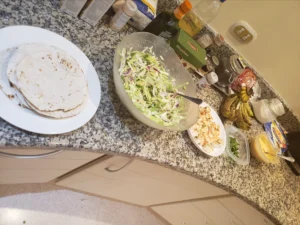
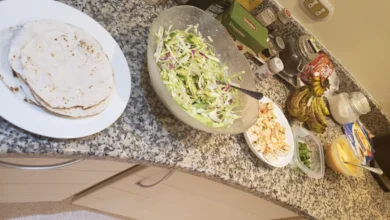
For full meals, local establishments offer traditional Brazilian comfort food, combining staples like rice, black beans (feijão), spaghetti, and slow-cooked meats. Small, family-run eateries operating directly out of residential kitchens—such as those run by local home cooks—provide complete plates featuring tender beef brisket, cassava (mandioca), and farofa (toasted cassava flour) for approximately R$10. These ingredients balance rich protein profiles with absorbent starches, forming the nutritional backbone of the local workforce’s diet.
Artistic Expression and Cultural Vitality
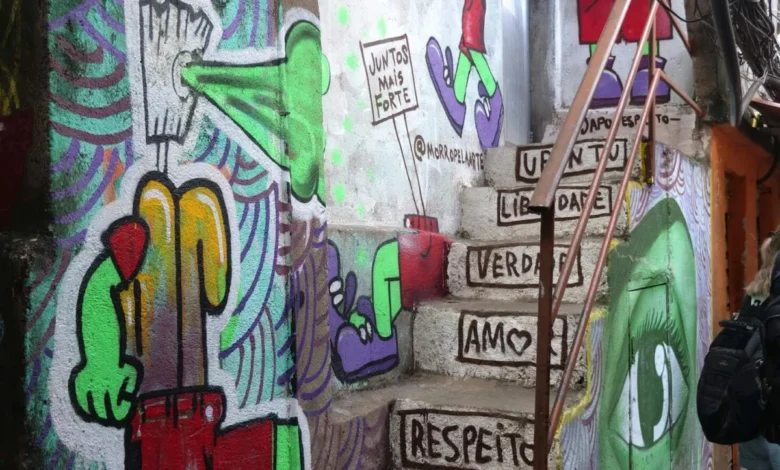
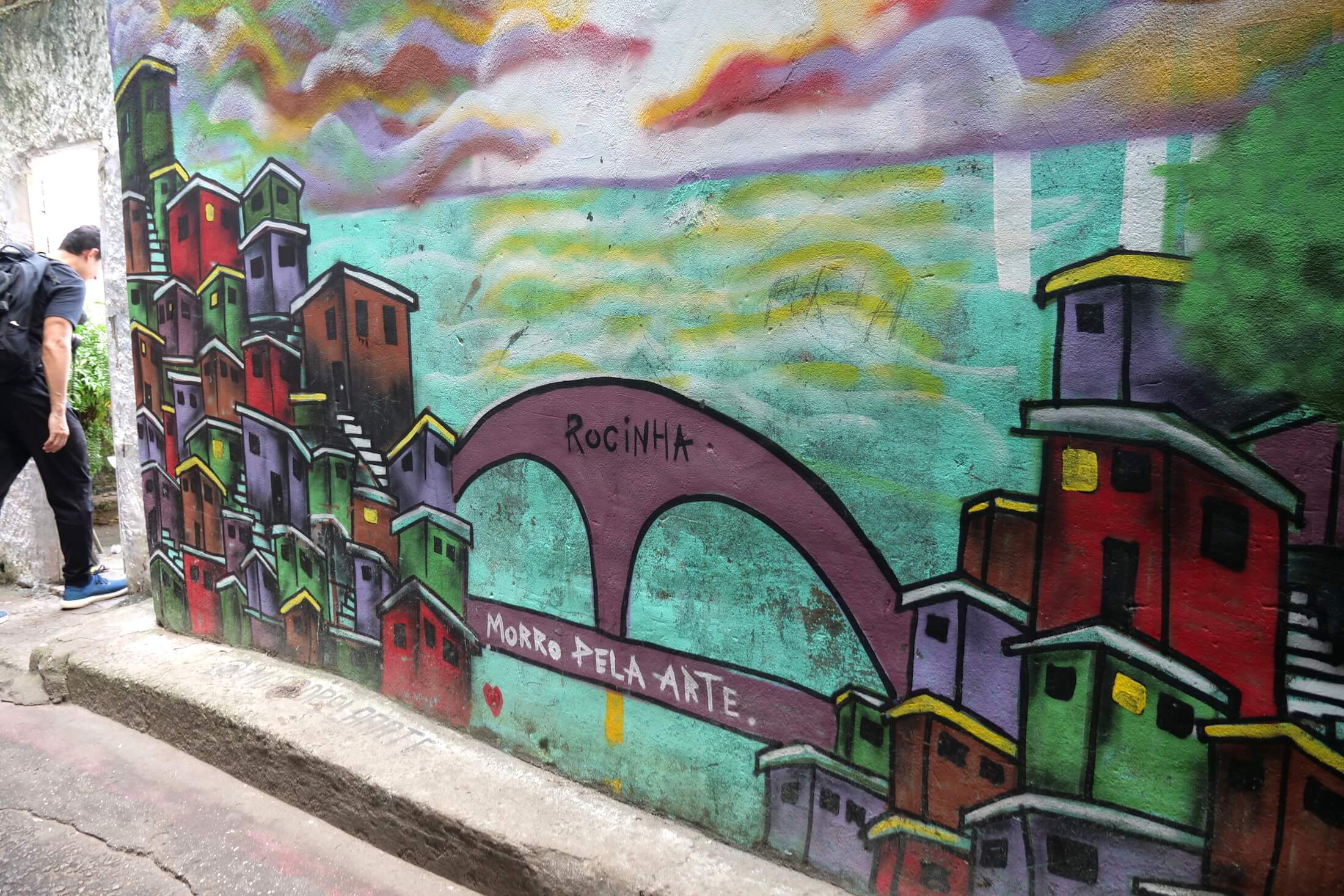
Art serves as a defining characteristic of Rocinha and other Brazilian favelas. Public spaces, stairways, and building facades are frequently covered in expansive, colorful murals created by local artists and entrepreneurs. This integration of visual art reflects a broader national ethos, transforming densely populated environments into open-air galleries.
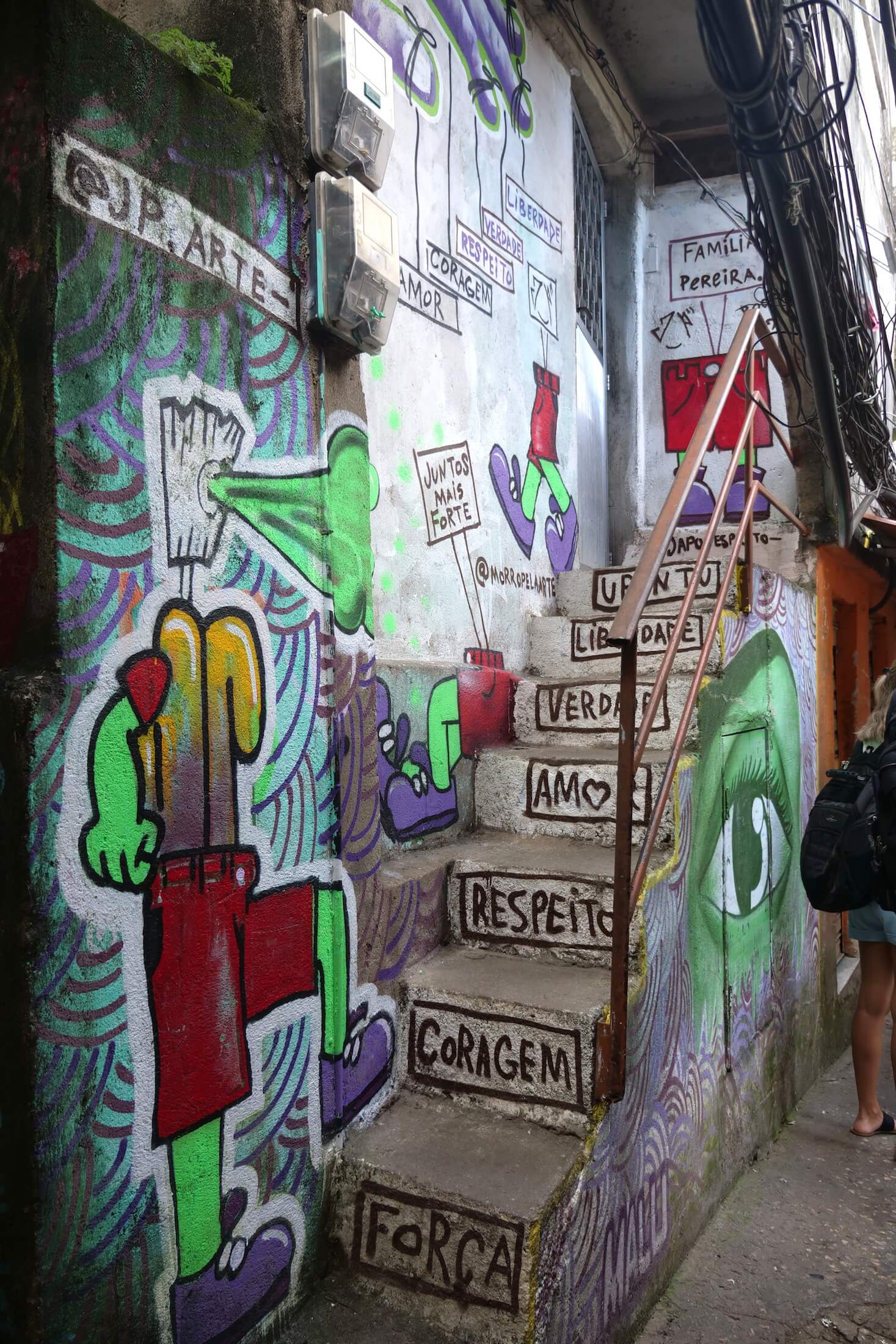
Artistic endeavors in favelas contribute significantly to modern Brazilian culture, offering youth an outlet for expression and a means of economic participation. Murals and community art projects serve to document local history and challenge external stigmas, injecting vibrancy into daily urban life.
Security, Public Policy, and Public Perception
Safety remains a central concern in international perceptions of Rio de Janeiro’s favelas, largely shaped by sensationalized media coverage. While certain areas have historically experienced high rates of criminal activity and territorial disputes, local authorities have implemented significant security interventions.
Ahead of major international events such as the 2018 Olympic Games, state initiatives deployed large-scale police operations to pacify major favelas, establishing permanent community policing units designed to stabilize the neighborhoods and foster long-term civic peace. Despite these measures, visitors and researchers emphasize the necessity of exercising situational awareness, noting that media portrayals often overlook the peaceful, community-oriented daily reality experienced by the vast majority of residents.
Implications and Broader Impact
The study and visitation of favelas like Rocinha offer critical insights into the realities of rapid global urbanization and socio-economic integration. By moving past generalized stigmas, observers gain a nuanced understanding of how informal communities function as self-sustaining urban ecosystems. Anthropologists and sociologists note that direct engagement with these neighborhoods fosters cross-cultural empathy, challenges systemic biases, and grants visibility to populations whose contributions are vital to the cultural and economic identity of contemporary Brazil.