Beyond the Beaten Path: Why Zimbabwe’s Foot-Based Safaris are Redefining Wilderness Exploration in Northern Hwange


When travelers encounter the term walking trail, expectations are usually fixed on conventional parameters: a clearly demarcated route, a topographical map in hand, and a path that loops predictably from trailhead back to base, punctuated perhaps by a mountain summit or an engineered scenic overlook. It stands as one of the most familiar outdoor paradigms globally, predicated on following a trajectory pre-mapped by human hands. Yet, within the varied ecosystems of southern Africa, Zimbabwe’s premier wilderness corridors operate under an entirely distinct ethos. Here, a walking safari is not merely an auxiliary activity bolted onto a conventional lodge itinerary, nor is it a protracted version of the brief bush walks commonly offered across regional reserves. Instead, pedestrian exploration forms the foundational core of the safari experience itself, elevating the journey between destinations to a level of paramount importance.
The absence of engineered footpaths remains perhaps the most striking realization for first-time participants. Rather than following human-graded routes, daily excursions unfold along ancient elephant thoroughfares, seasonal riverbeds, and deeply etched game trails forged by generations of megafauna navigating the terrain. This fluidity dictates that daily paths remain dynamic and unscripted. Fresh spoor may redirect a morning trek eastward, while the distant trumpet of a breeding herd of elephants might draw the party toward a concealed spring. Wind direction and thermal currents dictate the starting point of each venture, ensuring that the topography is experienced on the terms of its permanent inhabitants. The finest route across this terrain has never been constructed; rather, it has been continually discovered and preserved by the wildlife that inhabits it.

The Historical Evolution of the African Walking Safari
To fully comprehend the contemporary standing of Zimbabwe’s walking safaris, one must examine the broader historical landscape of southern African wildlife tourism. Neighboring Zambia is internationally acknowledged as the birthplace of the modern walking safari, pioneered in the mid-twentieth century within the Luangwa Valley by conservationists who recognized that vehicular travel insulated visitors from the intimate realities of the ecosystem. Over the subsequent decades, this immersive approach to wildlife observation spread across international borders, evolving from a niche adventure into a sophisticated tourism sector.
While nations such as Botswana and South Africa developed sophisticated infrastructure centered largely upon high-end game viewing vehicles, Zimbabwe cultivated a distinct identity rooted in pedestrian bushcraft. This quiet reputation was not built upon sheer density of animal populations—though national parks like Hwange rival any in the region—but rather upon the exceptionally rigorous training regime mandated for its professional guiding community.
The Zimbabwe Professional Guides Association (ZPGA) administers what wildlife experts widely consider the most demanding licensing examination process on the African continent. Aspiring guides endure an apprenticeship spanning many years, logging thousands of hours mastering complex ecological disciplines. Trainees must demonstrate comprehensive proficiency in regional botany, mammalian ethology, primitive tracking, celestial navigation, and wilderness survival, all prior to leading paying guests through territories populated by potentially dangerous game, including lions, elephants, and Cape buffalo.
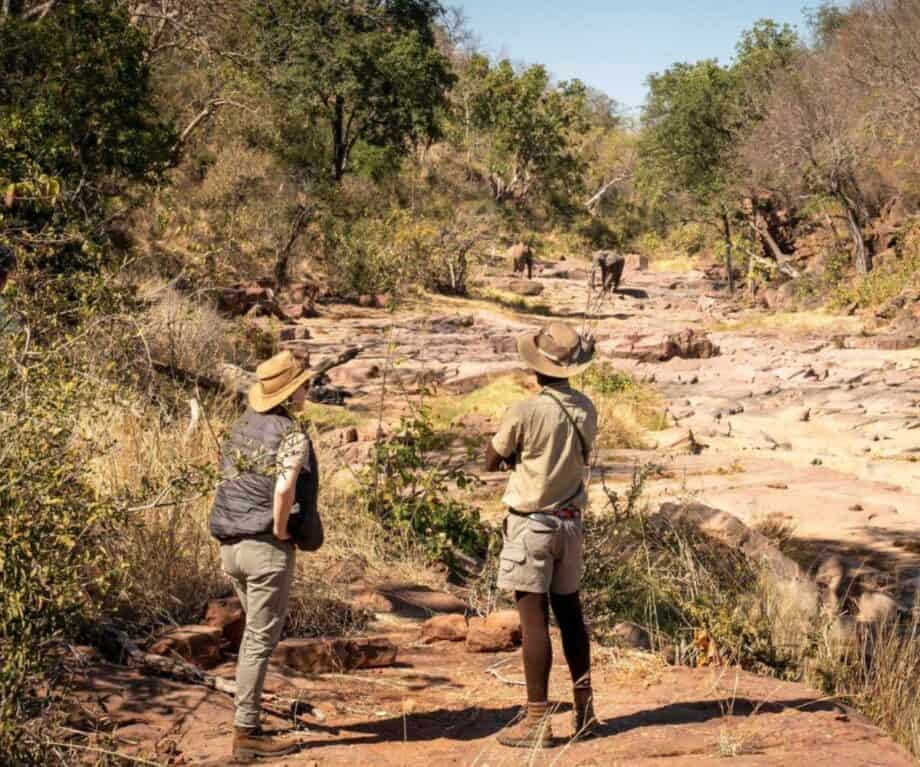
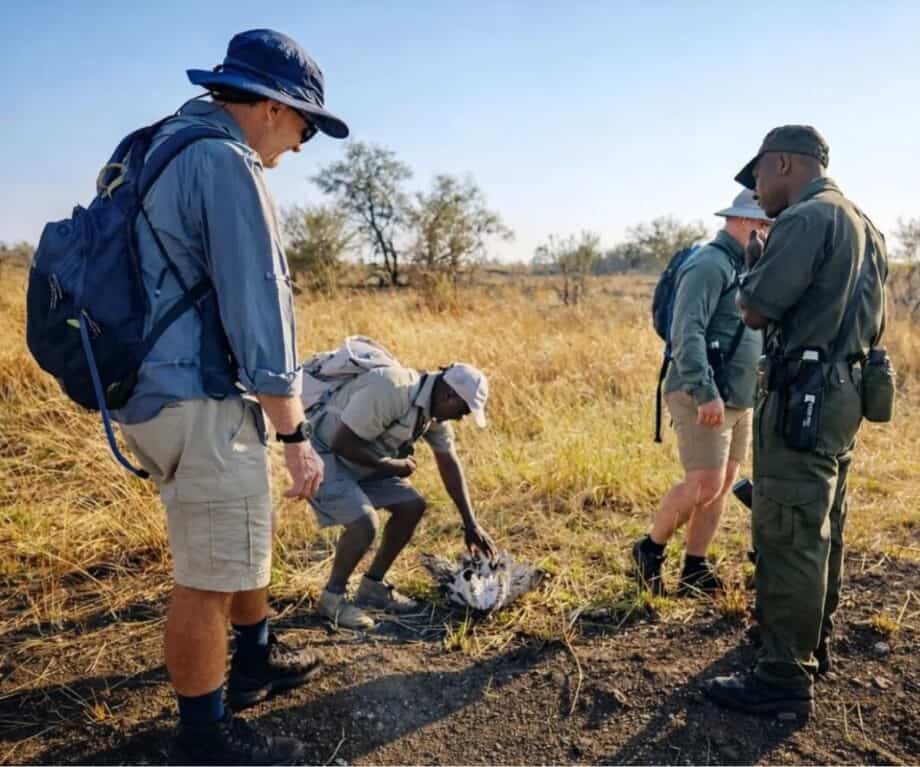
This rigorous preparation manifests in the field as an extraordinary depth of interpretation. A certified Zimbabwean guide might identify an approaching bird species based on a solitary alarm call echoing through the canopy, detect faint leopard prints pressed into shifting Kalahari sands long before guests notice them, or name every medicinal plant and subterranean water source for miles around.
Reading the Bush: A Paradigm Shift in Wildlife Observation
Traditional game drives inherently prioritize visual acquisition—the rapid tracking and spotting of charismatic megafauna from the relative security of an all-terrain vehicle. Conversely, walking safaris shift the cognitive focus from passive observation to active ecological literacy.
On foot, environmental variables that are typically muted inside a vehicle suddenly assume critical importance. Atmospheric pressure, ambient temperature, and wind vector dictate not only the safety parameters of the approach but also the behavioral state of nearby wildlife. Vocalizations transform from ambient background noise into a complex communicative network between prey and predator. A freshly snapped branch, an excavated termite mound, or an overturned stone ceases to be inert scenery and instead tells a chronological narrative of the preceding hours.
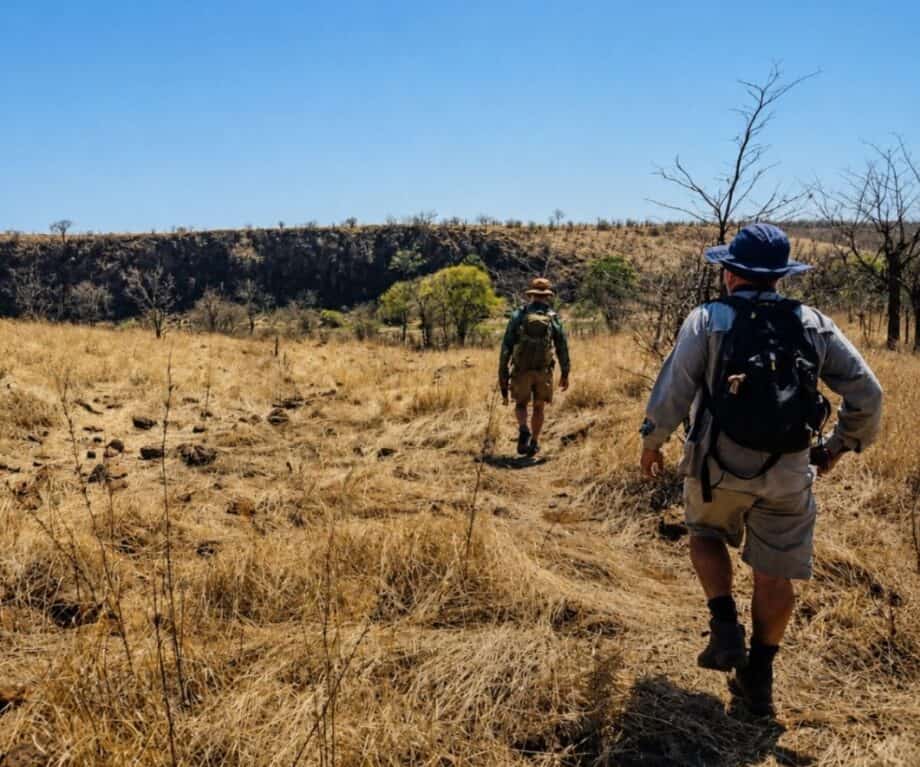
Slowly, the landscape ceases to be a static backdrop viewed through a camera lens and becomes an interconnected living system. The primary objective transitions away from merely checking off major animal sightings toward deciphering the invisible histories written into the earth by every creature sharing the habitat.
Northern Hwange National Park: A Landscape Built for Exploration
Few regions illustrate the advantages of pedestrian exploration more vividly than the northern sector of Hwange National Park. Encompassing more than 14,600 square kilometers, Hwange is Zimbabwe’s largest wildlife reserve. However, while the southern and central expanses are characterized by expansive, monotonous Kalahari sand sheets and artificial waterholes, the northern terrain presents a starkly different topographical profile.
Northern Hwange is defined by rugged sandstone ridges, natural thermal springs, dramatic erosion-carved gorges, and the winding course of the Deka River. This geological variety creates an amphitheater that is exceptionally well-suited for exploration on foot. Rather than commuting between isolated wildlife sightings in a motorized vehicle, walkers traverse transitional micro-habitats organically. Following the Deka River corridor, the landscape shifts seamlessly from dense teak and mopane woodlands to exposed rocky escarpments, perennial springs, and ancient migration routes.
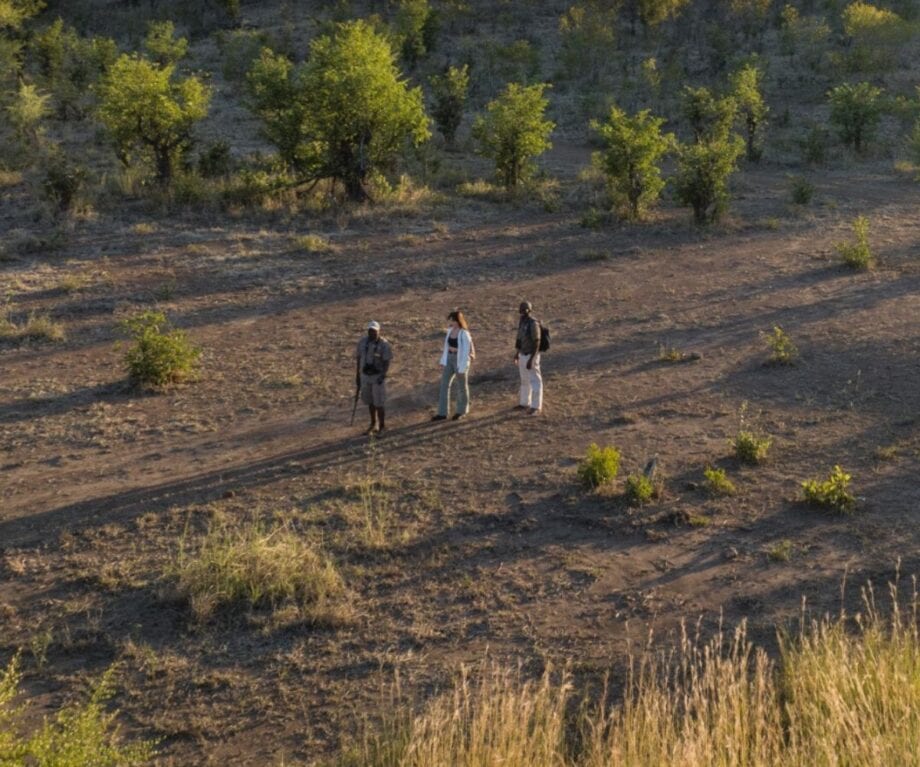
Furthermore, this terrain holds deep archaeological significance. Walking routes frequently intersect historical sites that underscore humanity’s long-standing relationship with the region. Ancient stone-walled settlements constructed by the Nambya people, prehistoric San rock art panels, and sprawling petrified forests demonstrate that humans have read and interpreted this landscape for millennia. Consequently, northern Hwange offers a rare synthesis where ecology, geology, and human history converge into a unified educational narrative.
The Operational Mechanics of Private Concessions
A significant portion of the specialized walking safari activity in northern Hwange occurs within private concessions operating on the park’s boundaries and within designated buffer zones. These private tracts afford operators a level of operational flexibility that is structurally impossible within national park main camps.
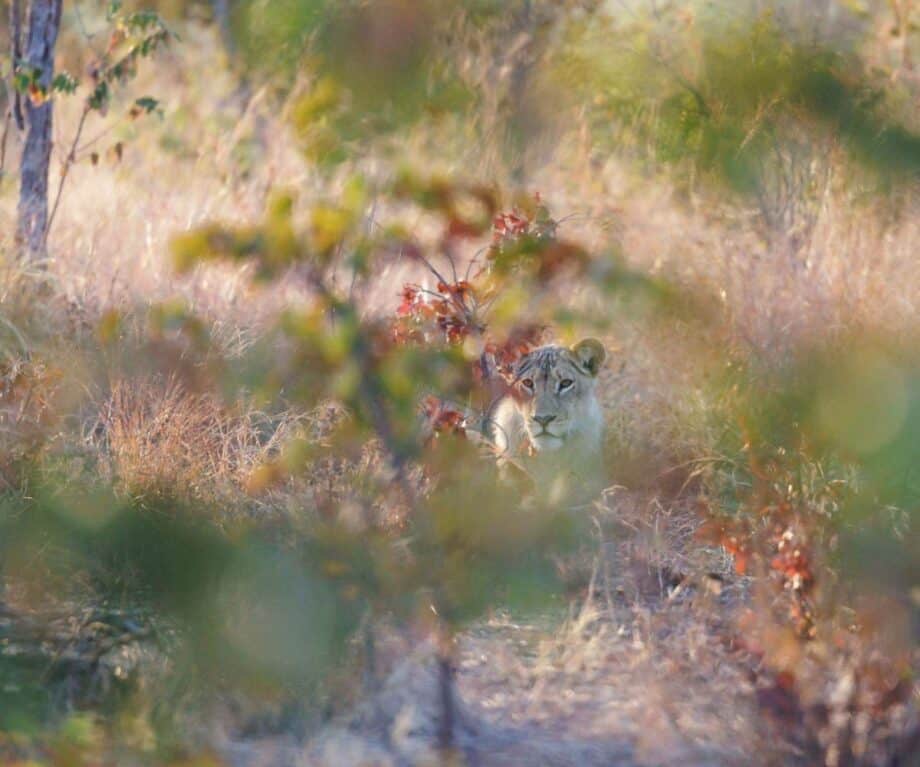
Within private concessions, guide teams retain the autonomy to dynamically alter daily itineraries based on real-time ecological conditions. If fresh lion spoor crosses a walking path, trackers can alter the route to safely investigate. If a breeding herd of elephants chooses to linger at a natural spring, the walking party can pause indefinitely to observe complex matriarchal social interactions without time constraints. Because these areas strictly limit guest numbers and prohibit the clustering of multiple safari vehicles around a single sighting—a common frustration in high-traffic national parks—travelers experience an absolute sense of solitude and uninterrupted immersion in the wilderness.
Economic and Conservation Implications
The proliferation and refinement of low-impact walking safaris carry profound implications for modern conservation economics in southern Africa. By decentralizing tourism and reducing reliance on heavy vehicular infrastructure, private concessions in regions like northern Hwange minimize their ecological footprint while maximizing revenue retention for local conservation initiatives and rural communities.
Industry analysts note that high-value, low-volume tourism models—exemplified by guided walking safaris—incentivize the preservation of vast tracts of wild land by demonstrating that pristine ecosystems hold substantial economic value without requiring industrial development or intensive agriculture. Furthermore, the employment of highly skilled professional guides creates sustainable, well-compensated career paths for local Zimbabweans, reinforcing community-based conservation incentives.
As international travelers increasingly seek purposeful, authentic engagement with the natural world rather than passive entertainment, the demand for pedestrian wildlife experiences is projected to rise steadily through the latter half of the decade. Industry stakeholders emphasize that Zimbabwe’s strict adherence to guide training standards positions the country favorably to capture this discerning demographic.
Conclusion: The Endurance of the Unpaved Path
Ultimately, the enduring appeal of Zimbabwe’s walking safari trails lies in their psychological and experiential impact. They are not engineered to facilitate rapid transit from point A to point B; rather, they are calibrated to fundamentally alter how humanity interacts with the natural world.
By the culmination of an extended walking safari, participants typically undergo a noticeable shift in perspective. The urgency to locate trophy species recedes, replaced by an acute fascination with the subtle indicators left behind by the broader ecosystem. Footprints assume the visual weight of the animals that generated them; alarm calls resonate with the clarity of narrative dialogue.
In this context, the complete absence of engineered footpaths ceases to be a logistical hurdle and becomes the defining feature of the journey. The finest walking trails in Zimbabwe have never been constructed by human hands, yet they have sustained travelers, trackers, and wildlife for centuries—and they remain open to those willing to explore the bush on foot.