Intrepid Travel Successfully Secures Recertification Under B Lab’s Rigorous New Global Standards


Global adventure tourism pioneer Intrepid Travel has officially announced its successful recertification as a Certified B Corporation, achieving this milestone under B Lab’s newly established, significantly more rigorous global standards. This latest achievement marks a major corporate milestone for the travel operator, which originally earned its inaugural B Corp status in 2018 and has maintained continuous certification through subsequent periodic reviews. However, the 2026 recertification landscape represents a fundamental shift in how non-financial corporate performance, social responsibility, and environmental stewardship are evaluated on an international scale.
The transition to B Lab’s updated framework moves away from the historical points-based accumulation model, replacing it with a strict set of mandatory performance requirements. Under the previous methodology, companies could occasionally offset underperformance in specific operational segments by accumulating high scores in others. The modern framework eliminates this flexibility, demanding that certified entities maintain excellence across seven distinct impact topics. These criteria are subjected to rigorous, independent third-party auditing to verify that sustainable and ethical practices are embedded into the core operations of the business rather than treated as peripheral initiatives.
Background Context of the B Corp Evolution
Certified B Corporations form a growing segment of the global economy comprising for-profit enterprises dedicated to meeting high standards of verified social and environmental performance, public transparency, and legal accountability. Established in 2006 by the non-profit organization B Lab, the certification evaluates a company’s entire social and environmental impact.
As consumer awareness regarding greenwashing and corporate accountability has intensified, B Lab recognized the necessity to modernize its diagnostic tools. The implementation of the new standards in recent years was designed to address systemic global challenges, including climate change, supply chain transparency, fair wage distribution, and governance ethics. For multinational enterprises operating in the tourism sector, these standards require comprehensive mapping of global supply chains, local employment practices, and carbon reduction metrics.
Scope of the Corporate Assessment
The scope of B Lab’s evaluation of Intrepid Travel extended far beyond the visible elements experienced by retail consumers on guided tours. The comprehensive audit reviewed the entirety of the company’s corporate ecosystem, which includes 93 locally managed offices worldwide, corporate-owned accommodation properties, third-party logistics suppliers, operational policies, and secondary sub-brands.

This meticulous behind-the-scenes evaluation ensures that labor rights are protected, environmental policies are enforced, and economic benefits are retained within local host communities. While much of this administrative and operational compliance occurs outside the immediate awareness of the average traveler, industry analysts note that these systemic frameworks directly dictate the quality, safety, and ethical integrity of the final tourism product.
Operational Realities: Translating Policy into Practice on the Ground
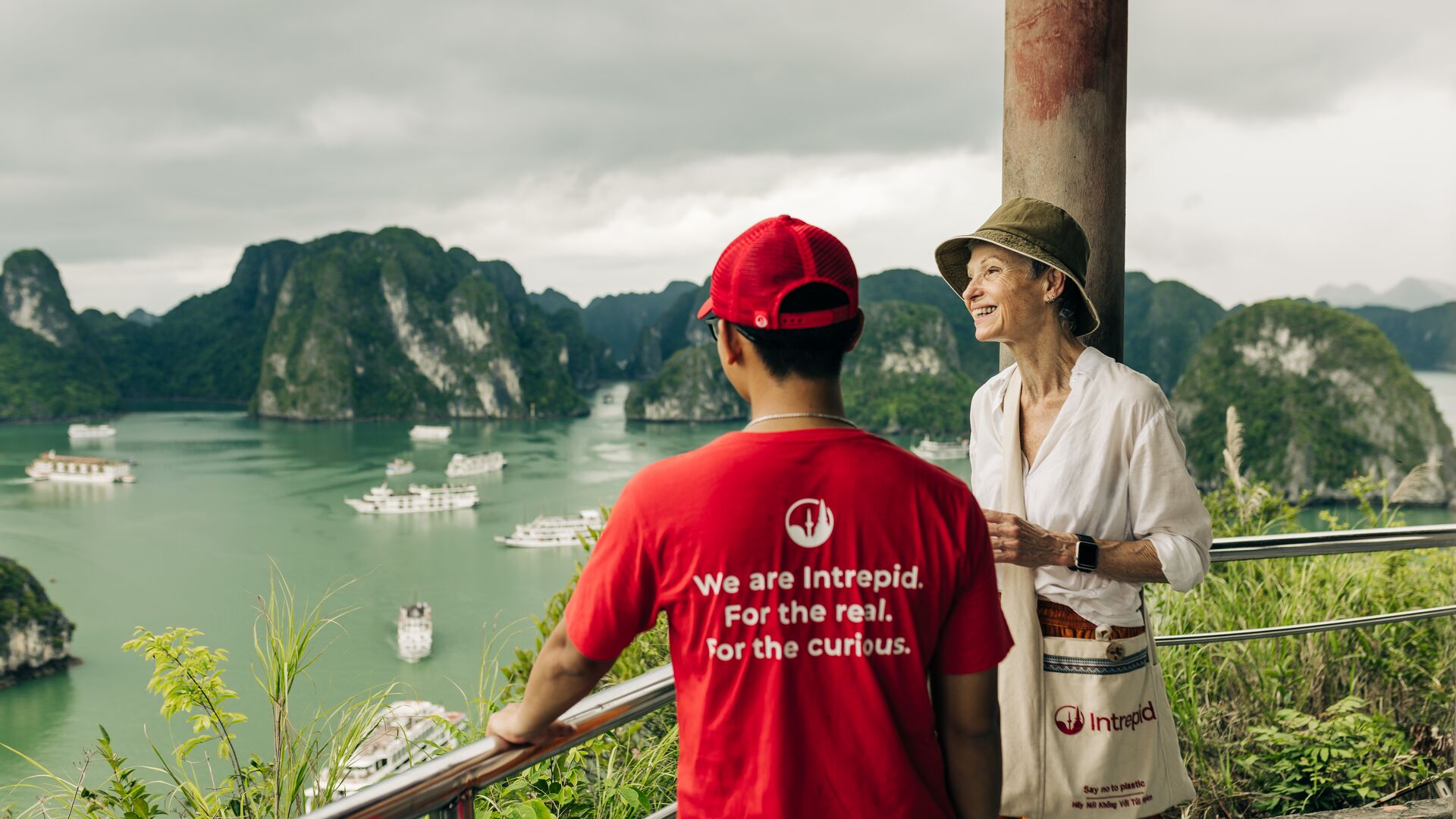
To illustrate how high-level corporate governance translates into practical realities for travelers, industry observers frequently examine on-trip experiences across global itineraries. A representative journey through Vietnam—exemplified by standard 15-day small-group itineraries traversing from Hanoi to Ho Chi Minh City—serves as a case study for sustainable tourism in action.
From the initial booking phase through digital platforms to ground transportation networks, accommodations, and local dining selections, the operational choices reflect mandatory B Corp compliance. Travelers interact directly with locally hired guides, regional transport providers, and community-based tourism enterprises that prioritize fair wages and localized economic distribution.

Chronology and Evolution of Intrepid’s Sustainability Journey
Intrepid Travel’s institutional commitment to sustainable tourism spans more than three decades, culminating in several key operational milestones:
- 1989: Intrepid Travel is founded with a mandate to pioneer community-focused, small-group adventures.
- 2018: The company achieves its initial B Corp certification, joining a select group of multinational tourism enterprises formally committed to balancing profit with purpose.
- 2020–2023: Intrepid undergoes subsequent periodic reviews under legacy scoring models while expanding its global network of local offices and community projects.
- 2026: The enterprise successfully secures recertification under B Lab’s newly introduced, mandatory performance requirements and independent third-party auditing standards.
Statements and Industry Implications
While specific corporate executive statements regarding this exact recertification cycle emphasize ongoing institutional dedication, leadership at Intrepid has consistently framed such certifications not as marketing accolades, but as operational roadmaps. Industry analysts and sustainable development experts suggest that the successful transition under stricter B Lab guidelines sets a benchmark for the broader travel and tourism sector.

As consumer demand shifts toward transparent, low-impact travel options, regulatory bodies and consumer watchdogs are increasing scrutiny on sustainability claims. The requirement for independent, third-party verification under the new B Lab standards provides a defense against greenwashing, offering consumers a reliable metric for corporate responsibility.
Broader Impact on the Global Tourism Sector
The implications of Intrepid’s recertification extend to the wider travel industry, signaling that voluntary adherence to high environmental and social standards is transitioning from a niche market differentiator to an essential requirement for long-term viability. By proving that a commercial enterprise operating across dozens of international jurisdictions can meet stringent performance metrics across all operational areas, the company demonstrates the commercial feasibility of ethical tourism models.
As global tourism continues its post-pandemic recovery and transformation, the intersection of rigorous corporate auditing and consumer-facing travel experiences will likely remain a central focus for policymakers, investors, and travelers alike. Intrepid Travel’s adherence to the updated B Corp framework underscores a broader movement within international commerce toward accountability, transparency, and measurable planetary stewardship.