Beyond the Basilica: Unlocking Barcelona’s Hidden Neighborhoods and Regional Culture on Return Visits

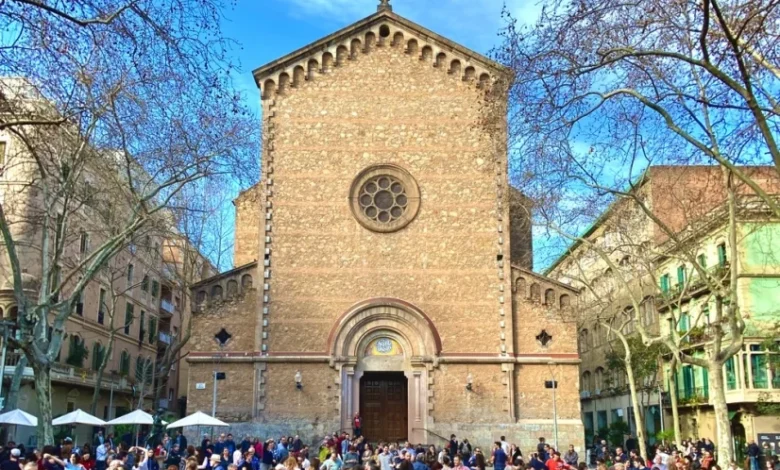
For millions of international travelers, a maiden voyage to Barcelona follows a well-trodden, highly anticipated path. The standard itinerary routinely features the staggering spires of Antoni Gaudí’s Sagrada Família, the surreal ceramic mosaics of Park Güell, the medieval labyrinths of the Gothic Quarter, and the bustling, tree-lined avenue of La Rambla. These iconic landmarks draw an estimated 12 million tourists annually to the capital of Catalonia, anchoring the city’s status as one of Europe’s premier tourism hubs.
However, a growing segment of international travelers is shifting away from rapid-fire landmark-ticking in favor of return visits. Tourism data from the Barcelona City Council indicates that repeat visitors now account for nearly 40% of all leisure arrivals. This demographic shift has catalyzed a broader trend in urban travel: moving beyond the central tourist core to engage with secondary neighborhoods, localized gastronomy, and regional day trips. For urban planners, economists, and local business owners, this evolution represents a vital mechanism for mitigating the congestion and overcrowding that have increasingly strained Barcelona’s central districts.
The Evolution of Urban Tourism: Moving Beyond the First-Timer’s Checklist
The structural reality of a first-time trip to Barcelona often involves logistical constraints. Confined to a weekend or a brief five-day window, visitors naturally gravitate toward high-profile attractions clustered in Ciutat Vella (Old City) and the Eixample district. Consequently, memories of these initial journeys frequently center on packed plazas, long queues, and the sensory overload of navigating dense pedestrian corridors.
Urban tourism analysts note that return trips fundamentally alter the visitor’s relationship with the destination. By removing the psychological pressure to see every globally recognized monument, travelers can reallocate their time and capital toward lesser-known zones. This decentralized exploration not only distributes economic benefits to historically working-class or industrial districts but also offers a more authentic perspective on contemporary Catalan life. Local authorities and regional tourism boards have actively encouraged this dispersal, launching initiatives designed to highlight the distinct cultural identity of peripheral neighborhoods.

Navigating El Raval: Diversity, Counterculture, and Contemporary Art
Situated just across La Rambla from the Gothic Quarter, the neighborhood of El Raval presents a stark contrast to the medieval serenity of its neighbor. Historically known as Barri Xinès (Chinese Quarter), El Raval has long served as a port of entry for generations of migrant communities, shaping its identity as Barcelona’s most ethnically diverse and culturally vibrant enclave.
While parts of El Raval retain a gritty, unpolished aesthetic, municipal investments in recent decades have transformed the area into a hub for contemporary culture. The district is anchored by the Museu d’Art Contemporani de Barcelona (MACBA), designed by Richard Meier, which stands as a masterpiece of minimalist architecture. Just outside its doors, the expansive Plaça dels Àngels functions as an urban social commons, drawing skateboarders, students, and local residents.
Urban sociologists emphasize that El Raval’s appeal lies in its resistance to corporate homogenization. Independent vintage boutiques, underground music venues, and family-run eateries reflecting North African, Asian, and Latin American culinary traditions dominate the side streets. For repeat visitors, wandering El Raval without a rigid itinerary provides a direct window into the city’s complex social fabric and immigrant history.
The Historic Village Feel of Gràcia
Further north, nestled between Eixample and the Collserola hills, lies Gràcia. Until it was formally annexed by Barcelona in 1897, Gràcia was an independent municipality—a history that remains fiercely guarded by its residents. Unlike the rigid grid system of Eixample, Gràcia’s urban landscape is defined by a network of narrow, pedestrian-friendly streets that open unexpectedly into charming, sunlit squares.
Plaça del Sol and Plaça de la Virreina serve as the communal living rooms of the neighborhood. Here, the pace of life slows considerably compared to the frantic energy of Plaça de Catalunya. Local governance data highlights Gràcia’s high concentration of artisanal shops, cooperative businesses, and neighborhood associations, which actively resist commercial gentrification. For the returning traveler, spending an afternoon sipping vermouth at an outdoor café in Gràcia offers a masterclass in the Catalan concept of barri—a strong, hyper-local sense of community identity.

Gastronomic Shifts: From La Boqueria to Mercat de Sant Antoni
Food tourism remains one of the primary drivers of repeat travel to Spain. While the historic Mercat de la Boqueria off La Rambla remains a marvel of 19th-century ironwork, its global fame has turned it primarily into a sightseeing attraction characterized by pre-packaged juices and snack stalls.
In contrast, the Mercat de Sant Antoni—located in the adjacent district of the same name—offers a deeply authentic market experience. Following a massive, state-of-the-art restoration project that concluded in 2018, the sprawling structure successfully balances its historical architectural heritage with modern commercial functionality. Inside, local residents purchase fresh seafood, cured meats, and seasonal produce from vendors who have operated in the area for decades.
The surrounding Sant Antoni neighborhood has simultaneously emerged as one of Barcelona’s premier culinary hotbeds. Trendy brunch spots, specialty coffee roasters, and innovative tapas bars line the wide avenues. Furthermore, the market hosts a massive open-air book and collector’s fair every Sunday, drawing bibliophiles from across the metropolitan area and reinforcing the neighborhood’s intellectual and cultural pedigree.
Montjuïc: Green Space, Olympic Heritage, and Dark History
Rising 185 meters above the Mediterranean coastline, the hill of Montjuïc is frequently given short shrift by first-time visitors who limit their experience to a brief cable car ride and a panoramic photograph. Yet, Montjuïc contains a dense concentration of historical monuments, botanical gardens, and sporting complexes that warrant a full day of exploration.
At the summit sits Montjuïc Castle, a fortress with a complex and often somber history. Constructed in the 17th century and later expanded, the castle has served as a military stronghold, a political prison, and an execution site—most notably witnessing the execution of Catalan nationalist leader Lluís Companys by Francoist forces in 1940. Today, it functions as a municipal facility offering sweeping views of the port and exhibitions on the city’s military history.

Beyond the fortress, Montjuïc houses infrastructure from two monumental eras in Barcelona’s modern development: the 1929 International Exposition and the 1992 Summer Olympic Games. Visitors can explore the Palau Nacional (home to the National Art Museum of Catalonia), the expansive botanical gardens, and the Olympic Stadium. Because much of the hill is designated parkland, it provides a tranquil escape from the urban density of the city center.
Industrial Heritage and Modernity in Poblenou
For travelers interested in urban regeneration, Poblenou offers a compelling case study in post-industrial transition. Once known as the "Catalan Manchester" due to its dense concentration of textile mills and heavy manufacturing plants in the 19th and early 20th centuries, Poblenou underwent significant economic restructuring as manufacturing shifted overseas.
Rather than demolishing its industrial past, the city administration and local developers embraced adaptive reuse. Redbrick chimneys and sprawling factory warehouses have been converted into loft apartments, art studios, design incubators, and tech hubs—most notably within the 22@ innovation district. Concurrently, the neighborhood maintains a distinct village atmosphere along Rambla del Poblenou, a pedestrian promenade that stretches down to the Mediterranean Sea.
Economic development reports from the regional government indicate that Poblenou has successfully attracted creative industries, positioning Barcelona as a major European player in the digital economy. For the visitor, walking through Poblenou reveals a dynamic synthesis of 19th-century industrial architecture and 21st-century urban innovation.
Evening Traditions: Pintxos in Poble Sec
As evening falls, the culinary traditions of northern Spain find a vibrant home in Poble Sec, situated at the foot of Montjuïc. While the Gothic Quarter is dominated by traditional Catalan sit-down restaurants, Poble Sec—specifically Carrer de Blai—is famous for its pedestrianized stretch of pintxos bars.

Originating from the Basque Country, pintxos are small snacks traditionally pierced with a toothpick. Diners sample a variety of cold and warm creations displayed along bar counters, keeping track of their consumption by counting the remaining toothpicks. This casual, communal style of dining encourages socializing and movement between establishments, offering a relaxed alternative to formal restaurant reservations. The surrounding streets of Poble Sec host a diverse array of neighborhood bodegas, theaters, and music halls, making it a favorite evening destination for locals seeking an authentic night out.
Beyond the City Limits: Coastal Wine, Historic Towns, and Alpine Monasteries
When repeat visitors exhaust the urban bounds of Barcelona, the surrounding Catalonia region offers world-class destinations accessible within an hour via Spain’s efficient rail and highway networks.
Just north of the city lies the Denominació d’Origen (DO) Alella, one of Spain’s smallest and most historic wine-making regions. Wedged between the coastal hills and the Mediterranean, Alella is internationally recognized for its crisp, mineral-driven white wines produced from the native Pansa Blanca grape. Several historic vineyards offer guided tours and tastings, providing a tranquil agricultural escape just 20 minutes from the urban center.
For a broader cultural day trip, high-speed rail links connect Barcelona to Girona in approximately 40 minutes. Girona boasts a remarkably preserved medieval old town, featuring the ancient Roman walls (Passeig de la Muralla), a soaring Gothic cathedral, and the Call—one of Europe’s best-preserved Jewish quarters. Further south, the coastal town of Sitges offers a picturesque Mediterranean atmosphere, known for its neoclassical architecture, vibrant cultural arts scene, and extensive beachfront promenades.
Meanwhile, nestled in the jagged peaks of the pre-coastal mountain range, the Santa Maria de Montserrat abbey remains a cornerstone of Catalan spiritual and national identity. Home to the revered Black Madonna (La Moreneta), the 11th-century monastery complex is located roughly an hour northwest of Barcelona. Beyond the religious sanctuary, the surrounding Montserrat Natural Park offers an extensive network of hiking trails that wind through fantastical rock formations, providing sweeping vistas across the Catalan plain.

Conclusion: The Enduring Appeal of Barcelona
The maturation of global tourism has prompted a reevaluation of how major European destinations are consumed. Barcelona’s enduring appeal lies in its multi-layered identity—one that extends far beyond the architectural genius of Gaudí or the crowded shores of Barceloneta.
By shifting focus toward neighborhood exploration, regional excursions, and slow travel, repeat visitors contribute to a more sustainable tourism model while unlocking a deeper, more nuanced understanding of Catalan culture. As urban analysts and tourism boards continue to advocate for decentralization, the hidden gems of El Raval, Gràcia, Poblenou, and beyond demonstrate that Barcelona is a city that rewards those willing to look beneath the surface.