A Comprehensive Guide to Trekking the Himalayas: Insights from the Druk Path and the Historic Trans Bhutan Trail

The resumption of tourism in the Kingdom of Bhutan following the global pandemic marks a significant milestone for international travelers and conservation-focused adventurers alike. Renowned for its policy of Gross National Happiness and rigorous environmental preservation, Bhutan has long maintained a controlled tourism model characterized by sustainable development fees and low visitor volumes. As the nation reopens its borders fully to international tourists without quarantine mandates, global interest in its high-altitude trekking routes—most notably the historic Trans Bhutan Trail and the popular Druk Path Trek—has seen a substantial resurgence.
Background and Context of Bhutanese Tourism
Bhutan’s approach to tourism is rooted in a constitutional mandate requiring that at least 60 percent of the country remain under forest cover for all time. To protect its delicate Himalayan ecosystems and preserve its traditional Buddhist culture, the government historically enforced a daily Sustainable Development Fee (SDF) for visitors. This policy ensures that tourism remains low-impact, high-value, and directly beneficial to local communities.
During the pandemic, the royal government utilized the temporary pause in international arrivals to undertake massive infrastructure improvements. Most notably, the historic Trans Bhutan Trail—an ancient 403-kilometer (250-mile) pilgrimage and trading route connecting Haa in the west to Trashigang in the east—underwent a historic restoration project. Funded in part through international philanthropy and executed by nearly 900 furloughed local workers, the trail officially reopened to the public, offering a reconnection to pathways that had fallen into disuse since the 1960s.
The Druk Path Trek: Route Profile and Daily Chronology
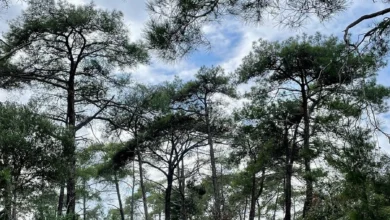
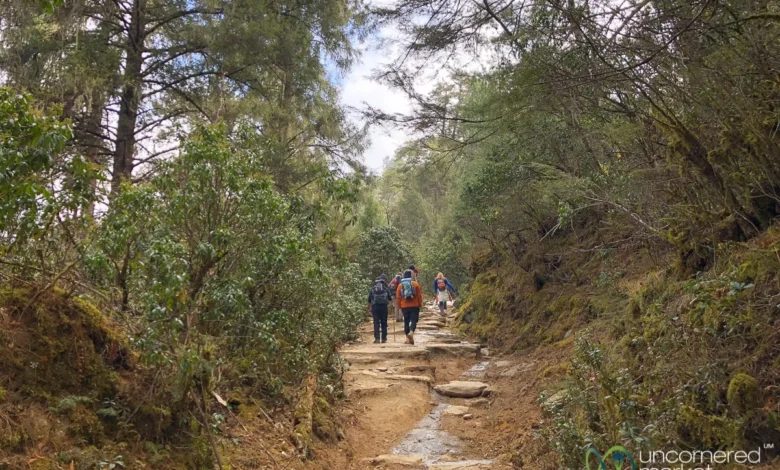
Among Bhutan’s shorter yet most rewarding alpine routes is the Druk Path Trek, often referred to as the Thunder Dragon Path. Spanning approximately 36 to 45 kilometers (22 to 28 miles), this medium-difficulty route follows an ancient mule track through pine forests, rhododendron thickets, and high-altitude ridges between the valleys of Paro and Thimphu.

The standard four-to-six-day itinerary offers a diverse range of landscapes, high-altitude camping, and cultural encounters:
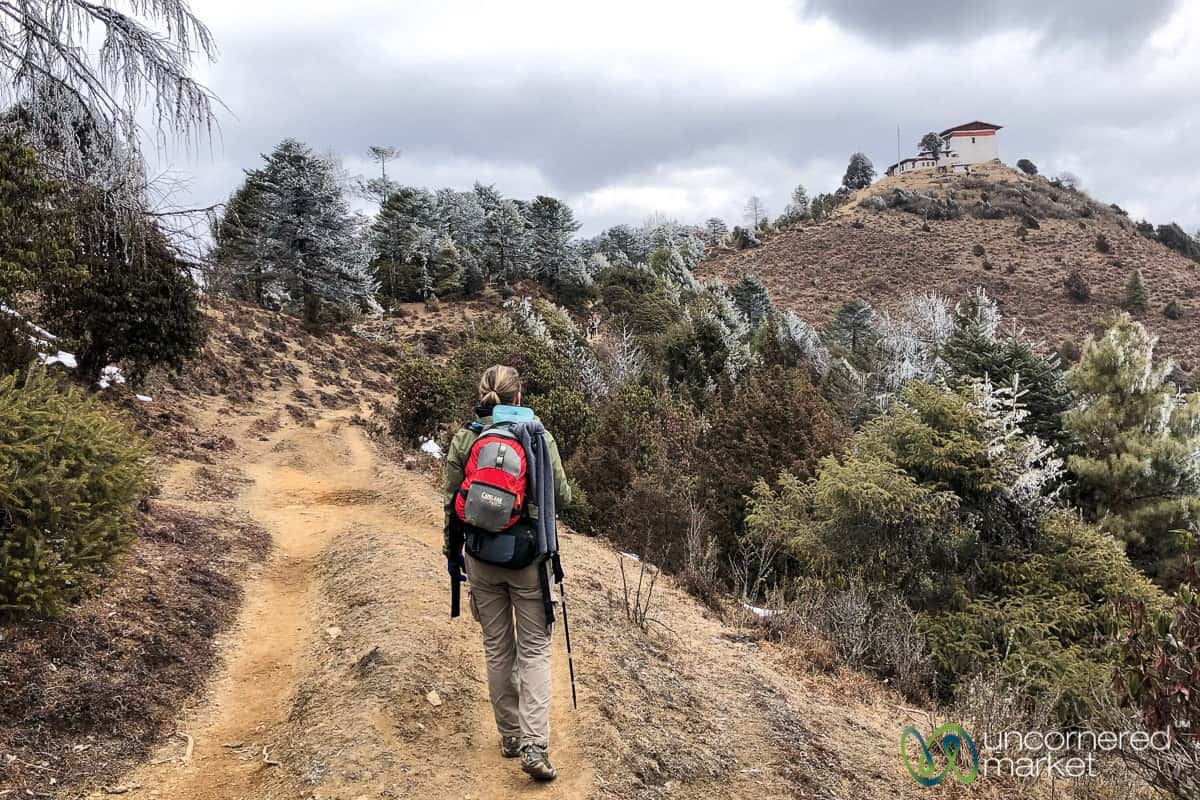
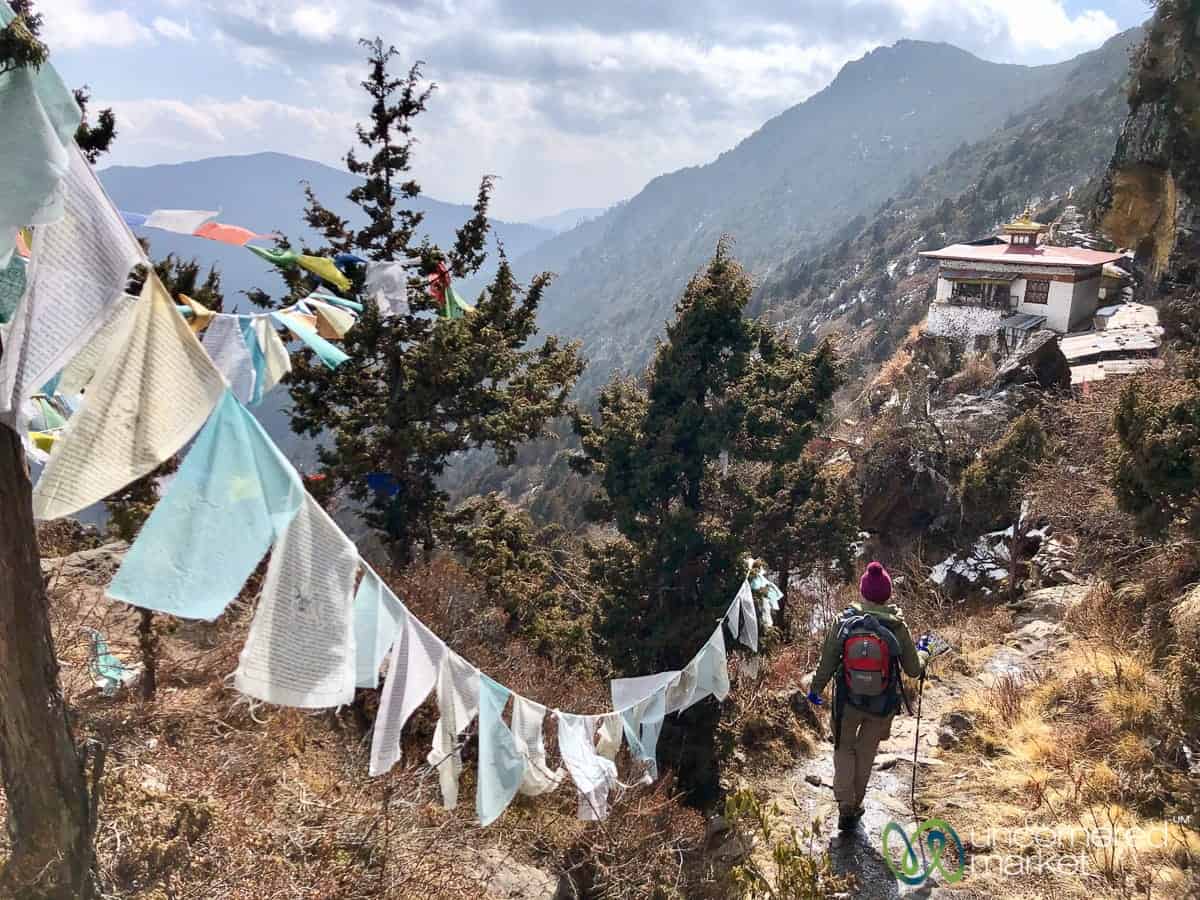
- Day 1 (Ta Dzong to Tshokam): The journey typically commences with a brief van transfer above Paro, transitioning onto an upward dirt track leading into mid-alpine woods. Trekkers pass the 15th-century Jele Dzong temple before continuing along forest paths and ridge clearings. The first night is typically spent at the Tshokam (Dry Lake) campsite at an elevation of approximately 3,800 meters (12,500 feet).
- Day 2 (Tshokam to Simkotra Lake): Featuring steady, prolonged ascents, this leg navigates through dense rhododendron zones before breaking out onto high-altitude ridges. Trekkers traverse terrain near Janye Tsho before arriving at Simkotra Lake campsite, situated at roughly 4,000 meters (13,100 feet). Because this represents the highest sleeping elevation on the route, nighttime temperatures drop significantly.
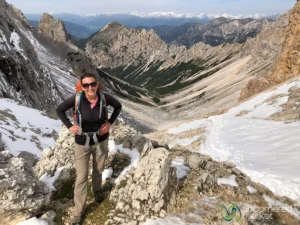
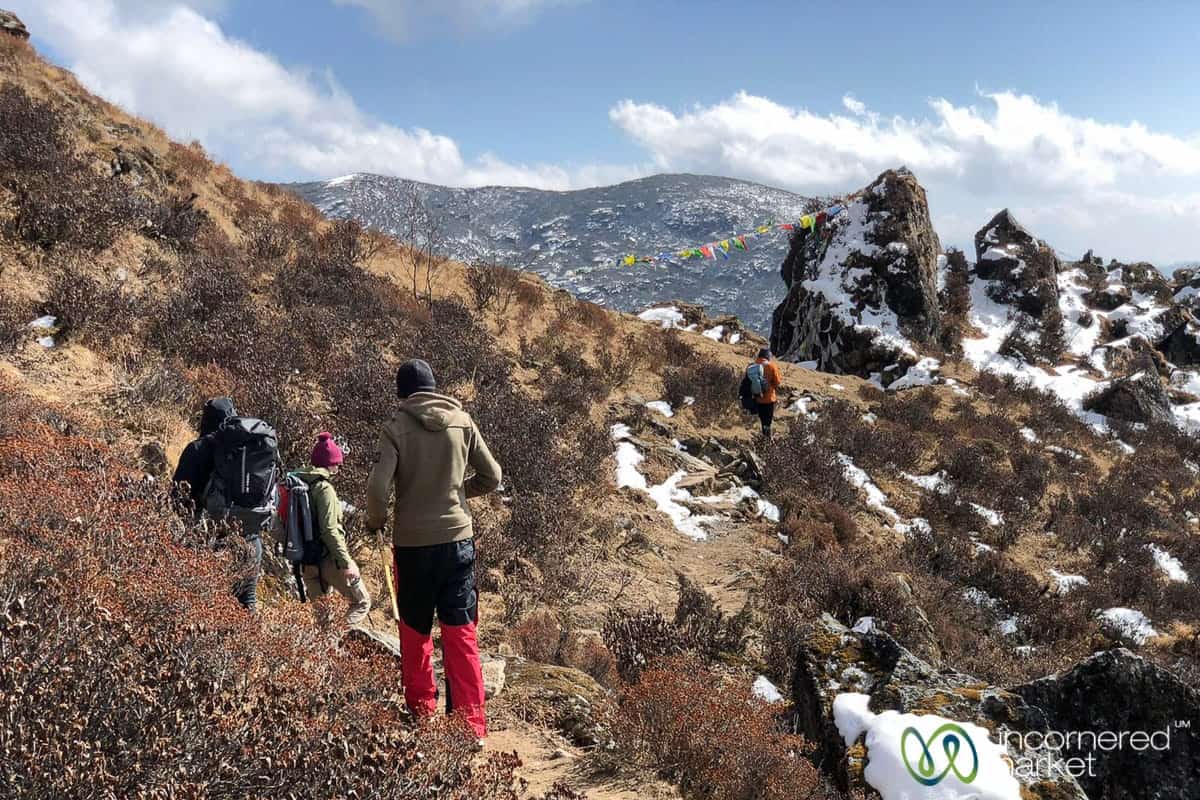
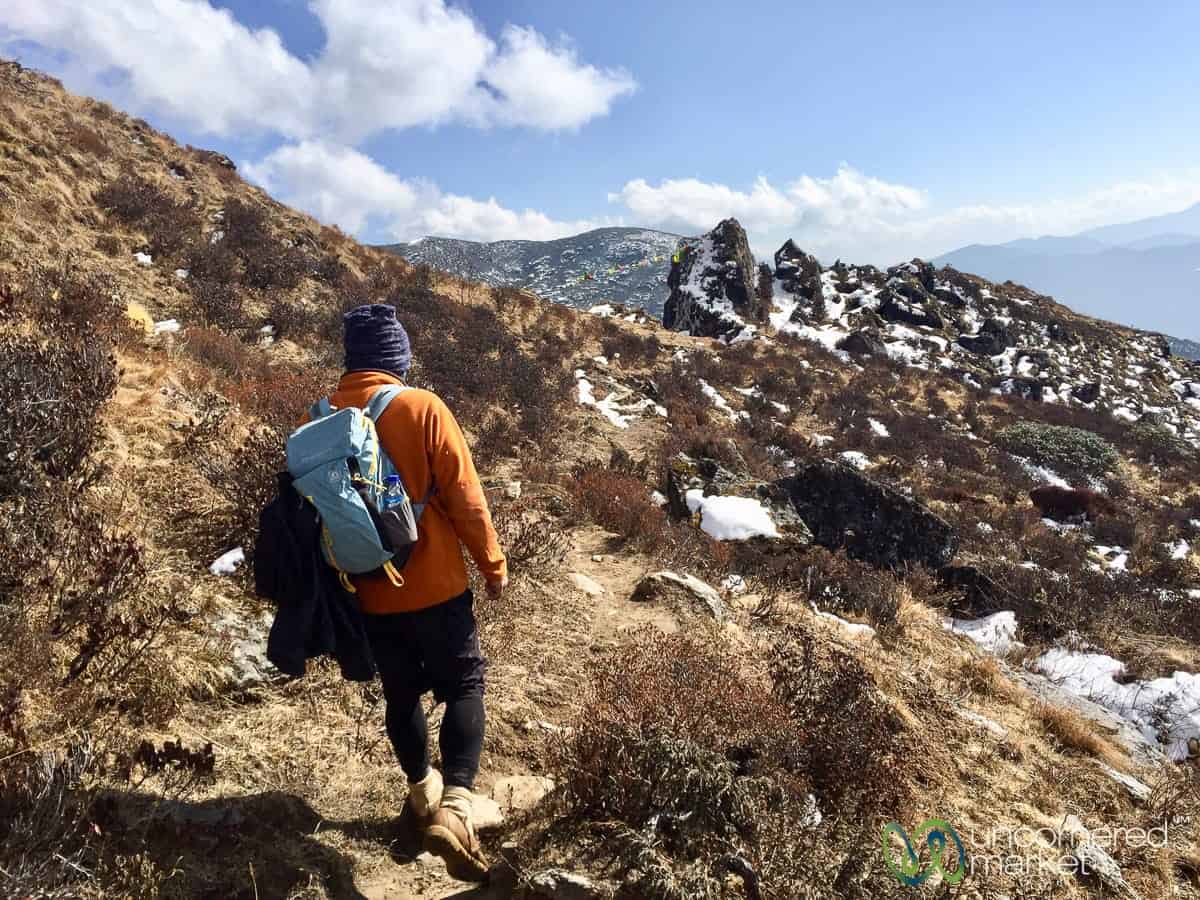
- Day 3 (Simkotra Lake to Phajoding Monastery via Labana Pass): Reaching the apex of the trek, Labana Pass stands at 4,200 meters (13,800 feet). On clear days, the pass affords panoramic views of distant snow-capped Himalayan peaks such as Jhomolhari. The route then descends past mountain chortens and the 14th-century Thujidrak Goemba temple before reaching the vicinity of Phajoding Monastery overlooking the capital city of Thimphu.
- Day 4 (Phajoding Monastery to Thimphu): The final leg consists of a relatively steep, descending forest track that brings hikers to the valley floor, where transportation awaits to transfer travelers back to urban accommodations.
Environmental Conditions and Altitude Management
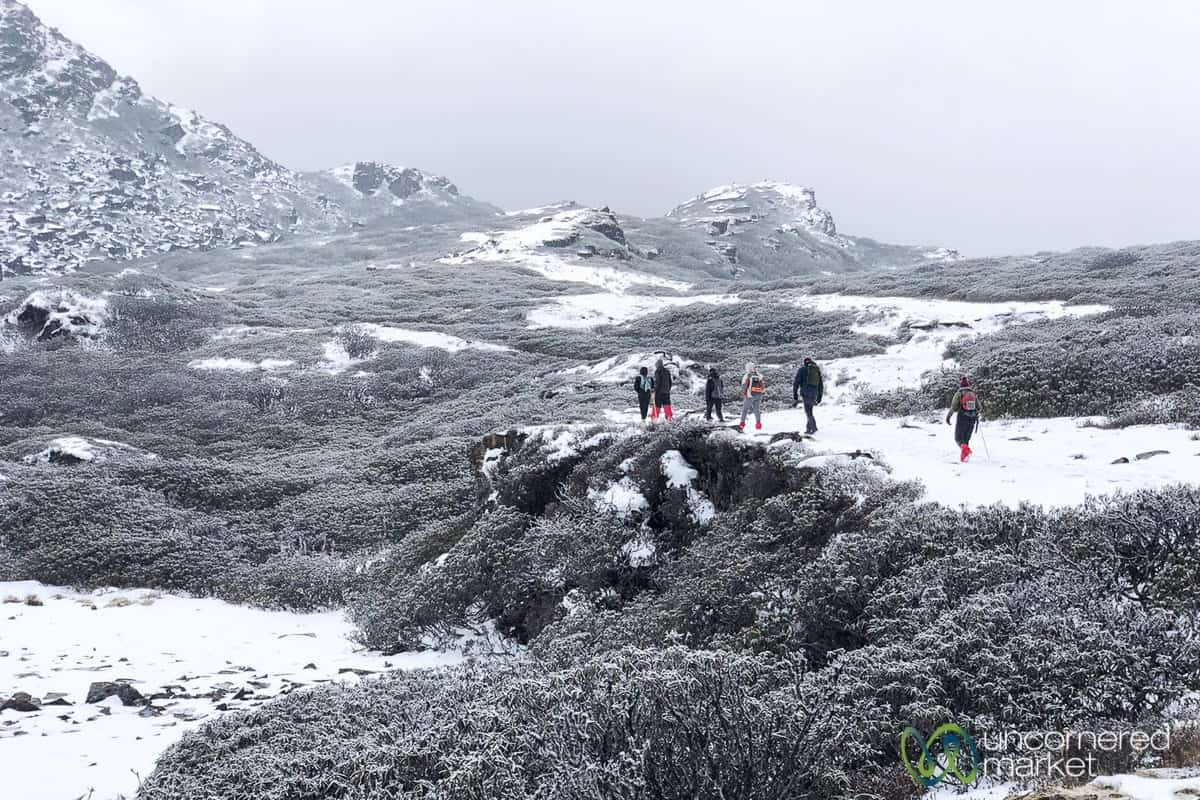
Trekking in the Himalayas requires careful preparation regarding both weather and altitude. While the peak spring season (April to May) attracts hikers with blooming flora, and autumn (September to November) provides clear skies, winter trekking (January and February) offers a distinct experience. Winter conditions present sub-zero nighttime temperatures—often dropping to -10°C (14°F)—along with potential snow and ice on high-altitude passes. However, winter expeditions reward travelers with serene, uncrowded trails and exceptional stillness.
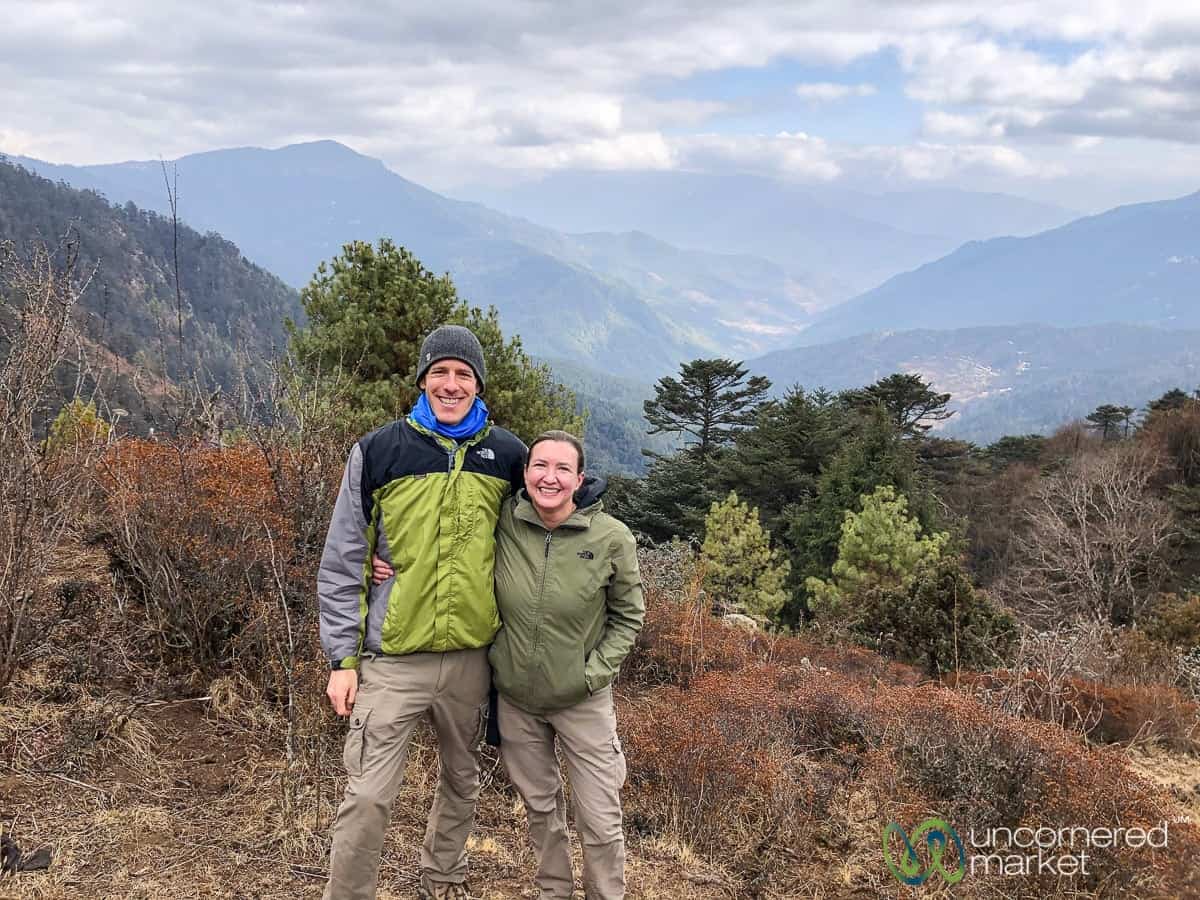
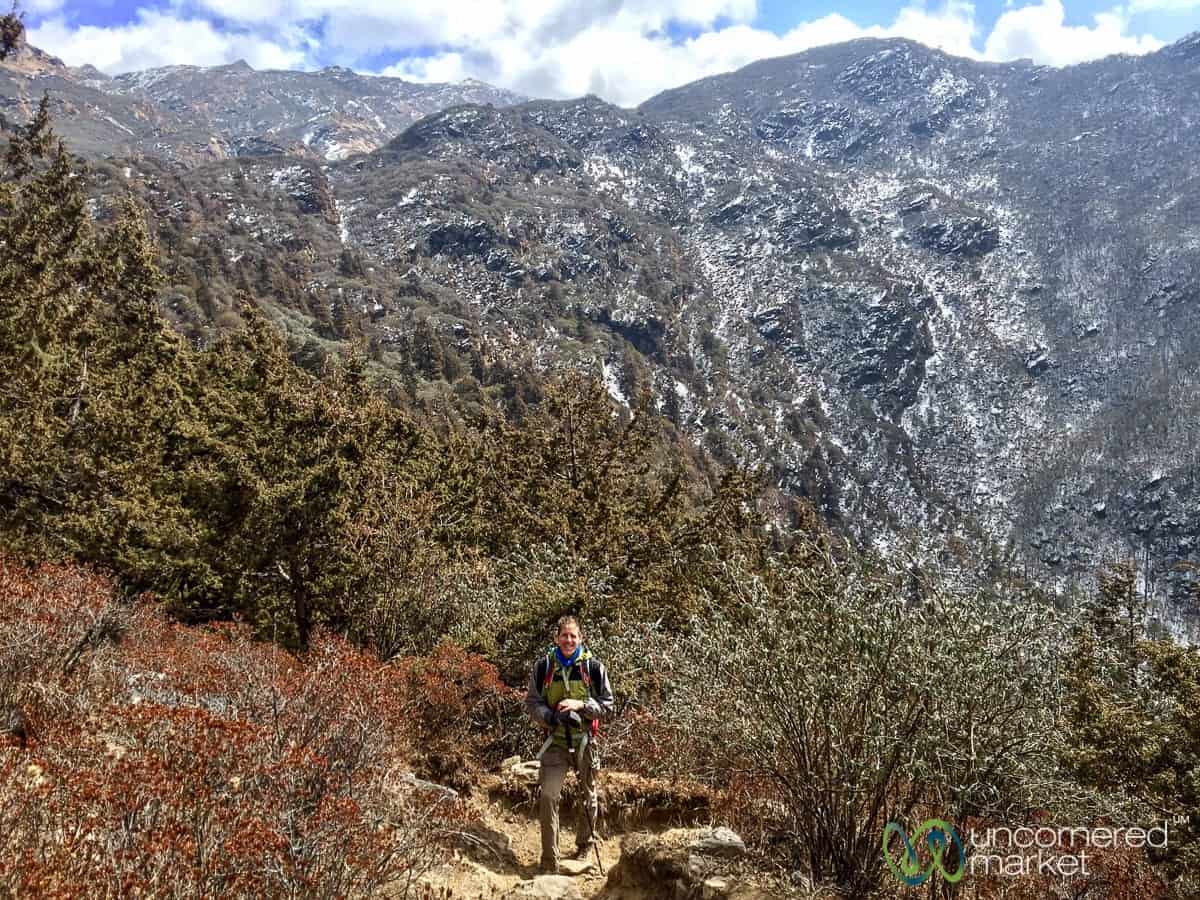
Altitude sickness remains a primary operational consideration. With multiple campsites sitting at or above 4,000 meters, expedition leaders emphasize adherence to high-altitude protocols: maintaining a slow, steady ascent pace ("pole, pole"), consuming multiple liters of hydration daily, and participating in initial acclimatization walks, such as day hikes around Paro prior to setting off on multi-day itineraries.
Infrastructure, Logistics, and Regulations
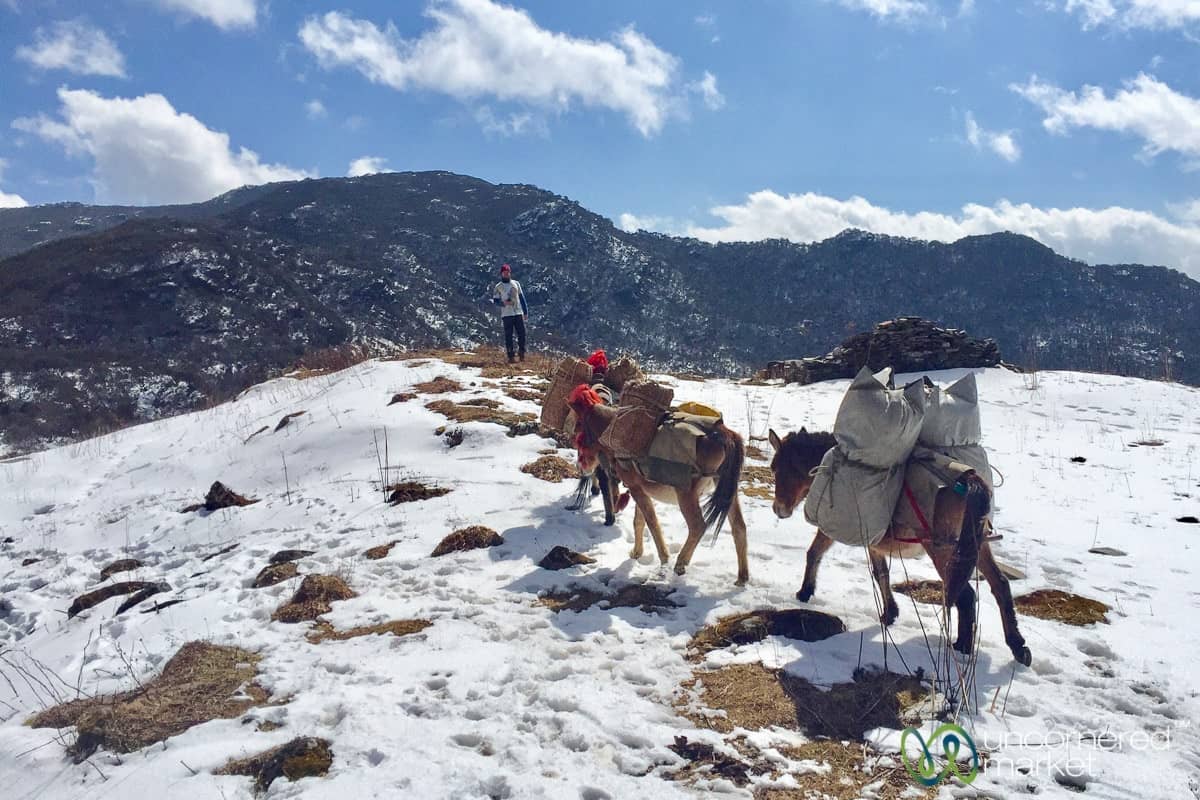
Independent trekking is strictly prohibited in Bhutan. All expeditions must be organized through government-authorized tour operators. This regulatory framework ensures that every trekking party is fully supported by an experienced crew—typically including a licensed guide, a dedicated cooking team, and mule handlers responsible for transporting heavy gear, kitchen equipment, and supplies.
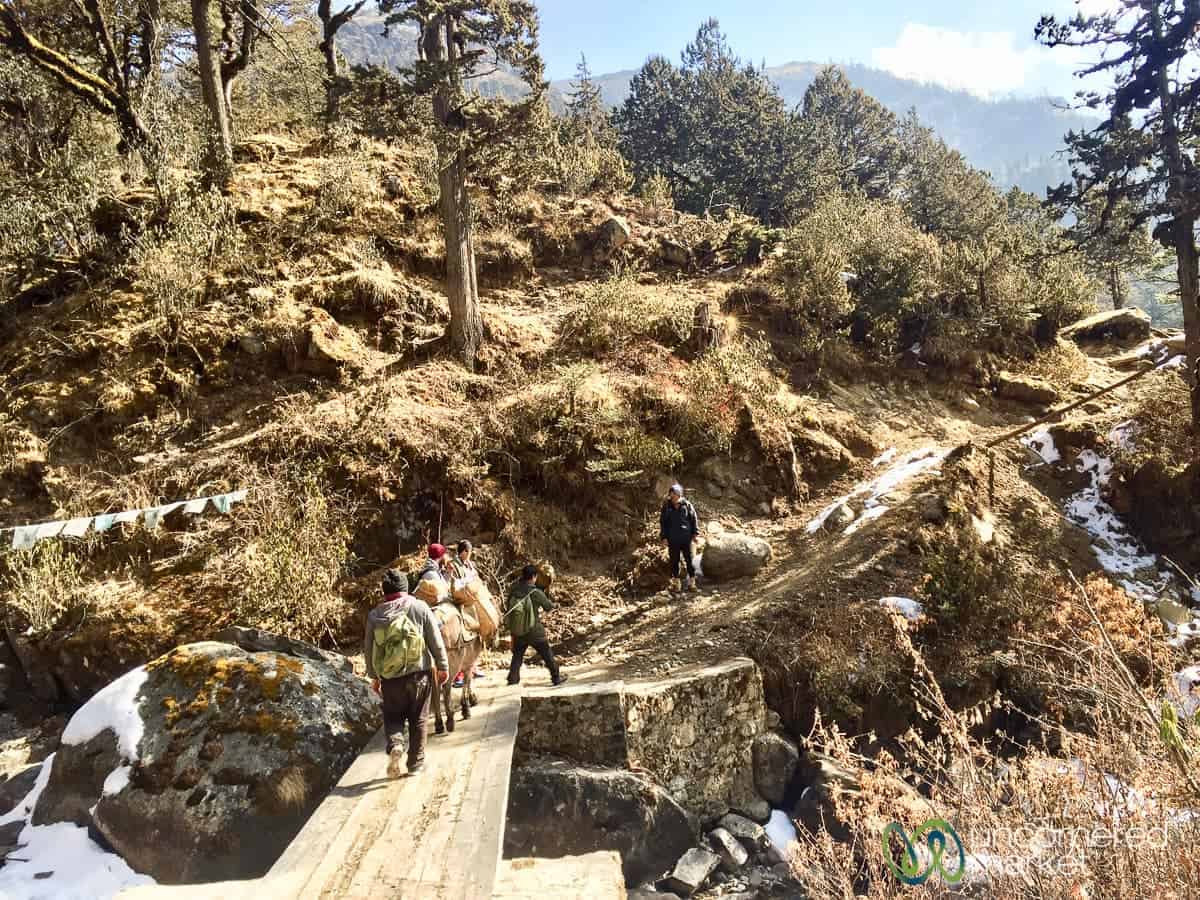
Luggage logistics are strictly managed to protect pack animals. On standard group treks, individual baggage allocated for the mules is capped at approximately 7.5 kilograms per person, which must accommodate sleeping bags, thermal wear, and nighttime apparel. Daypacks are kept relatively light, containing essential hydration systems, camera equipment, and immediate weather layers.
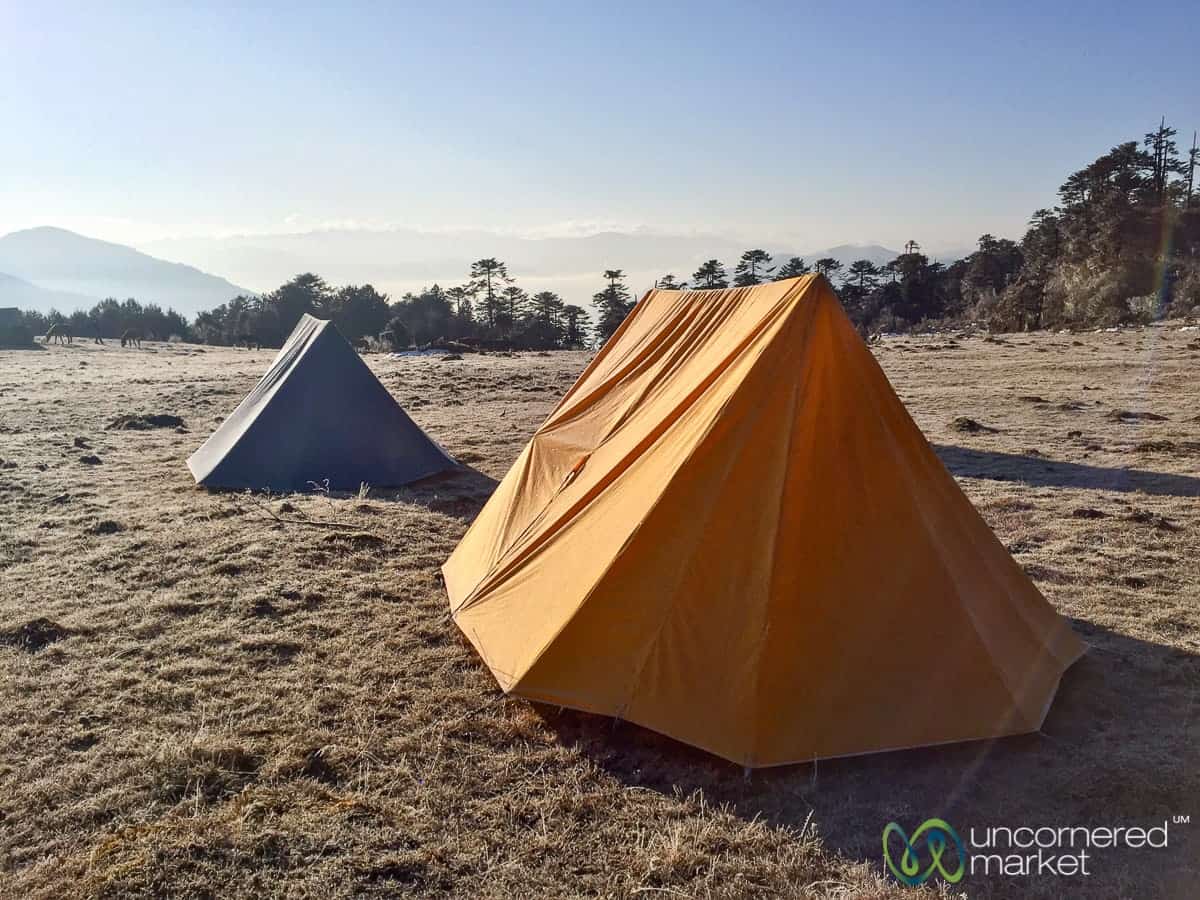
Campsites along established routes are equipped with basic semi-permanent sanitation facilities, such as tented latrines, to minimize environmental degradation. Freshly prepared meals are served in communal dining tents, with menus frequently incorporating a balance of traditional Bhutanese cuisine—such as chili and cheese preparations (ema datshi) alongside various vegetable curries—and international dishes designed to sustain high caloric expenditure.
Broader Economic and Conservation Implications
The phased reopening of Bhutanese trekking routes under updated public health and sustainability frameworks holds significant implications for the nation’s rural economy. By integrating community-based tourism initiatives—such as village homestays along the Trans Bhutan Trail and locally sourced farm-to-table food supplies—the tourism board seeks to distribute financial benefits directly to remote agrarian communities.
Furthermore, stringent environmental policies, including zero-plastic mandates along newly restored trails and tree-planting programs dedicated to international arrivals, underscore Bhutan’s commitment to carbon-negative tourism. As global travelers increasingly seek off-the-beaten-path wilderness experiences, Bhutan’s regulated trekking infrastructure offers a model for balancing ecological preservation with high-value adventure tourism.