Saba The Unspoiled Queen of the Caribbean balances modern conservation with ancestral heritage

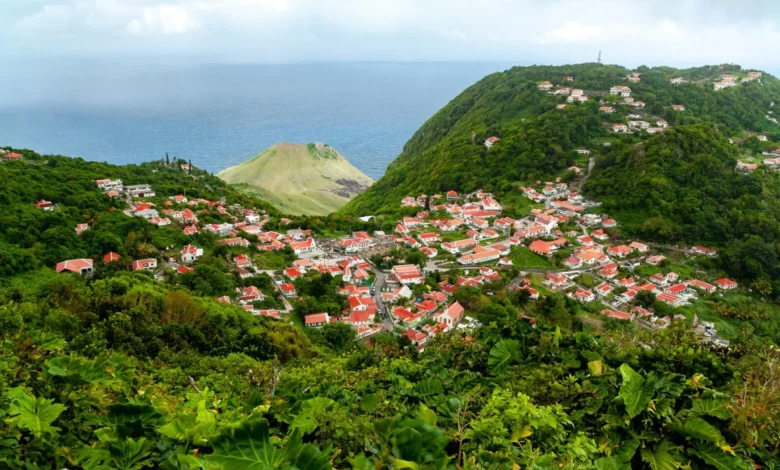
Saba, a five-square-mile volcanic island in the Caribbean Netherlands, stands as a distinct outlier in a region synonymous with mass tourism, sprawling mega-resorts, and artificial beachfronts. With approximately 30 percent of its landmass designated as protected national parkland—a network comprising the Mount Scenery National Park, the Saba National Marine Park, and the Saba Bank National Park—the island has successfully maintained a development model that prioritizes ecological integrity over rapid commercial expansion. This deliberate strategy has preserved its reputation as the "Unspoiled Queen," a title reflective of a landscape defined by dramatic topography rather than high-density infrastructure.
The Geography of Constraint and Preservation
The island’s physical geography serves as its primary deterrent to unchecked development. Rising abruptly from the Caribbean Sea, Saba is the summit of a dormant volcano, characterized by steep slopes and limited flat terrain. The logistical challenges of navigating this terrain are best exemplified by "The Road." Engineering studies conducted in the early 20th century concluded that a road spanning the island’s mountainous interior was physically impossible to construct.
Defying these technical assessments, the local population undertook the project themselves. Starting in the late 1930s, Saban residents—with no formal civil engineering training—manually carved the route into the volcanic rock using hand tools and sheer persistence. The project reached a successful conclusion in 1963, connecting the Juancho E. Yrausquin Airport to the village of Windwardside. Today, this single paved artery remains the island’s lifeline, yet its sharp, hairpin turns and steep gradients ensure that traffic remains localized and slow-paced, reinforcing the island’s quiet, remote character.
Strategic Conservation and Marine Stewardship
The Saba Conservation Foundation (SCF) plays a pivotal role in managing the island’s environmental assets. Tom Brokke, a Senior National Park Officer with the SCF, emphasizes that the island’s development trajectory is a calculated choice. According to Brokke, the economic model of the island relies on small-scale boutique hospitality rather than large-scale corporate operations. By keeping development in character with the traditional Saban architecture—defined by white-walled cottages, red shingled roofs, and green-and-white shutters—the island maintains a visual and cultural coherence that attracts a specific demographic of eco-conscious travelers.
The protection of the surrounding waters is perhaps the island’s most significant conservation achievement. Established in 1987, the Saba National Marine Park covers the entire coastal area around the island up to a depth of 60 meters. This regulatory framework has been instrumental in preserving one of the most vibrant reef systems in the Caribbean. Scientific monitoring shows that the ban on anchoring and the strict regulation of fishing activities within these waters have resulted in higher biodiversity and biomass compared to neighboring jurisdictions. Divers and snorkelers frequently encounter hawksbill sea turtles, nurse sharks, and vast schools of reef fish, all thriving in an environment shielded from industrial run-off and over-tourism.
A Chronology of Cultural Resilience
While the natural environment is the primary draw for visitors, the preservation of Saban intangible heritage is equally central to the island’s identity. The history of "Saba Lace" offers a window into the island’s socio-economic evolution. During the late 19th century, as the local maritime industry faltered and men were forced to leave the island for extended periods to find work as sailors, the women of Saba developed a complex form of drawn-thread work to sustain the household economy.
By the 1920s and 30s, this intricate lace-making had transformed into a sophisticated mail-order business, with products exported to the United States, England, and Canada. This cottage industry was so vital that it earned the island the moniker "The Island of Lace." Peggy Barnes, a prominent figure in the local craft community, notes that the craft was traditionally practiced by the light of kerosene lamps due to the island’s lack of electricity until the mid-20th century. Today, the tradition survives through the efforts of the "Lace Ladies," a group dedicated to teaching the skill to the younger generation at no cost, ensuring the technique does not vanish with the passing of the elder cohort.
Complementing this, local artisans like Marie Petit are working to revive "plaiting," the ancient art of weaving palm fronds. By sourcing materials directly from the island’s gardens and studying indigenous techniques from across the Pacific, Petit is attempting to bridge a generational gap in traditional knowledge, turning the act of craft into a vessel for cultural education.
Economic and Logistical Framework
Accessing Saba remains a logistical commitment that filters the flow of tourism. There are no direct commercial flights from international hubs to the island’s airport, which is famously known for having one of the shortest commercial runways in the world. Travelers must transit through St. Maarten, followed by a 15-minute flight via Winair or a 90-minute sea crossing on the Makana Ferry.
The economic implication of this limited accessibility is a self-regulating tourism market. With only five hotels on the island, including family-run establishments like Juliana’s Hotel, the occupancy capacity is strictly capped. This limits the potential for environmental degradation associated with large-scale waste management and high utility demands. The local culinary scene has adapted to this constraint by prioritizing farm-to-table practices. Establishments such as the Tropics Cafe and the historic Brigadoon restaurant lean heavily on locally sourced ingredients—including lobster caught in the protected Saba Bank—to minimize the carbon footprint associated with imported goods.
The Broader Impact: A Model for Sustainable Tourism
Saba serves as a case study for the "small island" development model. By rejecting the growth-at-all-costs paradigm, the island has managed to preserve its biodiversity and its cultural heritage in a way that few other Caribbean destinations have achieved. The implications for the region are clear: by enforcing strict building codes, protecting marine corridors, and valuing human capital in the form of traditional arts, Saba has carved out a sustainable economic niche.
The challenge for the future, according to local officials, lies in balancing the desire for economic growth with the need to maintain the very "unspoiled" nature that drives the island’s value. As global travel patterns shift toward sustainability and immersive, nature-based experiences, Saba is well-positioned to maintain its status. The island’s commitment to keeping its historical identity intact—from the preservation of its architecture to the teaching of lace-making to schoolchildren—suggests that the preservation of the "Unspoiled Queen" is not merely an environmental policy, but a foundational commitment to its inhabitants’ way of life.
In conclusion, the success of Saba is not measured by the volume of its visitors but by the depth of their engagement with the environment and the local culture. Through the synergy of the Saba Conservation Foundation, the dedication of its artisanal community, and a cautious approach to infrastructure, the island offers a roadmap for how remote, geographically challenged territories can thrive in the 21st century without sacrificing the integrity of their landscapes or their traditions.