Navigating the Wilderness: How Rural and Sustainable Tourism Operators Are Adapting to the COVID-19 Era

The global tourism industry has faced unprecedented disruption since the onset of the COVID-19 pandemic in early 2020. While mainstream urban destinations, mass-market cruise lines, and international resort hubs ground to a virtual halt, the landscape of travel underwent a forced and fundamental evolution. Across the globe, websites of traditional tour operators bear testament to months of inactivity throughout 2020, with many projecting delayed recoveries deep into 2021. Yet, within this broader narrative of economic devastation and border closures, a distinct subsector of the industry has managed to chart a different course: rural, remote, and nature-based tourism.
By leveraging wide-open spaces, low population densities, and natural environments inherently suited for social distancing, rural tourism operators have found unexpected pathways to survival. As the industry looks toward a complex global recovery, the experiences of remote destinations offer critical lessons in resilience, policy adaptation, and community-centric business models during a public health crisis.
The Pandemic Paradigm Shift: Urban Flight and Rural Resilience
When the World Health Organization officially declared COVID-19 a global pandemic in March 2020, governments worldwide scrambled to implement lockdowns, travel bans, and quarantine mandates. Major metropolitan centers—dense hubs of international transit—quickly became hotspots for viral transmission, prompting travelers to reconsider the desirability of crowded urban vacations.
Conversely, rural and remote regions experienced a natural advantage. With sparse populations and vast expanses of outdoor space, destinations far from major urban centers presented a lower perceived risk of infection. The great outdoors offered travelers a psychological and physical refuge, transforming wilderness areas, national parks, and countryside retreats into the most viable sectors of an otherwise paralyzed global travel market.
This dynamic hinted at a potential boom for businesses specializing in rural excursions. However, capturing this demand required navigating a labyrinth of rapidly shifting health protocols, international border restrictions, and deep-seated community anxieties. To understand how some businesses successfully managed this high-wire act, observers turned to firsthand accounts of overland travel across changing geopolitical landscapes.
On-the-Ground Realities: A Continental Cross-Section
Between August and October 2020, Kirsi Hyvaerinen, a member of the Board of Directors at the Global Ecotourism Network, undertook a notable overland expedition. Traveling from Montenegro to Finland and back again, Hyvaerinen observed firsthand the operational realities of rural tourism enterprises attempting to welcome guests amidst ongoing pandemic restrictions.
Her observations revealed that surviving rural operators shared key operational tendencies: extreme flexibility, stringent and transparent hygiene protocols, a heavy reliance on domestic or regional drive-markets, and deep integration with local community health structures. Rather than attempting to market to distant international clientele restricted by flight suspensions, successful businesses pivoted rapidly to accommodate local travelers seeking safe, socially distanced respites within driving distance of their homes.
Policy Barriers and the Labyrinth of International Travel Restrictions
Despite the inherent safety advantages of rural destinations, tourism operators large and small faced immense hurdles, many of which remained entirely outside their control. Vicky Smith, a sustainable tourism consultant and founder of Earth Changers—a curated collection of positive-impact tourism initiatives—highlights that the most debilitating obstacles manifested at the governmental policy level.
"The biggest challenges appear perhaps more at policy level," notes Smith. "In the UK, for example, the Foreign, Commonwealth & Development Office currently advises British nationals against all but essential international travel, with the exemption of some listed countries and territories."
This bureaucratic hurdle had immediate financial implications for consumers. According to Smith, government advisories rendered travel insurance null and void for any destination not explicitly featured on official exemption lists, even if commercial airlines were operating flights and travel insurance policies might otherwise have covered COVID-19-related medical claims.
Furthermore, the volatility of government policy severely eroded consumer confidence. "Additionally, the ‘exempt’ list is changing at least weekly, so consumers have lost confidence on where they can and can’t go, and don’t want to be faced with a quarantine on return, unknown and unplanned for on departure," Smith explains. "It’s too disruptive to lives and is putting further downward pressure on any bookings."
The Paradox of Rural Access and Community Protection
A complex paradox defined the operational environment for rural tourism during the pandemic: while travelers sought out remote areas for their safety, local rural communities frequently harbored deep anxieties about outsiders introducing the virus.
This fear was far from unfounded. Rural areas often lack the advanced medical infrastructure, intensive care units, and hospital capacity required to manage large-scale outbreaks. Moreover, travelers journeying to remote regions frequently had to pass through major urban transit hubs and capital cities—areas where infection rates were often highest.
"Infection rates may be highest in capitals, through which tourists travel to reach rural areas—and they don’t want the infection being brought in, especially as rural environments might not have the hospital facilities or capacity to deal with cases," Smith points out. Consequently, rural tourism suppliers faced a delicate balancing act: reassuring local populations of their safety while selectively welcoming guests necessary for economic survival.
Beyond Public Relations: The Power of Local Community Support
Faced with these profound structural challenges, forward-thinking tourism professionals offered a clear prescription for survival: businesses must deeply invest in the wellbeing of their host communities. Rather than relying on traditional marketing campaigns or superficial public relations strategies, sustainable tourism operators demonstrated their value by becoming essential pillars of local pandemic relief efforts.
South Africa’s Grootbos Private Nature Reserve serves as a prime example of this philosophy in action. Through its dedicated foundation, the reserve drastically expanded its free community feeding programs in response to pandemic-related economic hardship and school closures. By providing vital nutrition to children who could no longer receive school meals, the foundation scaled up its operations exponentially.
"By June 18th, that added up to 100,000 meals and by July 7th, 125,502!" Smith highlights, detailing the rapid mobilization of resources by a private tourism stakeholder to support its vulnerable neighbors.
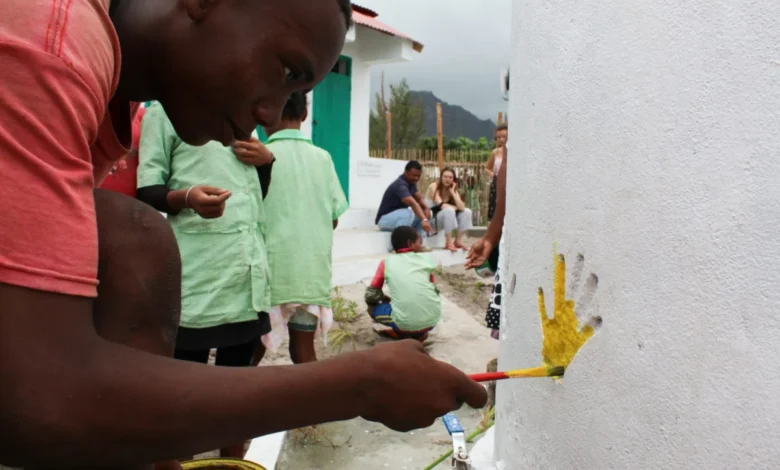
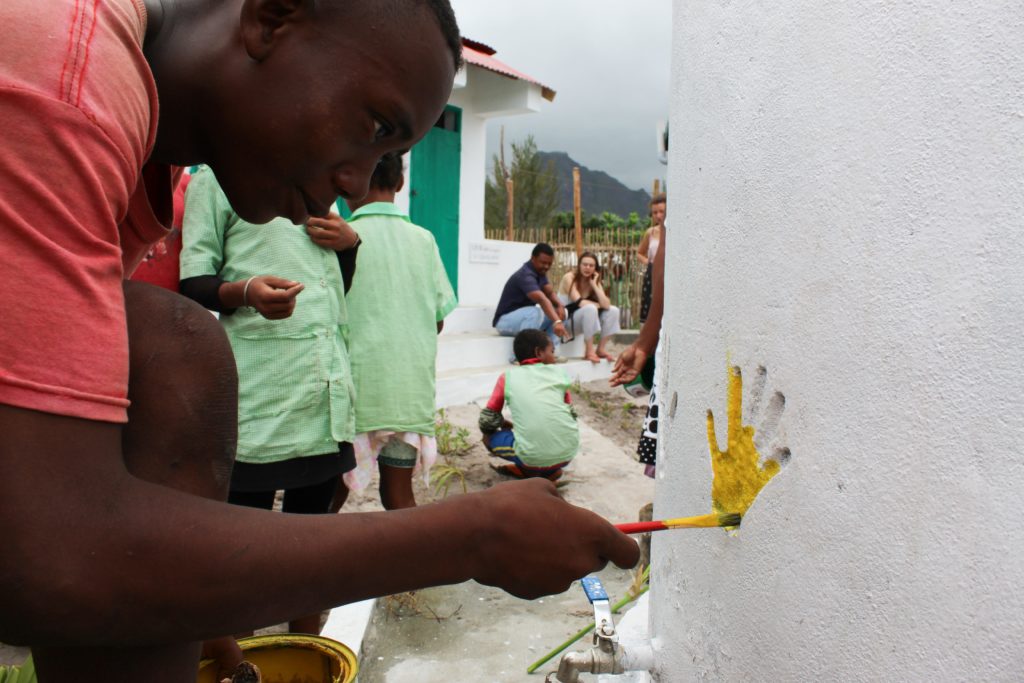
Similarly, in Madagascar, the NGO and conservation organization Seed Madagascar demonstrated how tourism-linked enterprises could pivot to address public health crises. Welcoming conservation volunteers and travelers who actively participate in local initiatives, the organization redirected its operational capacity to assist regional authorities.
"Through the pandemic, they’ve provided vital support to the government, purchasing thermometers for local healthcare facilities, constructing fourteen hand-washing stations, and making and distributing hundreds of masks," Smith explains.
These actions underscore a broader evolution in consumer and corporate consciousness. In the crucible of a global crisis, corporate behavior was laid bare, leaving indelible impressions on the public memory.
"The pandemic has magnified and clearly demonstrated company values and behavior," Smith asserts. "We’ve all seen companies who have behaved irresponsibly in the pandemic, which will be remembered. Those who have stepped up will equally be remembered for their help. This isn’t a cynical PR play, it’s organizations staying true to their values of supporting local people and places, which they’ve always done, and now it’s virtually understood."
Perspectives on Adaptation and Sustainable Recovery
Further insights into navigating the turbulence of the COVID-19 era come from Ariane Janer, a sustainable tourism consultant and the technical director of Instituto Homo Caballus, an equestrian center and NGO that experienced the cycle of pandemic-related closures and reopenings. Janer’s experiences reflect the operational grit required of small-scale eco-tourism operators who had to continually adapt business models to comply with fluctuating sanitary mandates while maintaining financial solvency.
Experts emphasize that the lessons learned during the 2020–2021 period extend far beyond the immediate confines of the pandemic. The crisis accelerated pre-existing trends toward hyper-local travel, slow tourism, and regenerative business models—frameworks where tourism actively improves, rather than merely sustains, destination communities.
Broader Implications for the Future of Global Travel
The disruptions of COVID-19 exposed the deep vulnerabilities of a global tourism industry overly reliant on mass mobility and unchecked consumption. At the same time, they illuminated the resilience of decentralized, community-integrated tourism models.
As international borders gradually reopen and vaccination rollouts alter the global health landscape, the rural and sustainable tourism sectors provide a blueprint for future resilience. Operators who prioritized transparency, community welfare, and environmental stewardship not only weathered the storm of 2020 but positioned themselves as leaders in a transformed global marketplace.
While global health crises and macroeconomic uncertainties will inevitably test the travel sector again, the pivot toward remote, responsible, and community-embedded tourism demonstrates that the industry’s long-term viability depends fundamentally on the health and trust of the local communities it touches.