Beyond the Tourist Trail: An Insider’s Guide to Experiencing the True Essence of New York City

New York’s headline tourist destinations are perhaps some of the most well-known in the world. The Empire State Building, Central Park, and Brooklyn Bridge are all well worth a visit — on your first trip to the Big Apple, that is. However, for the seasoned traveler who has already navigated the observation decks of Midtown and the sprawling lawns of Manhattan’s central green space, the city offers a much deeper, more nuanced experience. Navigating New York as a repeat visitor requires moving beyond the guidebooks and tapping into the city’s distinct, localized rhythms. Ben Vaschetti, co-founder of the luxury lifestyle concierge Maison Benjamin, emphasizes that the key to a sophisticated New York itinerary lies in fostering a genuine connection to the city’s cultural institutions and its residents. To provide a definitive guide for this demographic, we consulted Manhattan’s leading tastemakers, hoteliers, and cultural experts to curate a map of experiences that bypass the tourist traps in favor of authentic, elevated encounters.

The Evolution of the New York Art Experience
New York City’s art scene serves as its cultural backbone, yet the conventional museum circuit often fails to capture the true vibrancy of its creative ecosystem. While the Museum of Modern Art (MoMA), the Met, and the Guggenheim remain global landmarks, the most profound artistic interactions frequently occur behind closed doors. Maria Wittorp, chief concierge at The Mark, notes that the demand for bespoke, private access has grown significantly over the last decade. By leveraging established relationships, concierges are now capable of securing after-hours access to the Met or private, unpublicized viewings at artist studios that are otherwise closed to the general public.
This trend is corroborated by industry data from the New York Gallery Association, which has noted a 15% increase in demand for private, curator-led tours since 2022. Thaisa Cavalcante, general manager of Fasano Fifth Avenue, suggests that the most effective way to engage with the city’s art is through direct dialogue. “The goal is to move from observer to participant,” she explains. For those interested in the contemporary scene, the forthcoming Armory Show remains a cornerstone of the professional calendar, serving as a vital nexus for global collectors.

For a departure from the traditional Upper East Side gallery landscape, Tribeca has emerged as a premier destination. Artist Ashley Longshore observes that the neighborhood’s galleries offer a quieter, more meditative space for viewing, largely due to the lower foot traffic compared to Chelsea or Madison Avenue. Furthermore, for those seeking site-specific installations that challenge the boundaries of traditional museums, downtown Soho provides a unique opportunity. Walter de Maria’s Broken Kilometer on Broadway and The New York Earth Room on Wooster Street offer profound, static experiences that have remained largely unchanged for decades, serving as time capsules of the 1970s conceptual art movement.
Aerial Perspectives and Maritime History
While the skyline is a defining feature of the city, the most effective way to comprehend its scale is to move beyond the static observation decks. A private helicopter charter, particularly during the autumn months, provides an unparalleled view of the Hudson Valley’s foliage. From an urban planning perspective, this vantage point allows observers to grasp the geography of the Tri-State area and the strategic importance of the Hudson River, which has historically facilitated the city’s growth as a global commercial hub.

For those preferring a maritime perspective, the historic Herreshoff sailboat chartered by The Mark offers a rare connection to 20th-century naval design. These vessels, which represent a vanishing era of craftsmanship, allow for a quiet navigation of New York Harbor. Pairing this experience with high-end culinary partnerships—such as those with Jean-Georges Vongerichten—reflects a broader trend in luxury hospitality: the convergence of historical preservation with modern experiential dining.
Wellness and the Urban Bathhouse Tradition
New York’s wellness sector is increasingly pivoting back to historic, community-driven roots. The Russian and Turkish Baths in the East Village, established in 1892, offer a stark contrast to the sterile, high-tech spas found in contemporary five-star hotels. This shift toward "old-school" wellness is reflective of a wider cultural movement that favors authenticity and tangible history over luxury trends. The facility, which has survived multiple economic cycles and shifts in the Lower East Side’s demographic, provides a social space that has remained largely unchanged for over a century. Conversely, for those seeking a more secluded, ultra-luxury environment, the Shibui Spa at The Greenwich Hotel utilizes minimalist Japanese aesthetics to offer a quiet reprieve from the city’s relentless pace.

Industrial Heritage and the Automotive Sector
A visit to a showroom might not be standard for a leisure itinerary, but Cooper Classic Cars in the West Village functions more as a private museum than a commercial retail space. The facility specializes in the conservation and display of vintage, rare, and collectible automobiles. For enthusiasts, the value lies in the provenance of the vehicles, many of which have significant historical ties to mid-century industrial design. By offering access to automotive specialists, the space provides an educational, rather than merely transactional, experience. This model, which emphasizes the history of design and manufacturing, is increasingly popular among high-net-worth travelers who value intellectual engagement alongside high-quality inventory.
The Revitalization of Governor’s Island
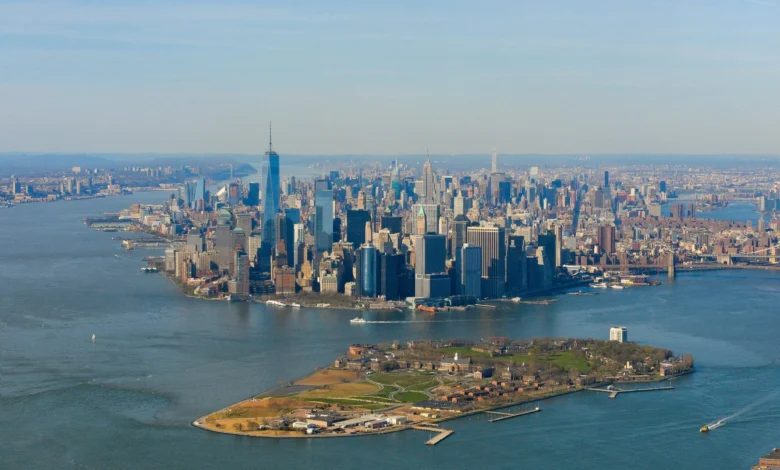
Perhaps no location in New York has undergone a more radical transformation than Governor’s Island. Once a restricted military installation that served as a headquarters for the US Army and the Coast Guard, the island was decommissioned in 1996. Its subsequent transition into a public park and cultural destination is a success story in urban reclamation. Since the completion of the park’s primary phase in 2013, the island has attracted millions of visitors, yet it retains a quiet, locals-only atmosphere. The proximity of the island to the financial district creates a unique juxtaposition: the density of Wall Street is visible from the island’s northern point, yet the environment is defined by open space and low-density recreation. It remains one of the few places in the city where the scale of the skyline can be viewed from a distance while remaining within a five-minute ferry ride of the island of Manhattan.

A Legacy of Mixology and Social Space
New York’s bar scene is not merely a collection of venues but a reflection of the city’s social history. Establishments like Dante, which has roots dating back to 1915, have successfully bridged the gap between historical heritage and modern mixology. The recognition of Dante by international cocktail competitions is a testament to the city’s enduring influence on global drinking culture.
The architectural significance of these venues is equally critical. The Campbell, located within the concourse of Grand Central Terminal, is a primary example of adaptive reuse. Originally the private office of financier John W. Campbell, the room retains its Gilded Age opulence, including original wood paneling and vaulted ceilings. By preserving these spaces, the city maintains a direct link to the financial and social titans of the early 20th century.

Broader Implications for the Luxury Travel Sector
The shift toward these "hidden" New York experiences indicates a change in the psychology of the modern traveler. There is a discernible move away from the "must-see" checklist and toward a desire for depth, history, and exclusive access. This trend places a higher premium on the role of the expert—the concierge, the specialist, or the local historian—who can act as a gatekeeper to these authentic experiences.
As New York continues to evolve, the challenge for the city’s tourism board and hospitality industry is to balance the accessibility of these spaces with their preservation. The rise of "experiential luxury" suggests that the most valuable commodity in New York is no longer just proximity to the center, but the ability to see beyond it. By focusing on historical continuity, specialized knowledge, and intimate community spaces, the visitor can engage with the city not as a transient, but as an observer of its living history. This approach ensures that New York remains a dynamic, rewarding destination, regardless of how many times a traveler has navigated its streets.