The Evolution of Aerial Videography: A Comprehensive Review of the Antigravity A1 360 Drone

The landscape of consumer and professional aerial videography has undergone a significant paradigm shift following the commercialization of 360-degree capture systems. Released in late 2025, the Antigravity A1 drone has emerged as a disruptive device within the unmanned aerial vehicle (UAV) market, largely by attempting to render traditional camera gimbals obsolete for a vast segment of content creators. By integrating a dual-lens 360-degree capture mechanism, the aircraft records omnidirectional data simultaneously, introducing a "fly now, frame later" operational model. This technological pivot transitions the primary role of the aerial operator from real-time pilot-director to virtual camera director working within a pre-recorded digital environment.
Main Facts and Structural Design
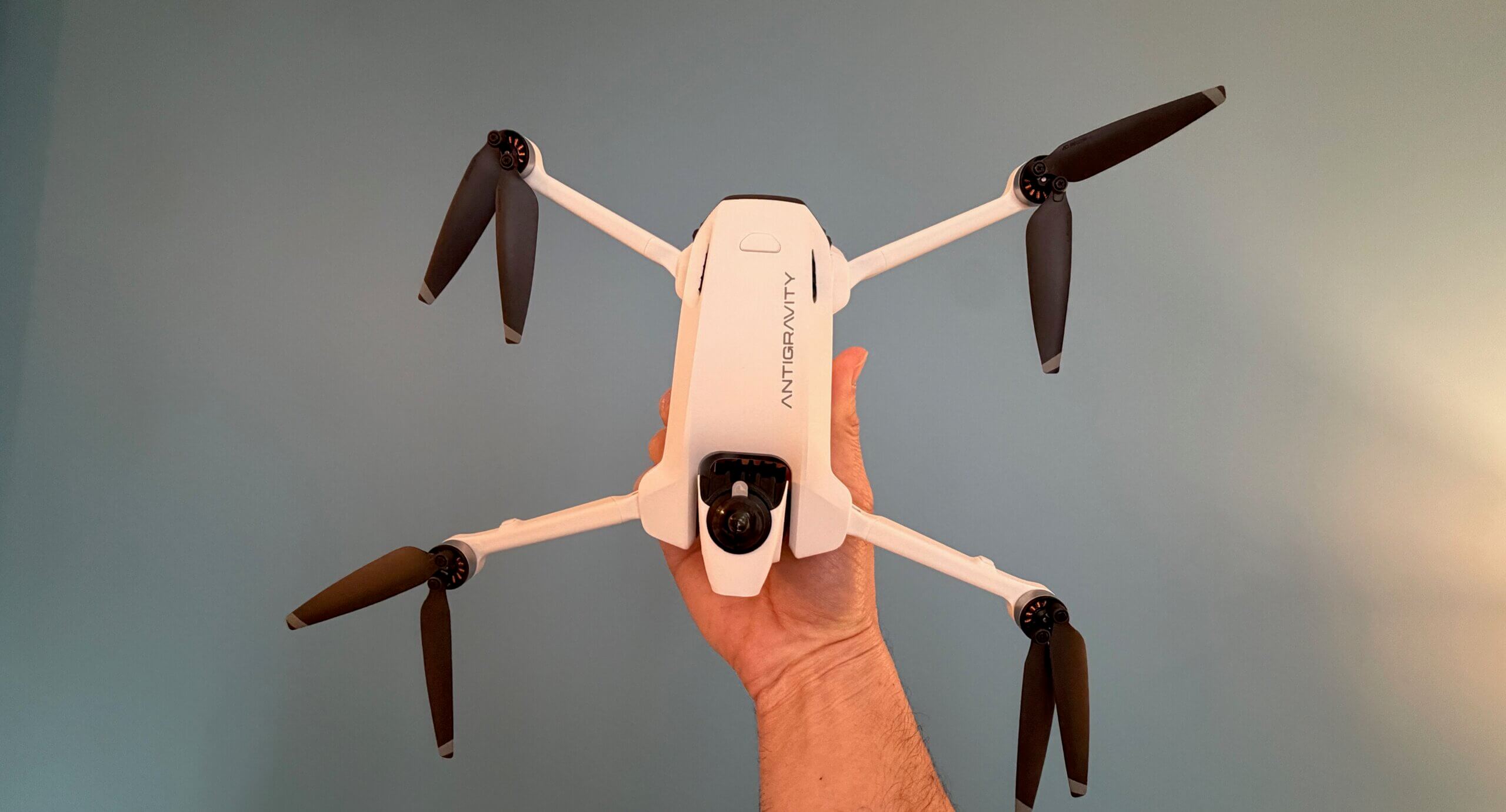
At the core of the Antigravity A1’s engineering is its dual-lens configuration. Traditional aerial platforms rely on a single, forward-facing camera mounted on a motorized mechanical gimbal to stabilize and direct shots. In contrast, the A1 utilizes two ultra-wide-angle lenses positioned on the top and bottom of the central fuselage, each capturing a 200-degree field of view. The overlapping data from these lenses form a seamless 360-degree spherical recording. During post-processing, proprietary algorithms digitally eliminate the drone’s chassis and landing gear from the final exported file, generating the visual illusion of an independent camera floating freely in mid-air.
The imaging hardware consists of 1/1.28-inch CMOS sensors. While marginally smaller than the 1-inch sensors commonly integrated into high-end professional photography drones, these sensors are substantially larger than those found in standard action cameras. This scale provides measurable benefits in low-light environments and expands the camera’s dynamic range, helping to preserve detail in high-contrast lighting scenarios, such as direct midday sun or deep shadows.
Weighing precisely 249 grams with its standard battery, the A1 was strategically designed to sit just below the regulatory threshold enforced by numerous international aviation authorities, including the Federal Aviation Administration (FAA) in the United States and the European Union Aviation Safety Agency (EASA). In many jurisdictions, aircraft weighing 250 grams or more mandate formal registration and face stricter operational limitations. By adhering to the sub-250-gram limit, the A1 offers recreational and commercial operators increased flexibility regarding deployment.
The structural integrity of the airframe relies on a high-grade carbon-fiber-reinforced polymer, replacing the standard acrylonitrile butadiene styrene (ABS) plastic typical of entry-level platforms. This material composition optimizes the strength-to-weight ratio, ensuring durability during transport. When folded, the aircraft approximates the footprint of a standard smartphone, facilitating integration into standard travel gear.
Chronology and Market Context
The development of the A1 reflects a broader industry trend toward simplifying complex camera operations through advanced computational photography and artificial intelligence. Throughout 2023 and 2024, the market saw rapid advancements in 360-degree consumer handheld cameras, yet aerial integration remained limited due to weight constraints, aerodynamic drag, and the structural obstruction of drone landing gear or propellers in 360-degree fields of view.
Antigravity’s engineering team addressed these hurdles throughout 2025, culminating in the official launch of the A1 in the fourth quarter of that year. Early market reception indicated strong demand from solo content creators and travel journalists seeking to maximize efficiency in the field. Industry analysts noted that the elimination of manual framing during flight addresses a primary pain point for solo operators, who previously had to execute multiple flights along identical trajectories to capture varying perspectives of the same subject.
Flight Dynamics and Control Systems
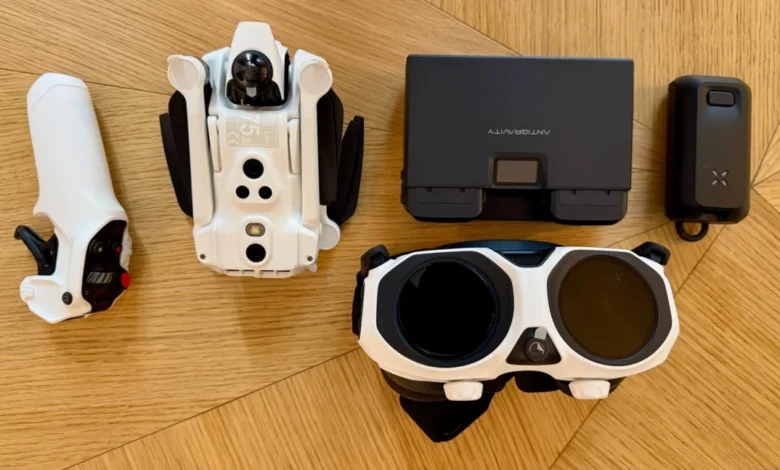
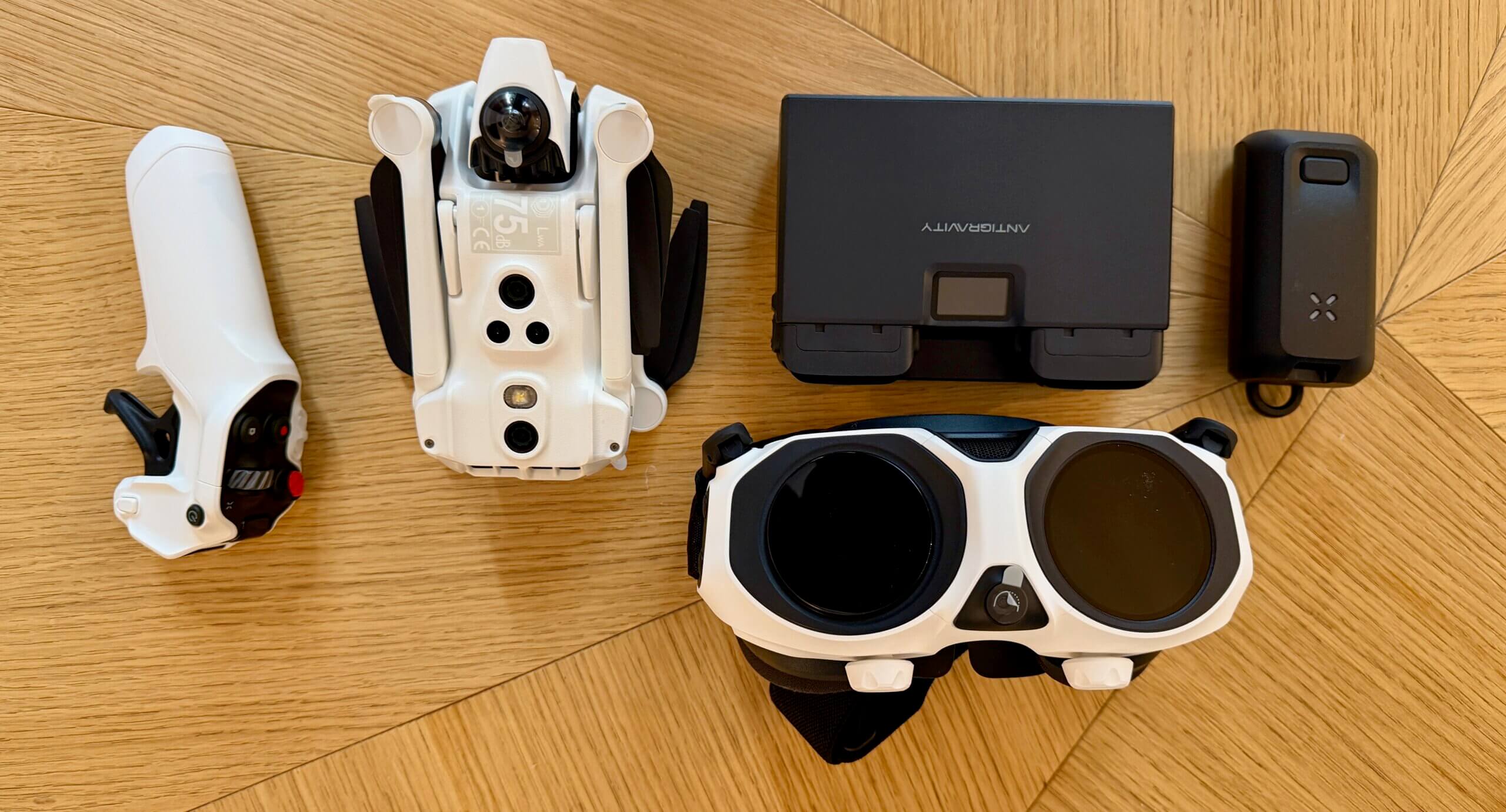
The piloting experience of the Antigravity A1 diverges significantly from conventional multirotors. The aircraft is supplied with dedicated vision goggles featuring dual 4K micro-OLED displays operating at a 120Hz refresh rate. These goggles incorporate integrated head-tracking technology. Because the sensor suite records in 360 degrees, the user’s perspective inside the goggles is not tethered to the physical orientation of the drone; panning the head left or looking downward shifts the viewpoint within the recorded sphere accordingly.
Control is managed primarily via a single-handed motion controller. Operators direct the aircraft by pointing the controller toward the desired vector and pulling a trigger for acceleration. Wrist articulation handles banking and climbing maneuvers. This interface lowers the technical barrier to entry for novice pilots, allowing proficiency in complex environments within a brief initial orientation period. For experienced FPV (First Person View) pilots requiring manual acrobatic capabilities, the A1 also supports traditional stick-based remote controllers, though the fluidity of the motion control system caters to mainstream cinematic applications.
Flight performance is categorized within the "cinewhoop" operational profile, prioritizing stability and predictable handling over high-speed racing agility. The aircraft reaches a maximum velocity of approximately 36 miles per hour, sufficient for tracking moderately paced subjects such as cyclists or automotive traffic. Safety features include "Turtle Mode," an automated recovery function that allows the drone to use its propellers to flip itself upright if inverted during a landing or minor collision.
Optical Performance and Software Integration
Evaluating the optical output of the A1 requires an understanding of resolution distribution in 360-degree video formats. While marketing materials highlight "8K Resolution," spherical capture spreads those pixels across a full 360-degree sphere rather than concentrating them into a standard 16:9 rectangular frame. Consequently, the final "reframed" video exported for standard viewing platforms represents a cropped portion of the total recorded data.
Color science profiles embedded in the system include a "Vivid" preset tailored for immediate social media distribution and a 10-bit "Log" profile designed for professional color-grading workflows. Stabilization is managed via proprietary software algorithms that mitigate environmental turbulence, ensuring stable footage even in sustained winds of up to 20 miles per hour.
Post-processing is centralized within the Antigravity Studio application, which enables wireless footage transfer speeds reaching up to 80 megabytes per second. The software features gyroscope-based reframing—permitting users to pan and scan across the video file using a mobile device—alongside an AI-driven "Auto-Frame" utility. This tool identifies moving subjects within the sphere and automatically generates dynamic cuts to maintain visual focus on the primary point of interest.
Power Management and Operational Efficiency
Battery performance remains a primary technical constraint for compact unmanned aerial vehicles. The A1’s standard Intelligent Flight Battery yields a theoretical maximum flight duration of 24 minutes, translating to approximately 19 to 20 minutes under real-world conditions involving moderate wind resistance and continuous recording.
Industry analysts emphasize that while flight times appear modest compared to larger enterprise platforms, the operational yield per minute is heightened by the 360-degree capture method. Because operators do not need to re-fly paths to secure distinct angles, a single battery cycle captures a broader array of usable framing options than a conventional single-lens camera drone. An optional "Pro Battery" extends flight times to roughly 39 minutes; however, utilizing this power source increases the aircraft’s total mass beyond the 250-gram threshold, subjecting the operator to standard regulatory registration requirements.
Broader Industry Impact and Implications
The introduction of the Antigravity A1 signals a maturation in how aerial tools interact with post-production workflows. By shifting the creative burden from real-time mechanical operation to digital editing choices, the device bridges traditional cinematography and immersive virtual reality capture techniques.
While optical fidelity does not match that of heavy cinema-grade UAVs carrying large-format sensors, and the dual protruding lenses require careful handling during transport, the platform offers a distinct alternative for creators operating independently. As computational power and sensor efficiencies continue to advance, omnidirectional aerial systems like the A1 are expected to influence future standards in travel documentation, real estate marketing, and dynamic sports videography.