Unearthing Kuala Lumpur’s Culinary Heritage at Nasi Lemak Tanglin: A Century of Malaysia’s National Dish

Nasi Lemak remains firmly entrenched as Malaysia’s definitive national dish, commanding a daily consumption of tens of millions of plates across the region, stretching from southern Thailand through peninsular Malaysia and into Singapore. At its core, the dish represents an exercise in culinary minimalism: fragrant rice infused with coconut milk and delicate pandan leaves, paired with essential accompaniments including crispy anchovies, roasted peanuts, fresh cucumber slices, and a complex, slow-cooked sambal. Among the thousands of vendors offering this ubiquitous comfort food, Nasi Lemak Tanglin in Kuala Lumpur stands out as a historic institution, operating continuously since its establishment in 1948. Located within the Kompleks Makan Tanglin food complex, this legendary stall has weathered decades of socioeconomic change to become a cornerstone of Malaysia’s rich gastronomic heritage.
Chronology and Daily Operations
The operational rhythm of Nasi Lemak Tanglin dictates an early start for both vendors and patrons. Operating daily from 7:00 AM to 1:00 PM, the stall frequently faces overwhelming demand, routinely selling out its entire inventory of rice, curries, and proteins well before noon, often by 11:30 AM.

On a typical operating day, such as a Friday morning, the surrounding parking infrastructure experiences severe congestion, often requiring visitors to make multiple circuits before securing a space. By 10:00 AM, hundreds of diners regularly populate the open-air seating area, which features protective awnings deployed to counter sudden tropical downpours. The bustling atmosphere is routinely accompanied by live musical performances featuring "Pop Yeh Yeh," a distinct genre of Malay pop and psychedelic rock popularised in Malaysia and Singapore between 1964 and 1970. This live entertainment forms part of a broader cultural trend among Kuala Lumpur’s open-air food courts, designed to enhance the daytime dining experience for patrons seeking a relaxed midday break.
Culinary Anatomy and Ordering Protocol

The culinary architecture of Nasi Lemak, translating literally to "fat rice," relies heavily on precise preparation techniques. The rice is softened through simmering in coconut milk, while the addition of pandan leaves imparts its characteristic aroma. The accompanying sambal—a paste constructed from chili peppers, aromatics, and frequently fruit-based additions—requires hours of careful reduction to achieve its balanced flavor profile of spice, sweetness, and tang.
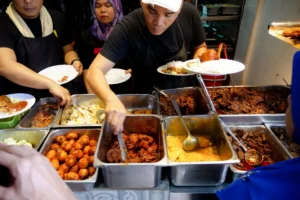
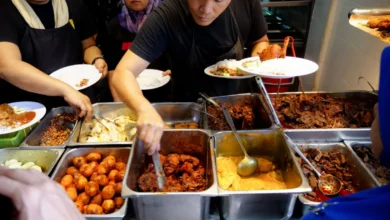
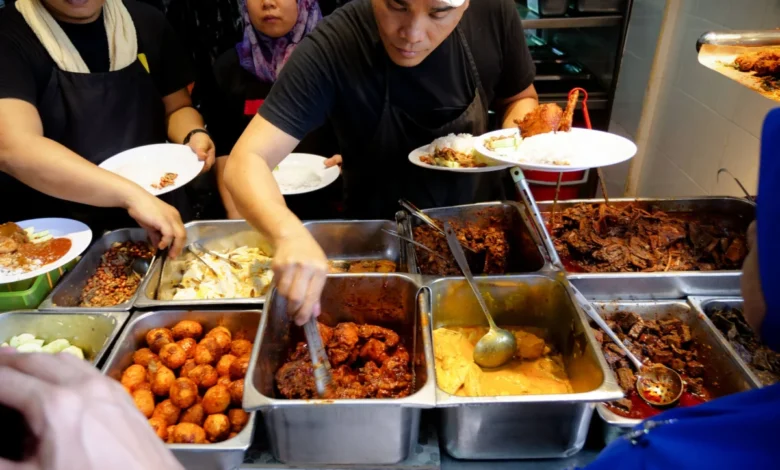
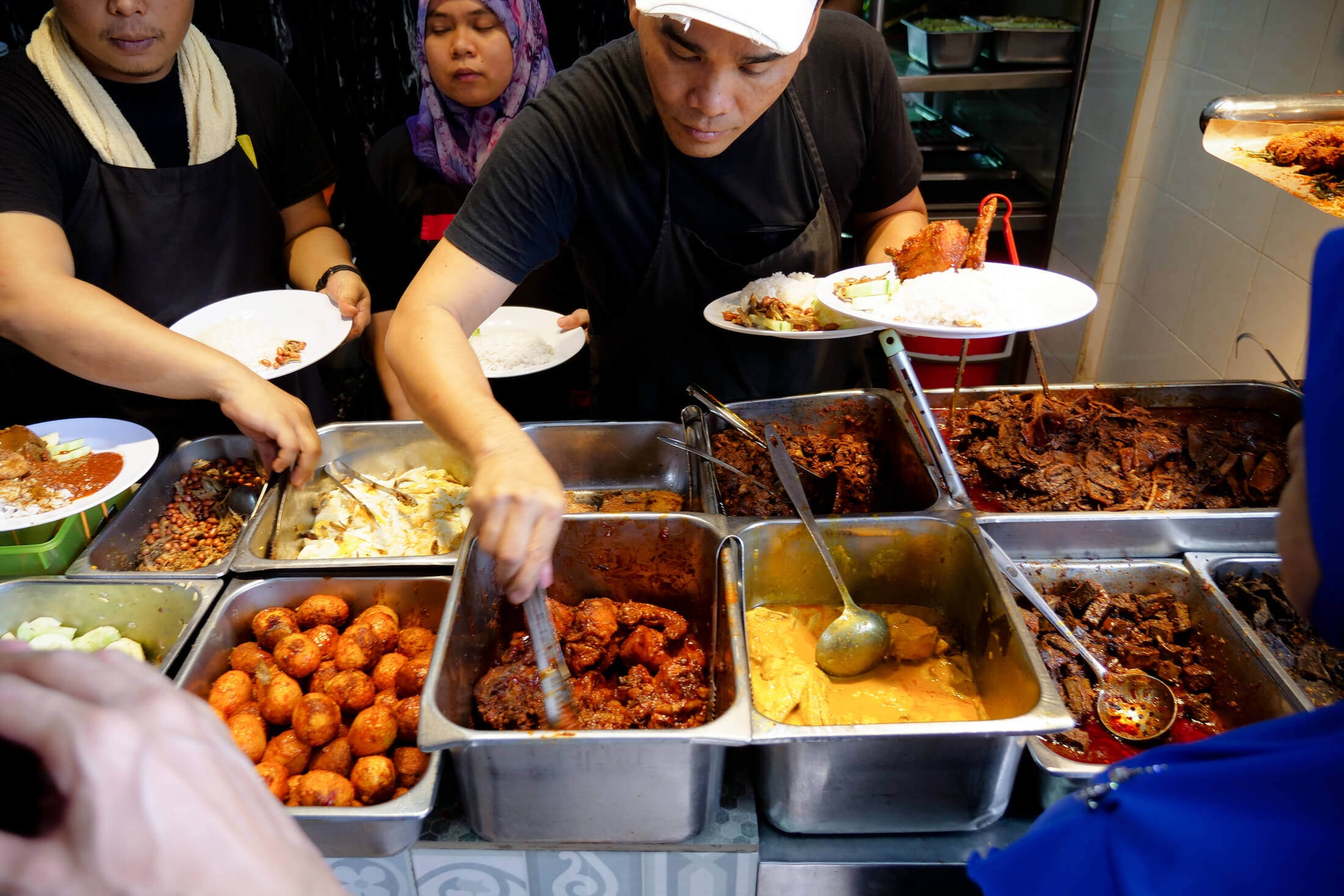
The ordering process at Nasi Lemak Tanglin requires patrons to queue at the primary service counter. Diners first receive a foundation of coconut rice before selecting from an expansive array of curries, side dishes, and proteins. Unlike traditional street food vendors who historically utilized single-use banana leaves, the establishment utilizes reusable plates. This operational shift aligns with contemporary Malaysian environmental policies, supporting national initiatives to curb single-use plastics and mitigate ecological degradation in protected jungle areas historically impacted by commercial banana leaf harvesting.

Signature Proteins and Regional Variations
While traditional iterations of Nasi Lemak feature standard accompaniments, Nasi Lemak Tanglin distinguishes itself through an extensive selection of rich gravies and specialty meats. Regular patrons frequently recommend specific protein pairings, notably "kolong"—comprising beef intestines and spleen—as well as beef rendang.

The preparation of the beef spleen involves thorough braising in a dark, thick brown curry sauce, yielding a rich, unctuous texture. To complete the plate, chefs routinely add a "bonus ladle" of mixed curry broth over any exposed white rice, ensuring the grains act as culinary sponges capable of absorbing the complex spice blends. A fried egg is standardly added to round out the dish’s nutritional and textural profile. Traditional dining etiquette encourages patrons to mix the components thoroughly by hand, a method local culinary experts argue allows the warm curry broth to coat individual grains more effectively than conventional cutlery.
Socioeconomic Impact and Affordability

Priced exceptionally accessibly—with a foundational plate of Nasi Lemak starting at approximately 2 Malaysian Ringgit (MYR), and protein additions ranging between 1 and 5 MYR—the establishment exemplifies the budget-friendly nature of Malaysian street food culture. A comprehensive meal for a group of four typically totals around 35 MYR (approximately $8.50 USD), underscoring the dish’s role as an economically inclusive meal option for both locals and international travelers.
Food historians and tourism analysts note that culinary institutions like Nasi Lemak Tanglin play a vital role in preserving intangible cultural heritage amid rapid urban modernization in Kuala Lumpur. By maintaining recipes established over seven decades ago while adapting to modern environmental standards, the restaurant bridges traditional Malaysian gastronomy with contemporary civic responsibility. For travelers navigating Southeast Asia’s dense culinary landscape, Nasi Lemak Tanglin offers an empirical look at the historical depth, communal dining practices, and enduring cultural significance defining Malaysia’s national cuisine.