Bridging the Gap Between Cultural Appreciation and Commodity Anniina Sandberg on the Evolution of Ethical Indigenous Tourism

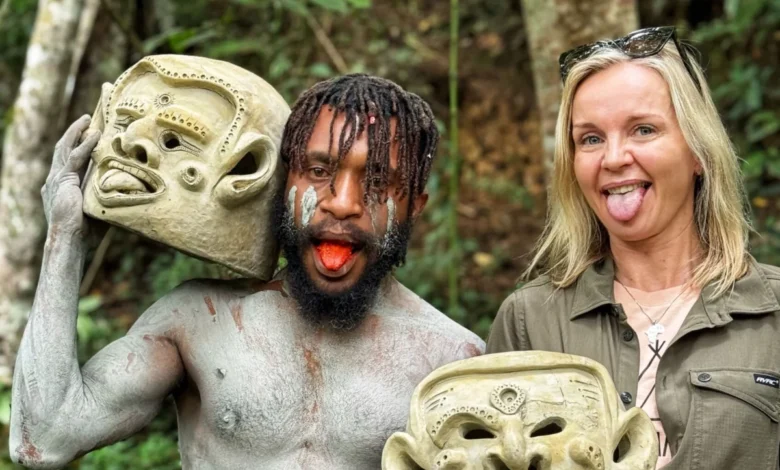
The rise of the global "attention economy" has fundamentally altered the landscape of international travel, creating a precarious tension between genuine cultural exchange and the commodification of Indigenous lives. For Anniina Sandberg, a seasoned cultural anthropologist and the founder of Visit Natives, this shift became starkly apparent following a visit with the Hadzabe hunter-gatherers in Tanzania. After sharing her experiences online, Sandberg observed a disturbing trend in the digital discourse: a significant portion of the audience viewed the Hadzabe not as a complex community with a rich, ancient heritage, but as a source of amusement—a curated spectacle designed for the entertainment of a globalized, digitally-connected public.
This observation serves as the catalyst for a broader, more urgent conversation regarding the ethics of modern travel. In an era defined by ubiquitous smartphone cameras and the relentless pressure of content creation, Sandberg is raising critical questions about the invisible boundaries of tourism. As travelers increasingly seek "authentic" experiences to bolster their social media presence, the line between meaningful human connection and the transformation of marginalized people into tourism products has become dangerously blurred.
The Evolution of a Cultural Anthropologist: Two Decades of Fieldwork
Anniina Sandberg’s perspective is informed by more than twenty years of immersive fieldwork and collaboration with Indigenous communities across several continents. Her career has been defined by a commitment to understanding the nuances of traditional lifestyles and the pressures exerted upon them by the modern world. Her extensive portfolio includes long-term engagements with the Maasai and Hadzabe in Tanzania, the Sámi people of the Arctic regions in Norway, Berber communities in the Atlas Mountains of Morocco, and various Indigenous groups in the highlands of Papua New Guinea.
Sandberg’s transition from academic anthropology to the leadership of Visit Natives was driven by a desire to provide an ethical alternative to the extractive nature of mainstream tourism. Visit Natives was established with a clear mandate: to facilitate community-led tourism that prioritizes Indigenous agency and long-term sustainability. Unlike traditional travel agencies that often treat Indigenous culture as a "side-show" to a broader safari or vacation, Sandberg’s model is built on the principle of reciprocity.
The chronology of Sandberg’s work reflects a deep-seated integration into the communities she serves. In Tanzania, she lived within a Maasai boma for over a year, participating in the daily rhythms of life and gaining insights that are inaccessible to the casual observer. This depth of experience allows her to identify the subtle ways in which tourism can either empower a community or erode its social fabric.

The Social Media Paradox: Visibility vs. Vulnerability
While the tourism industry has historically focused on environmental conservation and economic social impact, Sandberg argues that the industry has been slow to address the psychological and cultural ramifications of the social media age. "When we talk about sustainable tourism, we have focused on environmental issues and social issues, but we rarely talk about the impact of social media," Sandberg stated in a recent interview.
The drive for "clicks" and "views" has created a demand for high-impact, visual content that often relies on the "exoticization" of Indigenous peoples. This trend risks flattening complex, multi-dimensional cultures into simplified, stereotypical narratives. When a traveler prioritizes the perfect photograph over a genuine conversation, the Indigenous host is reduced to a prop in a digital performance.
Data from the global travel industry suggests that "experiential travel" is one of the fastest-growing sectors, with a projected compound annual growth rate (CAGR) of over 10% through the next decade. However, this growth brings with it a heightened risk of exploitation. Indigenous communities, often lacking the digital literacy or legal resources to manage their online representation, find themselves vulnerable to content creators who may misinterpret or sensationalize their traditions for personal gain. Sandberg notes that this vulnerability is not merely about privacy; it is about the right to self-determination and the protection of cultural intellectual property.
Redefining the Encounter: From Spectatorship to Participation
To combat the "commodity" model of tourism, Sandberg advocates for a fundamental shift in how travelers interact with Indigenous hosts. She distinguishes between a "tourism experience"—which is often characterized by convenience, fixed itineraries, and superficial engagement—and a "meaningful cultural exchange."
In the traditional tourism model, Indigenous activities are frequently staged to fit the schedule of a tour bus. Traditional dances or ceremonies may be performed out of context, stripped of their spiritual or social significance to satisfy a visitor’s desire for a photo opportunity. In contrast, Sandberg’s approach through Visit Natives emphasizes the "invitation into the home."
Visit Natives deliberately avoids "day trips," which Sandberg views as inherently prone to voyeurism. Instead, the organization facilitates multi-day stays where travelers live alongside Indigenous families. There are no rigid schedules; the experience is defined by the natural unfolding of daily life—sharing meals, participating in chores, and engaging in long-form dialogue. By removing the "stage" of the tourist attraction, the interaction becomes a human-to-human connection rather than a consumer-to-product transaction.

The Complexity of Informed Consent in the Digital Age
One of the most critical challenges identified by Sandberg is the issue of consent. While many ethical travelers understand the basic necessity of asking permission before taking a photograph, Sandberg argues that the current standard for "consent" is insufficient.
In many remote Indigenous communities, there is a significant gap in understanding regarding the reach and permanence of the internet. A community member might agree to a photo being taken, but they may not fully grasp that the image could be viewed by millions of people worldwide, used in advertisements, or subjected to derogatory comments on social platforms.
"When communities don’t know their rights, or don’t fully understand how their images might be used, it becomes much more complicated," Sandberg explained. Truly informed consent, in her view, requires a high degree of transparency. It involves explaining where the image will be shared, the potential audience, and ensuring that the community benefits directly from the representation. This requires tourism operators to act as intermediaries who protect the interests of the Indigenous hosts rather than simply facilitating the desires of the tourist.
The Need for an Industry-Wide Code of Conduct
The responsibility for ethical engagement does not rest solely on the individual traveler. Sandberg is a vocal advocate for systemic change within the tourism industry. She believes that tourism operators must be held to a higher standard, involving a formal code of conduct that prioritizes the long-term well-being of Indigenous communities over short-term profits.
Many Indigenous groups face existential threats from land encroachment, climate change, and economic marginalization. These pressures can make communities more likely to accept tourism deals that are exploitative or culturally damaging simply because they provide a necessary source of income.
A professionalized ethical framework would require operators to:

- Ensure fair and transparent compensation that goes directly to the community.
- Provide education to travelers regarding cultural norms and digital etiquette before they arrive.
- Support community-led initiatives that allow Indigenous people to decide which aspects of their culture they wish to share and which they wish to keep private.
- Advocate for the land rights and legal protections of their Indigenous partners.
Broader Implications: Cultural Preservation and Global Connection
The stakes of this conversation extend far beyond the logistics of travel. At its core, Sandberg’s work addresses the survival of human diversity. When Indigenous cultures are commodified, they are often frozen in time—forced to perform a version of their heritage that aligns with Western expectations of "primitivism" or "purity." This prevents cultures from evolving naturally and can alienate younger generations from their own traditions.
However, when practiced ethically, Indigenous-led tourism can be a powerful tool for cultural preservation. It provides an economic incentive for maintaining traditional knowledge, languages, and land-management practices. It also fosters a more profound global understanding, breaking down the "us vs. them" mentality that often fuels prejudice.
For Anniina Sandberg, the ultimate goal of travel is to recognize the "rich mosaic of cultures" that constitute the human experience. She maintains that the most transformative moments in travel do not occur in luxury settings, but in the quiet, unscripted moments of shared humanity. "It’s very human," she said. "The core of humanity is just spending time with each other."
As the travel industry continues to evolve in the wake of global shifts, the model proposed by Sandberg offers a roadmap for a more dignified and reciprocal future. By moving away from the lens of the "content creator" and toward the mindset of the "guest," travelers can ensure that their presence supports, rather than subverts, the communities they visit. The challenge for the modern traveler is to resist the urge to turn the world into a backdrop for their digital life and instead embrace the slow, complex, and deeply rewarding process of genuine cultural exchange.
Related posts: