Karakoram Climbing Season Sees Setbacks on Gasherbrum II Amidst Avalanche Fears, While K2 and Broad Peak Teams Push Ahead

The treacherous peaks of the Karakoram mountain range are once again testing the limits of human endurance and judgment, with a critical climbing window yielding mixed results across Gasherbrum II, K2, and Broad Peak. While ambitious summit pushes are underway on K2 and Broad Peak, Gasherbrum II has witnessed a strategic retreat by climbers due to perilous avalanche conditions, underscoring the formidable challenges inherent in high-altitude mountaineering.
Gasherbrum II: A Prudent Retreat in the Face of Avalanche Risk
Climbers aspiring to conquer Gasherbrum II (GII), the world’s 13th highest mountain at 8,035 meters (26,362 feet), have been forced to turn back from their summit attempts. The primary impediment was the presence of chest-deep fresh snow combined with an unacceptably high risk of avalanches, a stark reminder of the unpredictable nature of the Karakoram’s environment.
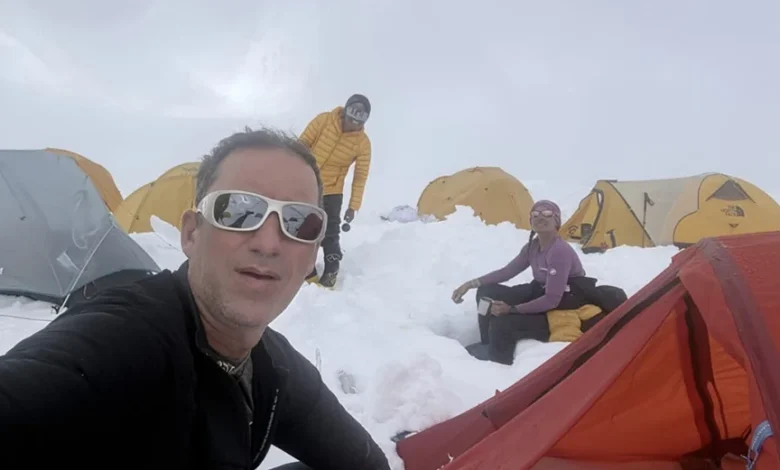
Romanian climber Horia Colibasanu, a veteran of numerous 8,000-meter ascents known for his commitment to climbing without supplemental oxygen, provided a firsthand account of the perilous conditions. "Last night, I left the last Camp 3 at 7,000m toward the summit of Gasherbrum II," Colibasanu reported. "After a section of climbing on a rock face, I entered an area where the snow was up to my chest. It was very hot, and the layers deposited during the last snowfall had not had time to stabilize. The risk of avalanches was too high."
Colibasanu’s decision to turn around, made at a critical juncture in his ascent, highlights the paramount importance of safety and experienced judgment in extreme environments. His assessment of the snowpack’s instability, exacerbated by recent warm temperatures preventing proper consolidation of new snow layers, was a professional and life-saving one. Following suit, the Sherpa team from Imagine Nepal, a prominent expedition organizer, also prudently retreated without reaching the summit, reinforcing the widespread concern over the prevailing conditions.
Chronology of the Gasherbrum II Attempt
The recent developments on Gasherbrum II unfolded rapidly. Climbers, including Colibasanu and the Imagine Nepal contingent, had established Camp 3 at approximately 7,000 meters, positioning themselves for a summit push when a favorable weather window was anticipated. The ascent from Camp 3, typically a grueling multi-hour endeavor, began with hopeful expectations. However, as climbers progressed beyond the established fixed lines and into higher, less trafficked terrain, the deteriorating snow conditions became undeniable. The critical decision to turn back was made late in the evening or early morning, based on the immediate assessment of avalanche danger. Colibasanu is currently recuperating in Camp 1, a strategic move to conserve energy and monitor the evolution of the mountain’s conditions.
Supporting Data: The Science of High-Altitude Avalanche Dynamics
The conditions described by Colibasanu—chest-deep, unconsolidated snow coupled with high temperatures—create a textbook scenario for dangerous slab avalanches. At high altitudes, the interplay of temperature, new snowfall, wind, and existing snowpack layers is incredibly complex. Fresh, light snow falling on a harder, older layer, especially if an ice lens has formed, creates a weak interface. When temperatures rise, this can further destabilize the snowpack by promoting internal melting and reducing the cohesion between layers. The steep slopes of Gasherbrum II, particularly above 7,000 meters, present numerous terrain traps and potential trigger points, making a decision to proceed through unstable snow an extremely high-risk gamble. Experienced climbers understand that retreating in such circumstances is not a failure but a testament to sound mountaineering principles. The rapid warming can create what is known as "wet slab" avalanche conditions, notoriously difficult to predict and extremely destructive.
Implications for the Gasherbrum II Season
Colibasanu, a seasoned climber with multiple 8,000-meter summits, including Dhaulagiri and Annapurna, is known for his patience and meticulous approach. While back in Camp 1, he remains hopeful for another summit attempt should the snow settle and clear skies persist. However, he acknowledges the precarious nature of the season. "The season could be compromised if snow starts falling again in the next few days," he stated, highlighting the narrow windows of opportunity that define Karakoram climbing. Further heavy snowfall would not only reset the avalanche risk but also add significantly to the physical burden of breaking trail, potentially making a successful summit bid unfeasible for the remainder of the current window. The cost and logistical complexity of these expeditions mean that a compromised season can have significant financial and personal ramifications for climbers and their support teams.
K2: The Savage Mountain’s Summit Push Accelerates
In stark contrast to the challenges faced on Gasherbrum II, progress on K2, the world’s second-highest and arguably most formidable peak at 8,611 meters (28,251 feet), has dramatically accelerated. Following a period where rope fixing had stalled just above Camp 2, a clear weather window emerged, galvanizing the Nepalese commercial teams into action. These highly skilled Sherpa climbers, the backbone of commercial expeditions in the Himalayas and Karakoram, seized the opportunity.
Leaving their clients at Base Camp, the Sherpa teams swiftly moved up the treacherous Abruzzi Spur route, the mountain’s most popular but still exceptionally challenging line. Dipan Gurung and Mingdorchi Sherpa of Imagine Nepal, alongside Lakpa Sherpa and Siddhi Ghising, spearheaded the effort. They successfully fixed ropes through the notorious ice sections of the Black Pyramid, a steep and technically demanding rock and ice barrier, reaching Camp 3 at approximately 7,000 meters on the section known as The Shoulder. This critical advancement sets the stage for further progress, with plans to continue fixing ropes up to Camp 4, situated just below the infamous Bottleneck, and subsequently towards the summit. This rapid progress, as captured and shared on social media by expedition teams, has injected a palpable sense of anticipation throughout the Base Camp community.
Chronology of K2’s Progress
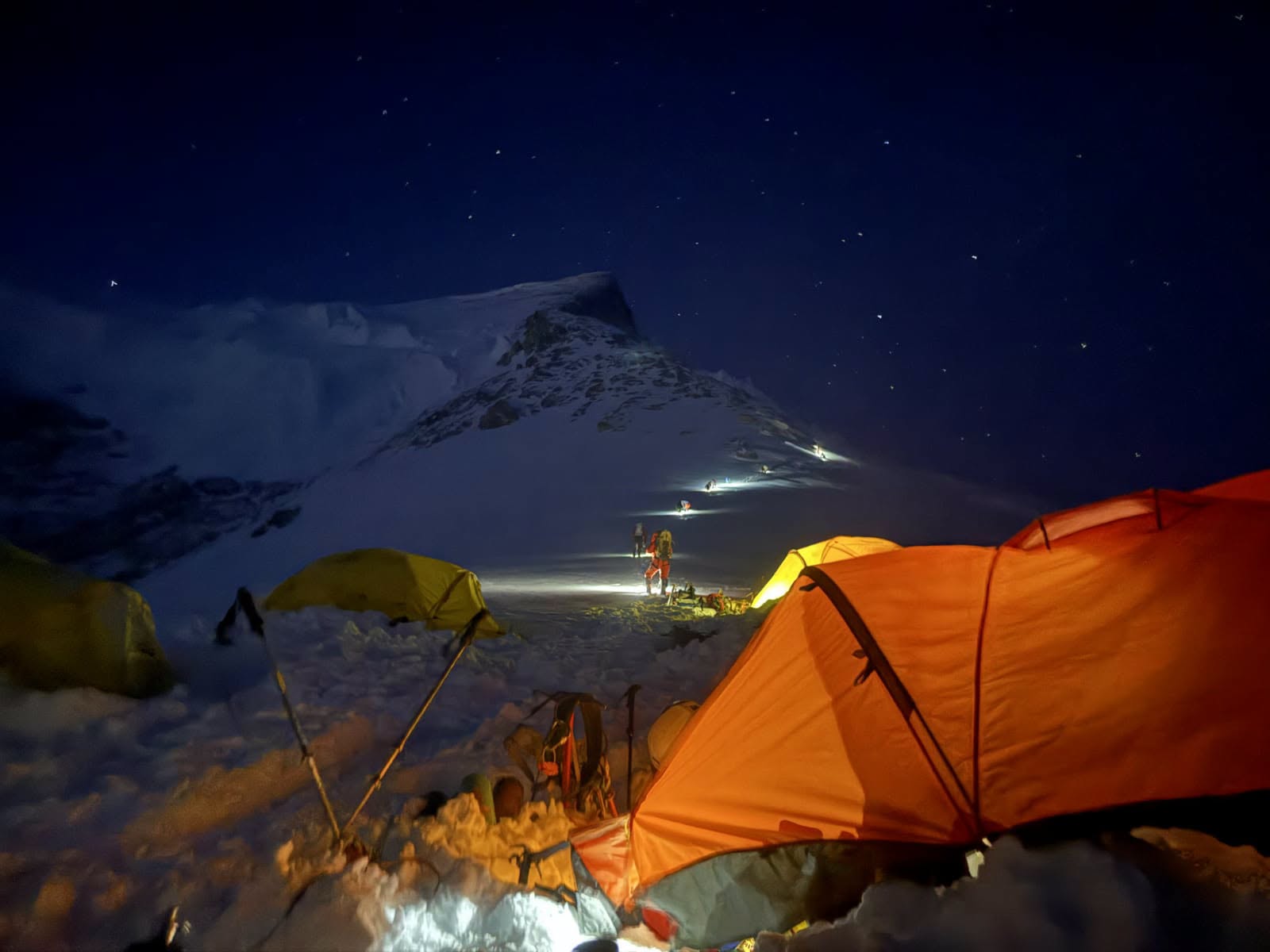
Until Thursday, rope fixing on K2 had been a slow and arduous process, extending only slightly above Camp 2. This bottleneck in progress was largely due to fluctuating weather and the sheer difficulty of the terrain. However, once the skies cleared and forecasts indicated a multi-day window of good weather, the Sherpa teams mobilized with remarkable speed and efficiency. Their swift ascent and expert placement of fixed ropes from Camp 2 through the Black Pyramid to Camp 3 on The Shoulder, a gain of approximately 1,000 vertical meters in a short timeframe, demonstrate their unparalleled skill and dedication. The next critical stages, fixing through the Bottleneck and the subsequent traverse, are now within immediate reach, potentially leading to summit attempts in the coming days.
Supporting Data: The Logistics of K2 Expeditions and the Sherpa Role
Commercial expeditions on K2 rely heavily on the logistical prowess and climbing expertise of Sherpa teams. These individuals are responsible for establishing camps, carrying vital supplies, and, most critically, fixing kilometers of static ropes that are essential for client safety and efficient ascent. The Abruzzi Spur route, while standard, presents numerous technical challenges: House’s Chimney, the Black Pyramid, the traverse to Camp 3 on The Shoulder, and the notorious Bottleneck – a narrow couloir of ice and rock leading to the summit plateau, often topped by a hanging serac. The ability of Sherpa teams to navigate and secure these sections rapidly during a weather window is a testament to their strength, high-altitude acclimatization, and technical proficiency. Their efforts significantly increase the chances of success for the paying clients who follow.
Implications for the K2 Summit Window
The accelerated progress on K2 suggests that summit bids could commence as early as next week, provided the weather window holds. The successful establishment of fixed lines to Camp 3 is a major hurdle overcome. The next few days will be crucial for the teams to push ropes to Camp 4 and for climbers to position themselves for a final summit attempt. However, the sheer number of climbers on K2 in a favorable window can also lead to congestion, increasing risks and slowing down progress on key sections like the Bottleneck. The race against time and weather remains a constant factor on the Savage Mountain.
Broad Peak: Charting New Territory
On Broad Peak, the world’s 12th highest mountain at 8,051 meters (26,414 feet), another significant development is underway. The Pakistani team from Karakorum Expedition has successfully reached Camp 3. Their objective goes beyond a standard ascent; the team plans to investigate options for a new route to the summit.
Chronology of Broad Peak’s Strategic Move
The Karakorum Expedition’s Pakistani team arrived at Camp 3 on Broad Peak yesterday, marking a crucial step in their expedition. Their immediate plan for tomorrow is to begin reconnaissance for potential new routes. This suggests that their acclimatization schedule is on track, and they are now ready to tackle the more complex and demanding aspect of their objective – identifying and establishing a new line to the summit.
Supporting Data: New Routes in High-Altitude Mountaineering
Attempting a new route on an 8,000-meter peak is a testament to an expedition’s ambition and skill. Unlike following established lines, a new route requires extensive reconnaissance, technical climbing expertise, and a high degree of self-sufficiency. It involves navigating unknown terrain, assessing new hazards, and often requires more advanced technical climbing skills. Broad Peak, known for its broad summit plateau and multiple peaks, offers potential for diverse new lines, although any deviation from the standard route significantly increases the complexity and inherent risks. The Pakistani climbing community has been steadily gaining prominence in high-altitude mountaineering, and such an endeavor would further solidify their reputation.
Implications for Broad Peak’s Expedition
The decision to explore new route options on Broad Peak adds an exciting dimension to the current climbing season. Success on a new route would be a significant achievement, contributing to mountaineering history and showcasing the capabilities of the Karakorum Expedition team. However, it also introduces additional layers of risk and uncertainty compared to a standard ascent. The team will need to balance the allure of a new line with the pragmatic considerations of safety, time, and resources. Their efforts highlight the growing ambition and talent within the Pakistani mountaineering community, increasingly making its mark on the peaks of their homeland.
Overall Context: A Dynamic Karakoram Season
The current climbing season in the Karakoram is unfolding as a dynamic narrative of human ambition, resilience, and respect for nature’s raw power. From the prudent retreat on Gasherbrum II, dictated by the immediate threat of avalanches, to the rapid, determined push on K2 and the ambitious new route aspirations on Broad Peak, each mountain presents its unique set of challenges and triumphs. The interplay of weather windows, expert judgment, and the unparalleled skill of local Sherpa and Pakistani climbers continues to define the high-stakes drama that captivates the global mountaineering community. As the season progresses, all eyes will remain fixed on these majestic peaks, awaiting further developments and hoping for safe ascents and descents.