The Nichupté Bridge Represents a Landmark Shift in Cancún Infrastructure and Regional Connectivity.

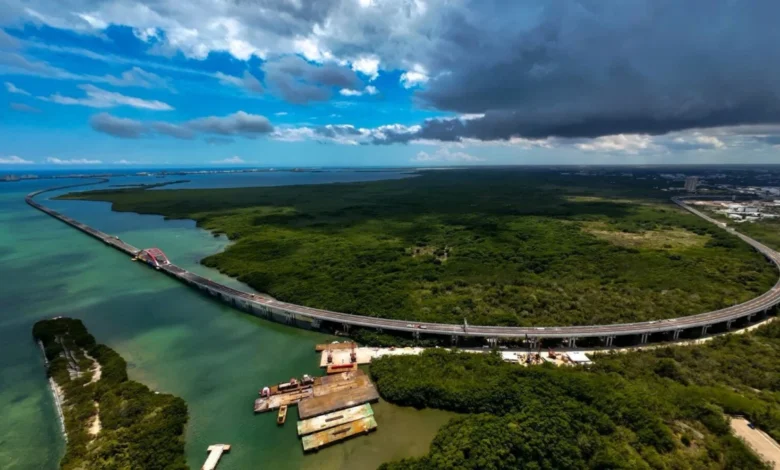
The completion and inauguration of the Nichupté Bridge in Cancún, Mexico, marks one of the most significant infrastructure milestones in the history of the state of Quintana Roo. Designed to alleviate the chronic traffic congestion that has long defined the corridor between downtown Cancún and the world-renowned Hotel Zone, the bridge is more than a simple transit route; it is a strategic intervention intended to modernize the logistics of Mexico’s most visited tourist destination. For decades, the narrow strip of Kukulcan Boulevard served as the sole artery for both the thousands of hospitality workers commuting daily and the millions of international tourists traveling from Cancún International Airport to their seaside resorts. The Nichupté Bridge effectively breaks this bottleneck, providing a long-overdue alternative that promises to redefine the urban and touristic rhythm of the region.
Technical Specifications and Engineering Scope
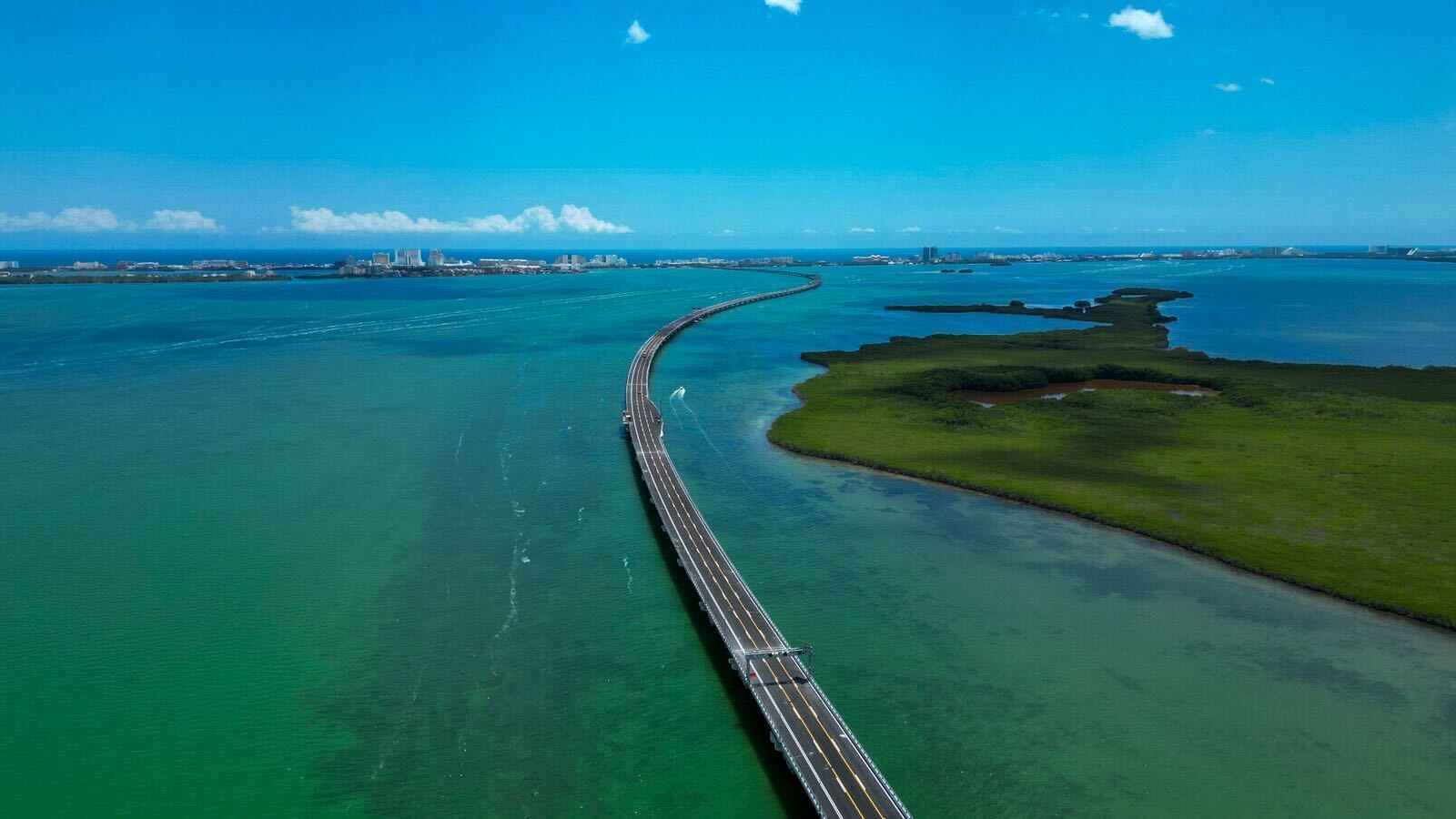
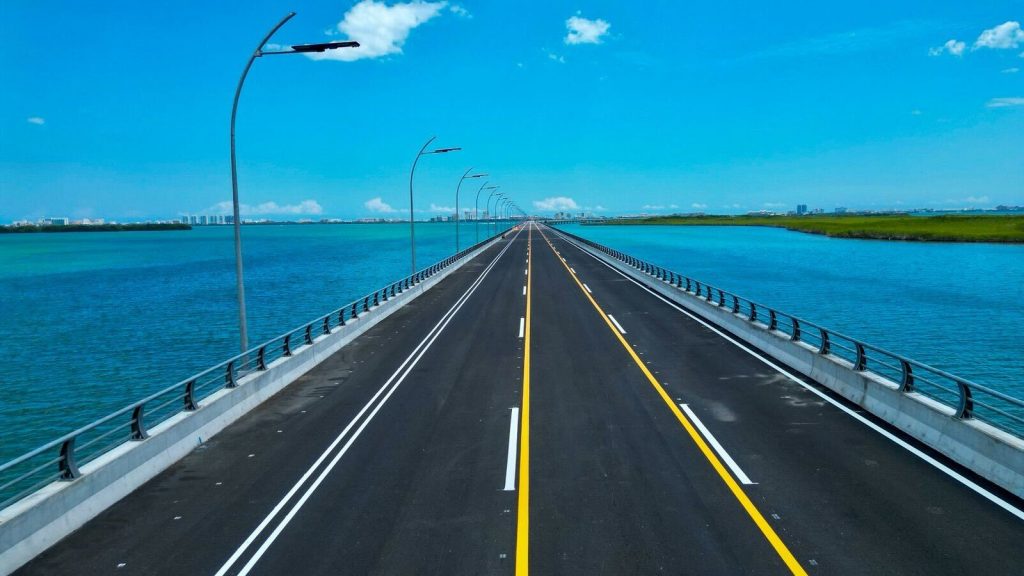
The Nichupté Bridge is an engineering feat spanning approximately 8.8 kilometers (5.4 miles), with a significant portion of its length traversing the Nichupté Lagoon system. The project involved an investment of over 5.5 billion Mexican pesos (approximately $300 million USD), funded through federal resources as part of a broader national infrastructure program. The bridge connects the intersection of Colosio Boulevard and Kabah Avenue in the mainland city center directly to the 13th kilometer mark of the Hotel Zone.
Constructed using a "Top-Down" methodology, the project was designed to minimize the environmental footprint on the delicate mangrove ecosystems and the lagoon floor. This technique allowed for the placement of pillars and the assembly of the bridge deck from above, reducing the need for heavy machinery to operate directly within the water or the protected wetlands. The bridge features three lanes—one for each direction of travel and a third reversible lane to accommodate peak traffic flows during the morning and evening rushes. Additionally, the structure includes dedicated spaces for pedestrians and cyclists, reflecting a shift toward multi-modal transportation in the region’s urban planning.
A Timeline of Development and Strategic Planning
The concept of a bridge across the Nichupté Lagoon had been discussed in various forms for over 20 years, often stalled by environmental concerns or lack of federal funding. However, the project gained definitive momentum in 2022 under a coordinated effort between the federal government of Mexico and the state administration of Quintana Roo.
- 2022: Formal announcement and environmental impact assessments were finalized. The Secretariat of Infrastructure, Communications, and Transportation (SICT) took the lead on the project, ensuring it aligned with other regional developments like the Maya Train.
- 2023: Construction commenced with the arrival of specialized maritime equipment. Work continued 24/7 to meet the ambitious deadlines set by the administration, even as the region faced challenges from seasonal weather patterns.
- 2024: The bridge reached structural completion. This phase included the installation of intelligent transportation systems (ITS), LED lighting, and safety barriers.
- 2025-2026: Integration with the newly renovated Colosio Boulevard and the Luis Donaldo Colosio Cloverleaf interchange was completed, ensuring a seamless flow from the airport to the bridge entrance.
The bridge’s completion was a focal point of the EDGE 2026 conference in San Diego. During this event, the Mexican Caribbean Tourism Board leveraged the bridge as a symbol of the region’s readiness to host global-scale events, leading to the official announcement that the EDGE 2027 conference will be held in the Cancún-Riviera Maya region.
Economic and Tourism Impact Data
The economic implications of the Nichupté Bridge are rooted in the sheer volume of the Cancún tourism market. According to data from the Quintana Roo Tourism Secretariat (SEDETUR), Cancún International Airport handled over 32 million passengers in 2023, a record-breaking figure that placed immense strain on the city’s existing road networks.
Prior to the bridge’s opening, travel times from the airport to the middle of the Hotel Zone could exceed 60 to 90 minutes during peak hours or in the event of a minor traffic accident. Projections suggest the Nichupté Bridge will reduce these commute times by as much as 40 to 50 percent. For the tourism industry, this translates into "recovered time" for visitors, increasing the likelihood of off-site spending in downtown restaurants, shopping centers, and cultural venues that were previously considered too difficult to reach.
Furthermore, the bridge serves a critical safety function. As the only other exit from the Hotel Zone besides the two ends of Kukulcan Boulevard, the Nichupté Bridge provides a vital evacuation route in the event of hurricanes or other natural disasters. This enhancement to the city’s resiliency is a key factor in maintaining the region’s standing with international travel insurance providers and luxury tour operators.
Official Responses and Regional Vision
The leadership of the Mexican Caribbean has characterized the bridge as a "social justice" project as much as a tourism one. Andrés Martínez Reynoso, CEO of the Mexican Caribbean Tourism Board, emphasized that the bridge reflects a "transformational" era for the city. "It is about the evolution of the destination," Martínez Reynoso stated during a recent industry briefing. "We are moving beyond being a collection of high-end resorts to becoming a fully integrated, accessible, and modern metropolitan area that can compete with any global destination."
Governor Mara Lezama of Quintana Roo has also been a vocal proponent, noting that the bridge is free of tolls, ensuring that it benefits the local workforce. For the thousands of waiters, housekeepers, and administrative staff who keep the Hotel Zone running, the bridge represents a significant improvement in quality of life, reducing daily transit times and allowing for more time at home.
The business community, represented by various chambers of commerce and the Cancún Hotel Association, has largely welcomed the project. While there were initial concerns regarding the visual impact on the lagoon, the implementation of environmental mitigation strategies—including the reforestation of mangroves in nearby areas—has helped build consensus among stakeholders.
Broader Implications for the Mexican Caribbean
The Nichupté Bridge does not exist in a vacuum. It is a central component of a massive infrastructure overhaul in Southeastern Mexico. The synergy between the bridge, the Maya Train (Tren Maya), and the newly opened Felipe Carrillo Puerto International Airport in Tulum creates a comprehensive transportation grid that was unimaginable a decade ago.
- Integration with the Maya Train: The bridge provides an indirect but essential link for tourists arriving via the Maya Train station near the airport, allowing them to reach their hotels with minimal friction.
- Urban Renewal: The construction has spurred a "beautification" and revitalization of downtown Cancún. With easier access to the Hotel Zone, the city center is seeing a surge in investment for boutique hotels and "Airbnb-style" developments that cater to a more mobile, tech-savvy traveler.
- Sustainability and Modernization: By reducing the time vehicles spend idling in traffic, the bridge contributes to a reduction in carbon emissions within the lagoon area. The inclusion of non-motorized transport lanes also signals a commitment to the "Master Plan for Sustainable Tourism 2030."
Analysis: The End of "Logistical Friction"
For the modern traveler, the luxury of a destination is increasingly measured by the absence of "friction." Friction is the time spent waiting for a shuttle, the stress of a traffic jam on the way to a flight, and the difficulty of navigating a city’s geography. In the competitive landscape of Caribbean tourism, where destinations like the Dominican Republic and Jamaica are also upgrading their infrastructure, Cancún’s investment in the Nichupté Bridge is a defensive and offensive strategic move.
By removing the primary logistical hurdle of the region, Cancún is effectively expanding its "usable" territory. The bridge makes the "downtown" experience part of the "resort" experience. It allows for a more diverse tourist offering, where a guest can enjoy the beaches of the Hotel Zone in the morning and easily access the authentic culinary scene of the mainland in the evening.
As the region prepares to host the EDGE 2027 conference, the Nichupté Bridge stands as a testament to Mexico’s ability to execute large-scale, complex engineering projects that balance economic necessity with environmental sensitivity. It represents a shift from the rapid, sometimes haphazard growth of the 1980s and 90s toward a more mature, planned phase of urban development. For the traveler sitting in the back of a car, looking out over the blue waters of the lagoon as they glide across the new span, the message is clear: the Mexican Caribbean is no longer just a place to stay; it is a place to move, explore, and experience with unprecedented ease.