The End of the Upgrade Era How Delta Air Lines Is Monetizing the First Class Cabin

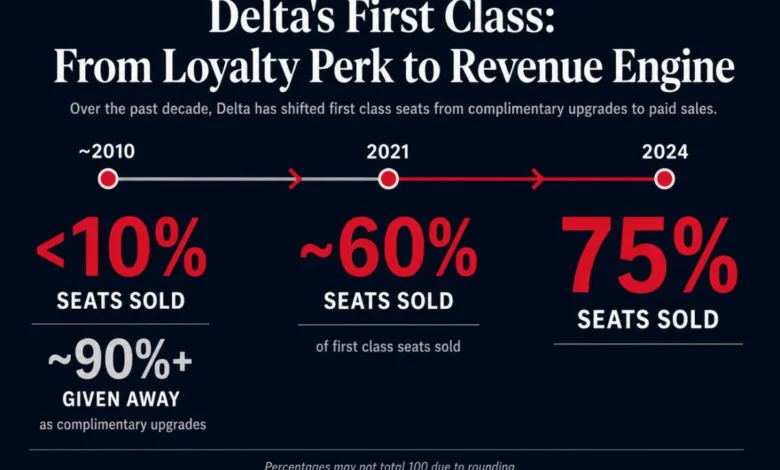
Delta Air Lines has initiated a fundamental transformation in its business model, systematically shifting its premium cabin inventory from a complimentary loyalty perk to a primary revenue driver. For decades, the domestic first class cabin functioned largely as a loss leader, with the vast majority of seats occupied by frequent flyers who received complimentary upgrades as a reward for their brand loyalty. However, recent financial disclosures and strategic maneuvers by the Atlanta-based carrier reveal that the era of the "free" upgrade is rapidly coming to an end, replaced by a sophisticated "paid-upgrade" ecosystem that has proven to be a financial windfall for the airline.
The Strategic Pivot from Loyalty to Revenue
The transition represents one of the most significant shifts in airline revenue management since the deregulation of the industry. Historically, airlines struggled to sell premium seats on domestic routes, often pricing them at such a high premium over economy fares that only corporate travelers with flexible expense accounts could justify the cost. Consequently, the front of the plane was often nearly empty of paying customers, allowing airlines to use those seats to appease their most frequent travelers through the Medallion status program.
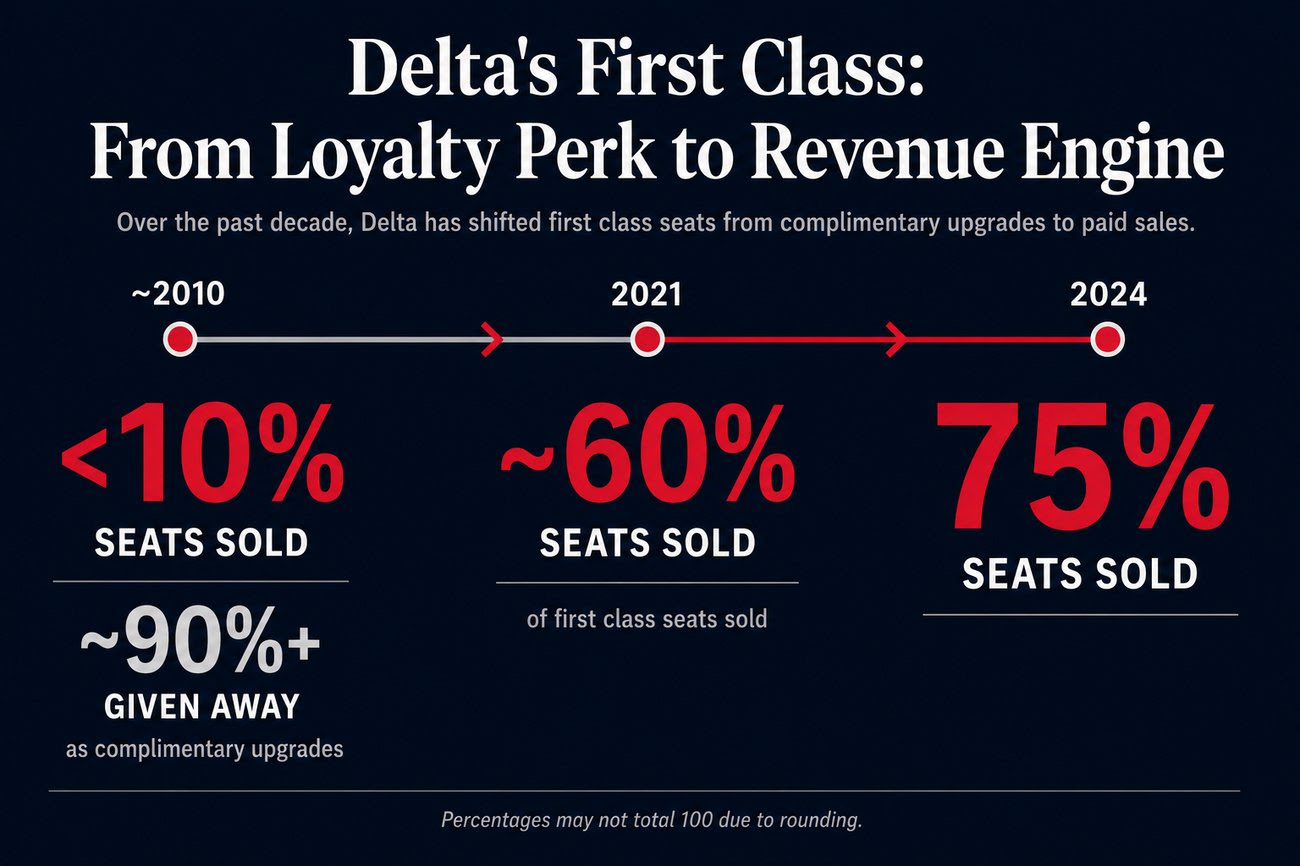
As recently as 2010, Delta Air Lines was selling fewer than 10% of its domestic first class seats. The remaining 90% were distributed as complimentary upgrades to status holders. During the airline’s 2024 investor day, Delta President Glen Hauenstein addressed this historical inefficiency, noting that premium products were the largest loss leader on the aircraft prior to 2010 because the airline simply could not sell them. The strategy at the time was to use the premium cabin as a tool for retention rather than a source of direct profit.
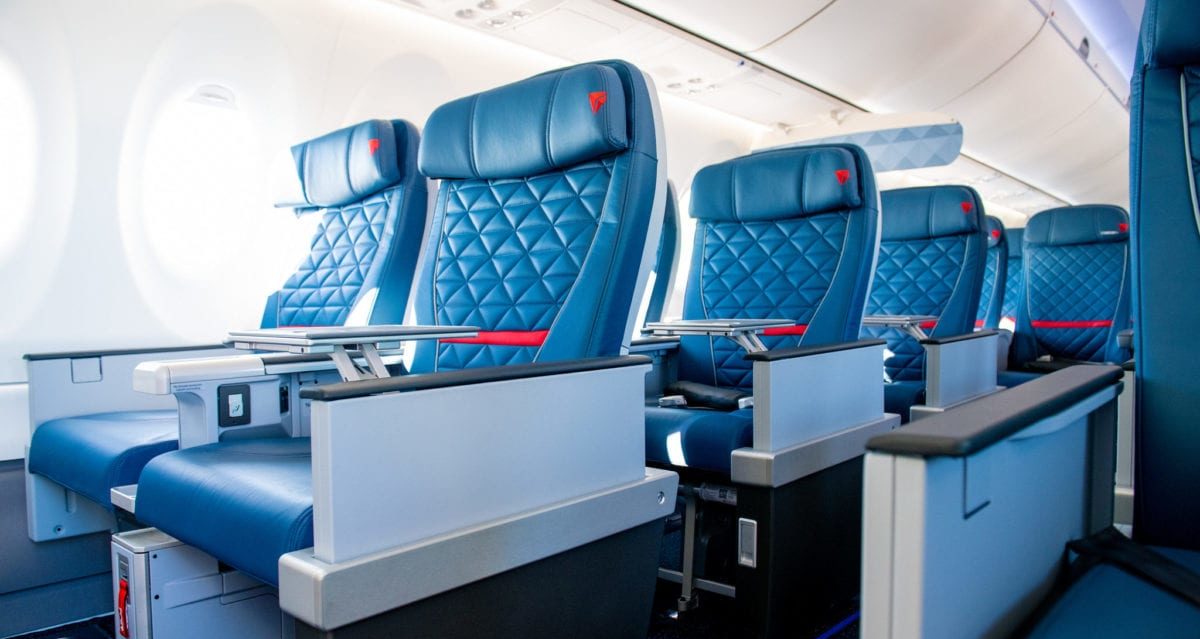
By 2024, Delta successfully inverted this ratio. The airline now sells approximately 75% of its first class seats outright, leaving only a small fraction of the cabin available for the tens of thousands of Medallion members vying for a seat. This shift was achieved not through traditional price hikes, but through a more agile pricing strategy that made first class accessible to a broader demographic. By offering upgrades for as little as $75 to $200 on shorter routes, Delta tapped into a "premium leisure" market—travelers who are willing to pay a modest premium for comfort but would never pay the full-fare first class price.
A Chronology of the Premium Shift
The timeline of Delta’s transformation illustrates a calculated, decade-long effort to retrain consumer behavior and maximize seat-mile revenue.
2010–2015: The Foundation of Paid Upgrades
Following its merger with Northwest Airlines, Delta began experimenting with "post-purchase" upgrade offers. By integrating upgrade prompts into the Fly Delta mobile app and website, the airline made it easier for passengers to see the value proposition of moving to the front of the plane for a small cash or mileage fee.
2015–2020: The Rise of Premium Leisure
As the U.S. economy strengthened, Delta observed a growing segment of travelers who were not business flyers but were willing to pay for extra legroom and better service. The airline began aggressively marketing its "Comfort+" cabin, creating a middle-tier product that bridged the gap between economy and first class.
2021–2023: Post-Pandemic Premiumization
The COVID-19 pandemic accelerated the demand for premium travel. As business travel remained depressed, leisure travelers with high disposable income and accumulated points began booking first class and Delta One cabins at record rates. Delta responded by refining its algorithm to offer "load-factor-based" pricing, ensuring that if a seat could be sold for $50, it would be sold rather than given away.
2024–2025: The Revenue Crossover
In the fourth quarter of 2025, Delta reached a historic milestone: for the first time, the airline generated more revenue from its premium cabins than from its main cabin. Premium revenue reached $5.7 billion, surpassing the $5.62 billion generated by economy seats. This occurred a full year ahead of the airline’s internal projections.
Financial Performance and Supporting Data
The financial implications of this strategy are evident in Delta’s recent earnings reports. For the full year of 2025, premium ticket sales grew by more than 7%, while main cabin sales saw a 5% decline. This divergence suggests that Delta is successfully migrating its customer base toward higher-margin products.
Industry analysts point to several key metrics that explain Delta’s success in this area:
- Ancillary Revenue Growth: Revenue from seat assignments and post-purchase upgrades now accounts for a significant portion of Delta’s quarterly profit margins.
- Yield Management: By selling a seat for a $150 upgrade fee rather than giving it to a Diamond Medallion member for free, the airline captures immediate cash flow while still providing the Medallion member with their lower-tier benefits like boarding priority and lounge access.
- Inventory Control: Delta’s revenue management software now holds first class inventory until the final hours before a flight, hoping for a last-minute buyer before releasing any seats to the upgrade list.
The Launch of "Comfort Basic" and Future Fare Classes
To further protect its premium revenue, Delta has begun unbundling its premium products, a move that effectively disqualifies certain tickets from the upgrade pool regardless of the passenger’s status. In late 2024, the airline launched "Comfort Basic," the first unbundled premium fare in the United States.
Comfort Basic offers the physical seat and amenities of a Comfort+ ticket—such as extra legroom and dedicated overhead bin space—but strips away the flexibility. Passengers booking this fare cannot select their seats, do not receive complimentary upgrades to first class, and earn fewer SkyMiles. By creating a fare class that is contractually ineligible for upgrades, Delta ensures that these seats cannot be occupied by "free" status-based flyers, preserving the remaining first class inventory for cash-paying customers.
During a 2025 industry conference, Hauenstein indicated that this segmentation is the blueprint for the entire aircraft. The airline is widely expected to launch "Basic First Class" and "Basic Business Class" (Delta One) in the near future. These products would offer the premium seat but remove the ability for the passenger to change flights or be eligible for further upgrades, essentially creating a "no-frills" version of the most expensive seats on the plane.
Broader Impact on the Value of Loyalty Programs
The monetization of the first class cabin has led to a re-evaluation of the value of airline status. For many travelers, the primary motivation for achieving Medallion status was the prospect of the "battlefield upgrade"—the moment at the gate when a coach ticket is traded for a first class boarding pass.
As the probability of these upgrades nears zero on many high-traffic routes, the Delta SkyMiles program has shifted its focus. In 2024, Delta overhauled its status requirements, moving to a purely spend-based system measured in Medallion Qualification Dollars (MQDs). This alignment ensures that status is awarded to those who spend the most money with the airline and its credit card partners, rather than those who fly the most miles.
For the airline, the benefits of this shift are twofold:
- Guaranteed Revenue: It encourages customers to pay for the cabin they want to sit in rather than hoping for an upgrade.
- Simplified Logistics: It reduces the friction and disappointment at the gate, as the upgrade list becomes a shorter, less contentious part of the boarding process.
Analysis of Industry Implications
Delta’s success in monetizing its premium cabin is being closely watched by competitors such as United Airlines and American Airlines. Both carriers have made similar strides in increasing the percentage of paid first class seats, though Delta remains the industry leader in premium revenue generation.
The broader implication for the travel industry is a "pay-to-play" model that mirrors other luxury sectors. Just as hotels have moved toward selling suites rather than upgrading frequent guests, and streaming services have introduced tiered pricing for ad-free content, airlines are realizing that their premium "real estate" is too valuable to give away.
For the consumer, the new reality is one of transparency and transaction. While the "magic" of the free upgrade is fading, the ability to secure a first class seat for a predictable, relatively affordable fee is increasing. For Delta, the strategy has solidified its position as a "premium" carrier, distancing itself from low-cost competitors and establishing a robust revenue stream that is less sensitive to the fluctuations of the economy’s "main cabin" travelers.
As Delta continues to refine its fare classes and expansion of "Basic" premium tiers, the divide between status-based rewards and cash-based access will only grow. For the modern traveler, the message from Atlanta is clear: the best way to ensure a seat in first class is no longer to fly 50,000 miles a year—it is to pay for the seat at the time of booking.