A Comprehensive Guide to Les Grands Buffets in Narbonne France’s Culinary Landmark and Global Gastronomic Phenomenon

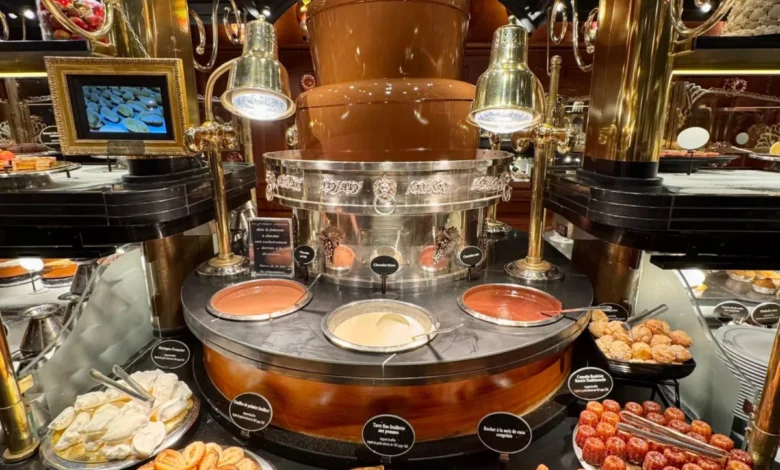
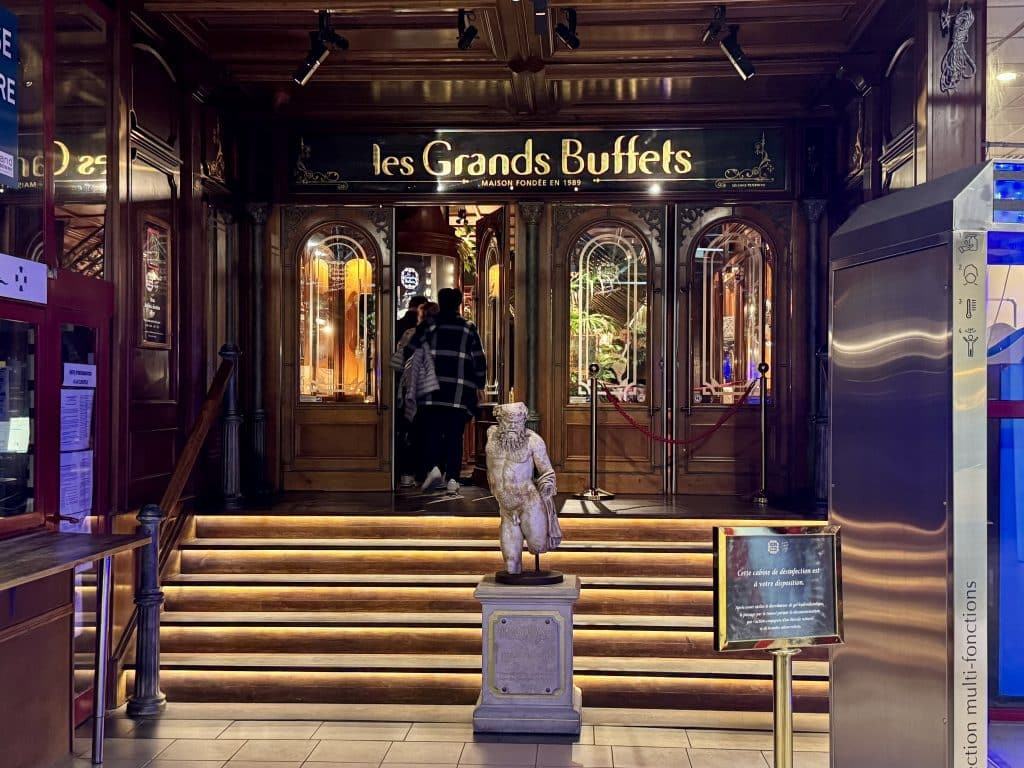
Les Grands Buffets, situated in the historic city of Narbonne in Southern France, has established itself as one of the most significant culinary destinations in Europe, offering an unprecedented "all-you-can-eat" experience that prioritizes high-end French gastronomy. Founded in 1989 by restaurateur Louis Privat and his wife Jane Privat, the establishment was originally conceived as a cafeteria for the Espace Liberté sports complex. However, over the following decades, it evolved into a world-renowned temple of traditional French cuisine, attracting approximately 400,000 guests annually. As of 2026, the restaurant maintains a flat-rate pricing model of 65.90 EUR per person, providing access to luxury ingredients including lobster, foie gras, and a Guinness World Record-holding selection of cheeses.
Historical Context and Culinary Philosophy
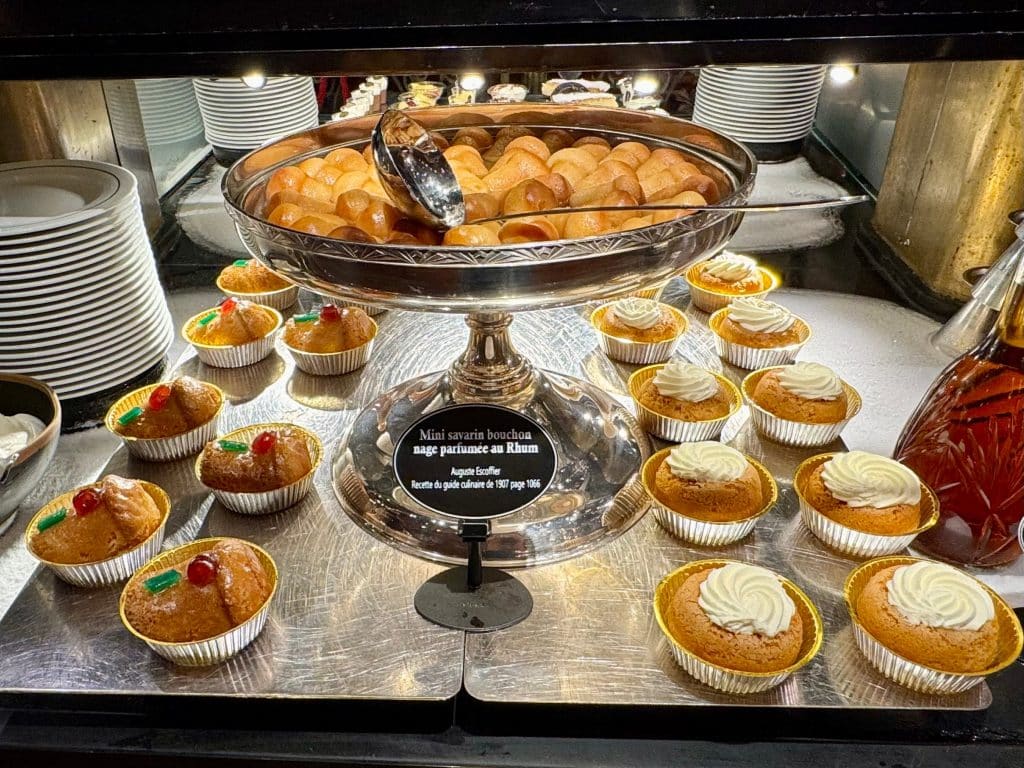
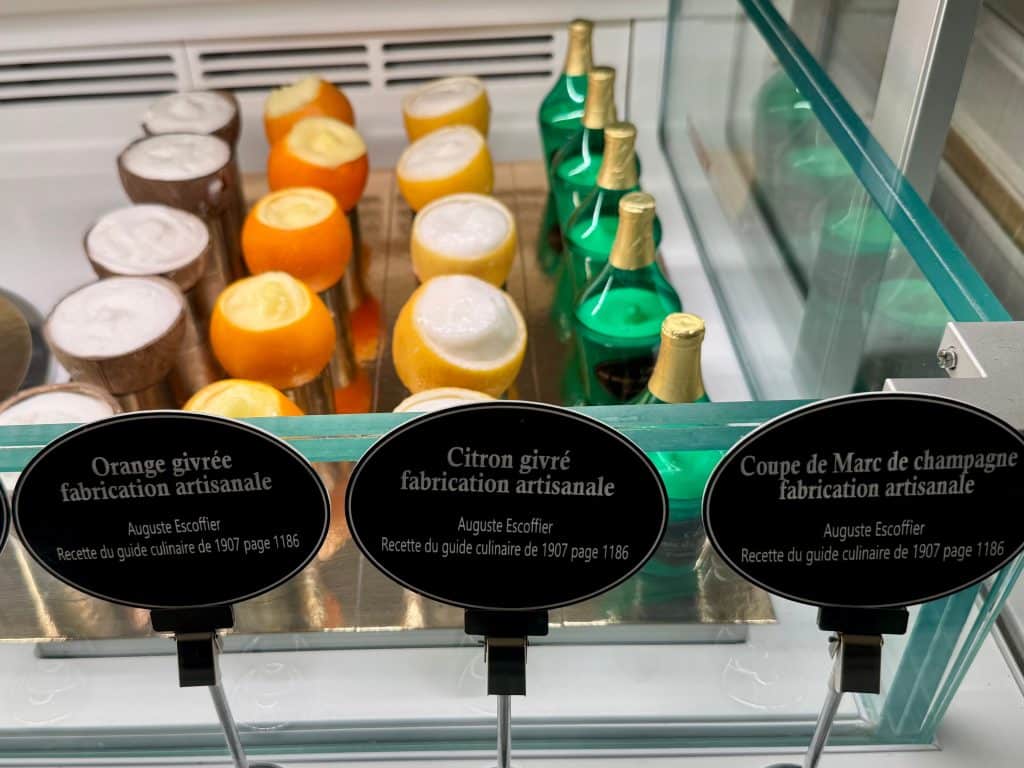
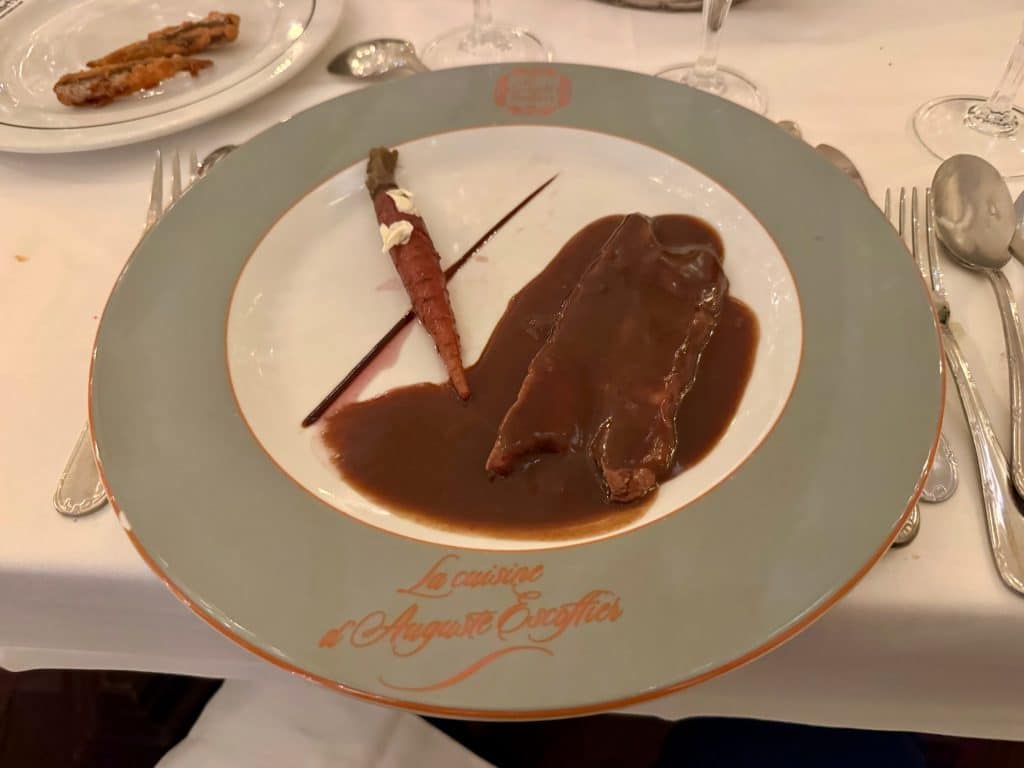
The operational philosophy of Les Grands Buffets is rooted in the preservation of "French service" (service à la française) and the culinary traditions of Auguste Escoffier. Escoffier, the legendary chef who authored Le Guide Culinaire in 1903, is credited with modernizing French cuisine and establishing the professional kitchen brigade system. Louis Privat sought to revive this heritage at a time when traditional bistro dishes—such as tripe, snails, and frog legs—were beginning to disappear from mainstream menus due to high labor costs and shifting culinary trends.
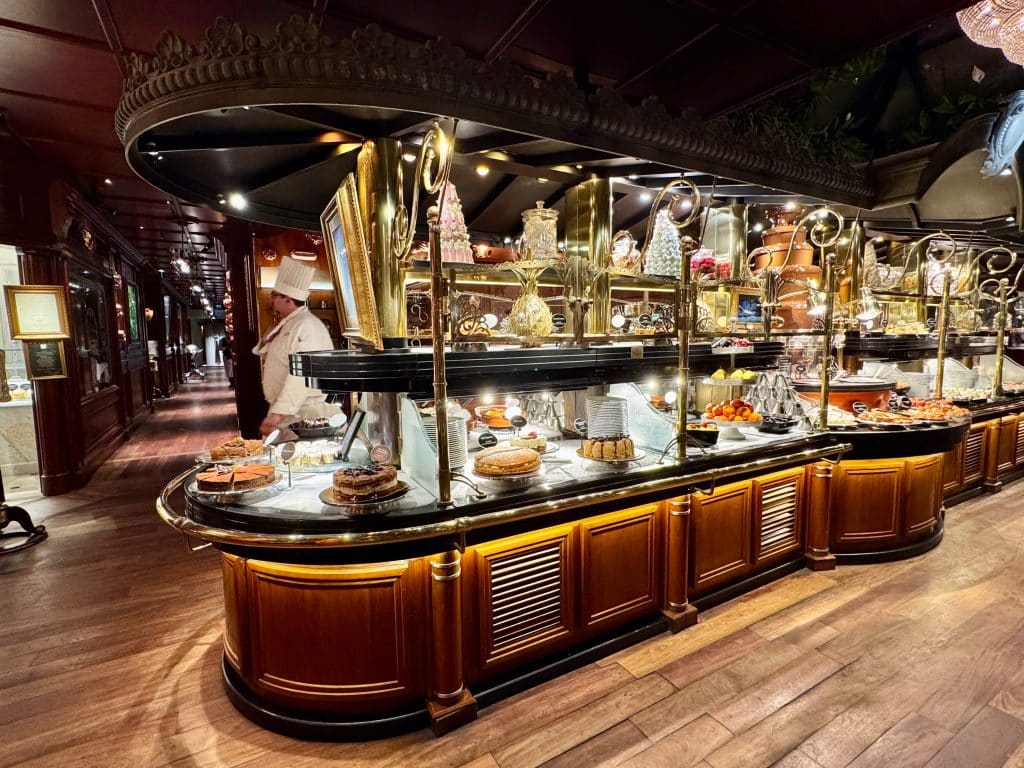
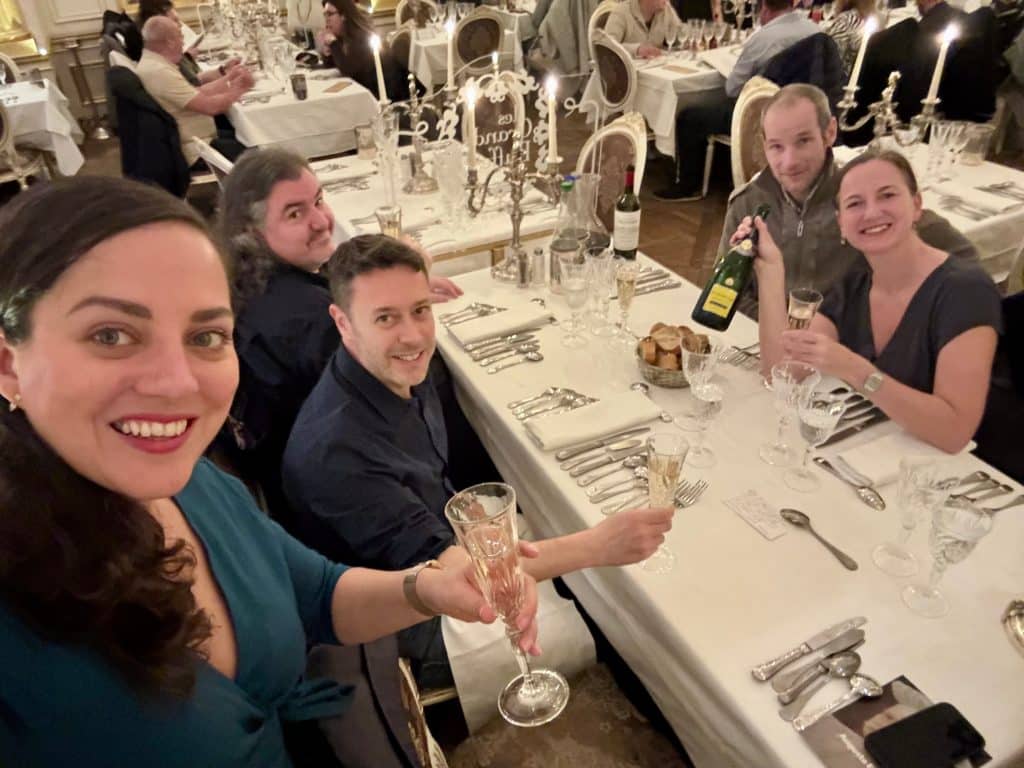
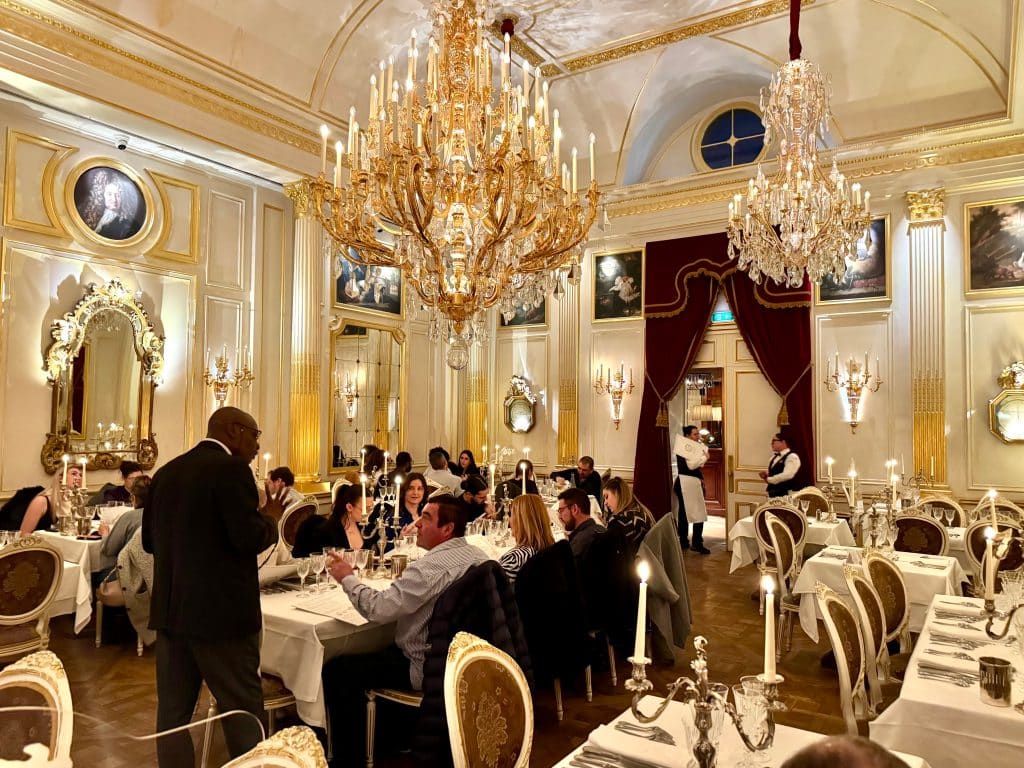
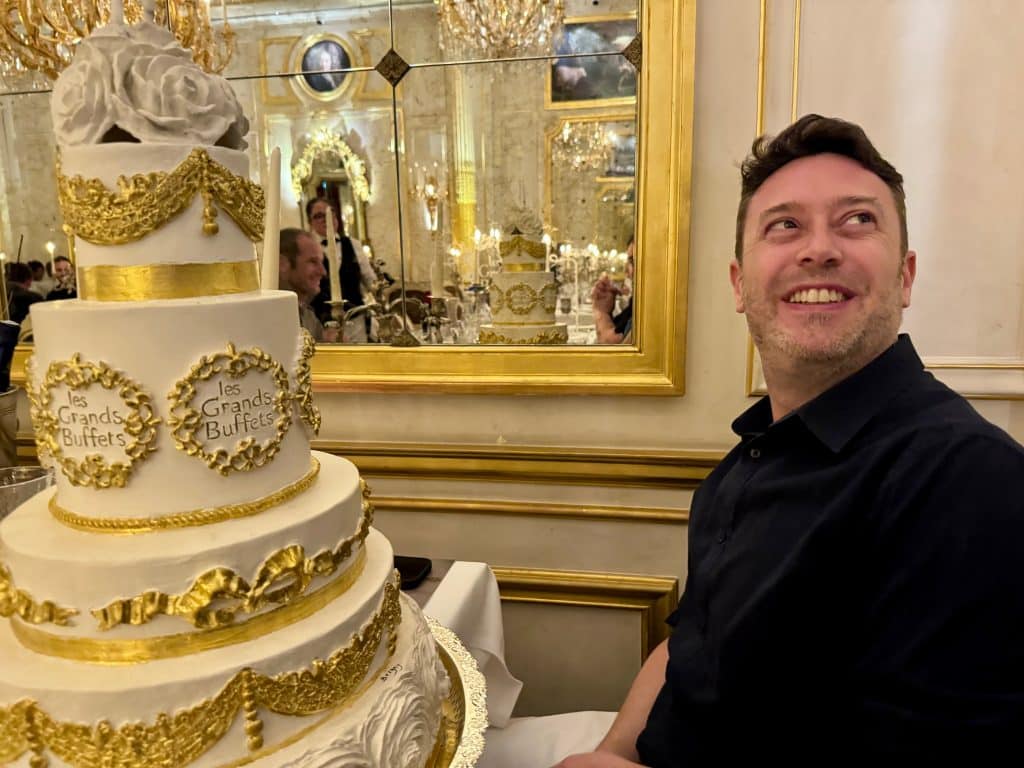
Privat’s vision was to democratize luxury, making elite French dishes accessible to a broader audience without compromising on quality or tradition. By operating 365 days a year and focusing on high-volume, high-quality output, the restaurant has managed to sustain a business model that offers items typically reserved for Michelin-starred establishments within a buffet format. The interior design further reflects this commitment to tradition, featuring ornate dining rooms like the Salon Doré, a Baroque-inspired hall adorned with gold leaf, white columns, and crystal chandeliers.
The Gastronomic Framework: Food Stations and Specialty Dishes
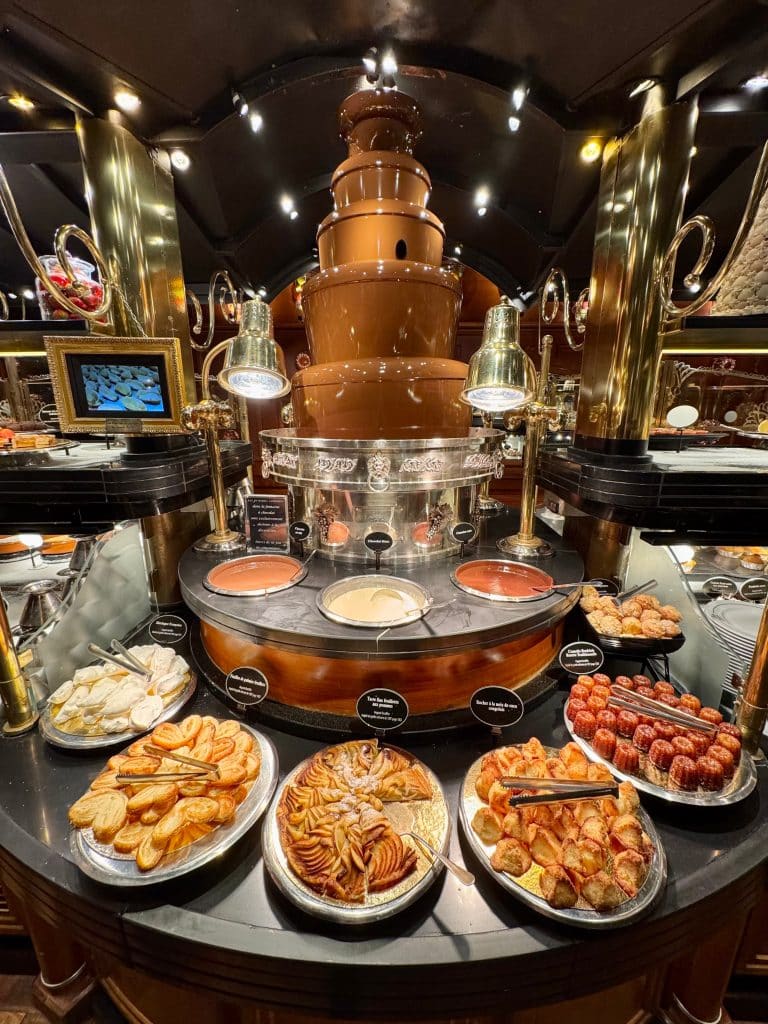
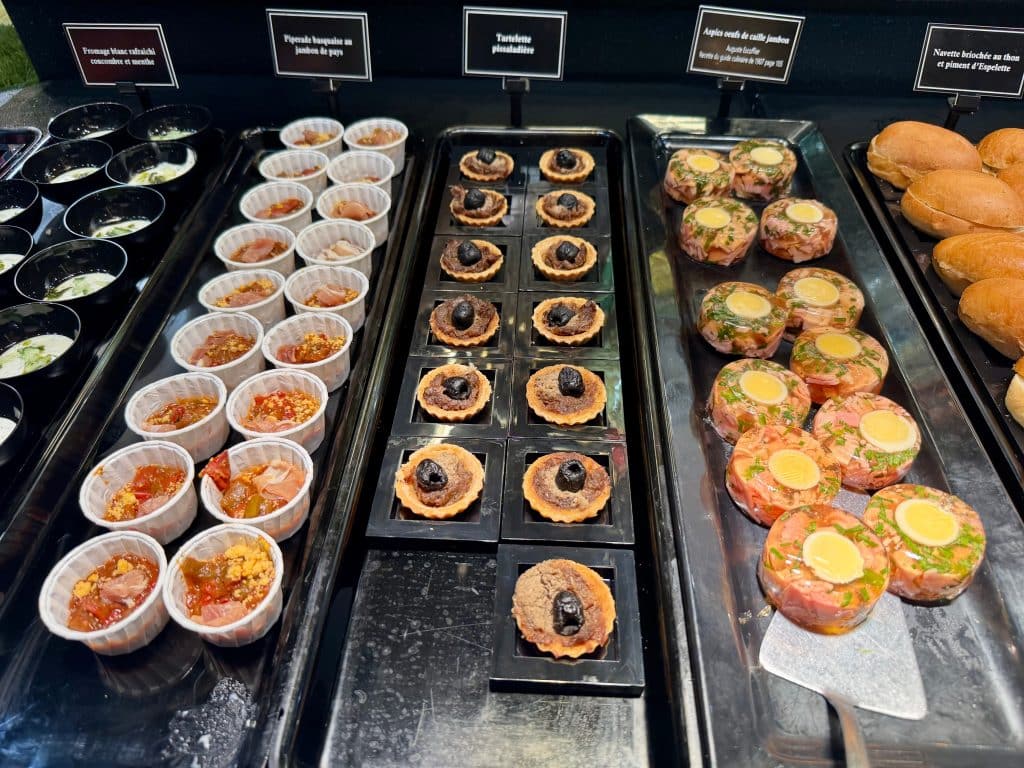
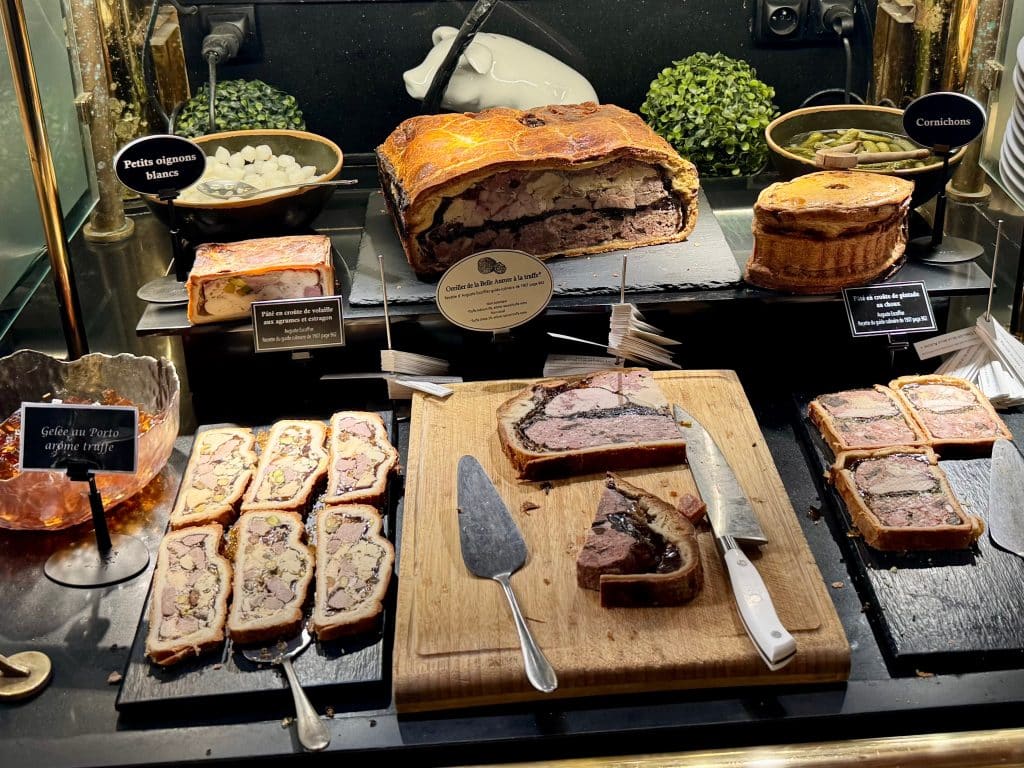
The culinary offerings at Les Grands Buffets are organized into distinct stations, each managed by specialized staff to ensure the integrity of the dishes. Unlike typical international buffets, the focus here remains strictly on the French repertoire.
The Seafood and Foie Gras Collections
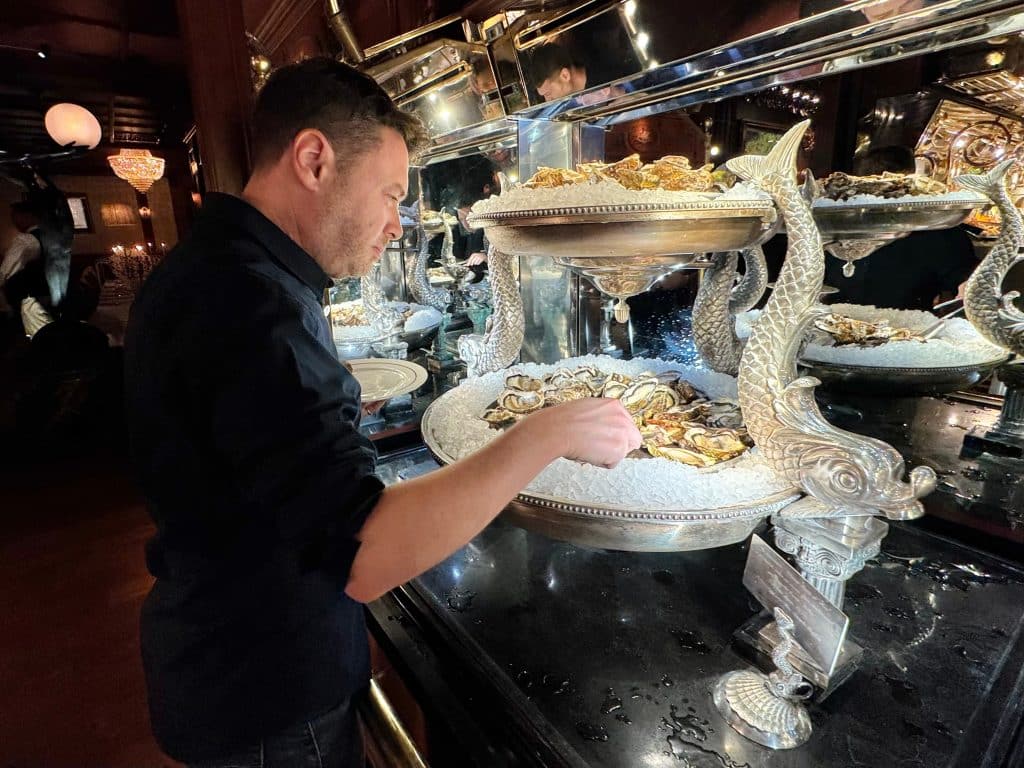
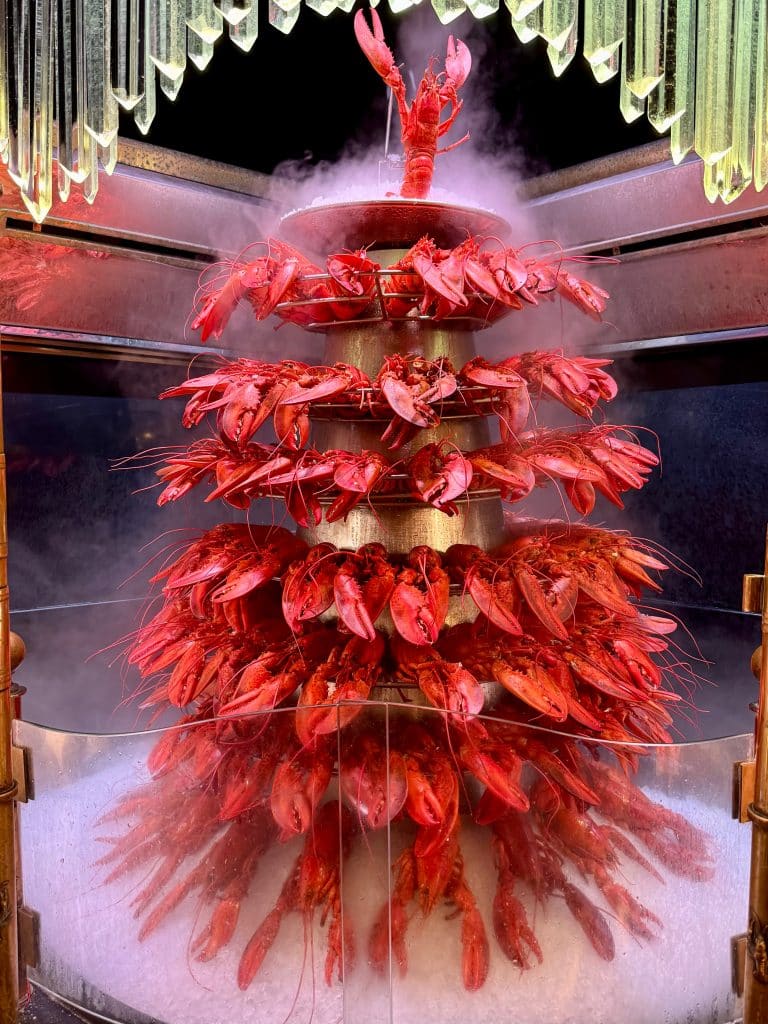
The seafood station serves as a primary draw for international visitors, anchored by a massive "lobster fountain" that provides a constant supply of both cold and warm Atlantic lobster. The selection includes Étang de Thau oysters, snow crab legs, brown crab, and various smoked fish such as salmon, herring, and mackerel.
Adjacent to the seafood is the foie gras buffet, which represents one of the most expensive sections of the restaurant to maintain. The station offers numerous variations of the delicacy, including duck foie gras with Armagnac, truffle-infused foie gras, and the highly acclaimed "foie brûlée"—a savory-sweet hybrid topped with a caramelized sugar crust.
The Rotisserie and the "Canard au Sang"
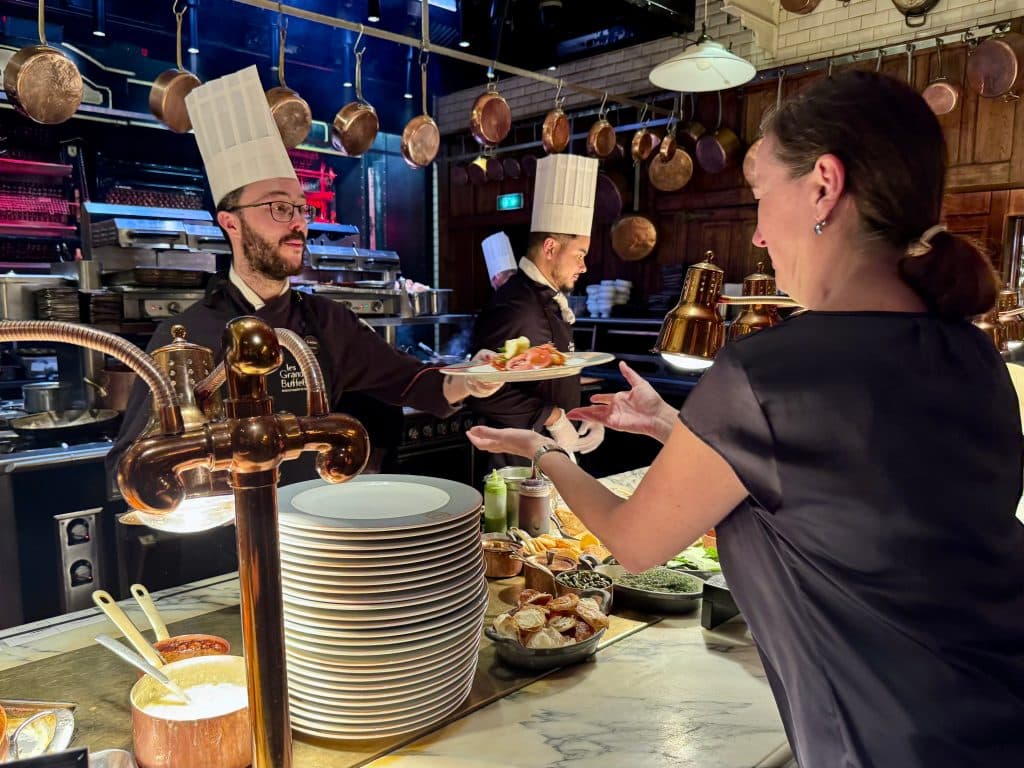
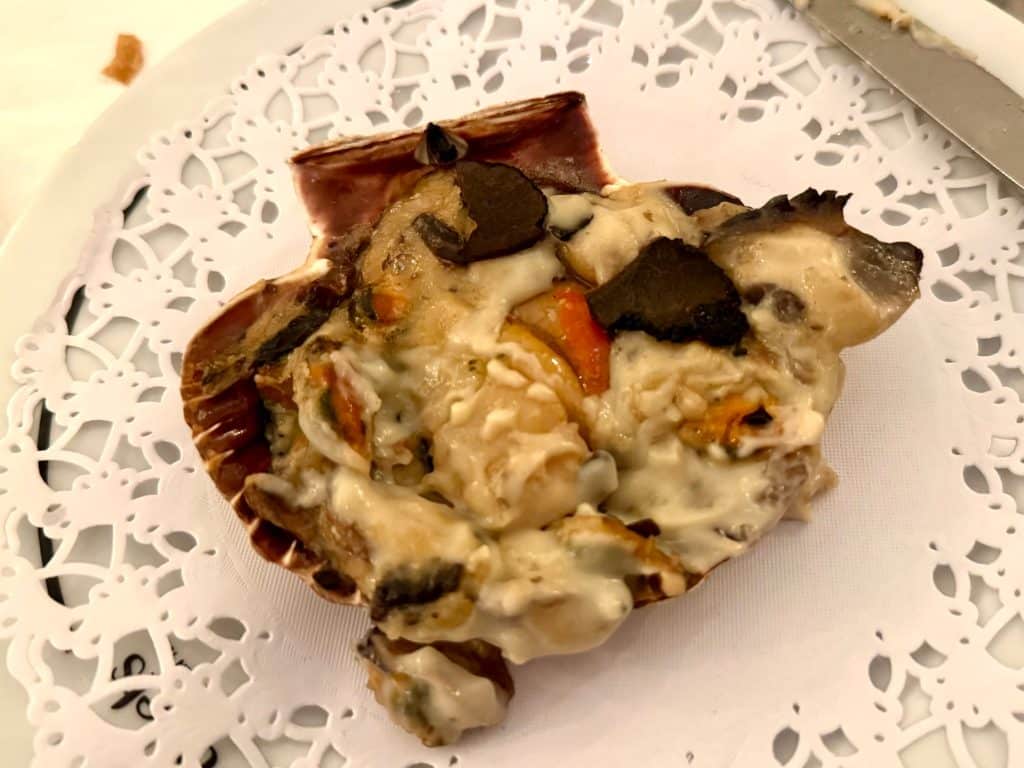
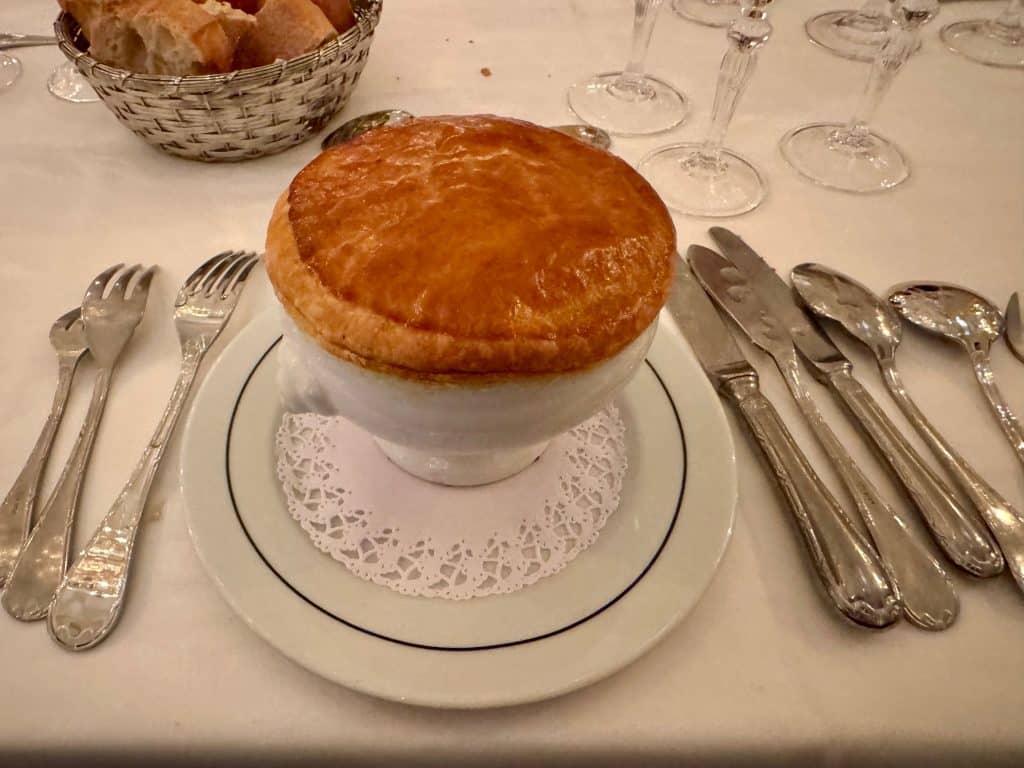
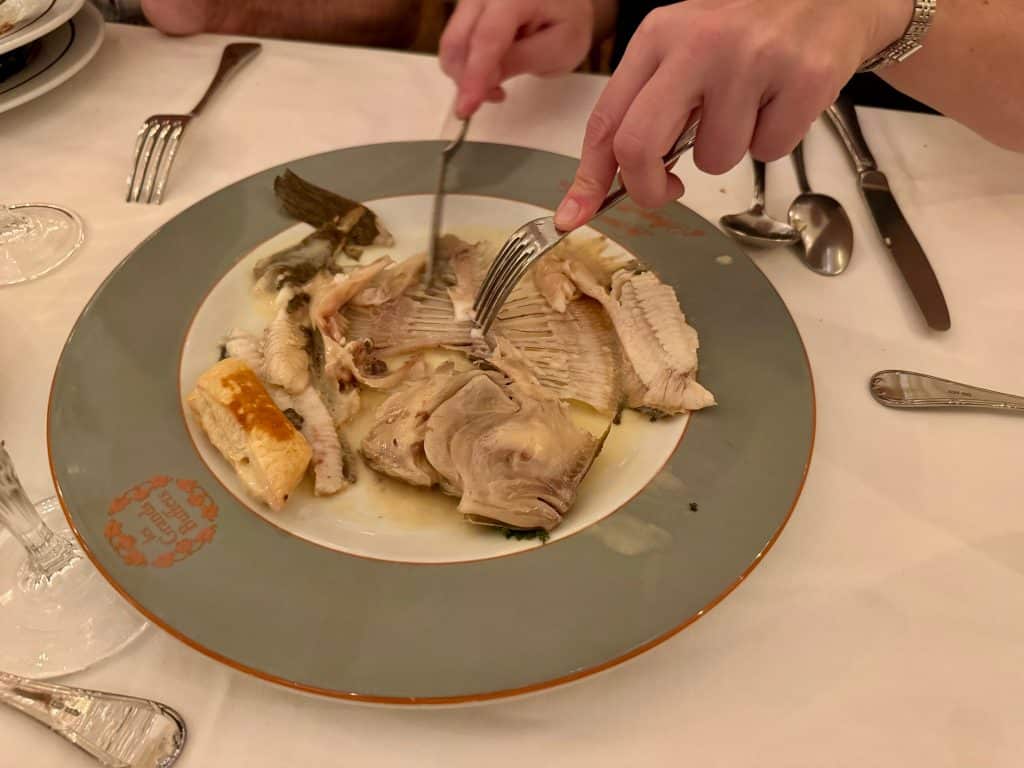
The rotisserie section functions as a live-cooking theater where chefs prepare classic entrees to order. This includes sweetbreads vol-au-vent, turbot in beurre blanc, and various gratinated shellfish.
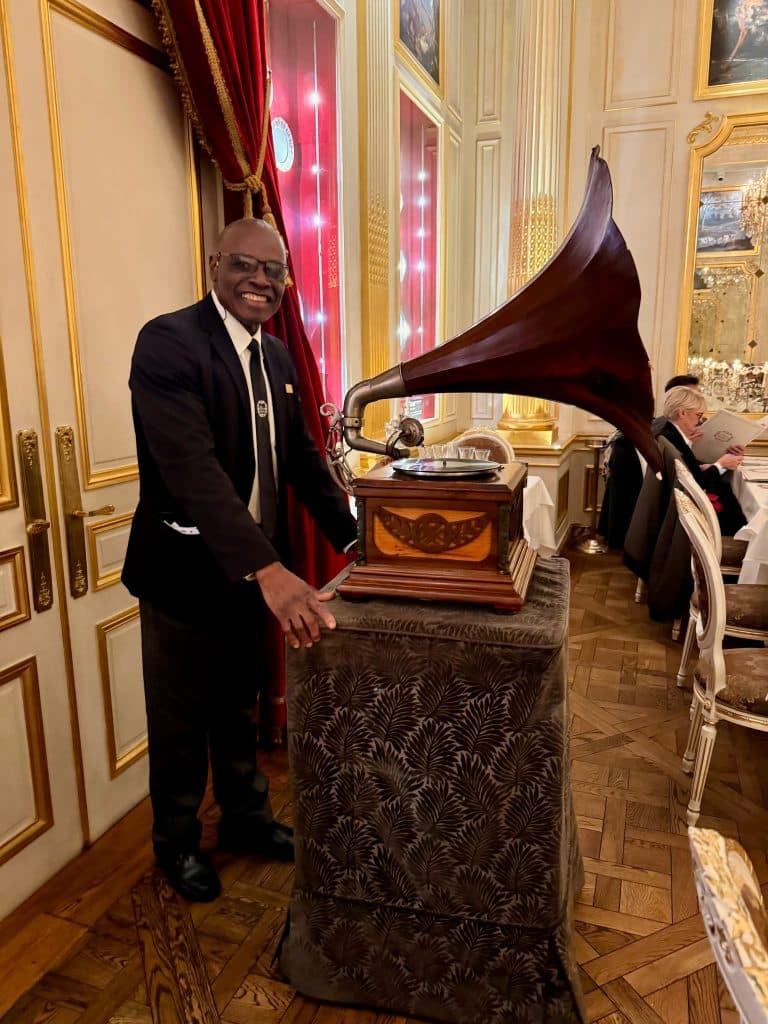
A centerpiece of the hot food section is the canard au sang (pressed duck) station. Les Grands Buffets is currently the only restaurant in France to serve this rare dish at every service. The process involves a theatrical ceremony using a silver duck press. Notably, the restaurant’s press was acquired in 2016 for 40,000 EUR at an auction of items from the legendary Paris restaurant La Tour d’Argent. During the service, the carcass of a roasted duck is pressed to extract its juices, which are then used to create a rich blood sauce flambéed in front of the guests, often accompanied by the dramatic music of Wagner’s "Ride of the Valkyries."
World Record Cheese Selection
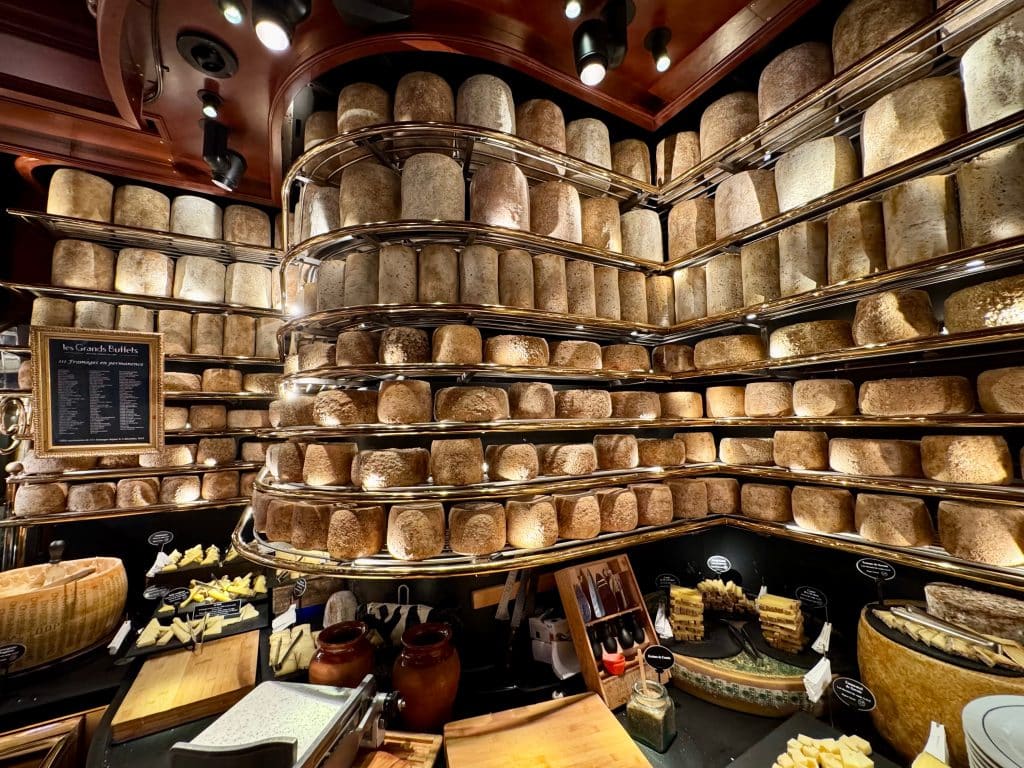
In 2021, Les Grands Buffets was officially recognized by the Guinness World Records for having the largest cheese selection in a restaurant. The display features 111 varieties of cheese, curated by a team of experts. The selection spans the geographical diversity of France and Europe, including a locally produced Brie stuffed with black truffles, various blue cheeses, aged hard cheeses, and the Swiss Tête de Moine, which is served in delicate shaved spirals.
The Economic Model and Pricing Strategy
The success of Les Grands Buffets is largely attributed to its unique economic approach to fine dining. While the food is offered at a flat rate, the restaurant generates additional revenue through its wine program. However, in a departure from standard industry practices, wine is sold at "producer prices," meaning the cost at the table is roughly equivalent to what a consumer would pay at the winery itself.
Data from 2026 indicates the following price structure:
- Adult Buffet Rate: 65.90 EUR (subject to annual adjustments based on inflation and ingredient costs).
- Wine Policy: Patrons can purchase bottles such as Champagne Monopole for approximately 25 EUR, significantly lower than the standard 300-400% markup found in most European restaurants.
- Take-Home Wine: The restaurant allows guests to purchase the wines they enjoyed during their meal to take home, provided they buy a minimum of six bottles, sold at the original producer’s price.
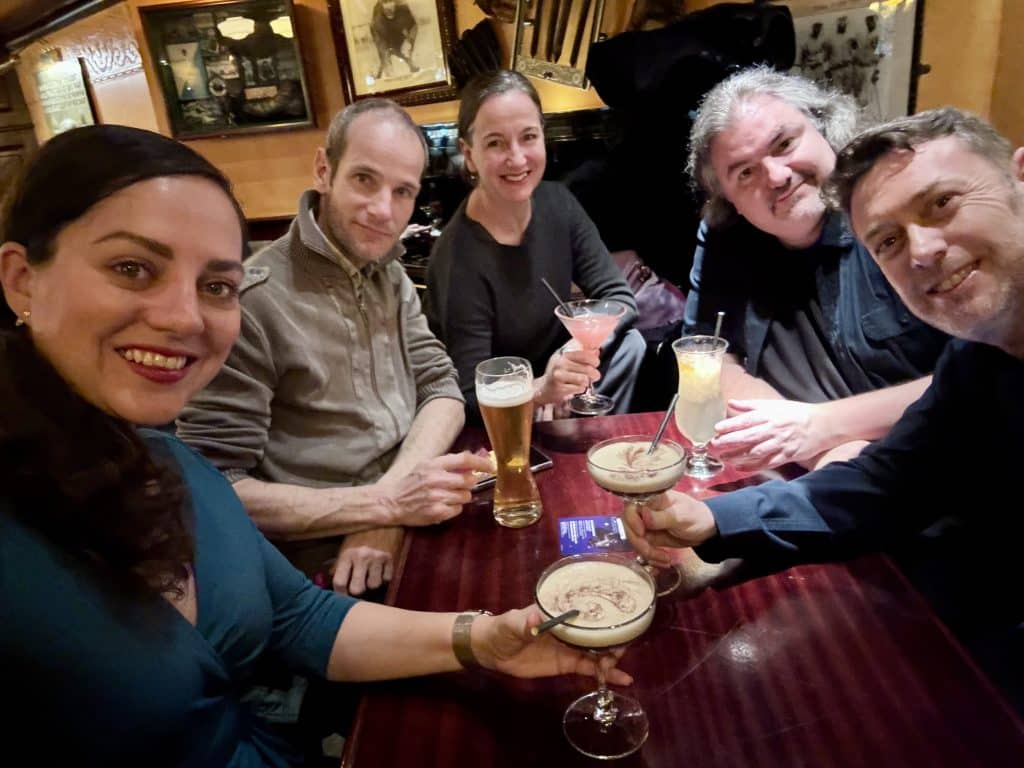
This "high-volume, low-margin" strategy on beverages encourages longer dining times—often exceeding four hours—and fosters a celebratory atmosphere that drives repeat business.
Operational Logistics and Global Demand
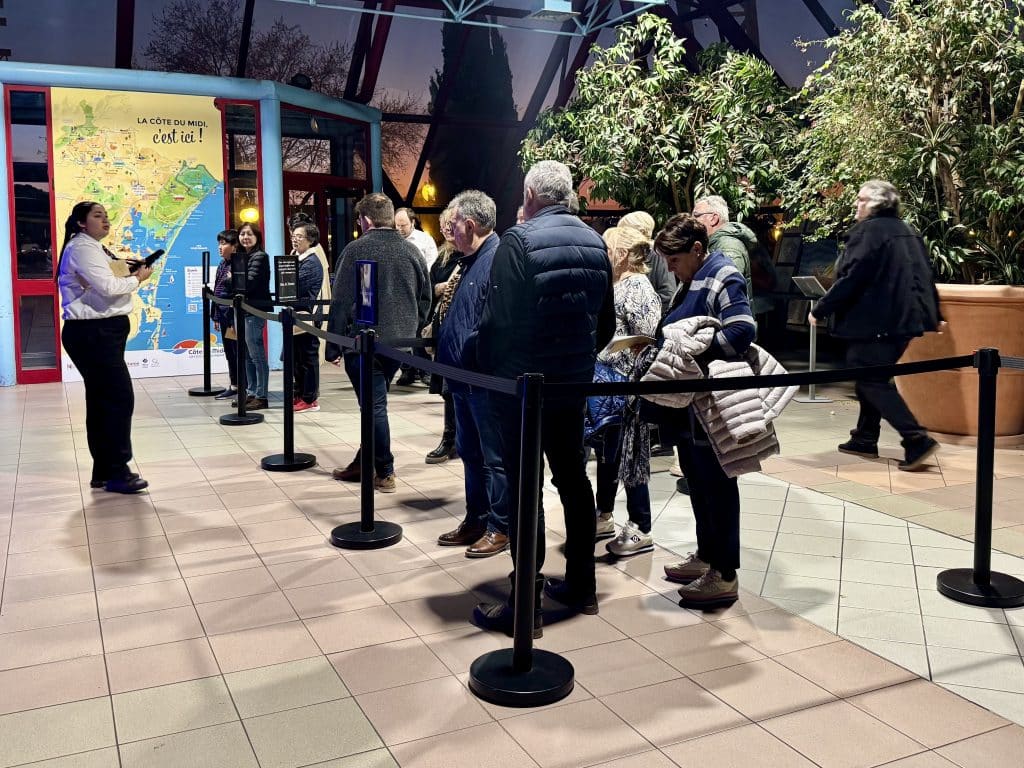
Securing a reservation at Les Grands Buffets is a complex process due to the extreme demand. The restaurant typically releases booking slots several months in advance, and weekend availability is often exhausted within minutes of release.
The Reservation System
The establishment utilizes a tiered reservation system where guests must choose specific dining environments:
- Salle à Manger Max le Verrier: A traditional wood-filled indoor space.
- Salon Doré Jean de la Fontaine: An ornate Baroque-style gold room.
- Tente d’Apparat: An elegant curtained indoor hall.
- Jardin Hervé di Rosa: An outdoor terrace available during favorable weather.
To mitigate the financial impact of no-shows, the restaurant implements a strict policy, including a 50 EUR per person charge for missed reservations. Guests are often required to pay a non-refundable deposit or purchase "reservation insurance" to allow for last-minute changes.
Dress Code and Etiquette
To maintain the atmosphere of a traditional French dining hall, a strict dress code is enforced. Sportswear, including jerseys, gym shorts, and flip-flops, is prohibited. The restaurant also positions itself as an adult-centric gastronomic experience; while children are permitted, they are charged the full adult price, and the establishment explicitly warns that the three-to-four-hour meal duration may not be suitable for younger guests.
Regional Impact and Accessibility
Narbonne’s economy has significantly benefited from the "Les Grands Buffets effect." The restaurant has transformed the city into a major stop on the European culinary circuit. Located in the Occitanie region, Narbonne is strategically positioned on the high-speed rail network connecting France and Spain.
Travel Times to Narbonne by Direct Train:
- From Montpellier: 45 minutes
- From Toulouse: 1 hour 15 minutes
- From Barcelona: 2 hours
- From Marseille: 2 hours 15 minutes
- From Paris: 4 hours 30 minutes
This connectivity allows tourists to integrate a visit to the buffet into broader regional itineraries that include the medieval fortress of Carcassonne, the beaches of the Costa Brava, or the pink-hued architecture of Toulouse. Local hospitality data suggests that a significant percentage of hotel bookings in Narbonne are directly tied to restaurant reservations, prompting the growth of boutique accommodations such as the Maison du Cloitre Couvent des Carmes.
Analysis of Implications for the Culinary Industry
The longevity and popularity of Les Grands Buffets present a counter-narrative to the idea that fine dining must be exclusive and portion-controlled. By combining the "all-you-can-eat" model with high-level culinary craftsmanship, Louis Privat has proven that there is a massive market for traditional heritage dishes when they are presented with transparency and value.
Furthermore, the restaurant serves as a vital repository for French culinary techniques. The presence of a full-time staff dedicated to carving hams, pressing ducks, and maintaining a 111-cheese cellar ensures that these artisanal skills are passed down to new generations of hospitality professionals. In an era where many restaurants are simplifying menus to cope with labor shortages, Les Grands Buffets stands as a defiant bastion of complexity and abundance.
As the restaurant moves through 2026, it remains a case study in successful niche marketing. It manages to appeal to both the "foodie" traveler seeking rare delicacies and the local French family celebrating a milestone, all while maintaining a price point that, despite annual increases, continues to be viewed as one of the best values in the global gastronomic market. For Narbonne and the wider Languedoc region, Les Grands Buffets is more than a restaurant; it is a primary engine of tourism and a living museum of French identity.
Related posts: