Google Hotels Enhances Search Capabilities with Individual Property Price Tracking and Real Time Alerts

The global travel landscape has witnessed a significant shift in digital search capabilities as Google officially expands its travel suite to include individual property price tracking within its Google Hotels platform. This update, announced on Friday, allows users to monitor specific hotels and resorts for price fluctuations, marking a major departure from the platform’s previous limitations where price tracking was only available at a broad, city-wide level. By integrating this feature, Google aims to replicate the success of Google Flights, a tool that has become a fundamental resource for budget-conscious travelers looking to optimize their booking windows.
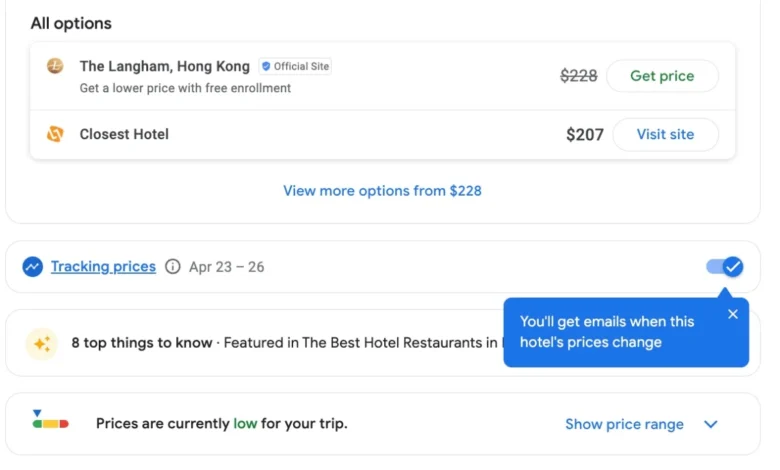
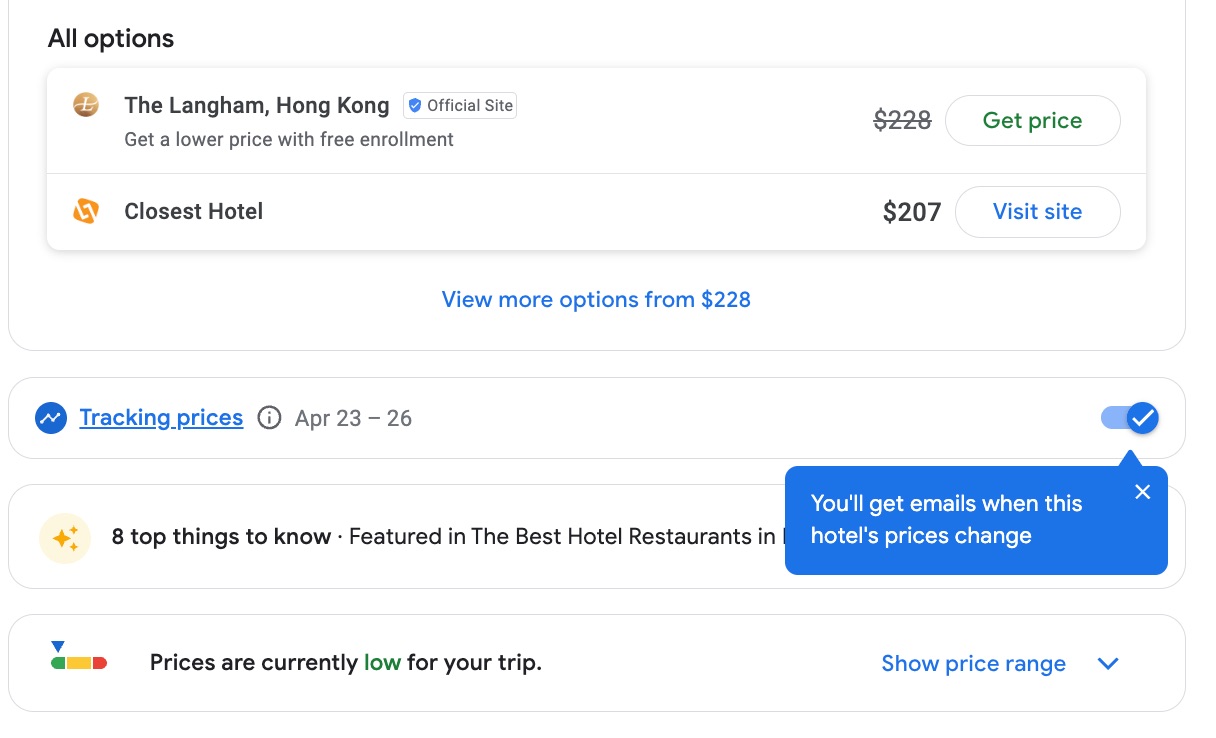
The introduction of property-specific alerts represents a pivotal moment in the evolution of Google’s travel ecosystem. For years, Google Flights has utilized a robust notification system to inform users when airfare for a specific route decreases. Now, that same technology is being applied to the hospitality sector, allowing travelers to toggle a tracking switch for tens of thousands of individual properties worldwide. Once activated, the system monitors rates across various booking channels and sends an automated email notification to the user when a "significant" price drop is detected. This functionality is designed to assist not only in initial bookings but also in the increasingly popular strategy of rebooking existing reservations to capture lower rates.
The Evolution of Google’s Travel Search Ecosystem
To understand the impact of this update, it is necessary to examine the chronology of Google’s entry into the travel sector. Google’s journey began in earnest with the acquisition of ITA Software in 2011, which provided the foundational data for what would become Google Flights. Over the subsequent decade, Google transformed from a simple search engine into a comprehensive travel agency aggregator.
In early 2023, Google Hotels introduced its first iteration of price tracking. However, this initial version was restricted to city-level data. A traveler could track "Hotels in Paris" for specific dates, but they could not narrow that focus to a specific boutique hotel in the Marais district or a luxury property near the Louvre. This limitation meant that users were often bombarded with notifications for hotels they had no intention of booking, while missing out on specific deals for their preferred accommodations.
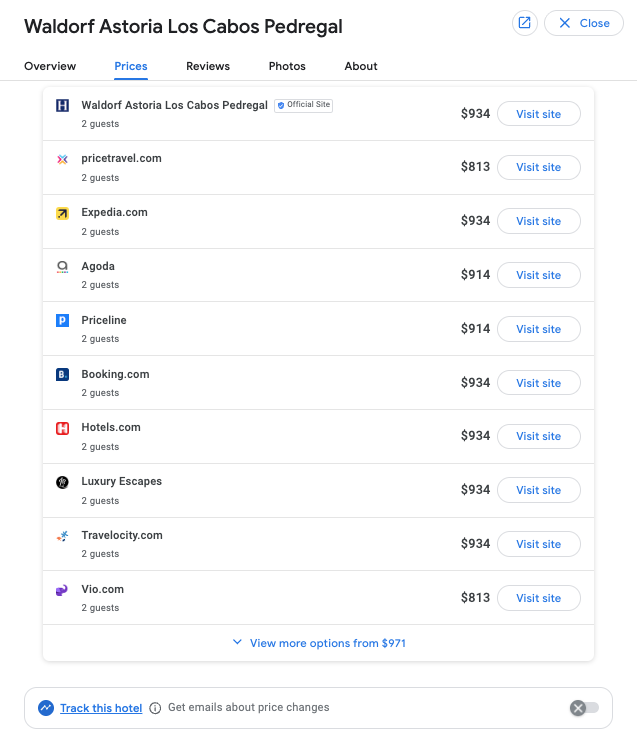
The update rolled out this week addresses this gap directly. By allowing users to search for a property by name—such as The Langham in Hong Kong or the Waldorf Astoria Los Cabos Pedregal—and enabling a dedicated alert, Google has moved into direct competition with specialized price-tracking apps like Hopper or Kayak. This shift reflects a broader industry trend where search engines are increasingly moving toward personalized, granular data delivery.
Technical Implementation and User Experience
The process for utilizing the new price tracking feature is integrated directly into the existing Google search interface. When a user navigates to google.com/hotels on a desktop or mobile device and selects a specific property, a new toggle option appears within the pricing module. By switching this toggle to the "on" position, the property is added to the user’s personal tracking list.
There are, however, specific requirements for the service to function. Users must be logged into a Google account to save their preferences and receive email alerts. The alerts themselves are triggered by what Google describes as "significant" price changes. While the company has not publicly defined the exact percentage or dollar amount that constitutes a significant change, industry analysts suggest that the algorithm likely accounts for historical price volatility and seasonal trends to avoid spamming users with minor, daily fluctuations.
One of the most notable aspects of this rollout is the breadth of properties covered. Because Google aggregates data from a vast array of sources, the tracking feature is available for everything from high-end luxury resorts to independent bed-and-breakfasts. This universality gives Google a distinct advantage over individual hotel brand apps, which only track their own inventory.
The Challenge of Data Aggregation: Direct vs. Third-Party Rates
Despite the technological advancement, the new feature introduces a layer of complexity regarding where the pricing data originates. Google Hotels functions as a meta-search engine, pulling rates from both direct hotel websites (such as Hilton.com or Marriott.com) and Online Travel Agencies (OTAs) like Expedia, Booking.com, and smaller, less-known third-party vendors.
This lack of source filtering presents a challenge for "savvy" travelers who prioritize direct bookings. There are several reasons why experienced travelers often avoid OTAs, including:
- Loyalty Programs: Most major hotel chains do not award loyalty points or recognize elite status (such as room upgrades or free breakfast) for bookings made through third-party sites.
- Cancellation Policies: Direct bookings often offer more flexible cancellation or modification terms. When a booking is made through an OTA, the hotel’s front desk is often unable to assist with changes, forcing the traveler to deal with third-party customer service.
- Best Rate Guarantees: Many hotel brands promise the lowest price on their own websites and will match or beat lower prices found elsewhere, provided they are legitimate.
The current iteration of Google’s price tracking does not allow users to filter alerts based on the booking source. Consequently, a user might receive an alert that the price of a hotel has dropped, only to find that the lower rate is offered by a "sketchy" OTA that they would not be comfortable using. However, there is a strategic silver lining: price parity. In the hospitality industry, many OTAs mirror the rates set by the hotels themselves. A price drop on a site like Priceline or Agoda often signals that the hotel has lowered its base rate across all platforms, including its own direct site.
Market Analysis and Industry Implications
The expansion of Google’s hotel tracking capabilities has significant implications for the broader travel industry. By keeping users within its own ecosystem for the duration of the "dreaming" and "planning" phases of travel, Google reduces the traffic that would otherwise flow directly to OTAs or hotel brand websites.
From a competitive standpoint, this move puts pressure on companies like Expedia Group and Booking Holdings. These companies spend billions of dollars annually on Google advertising to ensure their links appear at the top of search results. As Google provides more utility directly within its search results—such as price history and alerts—the necessity for users to visit multiple OTA sites decreases.
Furthermore, the feature aligns with the growing consumer trend of "rebooking." With the rise of flexible cancellation policies post-2020, travelers have become more adept at booking a refundable room and then monitoring the price until the date of stay. If the price drops, they cancel the original reservation and rebook at the lower rate. Google’s new tool automates this labor-intensive process, potentially leading to lower average daily rates (ADR) for hotels as more guests take advantage of price fluctuations.
Official Safeguards and Data Accuracy
To combat concerns regarding the reliability of third-party pricing, Google has stated that it employs both automated and manual safeguards. These measures are designed to ensure that the prices displayed—and the alerts sent—are accurate and not "bait-and-switch" tactics used by less reputable booking sites.
In instances where a third-party site consistently provides inaccurate data or fails to honor the advertised price, Google has the authority to remove that provider from its search results. This layer of oversight provides a level of security for users, ensuring that when they receive an email alert for a "significant" drop, the price is likely to be valid upon clicking through to the booking page.
Future Outlook: AI and Predictive Analytics
As Google continues to refine its hotel search tool, the next logical step is the integration of predictive analytics, similar to the "Price Guarantee" or "Price Prediction" features found in Google Flights. Predictive AI could potentially inform a traveler not just that the price has dropped, but whether it is likely to drop further or if it is currently at its historical low.
For now, the full rollout of property-specific price tracking remains a major win for the consumer. While the inability to filter by booking source is a notable drawback for loyalty-program members, the tool provides a level of transparency and automation that was previously unavailable in the hotel sector. As travelers prepare for the busy summer and winter seasons, the ability to monitor specific properties in real-time is expected to become a standard part of the modern travel-planning toolkit.
The broader impact of this update will likely be seen in how hotels manage their revenue. With more consumers alerted to price drops instantly, hotels may need to be more strategic with their dynamic pricing models to avoid a mass influx of cancellations and rebookings. Nevertheless, for the end-user, Google Hotels has solidified its position as an essential platform for securing the best possible value in a volatile travel market.