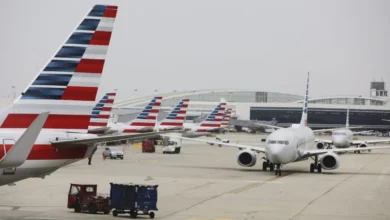
American Airlines Rejects United Merger Proposal, Igniting Industry Consolidation Speculation

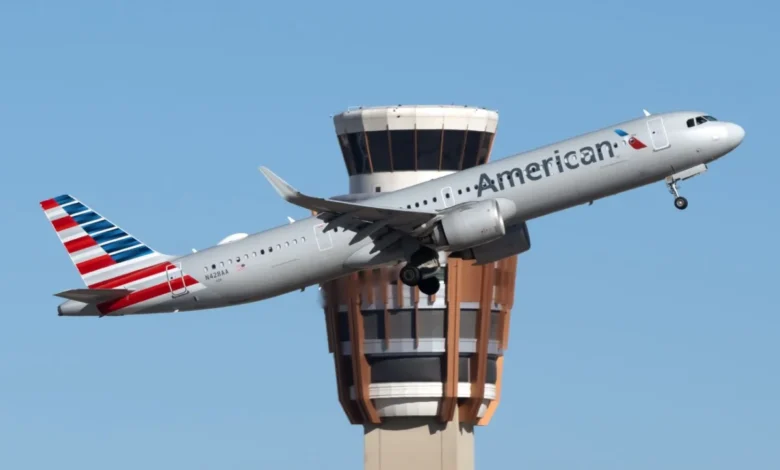
American Airlines has unequivocally rejected a merger proposal from United Airlines, a move that became public after United CEO Scott Kirby reportedly pitched the concept to senior government officials. The swift dismissal by American Airlines signals a significant development in the highly consolidated U.S. airline industry, highlighting the ongoing strategic considerations among carriers regarding scale, competition, and future growth amidst evolving economic and regulatory landscapes. American Airlines, in a definitive statement issued on Friday, declared, “American Airlines is not engaged with or interested in any discussions regarding a merger with United Airlines.” The statement further acknowledged that “changes in the broader airline marketplace may be necessary,” but explicitly ruled out a combination with United, underscoring the complexities and deeply entrenched competitive dynamics that characterize the sector.
A Decade of Consolidation: The Backdrop to a Bold Proposal
The U.S. airline industry has undergone a dramatic transformation over the past two decades, largely driven by a series of mega-mergers that have reshaped the competitive landscape. This period of consolidation began in earnest in the mid-2000s, catalyzed by factors such as fluctuating fuel prices, economic downturns, and the pursuit of operational efficiencies and expanded route networks. Key mergers include the 2008 combination of Delta Air Lines and Northwest Airlines, which created the world’s largest airline at the time. This was followed by United Airlines’ merger with Continental Airlines in 2010, establishing another dominant player. Southwest Airlines acquired AirTran Airways in 2011, expanding its reach beyond its traditional point-to-point model. The most recent major consolidation involved the merger of American Airlines and US Airways in 2013, a deal that resulted in the formation of the world’s largest airline by passenger miles.
These mergers fundamentally altered the industry structure, reducing the number of major legacy carriers from six to four: American, Delta, United, and Southwest. Proponents of consolidation argued that it led to greater financial stability for airlines, allowing them to invest in new aircraft, technology, and improve service quality. They also cited the ability to rationalize overlapping routes, achieve economies of scale, and better manage capacity. However, critics, including consumer advocates and some policymakers, raised concerns about reduced competition, potentially leading to higher fares, fewer choices, and diminished service for passengers. The Department of Justice (DOJ) has historically played a critical role in reviewing these mergers, often imposing conditions or even challenging deals to preserve competition. The American-US Airways merger, for instance, faced a DOJ lawsuit before a settlement allowed it to proceed with significant divestitures of slots at key airports.
The Proposal and Its Immediate Rejection: A Brief Chronology
The idea of a United-American merger, which would represent the most consequential airline deal in a decade, first surfaced publicly in the days leading up to American’s formal rejection. Reports indicated that United CEO Scott Kirby had approached senior government officials, including those within the Department of Transportation (DOT) and potentially the Department of Justice (DOJ), to discuss the potential for a merger with American Airlines. This outreach, typically a preliminary step in gauging regulatory appetite for such a significant transaction, suggests United was actively exploring strategic options to enhance its market position.
While the exact timing and specific details of Kirby’s conversations remain undisclosed, the fact that such a high-stakes proposition was floated to federal authorities underscores United’s strategic ambitions. For United, a merger with American could offer unparalleled scale, an expanded global network, and significant synergies in operations, purchasing, and potentially even technology. It could also provide a defensive measure against future competitive pressures or a proactive move to secure a dominant position in a market still recovering from the pandemic’s disruptions and grappling with rising operational costs.
American Airlines’ response, however, was swift and decisive. Their statement, issued on Friday, left no room for ambiguity. By stating they are "not engaged with or interested in any discussions," American effectively shut down any immediate prospects for such a combination. The phrasing, particularly the acknowledgement that "changes in the broader airline marketplace may be necessary," hints at American’s recognition of industry challenges but suggests their preferred solutions do not involve a direct merger with United. This could imply a focus on internal optimization, organic growth, or perhaps a different form of strategic partnership or consolidation that they deem more advantageous or less problematic from a regulatory standpoint. The speed of American’s rejection also suggests that the proposal, if formally made to them, was either deemed unfeasible, undesirable, or strategically misaligned with their current corporate objectives.
The Industry Landscape and Supporting Data: A Market in Flux
A merger between United and American would drastically alter the competitive dynamics of the U.S. airline industry. Currently, the "Big Four" airlines — American, Delta, United, and Southwest — collectively control over 80% of the domestic market share. As of recent data, American Airlines typically holds around 17-18% of the domestic market, while United Airlines hovers around 15-16%. Combining these two giants would create an entity controlling roughly 33-35% of the market, rivaling or even surpassing Delta’s approximate 17-18% and dwarfing Southwest’s 16-17%.
Such a combination would lead to significant consolidation of route networks. Both American and United operate extensive hub-and-spoke systems, with major hubs strategically located across the country. American’s key hubs include Dallas/Fort Worth, Charlotte, Chicago O’Hare, Miami, Philadelphia, Phoenix, and Washington D.C. (DCA/IAD). United’s primary hubs are Chicago O’Hare, Denver, Houston Intercontinental, Los Angeles, Newark, San Francisco, and Washington D.C. (Dulles). While there is some overlap, particularly at major international gateways and across transcontinental routes, a merger would also create a truly unparalleled global network, combining American’s strength in Latin America and the Caribbean with United’s robust trans-Pacific and trans-Atlantic operations.
Financially, the airline industry continues to navigate a complex environment. Post-pandemic recovery has been strong in terms of passenger demand, but airlines face persistent challenges including elevated fuel prices, significant labor cost increases due to new union contracts, and ongoing supply chain issues impacting aircraft deliveries and maintenance. While major carriers have largely returned to profitability, their balance sheets still reflect the substantial debt accumulated during the downturn. For United, a merger could be seen as a way to unlock new revenue streams, achieve cost efficiencies through scale, and potentially gain leverage in negotiations with suppliers and labor.
Regulatory Hurdles and Antitrust Concerns: A Formidable Obstacle
The prospect of a United-American merger would undoubtedly face intense scrutiny from the Department of Justice (DOJ) and other regulatory bodies. The current political climate in the U.S. generally favors robust antitrust enforcement, with the Biden administration taking a more aggressive stance against corporate consolidation across various sectors. The DOJ has demonstrated a willingness to challenge airline mergers, as seen in its successful blocking of the proposed JetBlue-Spirit Airlines merger earlier this year, citing concerns about reduced competition and harm to consumers. Even the American-US Airways merger, a decade ago, only proceeded after the DOJ extracted significant concessions, including the divestiture of valuable landing and takeoff slots at major airports.
A merger between American and United would reduce the number of major legacy carriers from four to three, a level of concentration that would almost certainly trigger severe antitrust alarms. The DOJ would analyze several key areas:
- Market Concentration: The combined entity’s market share in both domestic and international markets would be unprecedented, raising concerns about potential monopolies or duopolies on numerous routes.
- Impact on Fares and Service: Regulators would investigate whether reduced competition would lead to higher airfares, fewer flight options, and diminished quality of service for consumers.
- Hub Overlap: While the primary hubs are distinct, there would be significant overlap in destination cities served, potentially eliminating direct competition on hundreds of routes.
- Specialized Markets: The impact on specific market segments, such as business travel or international long-haul routes, would also be scrutinized.
Beyond the DOJ, the Department of Transportation (DOT) would also play a role in reviewing the public interest aspects of such a deal, including potential impacts on service to smaller communities and overall air transportation policy. Furthermore, the political optics of such a massive consolidation, particularly with public sentiment often critical of airline service and pricing, would likely generate considerable congressional and public opposition, making regulatory approval an even steeper uphill battle.
Implications and Analysis: Ripple Effects Across the Industry
The American Airlines rejection of United’s merger overture carries several significant implications for both airlines and the broader industry:
-
For American Airlines: Their swift and firm "no" suggests a strategic clarity and confidence in their current standalone path. It could indicate that American’s leadership believes the integration risks, potential labor strife, and insurmountable regulatory hurdles outweigh any perceived benefits of a merger with United. They may be prioritizing internal operational improvements, debt reduction, or leveraging existing partnerships (like their transatlantic joint venture with British Airways or their codeshare with Alaska Airlines) over a full-blown merger. Their statement also subtly hints at a desire for "changes in the broader airline marketplace," perhaps suggesting a preference for other forms of consolidation that might involve smaller carriers, or simply a wish for a more stable and profitable operating environment without further mega-mergers among the largest players.
-
For United Airlines: Kirby’s proactive approach in pitching the merger to government officials indicates a strong strategic drive within United for significant growth or consolidation. The rejection means United will need to re-evaluate its growth strategy. This could involve exploring other potential merger targets (though limited options remain among major carriers), focusing on organic growth through fleet expansion and network optimization, or deepening existing alliances. It also signals that United might feel competitive pressure or see a window of opportunity for consolidation that American does not.
-
For the Broader Airline Industry: Even a rejected proposal can send ripples through the market. The very idea of a United-American merger, however brief its consideration, forces other airlines to assess their own strategic positions. It could potentially spark renewed discussions about alliances, joint ventures, or even smaller-scale mergers and acquisitions that might be more palatable to regulators. It also underscores the continuous pressure on airlines to find efficiencies and growth in a mature, capital-intensive industry. The involvement of powerful labor unions, representing pilots, flight attendants, and mechanics at both airlines, would have been a colossal challenge in any merger, particularly given the complexities of integrating seniority lists and harmonizing contracts. The current labor environment, with unions having secured significant gains recently, would make such negotiations even more arduous.
-
For Consumers and Investors: For consumers, the immediate impact is negligible as the merger is off the table. However, the underlying discussions highlight the constant tension between airline financial health and consumer interests in competition. For investors, the news could lead to short-term fluctuations, but the definitive rejection removes a significant uncertainty and potential distraction for both companies.
In conclusion, American Airlines’ definitive rejection of a merger proposal from United Airlines underscores the inherent complexities and formidable regulatory obstacles associated with further consolidation among the largest U.S. carriers. While United’s proactive outreach highlights an ongoing strategic imperative for scale and efficiency in the airline industry, American’s swift dismissal signals a differing strategic vision or a pragmatic assessment of the challenges involved. For now, the U.S. airline landscape of four dominant carriers remains intact, though the underlying forces driving consolidation discussions continue to shape the future trajectory of air travel.