Vietnam Airlines Business Class Review: A Deep Dive into the Vegan Dining Experience from Singapore to Seoul

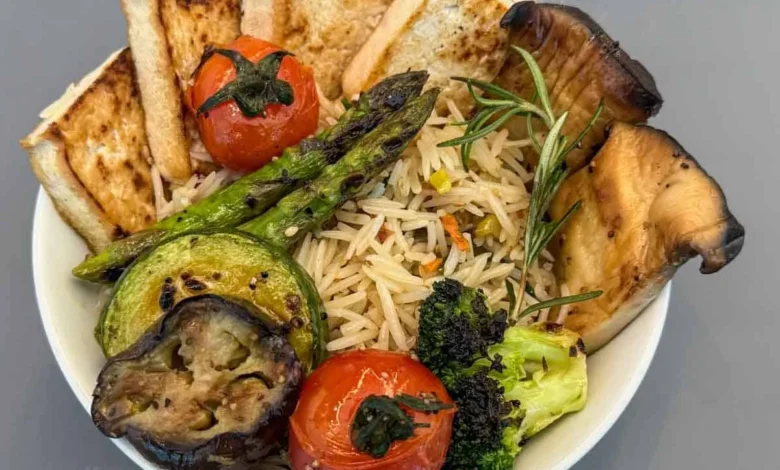
The decision to fly with Vietnam Airlines for a trip to Seoul, with a planned stopover in Ho Chi Minh City on the return journey, presented an opportunity to experience the carrier’s premium cabins for the first time. This review meticulously details the end-to-end business class journey, with a specific focus on the airline’s provision for vegan passengers, or those who opt for the VGML (vegan) special meal. The itinerary involved two distinct flight legs in each direction: a short-haul flight from Singapore to Ho Chi Minh City, followed by a longer flight to Seoul. This meant experiencing different aircraft types and, consequently, varied culinary offerings, particularly for those with dietary restrictions. This comprehensive overview aims to provide an honest assessment of Vietnam Airlines’ business class service, from airport check-in to arrival, and to inform vegan travelers about the airline’s suitability for their dietary needs.
Pre-Flight Preparations and Airport Experience
Departing from Singapore Changi Airport
The journey commenced at Singapore’s Changi Airport, a globally renowned hub for its efficiency and passenger amenities. Utilizing the dedicated business class check-in desks for Vietnam Airlines in Terminal 3, the process was observed to be professional and streamlined. Our luggage was checked through to our final destination in Seoul, and boarding passes for both segments of the journey were issued simultaneously. As Vietnam Airlines does not operate its own exclusive lounge at Changi, passengers are granted access to the SATS Premier Lounge. This was the initial point for assessing available vegan or plant-based food options.
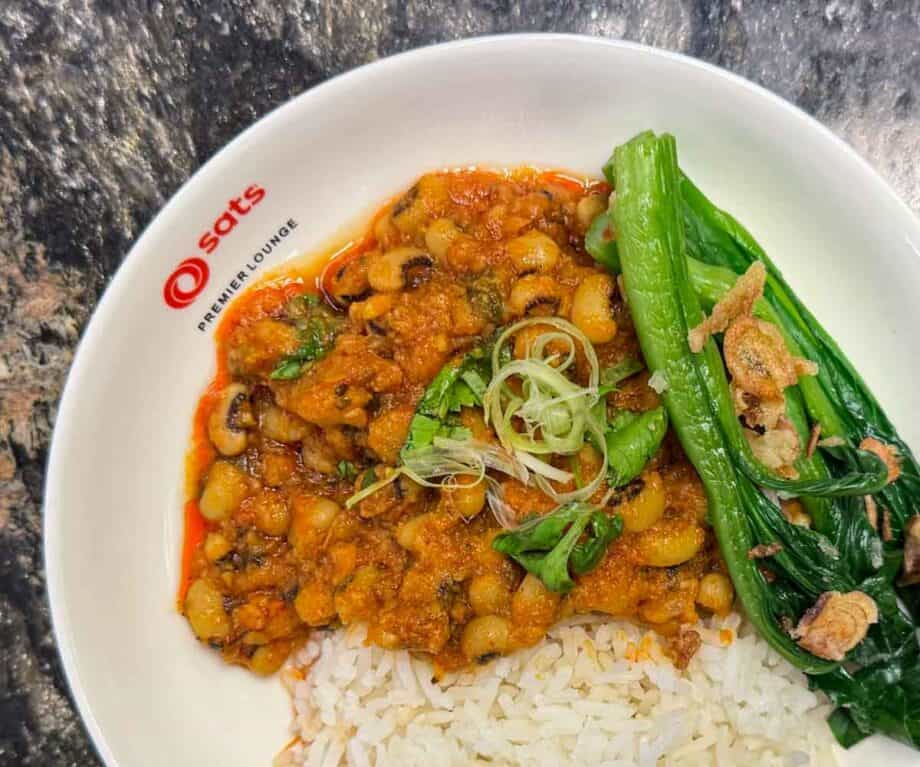
The SATS Premier Lounge, while well-appointed, offered a limited selection for vegan diners. The buffet items were clearly labeled, which aided in identifying suitable choices. The available options included a basic salad, roast potatoes, steamed white rice, cauliflower with black fungus and goji berries. A tempting marinated tofu dish was present, but unfortunately, its accompanying sauce was not vegan, a common pitfall for plant-based travelers. The flight experienced a delay, which proved beneficial as new dishes were introduced to the buffet. These additions included a black-eyed peas curry and kailan with fried garlic, both of which paired well with the steamed white rice, providing a satisfying and nutritious pre-flight meal while awaiting departure.
The First Leg: Singapore to Ho Chi Minh City
Onboard the Airbus A321
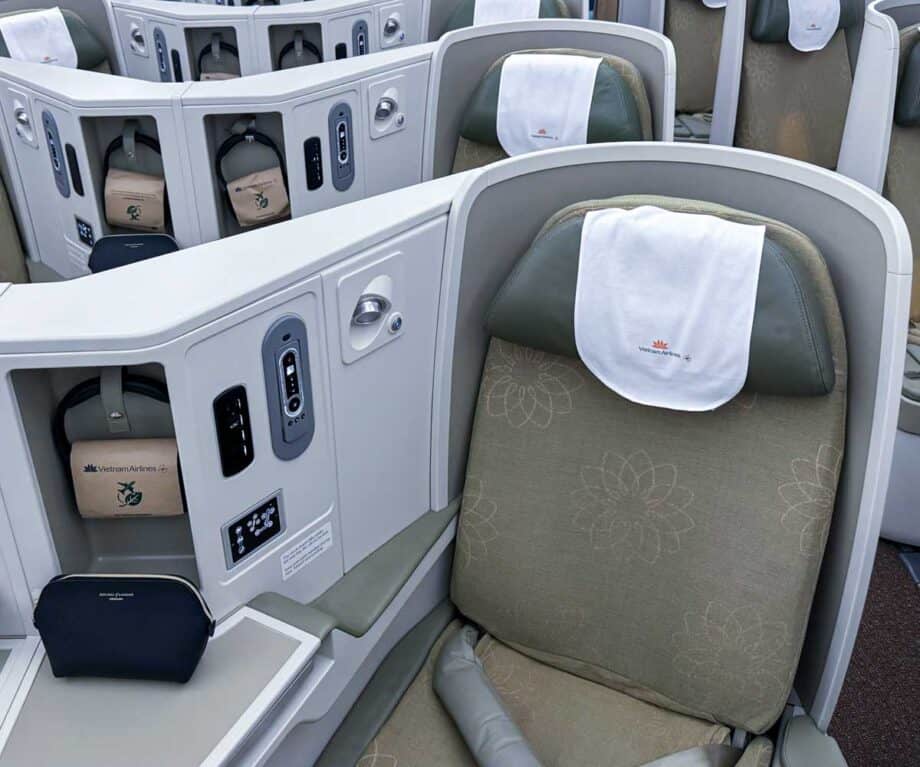
The initial flight from Singapore to Ho Chi Minh City was operated on an Airbus A321 aircraft. Vietnam Airlines typically configures its A321 business class cabins in a 2-2 seating arrangement, offering spacious reclining seats with ample legroom and footrests. However, this leg of the journey was marred by issues with the seating. Despite changing from pre-assigned seats, both passengers experienced non-functioning amenities. Specifically, the recliner mechanism was broken, the headrest failed to remain in place, and the footrest would not extend. These mechanical issues significantly detracted from the expected comfort of a short-haul business class flight.
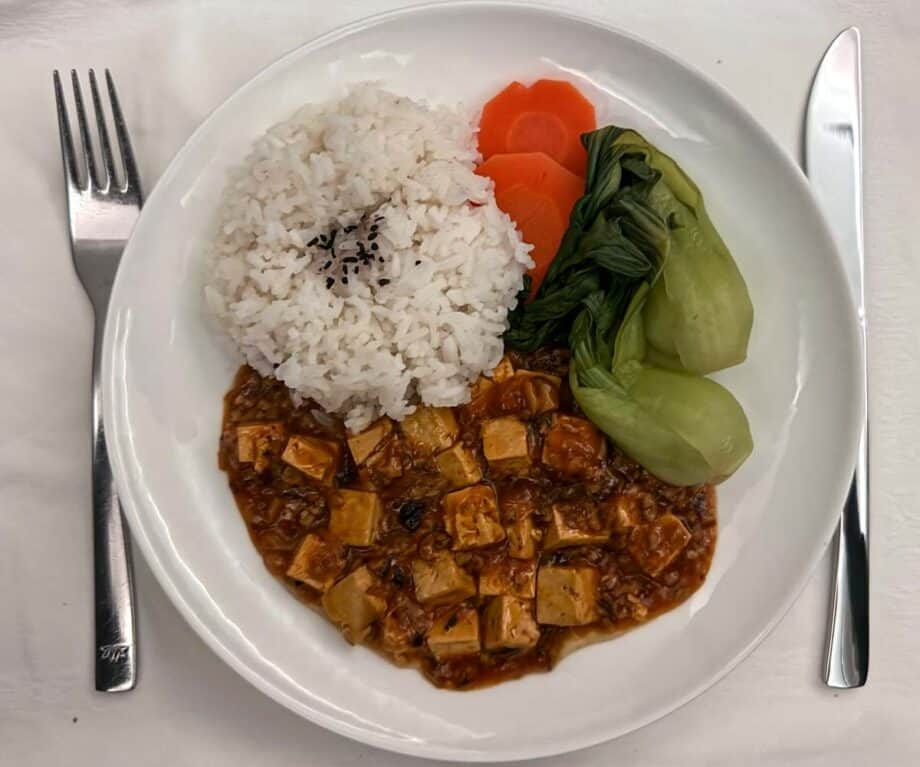
Despite the seating deficiencies, the vegan meal (VGML) served on this flight was a highlight. The dish consisted of a flavorful tofu preparation in a black bean sauce, accompanied by a mixed mushroom and tofu salad. While the salad was not consumed, it appeared visually appealing. The meal was rounded off with a bread roll served with vegan butter and fresh cut fruit. The main dish, in particular, was commended for its taste and was considered one of the more enjoyable vegan inflight meals experienced recently.
Transit in Ho Chi Minh City
Lotus Lounge at Tan Son Nhat International Airport
Due to a limited layover duration, the visit to Vietnam Airlines’ signature "Lotus Lounge" at Tan Son Nhat International Airport in Ho Chi Minh City was brief. The lounge provided an opportunity to utilize facilities and refresh before the onward overnight flight. However, the availability of vegan food options within the lounge was notably scarce. Apart from fresh fruit, no other dishes on the buffet were suitable for vegans. Lounge staff, overwhelmed by the crowds, were unable to offer specific assistance or alternative arrangements. The lounge was densely populated, necessitating a retreat to a quieter corner to await the next flight.
The Second Leg: Ho Chi Minh City to Seoul
Aboard the Boeing 787 Dreamliner
The subsequent flight from Ho Chi Minh City to Seoul was operated on one of Vietnam Airlines’ Boeing 787 Dreamliners. This aircraft offered a more luxurious experience, especially for the longer overnight journey. The 1-2-1 seating configuration provided increased personal space and the highly anticipated flatbed seats, crucial for restful sleep. The VGML offering for this leg of the journey was identical to the one served on the previous flight: a mushroom salad and the well-received tofu dish with rice.
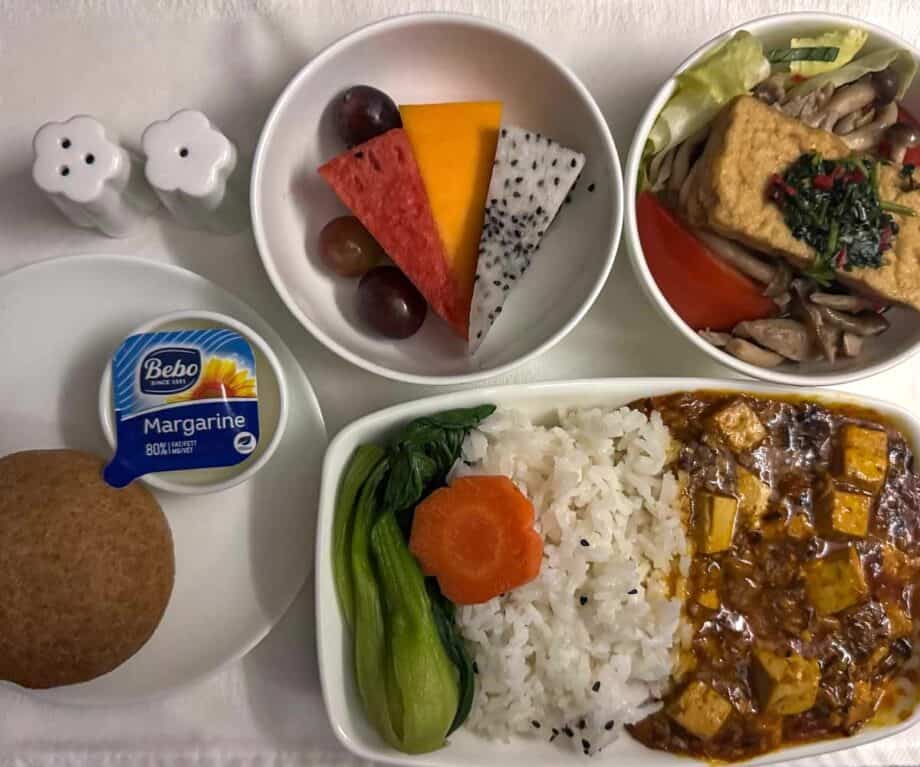
While the core components of the meal were the same, the presentation and plating were enhanced, particularly for the salad. This improvement may be attributed to the larger galley space available on the 787. The taste of the food remained consistent. A welcome addition was a dedicated dessert, a moist sponge cake with berry sauce, which served as a pleasant conclusion to the meal before passengers settled in for sleep. This thoughtful inclusion elevated the overall dining experience.
Pre-Departure in Seoul
Korean Air Lounge at Incheon International Airport
Before the return flight, access was granted to the Korean Air Lounge in Terminal 1 of Incheon International Airport, Seoul. This provided a comfortable environment for relaxation and was the final stop in the vegan food exploration for this trip. The lounge was characterized by its bright, modern, and spacious design, offering ample seating and shower facilities for passengers with extended layovers.
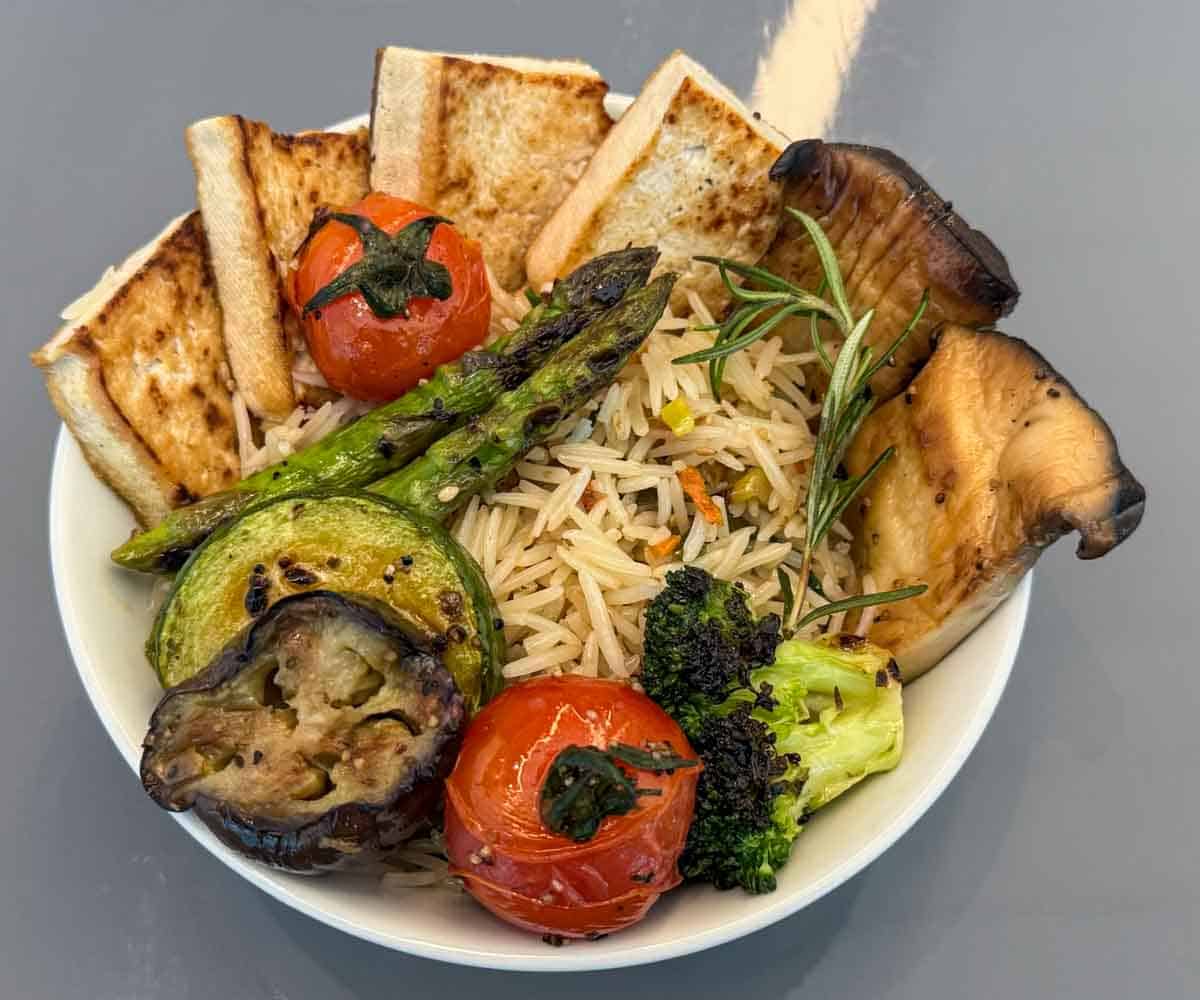
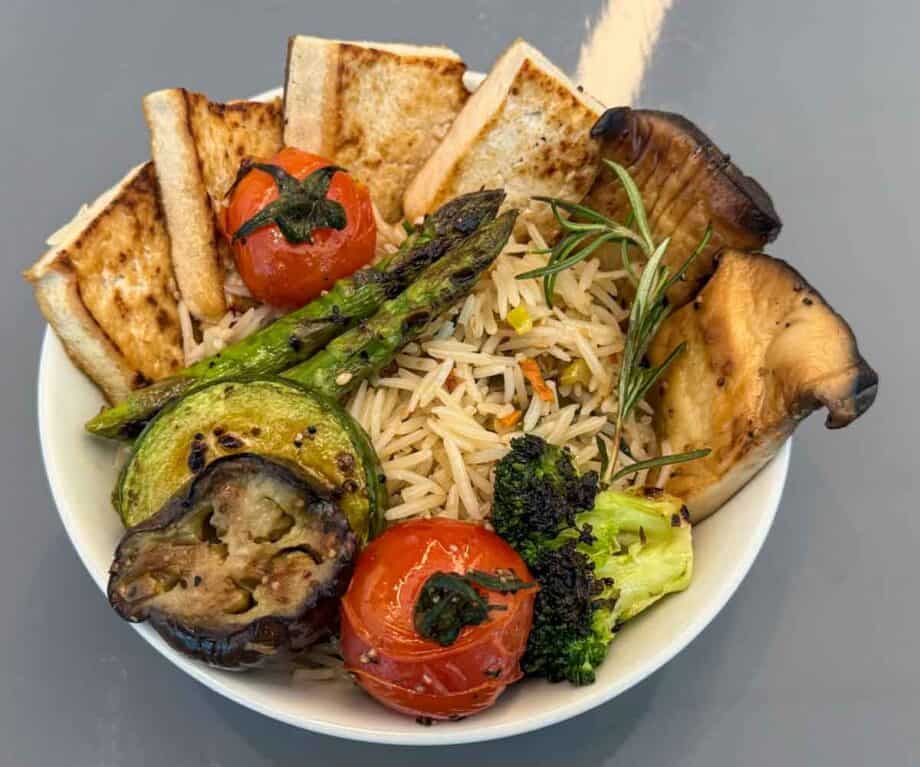
The lounge’s buffet, though modest in size, featured several clearly labeled vegan options, including mushroom soup with perilla seed, sautéed mushrooms with rice, and a pasta salad. These offerings were supplied by the Grand Hyatt Seoul. However, the travelers had previously received a specially prepared vegan breakfast box from the Conrad Seoul, curated by Executive Sous Chef Mike and his team. This box, featuring flavorful fried rice with tofu and grilled vegetables, was chosen over the lounge buffet, making for an exceptional vegan lounge breakfast.
The Return Journey: Seoul to Ho Chi Minh City
Another Boeing 787 Dreamliner Experience
The return flight from Seoul to Ho Chi Minh City was again operated on a Boeing 787 Dreamliner, ensuring a familiar cabin layout and the comfort of the flatbed seats. As this was a daytime flight, sleep was not the primary objective, but the fully reclining business class seats contributed to a more comfortable journey. The anticipation was whether the VGML offering would differ from the previous flights or if it would be a repetition of the tofu dish.
The meal served on this flight was indeed different, but unfortunately, not an improvement. The meal commenced with "canapés" that comprised a solitary fruit skewer, two cherry tomatoes, half an olive, and some dried fruit. While edible, these were perceived as uninspired and lacking creativity. The subsequent appetizer was an unappetizing stuffed pepper filled with beans and vegetables. Served cold, bordering on frozen, and devoid of any sauce, it lacked flavor entirely and was sent back. The main course also failed to impress. A mixture of dry, flavorless beans accompanied by overcooked vegetables was deemed one of the poorest vegan business class meals ever served. The quality was significantly below that of meals offered to other passengers.
The cabin crew were notably apologetic, acknowledging the substandard quality of the vegan meal. They proactively offered a solution by preparing instant noodles, which were vegan and tasted good. However, the fundamental expectation for business class travel is to receive a culinary experience commensurate with the fare paid, not instant noodles, however palatable they might be. This experience marked a significant disappointment in the vegan dining aspect of the journey.
Broader Context and Analysis of Vegan Travel Provisions
In recent years, the airline industry has witnessed a growing trend in enhancing plant-based offerings for vegan travelers. Airlines globally are increasingly incorporating creative and exciting vegan options into their pre-order menus. For instance, Emirates has reported having nearly 500 vegan recipes in rotation, positioning itself as a leader in catering to vegan passengers. This demonstrates a significant shift towards accommodating diverse dietary needs in air travel.
The experience with Vietnam Airlines, however, serves as a reminder that while progress is being made, the variety and quality of vegan inflight catering still have considerable room for improvement across the industry. The journey highlighted a stark contrast between the initial positive experiences and the significant decline in quality on the final leg.
Key Observations and Implications:
- Inconsistency: The most significant issue identified was the inconsistency in the quality and creativity of the vegan meals. While the tofu dish was commendable, the repetition of the same meal and the subsequent disappointing offering on the return flight suggest a lack of robust quality control or a limited menu rotation for vegan options.
- Lounge Provisions: The vegan food offerings in the airport lounges, particularly at Tan Son Nhat International Airport, were found to be inadequate, relying heavily on basic fruit. This puts greater pressure on the inflight meal service to compensate.
- Hard Product: The "hard product" – referring to the aircraft seats and amenities – was generally comfortable, especially on the Boeing 787 Dreamliner. The issues encountered with the A321 seating, however, detracted from the overall premium experience.
- Crew Performance: The cabin crew were consistently praised for their friendliness and helpfulness throughout the journey. Their apologies and proactive efforts to rectify the disappointing vegan meal on the final flight were appreciated, indicating a commitment to passenger satisfaction despite the limitations of the catering.
- Impact on Vegan Travelers: For vegan travelers, this experience underscores the importance of thorough research and pre-ordering special meals well in advance. The inconsistency observed suggests that reliance solely on standard menu options or even the pre-ordered VGML might not always guarantee a satisfactory culinary experience. The disappointment of receiving instant noodles as a substitute in business class highlights the gap between expectations and reality.
- Competitive Landscape: In comparison to airlines actively expanding their vegan recipe databases, Vietnam Airlines’ current offering appears less developed. The successful provision of a diverse and high-quality vegan menu is becoming a competitive differentiator in the premium travel market.
Future Outlook:
Given the airline’s regional base, it is plausible that future travel with Vietnam Airlines may occur. The hope remains that the airline will invest further in its vegan catering, ensuring that the quality of its plant-based offerings aligns with the attentiveness of its crew and the comfort of its premium cabins. The positive aspects of the journey, such as the comfortable seating on the Dreamliner and the commendable initial vegan meal, provide a foundation for improvement. However, a more consistent and creative approach to vegan dining is essential for Vietnam Airlines to be considered a truly vegan-friendly airline in the competitive global travel landscape. The data points towards a need for enhanced menu development and stricter quality control in their special meal preparation, ensuring that all passengers, regardless of dietary choices, receive a premium experience.