Unearthing the Past: Inside Prishtina’s Reporting House and the Legacy of the 1999 Kosovo Conflict

Nearly twenty-seven years after NATO fighter jets filled the Balkan skies and hundreds of thousands of displaced civilians returned to their devastated homeland, the capital of Kosovo has given a permanent home to the memories of that turbulent era. In the heart of Prishtina, a groundbreaking cultural and historical institution known as Reporting House has emerged as a vital archive, capturing the intersection of frontline journalism, human suffering, and international diplomacy during the 1998–1999 Kosovo conflict.
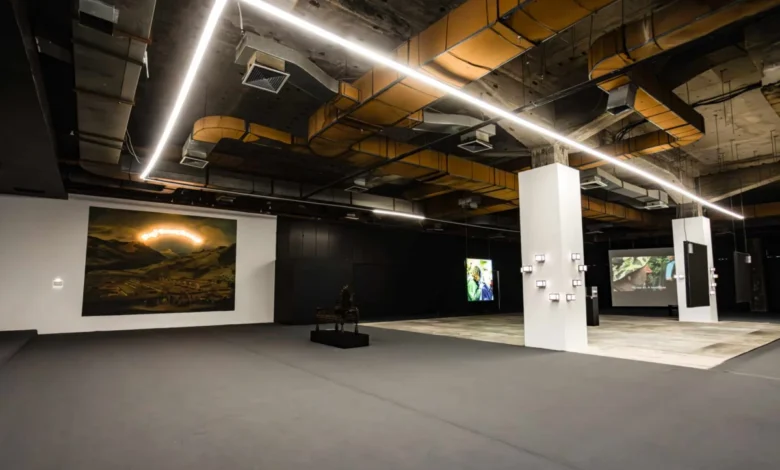
Located on Mother Teresa Avenue, directly adjacent to the prominent equestrian statue of Albanian historical figure Skanderbeg, Reporting House occupies an unexpected venue: a stripped-down, industrial-style former Yugoslav department store. Since opening its doors two years ago, the museum has drawn approximately 30,000 visitors, offering a raw, unvarnished look at the history of the war through the lenses of the reporters who documented it, the artists who interpreted it, and the ordinary citizens who survived it.
Main Facts and Architectural Concept
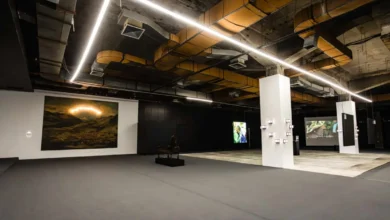
The museum’s physical structure mirrors the grit of the history it houses. Stripped back to its structural and quasi-industrial basics—featuring exposed ductwork, linear lighting, and raw concrete—the interior provides an expansive, open-gallery layout well-suited for high-impact multimedia installations.
Outside the building, visitors are greeted by a striking artistic installation constructed from scarred timbers salvaged from homes burned during the conflict. Inside, the institution houses an extensive repository of historical media, comprising roughly 500 photographs, 150 television reports, contemporary art pieces from the Balkans and international contributors—including Mozambique—and deeply personal human testimonies.

Among the most arresting exhibits is a damaged Sony mobile phone embedded with a high-velocity rifle bullet. The device was carried in the belt-bag of a BBC television cameraman who came under direct fire while filming Serbian forces in 1998. The ruined phone is widely believed to have saved the cameraman’s life, and the footage captured that day contributed to the vital global media coverage that ultimately galvanized international public opinion, paving the way for NATO’s military intervention.
Another central exhibit shifts the focus from foreign press corps to domestic resistance fighters. The museum displays the intimate love letters exchanged between Fehmi and Xheve Lladrovci, a married couple within the ranks of the Kosovo Liberation Army (KLA). The pair lived, fought, and ultimately died together during a firefight against Serbian forces in September 1998. Balancing these human-scale artifacts is an original, heavily dented Landrover Defender, bearing the physical scars of conflict as a testament to the perilous conditions faced by field reporters.
Chronology and Historical Context
To understand the weight of the artifacts within Reporting House, one must examine the geopolitical trajectory of the region leading up to the summer of 1999. The collapse of the Socialist Federal Republic of Yugoslavia in the early 1990s ignited a series of bloody ethnic conflicts across the Balkans. In Kosovo, where an overwhelming majority of the population was ethnic Albanian, tensions with the Belgrade government under Slobodan Milošević escalated sharply throughout the decade.
By 1998, the low-level insurgency led by the KLA erupted into open warfare. The conflict triggered a severe humanitarian crisis characterized by widespread displacement, village burnings, and systematic human rights abuses.
A chronological overview of the critical juncture includes:

- 1998: Intensification of armed clashes between the KLA and Serbian security forces; international journalists flood the region, documenting atrocities and mounting civilian casualties.
- March – June 1999: Following the failure of diplomatic negotiations at the Rambouillet Conference, NATO launches Operation Allied Force, a 78-day aerial bombing campaign targeting military infrastructure in the Federal Republic of Yugoslavia.
- June 1999: Serbian forces withdraw from Kosovo, and United Nations Security Council Resolution 1244 establishes the United Nations Interim Administration Mission in Kosovo (UNMIK), alongside the deployment of the NATO-led Kosovo Force (KFOR) peacekeeping troops. Simultaneously, hundreds of thousands of Kosovo Albanian refugees return from exile in neighboring Albania and North Macedonia.
Expansion: The Exodus ’99 Exhibit
Building on the success of its flagship location on Mother Teresa Avenue, Reporting House recently expanded its footprint to the Prishtina Train Station, launching a secondary exhibition titled Exodus ’99.
This installation is housed inside an authentic railway wagon that was utilized during the war to transport displaced civilians fleeing the conflict zones. Flanked by a dedicated gallery space, the exhibit preserves the harrowing narratives of forced migration, serving as a physical reminder of the logistics of mass displacement and the resilience of those who endured it.
Broader Impact and Implications
The establishment of Reporting House and Exodus ’99 arrives at a crucial juncture for Kosovo, Europe’s youngest recognized republic. More than two decades after declaring independence in 2008, the nation continues to navigate the complex social, psychological, and political aftermath of the war.
Cultural institutions that preserve conflict heritage play an instrumental role in shaping collective memory. By focusing heavily on the mechanisms of reporting—highlighting how the pen and the camera lens acted as catalysts for international intervention—Reporting House underscores the indispensable value of a free press during times of crisis. The museum emphasizes that the documentation of war crimes and human suffering is not merely a passive act of observation, but an active force capable of shifting global policy and compelling intervention.
Furthermore, the integration of international artistic perspectives, such as works from Mozambique, broadens the museum’s scope, framing the Kosovo conflict within the universal discourse of human rights, displacement, and post-conflict reconciliation.

Visitor Information
Both institutions operate under accessible public models, reflecting a commitment to historical education and community engagement. Admission to the museums is entirely free of charge.
Reporting House
- Location: Mother Teresa Avenue, central Prishtina (near the Skanderbeg statue)
- Opening Hours: Tuesday to Sunday, 10:00 – 18:00 (Closed Mondays)
Exodus ’99
- Location: Prishtina Train Station
- Opening Hours: Tuesday to Sunday, 12:00 – 18:00 (Closed Mondays)
Contact and Social Media:
- Phone: +383 48 831 998
- Instagram: @reportinghouse
- Facebook: Reporting House